 EN
EN

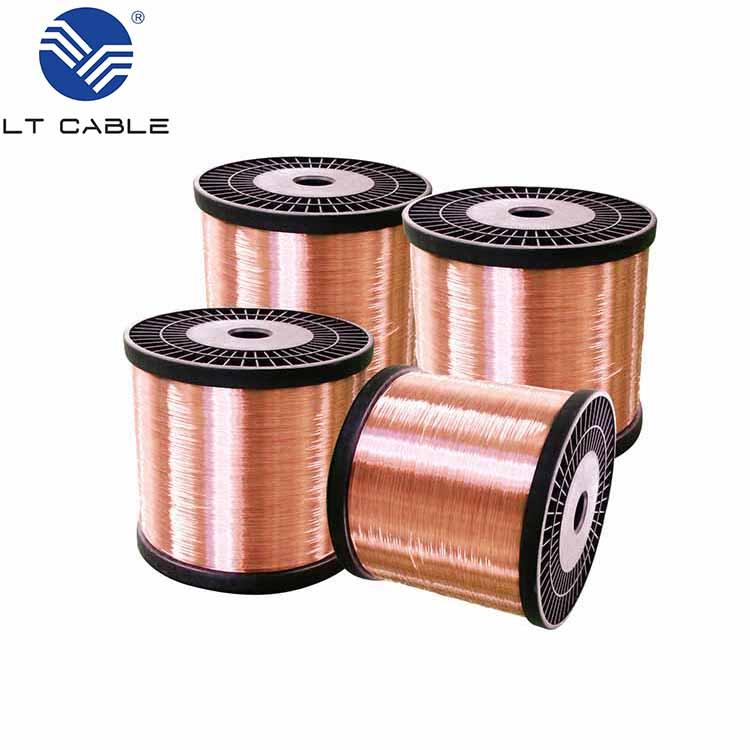
What Is Copper-Clad Aluminum Wire? Structure, Manufacturing, and Key Specifications
Metallurgical Design: Aluminum Core with Electroplated or Rolled Copper Cladding
Copper clad aluminum wire, or CCA for short, basically has an aluminum core wrapped in copper through processes like electroplating or cold rolling. What makes this combo so interesting is that it takes advantage of aluminum being way lighter than regular copper wires—about 60% less heavy actually—while still getting the good conductivity properties from copper plus better protection against oxidation. When making these wires, manufacturers start with high quality aluminum rods that get treated on the surface first before applying the copper coating, which helps everything stick together properly at a molecular level. How thick the copper layer is matters a lot too. Usually around 10 to maybe 15% of the total cross section area, this thin copper shell affects how well the wire conducts electricity, resists corrosion over time, and holds up mechanically when bent or stretched. The real benefit comes from preventing those pesky oxides from forming where connections meet, something pure aluminum struggles with badly. This means signals stay clean even during high speed data transfers without degradation issues.
Cladding Thickness Standards (e.g., 10%–15% by volume) and Impact on Ampacity and Flex Life
Industry standards—including ASTM B566—specify cladding volumes between 10% and 15% to optimize cost, performance, and reliability. Thinner cladding (10%) lowers material costs but limits high-frequency efficiency due to skin effect constraints; thicker cladding (15%) improves ampacity by 8–12% and flex life by up to 30%, as confirmed by IEC 60228 comparative testing.
| Cladding Thickness | Ampacity Retention | Flex Life (Cycles) | High-Frequency Efficiency |
|---|---|---|---|
| 10% by volume | 85–90% | 5,000–7,000 | 92% IACS |
| 15% by volume | 92–95% | 7,000–9,000 | 97% IACS |
When copper layers get thicker, they actually help cut down on galvanic corrosion problems at connection points, which is really important stuff if we're talking about installations in damp areas or near the coast where salt air hangs around. But there's a catch here. Once we go past that 15% mark, the whole point of using CCA starts to fade away because it loses its edge in terms of being lighter and cheaper compared to regular old solid copper. The right choice depends entirely on what exactly needs to be done. For things that stay put like buildings or permanent installations, going with around 10% copper coating works just fine most of the time. On the flip side, when dealing with moving parts such as robots or machinery that gets shifted around regularly, folks tend to bump up to 15% cladding since it stands up better to repeated stress and wear over long periods.
Why Copper-Clad Aluminum Wire Delivers Optimal Value: Cost, Weight, and Conductivity Trade-Offs
30–40% Lower Material Cost vs. Pure Copper—Validated by 2023 ICPC Benchmark Data
According to the latest ICPC Benchmark numbers from 2023, CCA cuts down on conductor material expenses by around 30 to 40 percent when compared to regular solid copper wiring. Why? Well, aluminum just costs less at the market level, and manufacturers have really tight control over how much copper gets used in the cladding process. We're talking about only 10 to 15% copper content in these conductors overall. These cost savings make a big difference for expanding infrastructure projects while still keeping those safety standards intact. The impact is especially noticeable in high volume scenarios such as running the main cables through massive data centers or setting up extensive telecom network distributions across cities.
40% Weight Reduction Enables Efficient Aerial Deployment and Reduces Structural Load in Long-Run Installations
CCA weighs about 40 percent less than copper wire of the same gauge, which makes installation much easier overall. When used for aerial applications, this lighter weight means less strain on utility poles and transmission towers something that adds up to thousands of kilograms saved across long distances. Real world testing has shown workers can save around 25% of their time because they're able to work with longer sections of cable using regular equipment instead of specialized tools. The fact that these cables are lighter during transport helps cut down on shipping expenses too. This opens up possibilities where weight matters a lot, like when installing cables on suspension bridges, inside old buildings that need preservation, or even in temporary structures for events and exhibitions.
92–97% IACS Conductivity: Leveraging Skin Effect for High-Frequency Performance in Data Cables
CCA cables hit around 92 to 97 percent IACS conductivity because they take advantage of something called the skin effect. Basically, when frequencies go above 1 MHz, electricity tends to stick to the outer layers of conductors rather than flowing through the whole thing. We see this in action across several applications like CAT6A Ethernet at 550 MHz speeds, 5G network backhauls, and connections between data centers. The copper coating carries most of the signal while the aluminum inside just gives structural strength. Tests have shown that these cables maintain less than 0.2 dB difference in signal loss over distances up to 100 meters, which is basically the same performance as regular solid copper wires. For companies dealing with massive data transfers where budget constraints matter or installation weight becomes an issue, CCA offers a smart compromise without sacrificing much on quality.
Copper-Clad Aluminum Wire in High-Growth Cable Applications
CAT6/6A Ethernet and FTTH Drop Cables: Where CCA Dominates Due to Bandwidth Efficiency and Bend Radius
CCA has become the go to conductor material for most CAT6/6A Ethernet cables and FTTH drop applications these days. Weighing in at about 40% less than alternatives, it really helps when running cables both outdoors on poles and indoors where space matters. The conductivity levels sit between 92% and 97% IACS which means these cables can handle all the way up to 550 MHz bandwidth without issues. What's particularly useful is how flexible CCA naturally is. Installers can bend these cables pretty tightly, down to four times their actual diameter, without worrying about losing signal quality. This comes in handy when working around tight corners in existing buildings or squeezing through narrow wall spaces. And let's not forget the money aspect either. According to ICPC data from 2023, there are roughly 35% savings on materials costs alone. All these factors together explain why so many professionals are turning to CCA as their standard solution for dense network installations that need to last into the future.
Professional Audio and RF Coaxial Cables: Optimizing Skin Effect Without Premium Copper Costs
In professional audio and RF coaxial cables, CCA delivers broadcast-grade performance by aligning conductor design with electromagnetic physics. With 10–15% copper cladding by volume, it provides surface conductivity identical to solid copper above 1 MHz—ensuring fidelity in microphones, studio monitors, cellular repeaters, and satellite feeds. Critical RF parameters remain uncompromised:
| Performance Metric | CCA Performance | Cost Advantage |
|---|---|---|
| Signal Attenuation | ∼0.5 dB/m @ 2 GHz | 30–40% lower |
| Velocity of Propagation | 85%+ | Equivalent to solid copper |
| Flex Cycle Endurance | 5,000+ cycles | 25% lighter than copper |
By placing copper precisely where electrons travel, CCA eliminates the need for premium-priced solid copper conductors—without sacrificing performance in live sound, wireless infrastructure, or high-reliability RF systems.
Critical Considerations: Limitations and Best Practices for Copper-Clad Aluminum Wire Use
CCA definitely has some good economic advantages and makes sense logistically, but engineers need to think carefully before implementing it. The conductivity of CCA sits around 60 to 70 percent compared to solid copper, so voltage drops and heat buildup become real issues when working with power applications beyond basic 10G Ethernet or dealing with high current circuits. Because aluminum expands more than copper (about 1.3 times as much), proper installation means using torque controlled connectors and checking connections regularly in areas where temperature changes happen often. Otherwise those connections can loosen over time. Copper and aluminum don't play nice together either. Corrosion problems at their interface are well documented, which is why electrical codes now require applying antioxidant compounds wherever they connect. This helps stop the chemical reactions that degrade connections. When installations face humidity or corrosive environments, going with industrial grade insulation like cross linked polyethylene rated for at least 90 degrees Celsius becomes absolutely necessary. Bending cables too sharply beyond eight times their diameter creates tiny fractures in the outer layer, something best avoided altogether. For critical systems such as emergency power supplies or main data center links, many installers opt for a mixed strategy these days. They run CCA through distribution paths but switch back to solid copper for final connections, balancing cost savings with system reliability. And let's not forget recycling considerations. While CCA can technically be recycled through special separation methods, proper end of life handling still needs certified e waste facilities to manage materials responsibly according to environmental regulations.
Table of Contents
- What Is Copper-Clad Aluminum Wire? Structure, Manufacturing, and Key Specifications
- Why Copper-Clad Aluminum Wire Delivers Optimal Value: Cost, Weight, and Conductivity Trade-Offs
- Copper-Clad Aluminum Wire in High-Growth Cable Applications
- Critical Considerations: Limitations and Best Practices for Copper-Clad Aluminum Wire Use


