Aug 11,2025
Worldwide, the solar industry needs around 2.8 million miles worth of cables every year, and most of this demand comes from big utility scale projects according to the Global Solar Council report from 2023. Take India for instance where solar power is expanding at about 20% growth rate yearly until 2030. The country really needs cables that can handle brutal weather conditions like those found in Rajasthan where temperatures hit 50 degrees Celsius, all while keeping transportation volumes down. Regular copper cables make things harder logistically speaking because they require special oversized load permits which cost between $18 to $32 extra per ton mile when transporting them. Lighter aluminum options just make more sense practically speaking.
Cutting down on cable weight by about 10% can actually save around $1.2 to $2.1 for every watt installed at solar farms. Aluminum alloy wires help with this because they cut down on manual labor needed during installation by roughly 30%, according to Renewables Now from last year. With the US Energy Information Administration predicting nearly tripled solar production within just two years, there's real pressure on project developers to get their infrastructure sorted out efficiently. Copper cables are heavy beasts that need special transportation for almost half of all components, while aluminum systems only need it for about one eighth of parts. This difference adds up fast, creating a gap of about seven hundred forty thousand dollars in logistics expenses when comparing a standard 100 megawatt solar installation using these different materials.
Because aluminum weighs about 61% less than copper, companies can fit roughly 25% more cable into each standard shipping container. This translates to significant savings on trans-Pacific freight costs, somewhere between $9.2 and $15.7 per kilowatt for solar components being shipped overseas. The cost benefits have really taken off in recent years, especially with increased demand from Southeast Asian markets. Shipping accounts for around two thirds of all material costs in these regions, so lighter materials make a huge difference. Many manufacturers are now getting their aluminum alloy cables certified for long term use in coastal areas, which is particularly important given Vietnam's ambitious plans for 18.6 gigawatts of offshore solar capacity development along its coastline.
## Aluminum vs. Copper: Cost, Performance, and Material Economics ### Material Economics: 60% Lower Cost with Aluminum Alloys Aluminum alloys reduce material costs by up to 60% compared to copper, with bulk prices averaging $3/kg versus $8/kg (2023 Market Analysis). This gap becomes decisive in utility-scale solar farms, which often require over 1,000 km of cabling. A 500 MW solar export project can save $740k in raw materials alone by using aluminum conductors, according to energy infrastructure ROI models. ### Balancing Conductivity and Budget in Solar Power Transmission While pure aluminum has 61% of copper’s conductivity (IACS 61 vs 100), modern alloys achieve 56–58% conductivity with significantly greater flexibility. Today’s 1350-O aluminum cables deliver 20% higher current-carrying capacity per dollar than copper in 20–35kV solar transmission systems. This balance allows developers to maintain under 2% efficiency loss while reducing cable budget allocations by 40% in commercial export projects. ### Overcoming Historical Reliability Concerns with Modern Aluminum Alloys AA-8000 series aluminum alloys have eliminated 80% of the failure modes seen in mid-20th century applications, thanks to controlled annealing and zirconium additives. Recent field studies show: - 0.02% annual oxidation rate in coastal zones (vs 0.12% for legacy alloys) - 30% higher cyclic flexural strength than EC-grade copper - Certification for 50-year service life in direct-buried solar farm installations (2022 Industry Durability Report) These improvements establish aluminum as a technically sound and economically superior option for next-generation solar export infrastructure. 
When it comes to modern aluminum cables, zirconium (Zr) and magnesium (Mg) play pretty important roles. Zr creates those tiny precipitates that stop grains from growing when cables go through temperature changes, which actually makes them stronger too. Some tests show strength can jump by around 18%, yet they still conduct electricity just fine. Magnesium works differently but equally well. It helps with work hardening so manufacturers can make wires thinner and lighter while keeping their ability to carry current intact. Put these two together and what do we get? Aluminum cables that satisfy the IEC 60228 Class B requirements but weigh about 40% less than traditional copper options. That kind of weight reduction matters a lot for installation costs and overall system efficiency.
The AA-8000 series manages around 62 to 63 percent IACS conductivity thanks to careful management of trace elements, which is quite a jump compared to the old AA-1350 formulas that were used before. What makes these new alloys really stand out is their ability to handle stress better - about 30% more resistant to fatigue than previous materials. This matters a lot for solar installations since they often face constant vibration from wind across open fields. When we look at accelerated aging tests, these materials show less than 2% loss in conductivity after 25 years. That actually beats copper in places with high humidity where oxidation tends to slowly eat away at performance characteristics over time.
South Korea's Honam solar belt implemented AA-8030 conductors back in 2023 which cut down cable tray loads by around 260 kg per kilometer on those 33kV power lines. Going with aluminum saved about $18 for every MWh produced through balance of system costs, plus it shaved off roughly 14 days from the installation timeline. After everything was up and running, the numbers told the story too - system availability hit 99.4% even during typhoon season. That speaks volumes about how reliable aluminum really is when facing those harsh weather conditions that are so typical in many export markets across Asia.
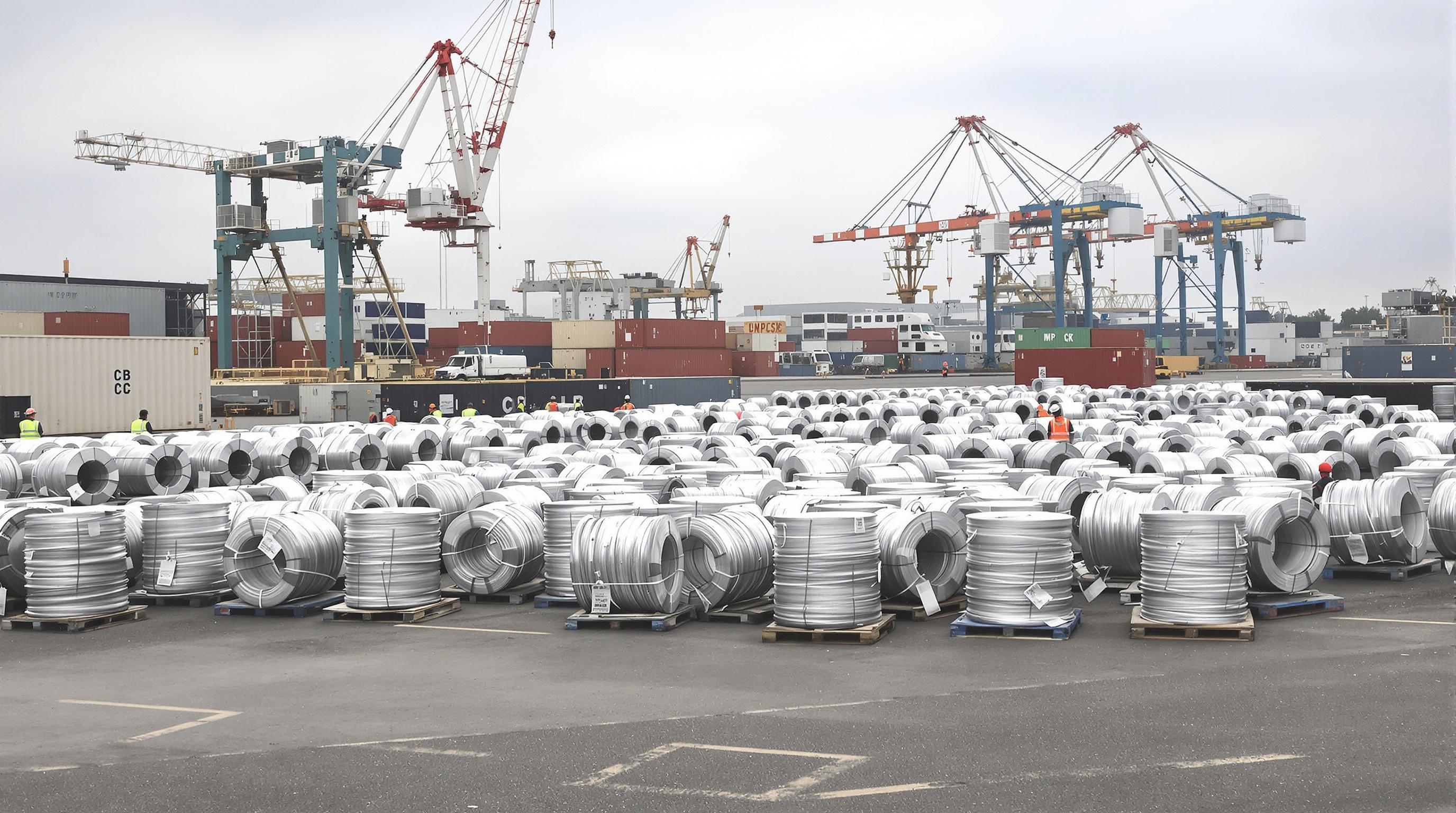
As countries around the world push harder toward clean energy sources, there's been a huge spike in need for lighter power cables lately. Aluminum alloys have become pretty much the go-to choice for this stuff. According to recent data from IEA (2025), about two thirds of all large scale solar installations these days are going with aluminum conductors because they weigh roughly 40 to 50 percent less than alternatives. Makes sense when looking at ambitious goals like India aiming for 500 gigawatts of renewables by 2030 or Saudi Arabia's plan to get 58.7 gigawatts from solar power. These kinds of targets mean governments need transmission systems that won't break the bank while still being able to handle massive amounts of electricity over long distances.
Chinese aluminum wire and cable exports jumped nearly 47% from February to March 2025, hitting around 22,500 metric tons last month, per the latest Renewable Energy Materials Report. The spike makes sense when looking at global solar trends too there are now over 350 gigawatts installed each year worldwide, and switching to aluminum saves about two cents per watt on big solar farms. According to forecasts from the International Energy Agency, most solar farms will be wired with aluminum conductors by 2030. This seems likely given how countries in development are pushing forward with their grid expansions so quickly these days.
Four regions lead in aluminum cable adoption:
Africa’s electrification push—targeting 300 million new connections by 2030—now represents 22% of China’s aluminum cable exports.
Government policies are accelerating aluminum adoption through:
These incentives amplify aluminum’s inherent 60% cost advantage, fueling a $12.8 billion export market for alloy power cables by 2027 (Global Market Insights 2025). Industry leaders increasingly adopt AA-8000 series alloys, which achieve 61% IACS conductivity—effectively closing the performance gap with copper.
The solar industry has been switching to aluminum alloy conductors at about three times the rate seen in conventional power systems lately. This shift makes sense when we look at materials shortages and how fast installations need to happen. According to some recent studies from the University of Michigan (2023), photovoltaic setups actually need between 2.5 and 7 times as much conductive metal for each megawatt compared to what fossil fuel plants require. Looking ahead, the 2024 specs for exporting solar equipment show that these lighter weight cables account for nearly 8 out of 10 parts in the balance of system components. What makes aluminum so attractive is how well it works with modular design approaches, which speeds things up considerably. Traditional grid systems still stick with copper though, mostly because people keep believing old reliability myths about the material despite newer alternatives being available.
The flexible nature of aluminum makes it possible to create prefabricated cable reels that really shorten on site assembly times, probably around 40% less work needed compared to traditional methods. For exporters, there's another big plus point here. Shipping containers can hold about 30% more aluminum cables than copper ones, which is why this material works so well in places like parts of Southeast Asia where ports just don't have much space or capacity. Contractors working on international projects find these kinds of solutions invaluable when dealing with those super tight deadline situations. And despite all these advantages, the conductivity remains pretty close to standard levels at roughly 99.6% for mid voltage solar installations too.
The global market for aluminum-stranded solar cables seems set to expand rapidly, growing at around 14.8% annually until 2030 and beating copper adoption by roughly three to one. The biggest changes are happening in developing economies. After India reformed its solar tariffs in 2022, aluminum cable imports there jumped nearly 210%, while in Brazil most utility companies now go with aluminum for almost all their new small-scale power projects these days. To keep up with this demand, factory owners across the world are pouring about $2.1 billion into expanding production lines for AA-8000 alloy cables. These special cables meet the needs of solar farms that want lighter materials which won't corrode easily when transmitting electricity over long distances.
Lightweight power cables, especially those made from aluminum alloys, are important for solar farm exports because they reduce installation and logistics costs. Aluminum cables weigh less than copper ones, enabling more efficient transport and installation, which is crucial for large-scale projects.
While pure aluminum has lower conductivity than copper, modern aluminum alloys have improved significantly in terms of conductivity and strength. Aluminum alloys can maintain a conductivity close to copper and, thanks to advanced alloying techniques, achieve high durability and flexibility, making them ideal for solar power transmission.
Regions like the Middle East, India, Southeast Asia, and Latin America are adopting aluminum cables mainly because of their cost-effectiveness, lightweight nature, and ability to handle harsh environmental conditions. These regions have ambitious solar energy targets, making aluminum a preferred choice for grid expansion projects.

Tailored advice, perfect fit solutions.

Efficient manufacturing, seamless supply.

Rigorous testing, global certifications.

Prompt assistance, ongoing support.
 EN
EN