 EN
EN

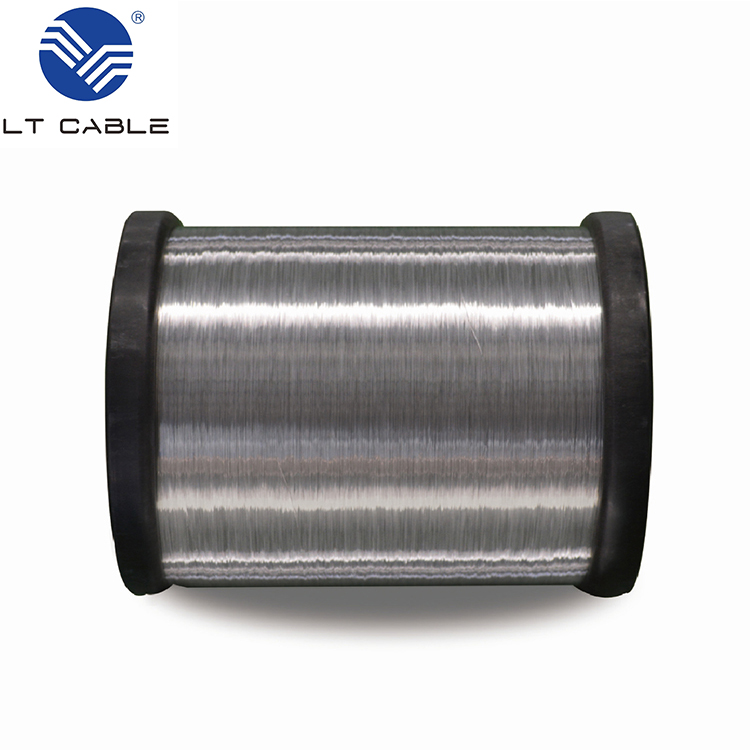
Al-Mg Alloy Wire Composition and Its Direct Impact on Electrical Conductivity
The electrical conductivity of aluminum-magnesium alloy wire really hinges on how much magnesium is present. As magnesium content ranges between 0.5 to 5 weight percent, it gets incorporated into the aluminum's crystal structure, which messes with the way electrons move through the material. This happens because the magnesium creates tiny distortions at the atomic level that act as obstacles for electron flow. For every additional 1% magnesium added, we generally see around a 3 to 4% drop in conductivity according to the International Annealed Copper Standard benchmark. Some sources claim a 10% reduction, but that number tends to exaggerate what actually occurs in standard commercial products. It also mixes up normal alloy behavior with situations involving very high levels of impurities. The main reason behind this conductivity loss? More magnesium means more scattering events for electrons encountering those dissolved atoms, and naturally leads to higher resistance as magnesium concentration increases.
How magnesium content (0.5–5 wt%) governs electron scattering in aluminum magnesium alloy wire
Magnesium atoms substitute for aluminum in the lattice, distorting local symmetry and impeding electron motion. The magnitude of scattering intensifies nonlinearly above ~2 wt% Mg, where solubility limits are approached. Key experimentally observed impacts include:
- At 1 wt% Mg: resistivity rises ∼3 nΩ·m versus pure aluminum (ρ = 26.5 nΩ·m)
- Above 3 wt% Mg: electron mean free path shortens by ~40%, accelerating resistivity growth
Staying within the equilibrium solid solubility limit (~1.9 wt% Mg at room temperature) is essential—excess Mg promotes β-phase (Al₃Mg₂) precipitation, which introduces larger, less frequent scattering sites but degrades long-term stability and corrosion resistance.
Solid solution hardening vs. precipitate formation: Microstructural drivers of conductivity loss in cold-drawn aluminum magnesium alloy wire
Cold drawing enhances strength but also amplifies microstructural influences on conductivity. Two interrelated mechanisms dominate:
Solid solution hardening: Dissolved Mg atoms elastically strain the Al lattice, acting as distributed scattering centers. This mechanism dominates in low-Mg alloys (<2 wt%) and during cold working below ~150°C, where diffusion is suppressed and precipitates remain absent. It delivers high strength gains with relatively modest conductivity penalties.
Precipitate formation: Above ~3 wt% Mg—and especially after thermal aging—β-phase (Al₃Mg) particles nucleate. While these larger obstacles scatter electrons less efficiently per atom than dissolved Mg, their presence signals supersaturation and instability. Precipitates reduce lattice strain but introduce interfacial scattering and accelerate localized corrosion.
| Mechanism | Conductivity Impact | Dominant When | Practical Implication |
|---|---|---|---|
| Solid solution | High resistivity | Low Mg (<2 wt%), cold-worked | Best for applications prioritizing stable, predictable conductivity |
| Precipitates | Moderate resistivity | High Mg (3 wt%), thermally aged | Acceptable only with strict process control and corrosion mitigation |
Optimal processing balances these effects: controlled aging minimizes coarse precipitate formation while leveraging fine, coherent clusters to enhance strength without disproportionate conductivity loss.
Standardized Conductivity Measurement and Calculation for Aluminum Magnesium Alloy Wire
From Resistivity to %IACS: ASTM E1004-Compliant Four-Point Probe Calculation Workflow
Getting accurate conductivity readings for aluminum-magnesium alloy wires means following the ASTM E1004 guidelines pretty closely. The standard calls for using a four-point probe on wire segments that have been straightened out and stripped of any oxides. Why? Because this approach actually gets rid of those pesky contact resistance issues that plague regular two-point measurements. Labs need to keep things really tight when taking these readings - temperatures should stay within 20 degrees Celsius plus or minus just 0.1 degree. And of course, everyone needs to be working with properly calibrated equipment and standards that can trace back to NIST. To figure out the International Annealing Copper Standard percentage, we take the bulk resistivity value (measured in nanoohm meters) and plug it into this formula: %IACS equals 17.241 divided by resistivity multiplied by 100. That number, 17.241, represents what standard annealed copper looks like at room temperature. Most certified labs can get within about 0.8% accuracy if everything goes right. But there's another trick too: the distance between the probes has to be at least three times the actual wire diameter. This helps create an even electric field across the sample and prevents those annoying edge effect problems that throw off results.
| Measurement Factor | Four-Point Probe Requirement | Impact on %IACS Accuracy |
|---|---|---|
| Temperature stability | ±0.1°C controlled bath | ±0.15% error per 1°C deviation |
| Probe alignment | Parallel electrodes ±0.01mm | Up to 1.2% variance if misaligned |
| Current density | ∼100 A/cm² | Prevents Joule heating artifacts |
Eddy Current vs. DC Four-Wire Measurement: Accuracy Trade-offs for Sub-2 mm Aluminum Magnesium Alloy Wire
For thin aluminum–magnesium alloy wire (<2 mm diameter), method selection hinges on accuracy requirements and production context:
Eddy current testing
Offers non-contact, high-speed scanning ideal for inline quality sorting. However, its sensitivity to surface condition, near-surface segregation, and phase distribution limits reliability when Mg exceeds ~3 wt% or microstructure is inhomogeneous. Typical accuracy is ±2% IACS for 1 mm wire—sufficient for pass/fail screening but inadequate for certification.The DC four wire Kelvin measurement technique can achieve around plus or minus 0.5 percent IACS accuracy even when dealing with thin wires as small as 0.5 mm that contain higher magnesium levels. Before getting accurate readings though, there are several preparation steps needed. First, specimens need to be properly straightened out. Then comes the tricky part - removing surface oxides through methods like gentle abrasion or chemical etching. Thermal stability during testing is also crucial. Despite needing all this prep work and taking about five times longer than other methods, many still rely on it because it's currently the only approach recognized by ASTM E1004 standards for official reports. For applications where electrical conductivity directly affects how well a system performs or meets regulatory requirements, this extra time investment often makes sense despite the slower process.
Step-by-Step Conductivity Calculation: A Real-World Example for 3.5 wt% Aluminum Magnesium Alloy Wire
Input validation: Resistivity measurement, 20°C temperature correction, and Mg solubility assumptions
Getting accurate conductivity calculations starts with making sure all input data is properly validated first. When measuring resistivity, it's essential to use ASTM E1004 compliant four point probes on wires that have been straightened out and thoroughly cleaned. The readings then need adjustment to account for temperature differences from the standard 20 degree Celsius reference point. This correction follows the formula rho_20 equals rho_measured multiplied by [1 plus 0.00403 times (temperature minus 20)]. The value 0.00403 per degree Celsius represents how much resistivity changes with temperature for aluminum magnesium alloys around room temperatures. Something worth noting about these measurements: when working with a 3.5 weight percent magnesium alloy, we're actually looking at something beyond what's normally possible since the equilibrium solubility limit sits around just 1.9 weight percent at 20 degrees Celsius. What this means in practice is that the resistivity numbers obtained don't only reflect solid solution effects but probably include some contribution from either metastable or stable beta phase precipitates forming within the material. To really understand what's going on here, microstructural analysis through methods like scanning electron microscopy combined with energy dispersive spectroscopy becomes absolutely necessary for meaningful interpretation of test results.
Numerical walkthrough: Converting 29.5 nΩ·m to %IACS with ±0.8% uncertainty
Consider a measured resistivity of 29.5 nΩ·m at 25°C:
- Temperature-correct to 20°C:
ρ_20 = 29.5 × [1 + 0.00403 × (25 − 20)] = 30.1 nΩ·m - Apply %IACS formula:
%IACS = (17.241 / 30.1) × 100 = 57.3%
The plus or minus 0.8% uncertainty comes from putting together all those calibration errors, temperature effects, and alignment issues we always have to deal with during testing. It doesn't actually reflect any natural variation in the materials themselves. Looking at real world measurements for cold drawn wire that's been aged a bit, around 3.5 weight percent magnesium content usually shows conductivities between about 56 and 59 percent IACS. Something worth remembering though is that this rule of thumb about losing 3% conductivity for every additional weight percent magnesium works best when magnesium levels stay under 2%. Once we go past that threshold, things start breaking down faster because of these little precipitates forming and the whole microstructure getting more complicated as well.
Practical Implications for Engineers Selecting Aluminum Magnesium Alloy Wire
When specifying aluminum–magnesium alloy wire for electrical applications, engineers must balance three interdependent parameters: conductivity, mechanical strength, and environmental durability. Magnesium content (0.5–5 wt%) sits at the center of this trade-off:
- Conductivity: Every 1 wt% Mg reduces conductivity by ~3% IACS below 2 wt%, rising to ~4–5% IACS loss near 3.5 wt% due to scattering from early-stage precipitates.
- Strength: Yield strength increases ~12–15% per 1 wt% Mg—primarily via solid solution hardening below 2 wt%, then increasingly via precipitation hardening above 3 wt%.
- Corrosion resistance: Mg improves atmospheric corrosion resistance up to ~3 wt%, but excess Mg promotes grain boundary β-phase formation, accelerating intergranular corrosion—especially under cyclic thermal or mechanical stress.
When dealing with important stuff like overhead transmission lines or busbars, it's better to go with ASTM E1004 compliant DC four wire resistivity measurements instead of relying on eddy current methods for those tiny sub 2 mm wires. Temperature matters too folks! Make sure there are mandatory baseline corrections at 20 degrees Celsius because even a 5 degree swing can throw off readings by about 1.2% IACS, which messes up meeting specs. For checking how materials hold up over time, run those accelerated aging tests using standards like ISO 11844 with salt spray and thermal cycling. Research indicates that if materials aren't properly stabilized, corrosion along grain boundaries jumps up around three times after just 10,000 load cycles. And don't forget to double check what suppliers claim about their products. Look at actual composition reports from reliable sources, especially when it comes to iron and silicon content that should stay below 0.1% total. These impurities really hurt fatigue resistance and can lead to dangerous brittle fractures down the road.
Table of Contents
- Al-Mg Alloy Wire Composition and Its Direct Impact on Electrical Conductivity
- Standardized Conductivity Measurement and Calculation for Aluminum Magnesium Alloy Wire
- Step-by-Step Conductivity Calculation: A Real-World Example for 3.5 wt% Aluminum Magnesium Alloy Wire
- Practical Implications for Engineers Selecting Aluminum Magnesium Alloy Wire


