 EN
EN

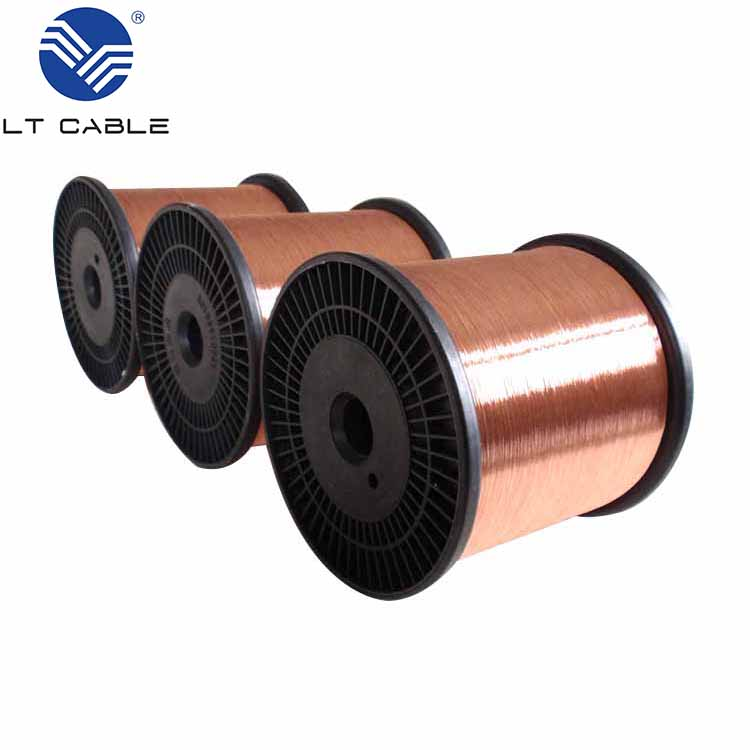
Core Metallurgical Differences Between Cladding and Plating for CCA Wire
Bond Formation: Solid-State Diffusion (Cladding) vs Electrochemical Deposition (Plating)
The production of Copper-Clad Aluminum (CCA) wire involves two completely different approaches when it comes to combining metals. The first method is called cladding, which works through what’s known as solid state diffusion. Basically, manufacturers apply intense heat and pressure so that copper and aluminum atoms actually start mixing at the atomic level. What happens then is pretty remarkable - these materials form a strong, lasting bond where they become one at the microscopic level. There's literally no clear boundary between the copper and aluminum layers anymore. On the other side of things we have electroplating. This technique works differently because instead of mixing atoms together, it simply deposits copper ions onto aluminum surfaces using chemical reactions in water baths. The connection here isn't as deep or integrated though. It's more like sticking things together with glue rather than fusing them at the molecular level. Because of this difference in bonding, wires made through electroplating tend to separate more easily when subjected to physical stress or temperature changes over time. Manufacturers need to be aware of these differences when choosing their production methods for specific applications.
Interface Quality: Shear Strength, Continuity, and Cross-Sectional Homogeneity
Interfacial integrity directly governs CCA wire’s long-term reliability. Cladding yields shear strengths exceeding 70 MPa due to continuous metallurgical fusion—validated by standardized peel tests—and cross-sectional analysis shows homogeneous blending without voids or weak boundaries. Plated CCA, however, faces three persistent challenges:
- Discontinuity risks, including dendritic growth and interfacial voids from non-uniform deposition;
- Reduced adhesion, with industry studies reporting 15–22% lower shear strength than clad equivalents;
- Delamination susceptibility, especially during bending or drawing, where poor copper penetration exposes the aluminum core.
Because plating lacks atomic diffusion, the interface becomes a preferential site for corrosion initiation—particularly in humid or saline environments—accelerating degradation where the copper layer is compromised.
Cladding Methods for CCA Wire: Process Control and Industrial Scalability
Hot Dip and Extrusion Cladding: Aluminum Substrate Preparation and Oxide Disruption
Getting good results from cladding starts with proper prep work on aluminum surfaces. Most shops use either grit blasting techniques or chemical etching processes to strip away that natural oxide layer and create just the right amount of surface roughness around 3.2 micrometers or less. This helps the materials bond better together over time. When we talk about hot dip cladding specifically, what happens is pretty straightforward but requires careful control. The aluminum parts get dipped into molten copper heated between roughly 1080 to 1100 degrees Celsius. At those temperatures, the copper actually starts working its way through any remaining oxide layers and begins diffusing into the base material. Another approach called extrusion cladding works differently by applying massive amounts of pressure somewhere between 700 and 900 megapascals. This forces the copper into those clean areas where there were no oxides left behind through what's known as shear deformation. Both these methods are great for mass production needs too. Continuous extrusion systems can run at speeds approaching 20 meters per minute, and quality checks using ultrasonic testing typically show interface continuity rates above 98% when running full scale commercial operations.
Sub-Arc Welding Cladding: Real-Time Monitoring for Porosity and Interfacial Delamination
In submerged arc welding (SAW) cladding processes, copper gets deposited beneath a protective layer of granular flux. This setup really cuts down on oxidation problems while giving much better control over the heat during the process. When it comes to quality checks, high speed X ray imaging at around 100 frames per second can spot those tiny pores smaller than 50 microns as they form. The system then automatically tweaks things like voltage settings, how fast the weld moves along, or even adjusts the flux feeding rate accordingly. Keeping track of temperature is also super important. The heat affected zones need to stay below about 200 degrees Celsius to stop aluminum from getting all messed up with unwanted recrystallization and grain growth that weakens the base material. After everything's done, peel tests regularly show adhesion strengths above 15 Newtons per millimeter, which meets or beats the standards set by MIL DTL 915. Modern integrated systems can handle between eight to twelve wire strands at once, and this has actually cut down on delamination issues by roughly 82% across various manufacturing facilities.
Electroplating Process for CCA Wire: Adhesion Reliability and Surface Sensitivity
Pre-Treatment Criticality: Zincate Immersion, Acid Activation, and Etch Uniformity on Aluminum
When it comes to getting good adhesion on electroplated CCA wires, surface prep matters more than almost anything else. Aluminum naturally forms this tough oxide layer that gets in the way of copper sticking properly. Most untreated surfaces just don't pass adhesion tests, with research from last year showing failure rates around 90%. The zincate immersion method works well because it lays down a thin, even layer of zinc that acts as a kind of bridge for copper to deposit onto. With standard materials like AA1100 alloy, using acid solutions with sulfuric and hydrofluoric acids creates those tiny pits across the surface. This raises surface energy somewhere between 40% to maybe 60%, which helps ensure the plating spreads out evenly instead of clumping together. When etching isn't done right, certain spots become weak points where the coating might come off after repeated heating cycles or when bent during manufacturing. Getting the timing right makes all the difference. About 60 seconds at room temperature with a pH level around 12.2 gives us zinc layers thinner than half a micrometer. If these conditions aren't met exactly, the bond strength drops dramatically, sometimes by as much as three quarters.
Copper Plating Optimization: Current Density, Bath Stability, and Adhesion Validation (Tape/Bend Tests)
The quality of copper deposits really hinges on keeping those electrochemical parameters under tight control. When it comes to current density, most shops aim for between 1 and 3 amps per square decimeter. This range gives a good balance between how fast the copper builds up and the resulting crystal structure. Go over 3 A/dm² though, and things get problematic fast. The copper grows too quickly in dendritic patterns that will crack right up when we start pulling wires later on. Maintaining bath stability means watching copper sulfate levels closely, typically keeping them somewhere between 180 and 220 grams per liter. Don't forget about those brightener additives either. If they run low, the risk of hydrogen embrittlement jumps by around 70%, which nobody wants to deal with. For adhesion testing, most facilities follow ASTM B571 standards, wrapping samples 180 degrees around a mandrel. They also do tape tests according to IPC-4101 specifications using about 15 newtons per centimeter pressure. The goal is no flaking after 20 tape pulls straight through. If something fails these tests, it's usually pointing to problems with bath contamination or poor pre-treatment processes rather than any fundamental issues with the materials themselves.
Performance Comparison of CCA Wire: Conductivity, Corrosion Resistance, and Drawability
Copper Clad Aluminum (CCA) wire comes with certain performance limitations when looking at three key factors. The conductivity typically sits between 60% to 85% of what pure copper offers according to IACS standards. This works okay for transmitting low power signals but falls short for high current applications where heat buildup becomes a real problem for both safety and efficiency. When it comes to resisting corrosion, the quality of the copper coating matters a lot. A solid, uninterrupted copper layer protects the aluminum underneath pretty well. But if there's any kind of damage to this layer - maybe from physical impacts, tiny pores in the material, or layers coming apart at the boundary - then the aluminum gets exposed and starts corroding much faster through chemical reactions. For outdoor installations, extra protective coatings made of polymers are almost always necessary, particularly in areas with regular moisture. Another important consideration is how easy the material can be shaped or drawn without breaking. Hot extrusion processes work better here since they maintain the bond between materials even after multiple shaping steps. Electroplated versions tend to have problems though because their connection isn't as strong, leading to separation issues during manufacturing. All told, CCA makes sense as a lighter weight, cheaper option compared to pure copper in situations where electrical requirements aren't too demanding. Still, it definitely has its limits and shouldn't be considered a one-size-fits-all replacement.
Table of Contents
- Core Metallurgical Differences Between Cladding and Plating for CCA Wire
- Cladding Methods for CCA Wire: Process Control and Industrial Scalability
- Electroplating Process for CCA Wire: Adhesion Reliability and Surface Sensitivity
- Performance Comparison of CCA Wire: Conductivity, Corrosion Resistance, and Drawability


