 EN
EN

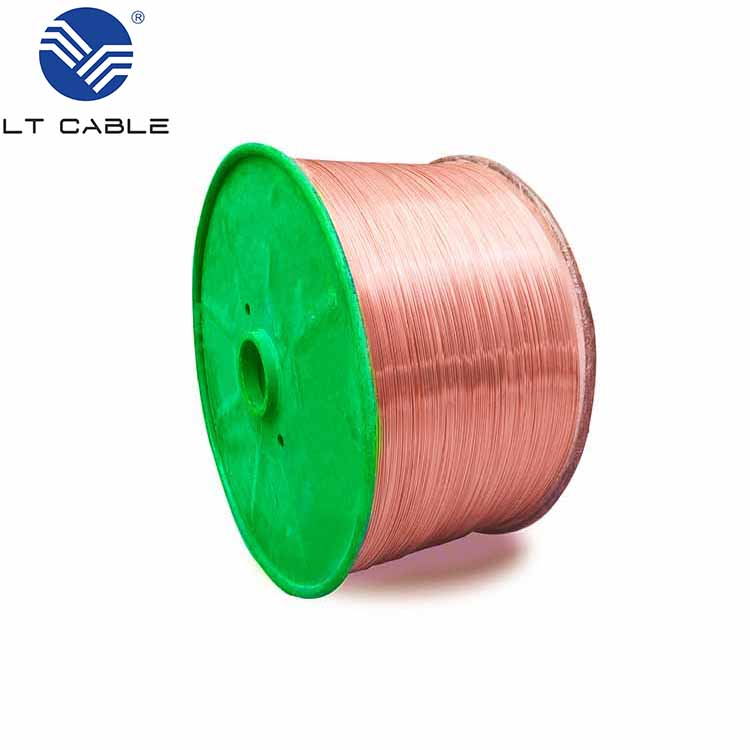
Electrical Conductivity of CCAM Wire: Physics, Measurement, and Real-World Impact
How Aluminum Coating Affects Electron Flow vs. Pure Copper
CCAM wire combines the best of both worlds really – copper's excellent conductivity paired with aluminum's lighter weight benefits. When we look at pure copper, it hits that perfect 100% mark on the IACS scale, but aluminum only gets to about 61% because electrons just don't move as freely through it. What happens at the copper-aluminum boundary in CCAM wires? Well, those interfaces create scattering points which actually increase resistivity somewhere between 15 and 25 percent compared to regular copper wires of the same thickness. And this matters a lot for electric vehicles since higher resistance means more energy loss during power distribution. But here's why manufacturers still go for it: CCAM cuts down on weight by roughly two thirds compared to copper, all while maintaining around 85% of copper's conductivity levels. That makes these composite wires particularly useful for connecting batteries to inverters in EVs, where every gram saved contributes to longer driving ranges and better heat control throughout the system.
IACS Benchmarking and Why Lab Measurements Differ from In-System Performance
IACS values are derived under tightly controlled lab conditions—20°C, annealed reference samples, no mechanical stress—which rarely reflect real-world automotive operation. Three key factors drive performance divergence:
- Temperature sensitivity: Conductivity declines ~0.3% per °C above 20°C, a critical factor during sustained high-current operation;
- Interface degradation: Vibration-induced microcracks at the copper–aluminum boundary increase localized resistance;
- Oxidation at terminations: Unprotected aluminum surfaces form insulating Al₂O₃, raising contact resistance over time.
Benchmark data shows CCAM averaging 85% IACS in standardized lab tests—but drops to 78–81% IACS after 1,000 thermal cycles in dynamometer-tested EV harnesses. This 4–7 percentage-point gap validates the industry practice of derating CCAM by 8–10% for high-current 48V applications, ensuring robust voltage regulation and thermal safety margins.
Mechanical Strength and Fatigue Resistance of CCAM Wire
Yield Strength Gains from Aluminum Cladding and Implications for Harness Durability
Aluminum cladding in CCAM boosts yield strength around 20 to 30 percent compared to pure copper, which makes a real difference in how well the material resists permanent deformation when installing harnesses, particularly in situations where space is limited or there's significant pulling force involved. The extra structural strength helps cut down on fatigue issues at connectors and areas prone to vibrations like suspension mounts and motor housing points. Engineers take advantage of this property to use smaller wire sizes while still maintaining adequate safety levels for important connections between batteries and traction motors. Ductility does drop a bit when exposed to extreme temperatures ranging from minus 40 degrees Celsius up to plus 125 degrees, but testing shows that CCAM performs well enough across standard automotive temperature ranges to meet the necessary ISO 6722-1 standards for both tensile strength and elongation properties.
Bend-Fatigue Performance in Dynamic Automotive Applications (ISO 6722-2 Validation)
In dynamic vehicle zones—including door hinges, seat tracks, and sunroof mechanisms—CCAM undergoes repeated flexing. Per ISO 6722-2 validation protocols, CCAM wire demonstrates:
- Minimum 20,000 bend cycles at 90° angles without failure;
- Retention of ≥95% initial conductivity post-testing;
- Zero sheath fractures even at aggressive 4mm bend radii.
Though CCAM exhibits 15–20% lower fatigue resistance than pure copper beyond 50,000 cycles, field-proven mitigation strategies—such as optimized routing paths, integrated strain relief, and reinforced overmolding at pivot points—ensure long-term reliability. These measures eliminate connection failures across typical vehicle service life expectations (15 years/300,000 km).
Thermal Stability and Oxidation Challenges in CCAM Wire
Aluminum Oxide Formation and Its Effect on Long-Term Contact Resistance
The fast oxidation of aluminum surfaces creates a big problem for CCAM systems over time. When exposed to regular air, aluminum forms a nonconducting layer of Al2O3 at around 2 nanometers per hour. If nothing stops this process, the oxide buildup increases terminal resistance by as much as 30% within just five years. This leads to voltage drops across connections and creates heat problems that engineers really worry about. Looking at old connectors through thermal cameras shows some pretty hot areas, sometimes above 90 degrees Celsius, exactly where the protective plating has started to fail. Copper coatings do help slow down oxidation somewhat, but tiny scratches from crimping operations, repeated bending, or constant vibrations can punch through this protection and let oxygen reach the aluminum underneath. Smart manufacturers combat this resistance growth by putting nickel diffusion barriers under their usual tin or silver coatings and adding antioxidant gels on top. This double protection keeps contact resistance under 20 milliohms even after 1,500 thermal cycles. Real world testing shows less than 5% loss in conductivity throughout an entire vehicle's service life, which makes these solutions worth implementing despite the extra costs involved.
System-Level Performance Trade-Offs of CCAM Wire in EV and 48V Architectures
Moving to higher voltage systems, especially those running on 48 volts, changes how we think about wiring designs completely. These setups cut down on current needed for the same amount of power (remember P equals V times I from basic physics). This means wires can be thinner, which saves a lot of copper weight compared to old 12 volt systems maybe around 60 percent less depending on specifics. CCAM takes things even further with its special aluminum coating that adds more weight savings without losing much conductivity. Works great for stuff like ADAS sensors, air conditioning compressors, and those 48 volt hybrid inverters that don't need super high conductivity anyway. At higher voltages, the fact that aluminum conducts electricity worse isn't such a big deal because power loss happens based on current squared times resistance rather than voltage squared over resistance. Still worth noting though that engineers need to watch out for heat buildup during fast charging sessions and make sure components aren't overloaded when cables are bundled together or sitting in areas with bad airflow. Combine proper termination techniques with standards compliant fatigue testing and what do we get? Better energy efficiency and more room inside vehicles for other components all while keeping safety intact and making sure everything lasts through regular maintenance cycles.


