 EN
EN

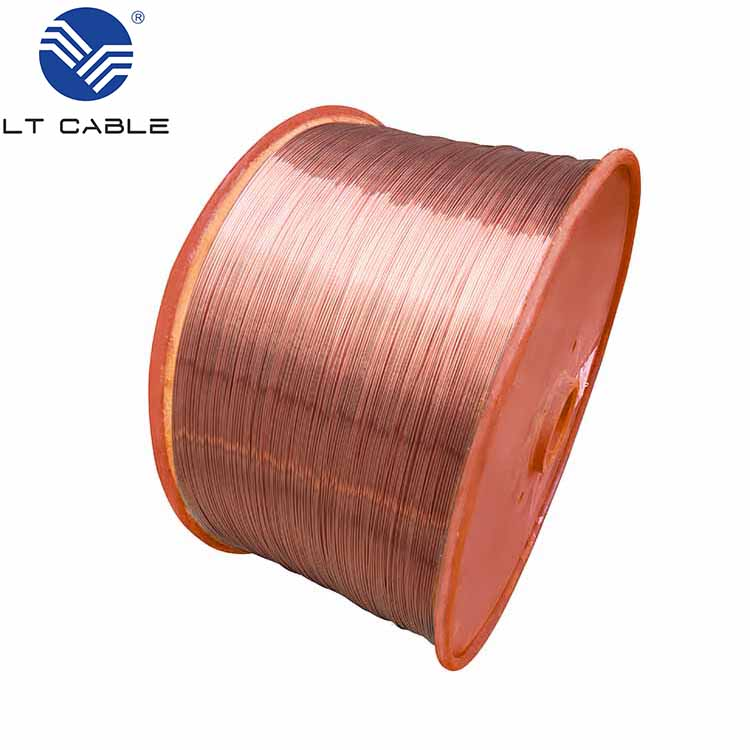
Why CCAM Wire Is Transforming Telecom Infrastructure
The Copper Clad Aluminum Magnesium (CCAM) wire is changing how telecom companies build their networks because it cuts down on weight while keeping signals stable. What makes this cable special is that it has copper on the outside and an aluminum-magnesium mix inside. This combination makes it about 40-45% lighter than regular copper wires. The lighter weight means installers can work faster when climbing towers, need less support structures for poles, and manage tight spaces better in cities where space is at a premium. For service providers dealing with crowded urban environments, these practical advantages translate into real savings during deployment phases.
CCAM wire is built to handle those high frequency signals we all need these days. The special mix of materials in this wire actually cuts down on signal loss when working with those tricky millimeter wave frequencies thanks to how it manages the skin effect. What makes it stand out? Well, the copper coating has been fine tuned so there's under 0.15 dB/m loss at 28 GHz. That beats regular aluminum hands down while still keeping up with what copper can do. Take a look at what happened in South Korea last year during their big push to expand small cell backhaul in Gangnam. Installers were able to get things up and running 30% quicker than usual, and companies saved between 19 to 25% on costs over five years. Another big plus? The magnesium alloy core resists corrosion way better than standard aluminum cables. Tests showed oxidation slowed down by about 40% which means these wires last longer especially where humidity or salt air might be a problem near coasts. All told, CCAM brings together light weight, great mmWave capabilities, and lasting durability making it pretty much essential for building out sustainable 5G networks that can grow with demand.
How CCAM Wire Delivers Superior Performance at mmWave Frequencies
Optimized Skin Effect Management Through Hybrid Core-Clad Design
When dealing with mmWave frequencies between 30 and 300 GHz, signals tend to weaken significantly because of what's called the skin effect. Basically, electricity starts concentrating near the surface of conductors at these frequencies. CCAM wire tackles this problem with a clever hybrid setup. The outer layer is made of super conductive copper that handles those high frequency currents, while inside there's an aluminum-magnesium alloy core that gives the wire its strength and keeps things stable when temperatures change. According to research published in IEEE Transactions on Electromagnetic Compatibility last year, this two part design cuts down on impedance fluctuations by around 40% compared to regular solid core wires, which means better signal quality throughout 5G backhaul systems. Plus, the way the electromagnetic fields are contained within the wire actually reduces interference between closely packed antennas, something that becomes really important when trying to maintain good data speeds in cities where lots of small cell towers are deployed close together.
Reducing Insertion Loss via Precision-Tuned Copper Cladding Thickness
Insertion loss becomes critical at high frequencies, where even minor deviations impact network efficiency. CCAM wire addresses this through copper cladding thickness calibrated to ±5 µm tolerances—optimized for both dielectric dispersion control and thermal dissipation. As a result:
- Attenuation is reduced to 1.2 dB/100 m at 60 GHz—35% less than standard coaxial cables
- Phase stability is maintained across industrial temperature ranges (–40°C to +85°C)
- Field tests in millimeter-wave backhauls show a 22% reduction in cumulative signal degradation over 18-month operational cycles, directly extending hardware lifespans
This precision engineering ensures CCAM wire meets the stringent performance demands of evolving 5G-Advanced and 6G readiness roadmaps.
Lightweight Efficiency: Enabling Scalable 5G Deployment with CCAM Wire
42% Weight Reduction vs. Copper—Impact on Aerial, Pole-Mounted, and Dense Urban Installations
CCAM wire cuts down on weight by around 42% compared to regular copper cables, which makes a huge difference when installing things in cities. For overhead installations, these lighter cables put about 30% less stress on utility poles, so there's no need for extra support structures and equipment can go up much quicker. Workers report getting through their daily tasks about 18% faster in busy city areas because they aren't struggling with heavy cable reels all day long. Money savings add up too – most companies save between $240 and $580 at each installation point since they don't have to reinforce poles for those mmWave antennas anymore. All these small advantages stack together, letting telecom companies expand their 5G coverage way faster than before. No more waiting months to get enough cells installed in densely populated areas thanks to this lighter alternative, while still keeping signals strong across the network.
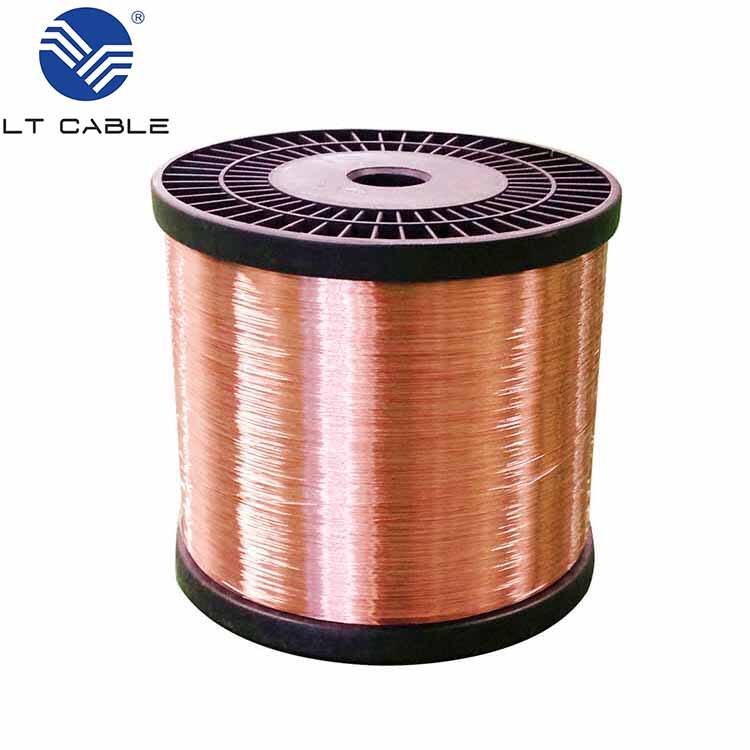
Real-World Validation: CCAM Wire in High-Density Telecom Deployments
Real world tests show that CCAM wire works just as well outside controlled lab settings as it does inside them, something regular cables simply can't match when things get tough. Cities packed with buildings create all sorts of problems for network installation. There's just not enough room to run conventional wiring between structures. Poles and overhead lines struggle under the weight of traditional solutions. Plus, getting clear signals at those high frequency mmWave levels becomes nearly impossible in such dense environments. But look at what's happening now with actual CCAM deployments across several major metropolitan areas. These installations are beating the odds by handling all those tricky conditions better than anything else available today. Network operators report noticeable improvements in both connection stability and data transfer speeds without breaking their budgets.
South Korea Urban Small-Cell Backhaul Case Study (2023): Reliability, Installation Speed, and TCO Gains
Seoul's 2023 small-cell deployment across Gangnam district—a high-population-density area with extreme RF interference and monsoon-season exposure—delivered compelling real-world validation across 500+ nodes:
- Reliability: Achieved 99.99% uptime, attributed to the magnesium-enhanced alloy core's corrosion resistance and copper cladding's stable conductivity
- Installation Speed: Aerial deployments completed 30% faster than with copper equivalents—directly enabled by the 42% weight reduction
- TCO Reduction: Projected 25% five-year cost savings from lower material spend, reduced labor hours, and diminished maintenance needs
The hybrid core-clad design minimized signal degradation at 28 GHz, while lightweight construction allowed rapid pole-mounted installations without structural upgrades. This deployment confirms CCAM wire's role as a mission-critical enabler of agile, future-proof 5G infrastructure in the world's most demanding urban settings.


