 EN
EN

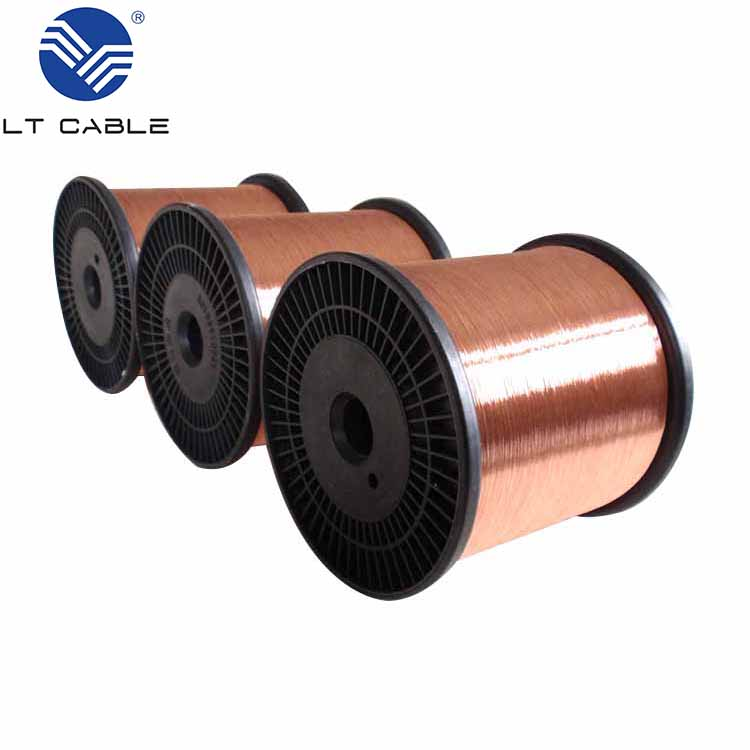
Why CCAM Wire Buyers Prioritize Elongation and ISO 6722-1 Compliance
Elongation as a critical durability indicator for automotive wiring harnesses in thermal cycling environments
The ability of a wire to stretch before breaking, known as elongation, turns out to be one of the best indicators for how well automotive wiring harnesses will hold up through years of thermal cycling. When these wires face actual operating temperatures between minus 40 degrees Celsius and 150 degrees Celsius, they constantly expand and contract, which builds up stress at connection points over time. Wires that can only stretch less than 10 percent tend to become brittle after around 5,000 temperature changes, eventually causing cracks in the insulation and failures in the conductors themselves. CCAM wire tells a different story though. It stretches anywhere from 18 to 25 percent at normal temperatures, making it much better at handling all those vibrations from engines, flexing in the vehicle frame, and temperature fluctuations without damaging the internal conductors. Real world testing by major component manufacturers shows something pretty significant too. Harnesses made with CCAM wire that stretches at least 15 percent result in about half as many warranty issues caused by insulation fractures during an eight year lifespan compared to standard options.
ISO 6722-1 requirements: Minimum 15% elongation at 23°C and ≥10% at -40°C – how CCAM wire meets (or challenges) the standard
The ISO 6722-1 standard establishes mandatory elongation requirements for automotive conductors. At room temperature (around 23 degrees Celsius), the minimum is set at 15%, while at extremely cold conditions (-40 degrees Celsius) it drops to 10%. High quality CCAM wire typically meets and often surpasses these standards at normal temperatures. However, when things get really cold, there's a problem related to how aluminum behaves at the molecular level. The hexagonal structure of aluminum tends to contract more aggressively compared to copper cladding, which actually reduces its ability to stretch without breaking. We've seen some batches produce between 8 to 12% elongation at those freezing temperatures, barely meeting the minimum requirements. To combat this issue, industry leaders have developed three main approaches. First, they fine tune the annealing process to maintain flexibility in cold environments. Second, they introduce small amounts of elements like magnesium and silicon to prevent brittle compounds from forming. Third, they carefully control the ratio of copper to aluminum in the cladding, usually keeping it around 10 to 15% of the total cross section area. This balances electrical conductivity with the need for flexibility in cold weather. Independent tests indicate that premium CCAM products can achieve at least 12% elongation even at -40 degrees Celsius, which means they perform about 15 to 20% better than required by the standard across all temperature ranges. These properties make such wires ideal for electric vehicle battery systems operating in northern regions where temperatures regularly drop below freezing.
Tensile Strength vs. Ductility Trade-offs in CCAM Wire Design
The inverse tensile–elongation relationship in copper-clad aluminum composite wire
CCAM wire shows what happens when we try to get the best of both worlds with materials science - stronger materials tend to be less flexible. When manufacturers use techniques like work hardening or refine grain structures, they make the material harder to deform but sacrifice some ability to stretch without breaking. Aluminum naturally has good flexibility, which is why it works well as a base material. Adding copper cladding makes the surface harder and more resistant to corrosion, though this can create problems at the interface between metals when temperatures change repeatedly. Getting CCAM wire right means carefully managing several factors during production: how much we reduce the diameter during drawing, the exact temperatures and duration for heat treatment, and just the right amount of copper coating. Industry tests show that if we push the elongation past around 15%, the tensile strength drops below 130 MPa, which isn't good enough for reliable crimps or resisting vibrations over time. On the flip side, making the wire really strong (over 170 MPa) usually means it can only stretch about 10-12% before breaking, which makes it prone to cracking after repeated heating and cooling cycles. Engineers aren't looking for record-breaking numbers in either category, but rather finding that sweet spot where the wire performs reliably across all operating conditions.
Real-world tensile data: 130–180 MPa for CCAM vs. 220+ MPa for pure copper – implications for crimping, vibration resistance, and service life
CCAM wire exhibits a tensile strength range of 130–180 MPa—substantially lower than pure copper's 220+ MPa benchmark. This difference has direct consequences for manufacturing and field performance:
- Crimping reliability: Lower tensile strength demands tighter control of crimp force and die geometry to prevent conductor necking or core pull-out during termination. OEMs specify crimp height tolerances ±0.02 mm for CCAM versus ±0.05 mm for copper.
- Vibration endurance: Reduced stiffness increases susceptibility to resonant fatigue in high-vibration zones (e.g., engine bays), though elevated elongation (18–25%) mitigates crack propagation under cyclic loading.
- Service life: Accelerated aging tests per SAE J1211 show CCAM harnesses in high-vibration applications demonstrate ~18% shorter median time-to-failure versus copper equivalents—driving reinforced routing, strain relief, and selective use in non-safety-critical circuits.
Manufacturers mitigate these limitations via clad-thickness optimization—maintaining 10–15% copper by cross-sectional area—to preserve electrical continuity while maximizing mechanical resilience within weight and cost constraints.
IACS Conductivity Performance of CCAM Wire: Benchmarks and Application Limits
Standard CCAM conductivity range (55–65% IACS) and its impact on ampacity, voltage drop, and harness weight savings
CCAM wire achieves 55–65% of the International Annealed Copper Standard (IACS) conductivity—significantly below copper's 100% benchmark. This defines its application envelope:
- Ampacity: With 40–45% higher DC resistivity than copper (per IEC 60228:2023), CCAM carries ~30–35% less current for identical cross-sections—requiring up-gauging in high-load circuits like HVAC compressors or PTC heaters.
- Voltage drop: Over a 5-meter run at rated load, CCAM incurs 60–70% greater voltage drop than copper—potentially degrading signal fidelity in 5V sensor networks or LIN bus systems.
- Weight savings: Aluminum's density (~2.7 g/cm³) combined with copper cladding yields a composite density of ~3.3 g/cm³—enabling 45–50% harness weight reduction versus copper. This directly improves EV range efficiency and reduces chassis loading.
| Performance Factor | CCAM (60% IACS) | Pure Copper (100% IACS) |
|---|---|---|
| Conductivity | 55–65% IACS | 100% IACS |
| Weight Density | ~3.3 g/cm³ | 8.9 g/cm³ |
| Relative Ampacity | 60–65% | 100% |
| Voltage Drop (DC) | 60–70% higher | Baseline |
High-frequency and elevated-temperature derating: When 60% IACS isn't enough for ADAS or battery management systems
The problems with CCAM's conductivity really stand out when we look at advanced systems that need reliable signals and stable temperatures. When working with frequencies over 1 MHz, which happens all the time in those fancy 77 GHz radar systems and fast camera connections, something called the skin effect kicks in. This makes electricity bunch up near the surface of the conductor instead of spreading through it evenly, and that just increases how much energy gets lost as heat. According to tests from IEEE Standard 2023, CCAM actually loses about 20 to 25% more signal strength compared to copper at around 100 MHz. Why? Because aluminum doesn't conduct electricity as well as copper does, plus its surface has higher resistance. There's another issue too: aluminum changes its electrical properties faster when it gets hot. The temperature coefficient for resistance is 0.4% per degree Celsius versus copper's 0.3%. That means in real world conditions like battery packs that run around 105 degrees Celsius, CCAM becomes significantly less efficient. Resistance goes up between 15 and 20% compared to what it was at room temperature, cutting down on how much current can safely flow by roughly a quarter to a third. All these factors combined point to why most engineers still reach for copper when designing critical parts of automotive systems like ADAS power distribution networks or battery management systems where maintaining steady performance despite changing temperatures simply cannot be compromised.
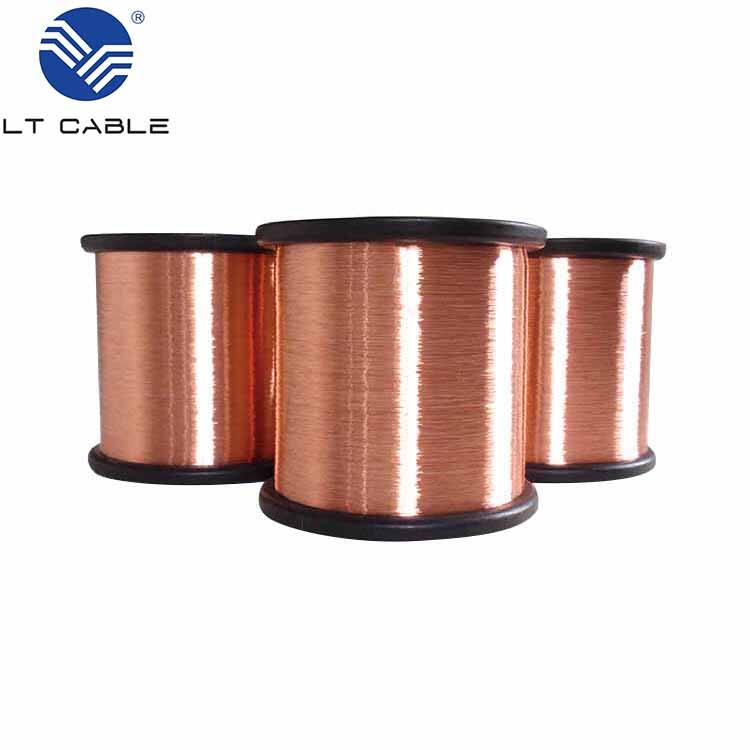
How Automotive Buyers Evaluate CCAM Wire Holistically: Integrating Mechanical and Electrical Specs
When looking at CCAM wire, automotive buyers don't just check off individual specs like some sort of shopping list. Instead they see these characteristics as parts of a bigger picture that work together. Take elongation first. The industry standard ISO 6722-1 says it needs to be at least 15% when tested at room temperature around 23 degrees Celsius. This basically tells us if the wiring harness can handle all those thousands of temperature changes without developing cracks over time. Then there's tensile strength which ranges from about 130 to 180 megapascals. This number matters because it affects how well the wire stays connected after being crimped and how it holds up against constant vibrations inside hot engine bays. Lastly we have conductivity measured between 55 and 65 percent of International Annealed Copper Standard. This impacts several things including how much voltage drops along the line, what happens to current carrying capacity under different conditions, and whether the wire works properly with those fancy high frequency sensors used in modern driver assistance systems.
Key evaluation criteria include:
- Environmental resilience: Performance under thermal shock (-40°C to +125°C), fluid exposure (brake fluid, coolant), and UV aging per ISO 6722-2
- Electrical derating rigor: Verified ampacity adjustments for high-load circuits—including temperature-rise modeling per SAE J1128 and frequency-dependent skin-depth analysis
- Lifetime cost analysis: Quantifying weight-driven EV range gains against potential service-life penalties in high-vibration zones
- Standards validation: Cross-referencing certified test reports for ISO 6722-1 mechanical compliance and IACS consistency per ASTM B393
Procurement teams increasingly overlay tensile-elongation curves with conductivity-temperature derating charts—recognizing that chasing 65% IACS often sacrifices low-temperature ductility. This disciplined, application-first methodology ensures CCAM selection aligns precisely where mechanical endurance and electrical efficiency converge: in non-safety-critical, weight-sensitive circuits across next-generation vehicle architectures.
Table of Contents
- Why CCAM Wire Buyers Prioritize Elongation and ISO 6722-1 Compliance
- Tensile Strength vs. Ductility Trade-offs in CCAM Wire Design
- IACS Conductivity Performance of CCAM Wire: Benchmarks and Application Limits
- How Automotive Buyers Evaluate CCAM Wire Holistically: Integrating Mechanical and Electrical Specs


