 EN
EN

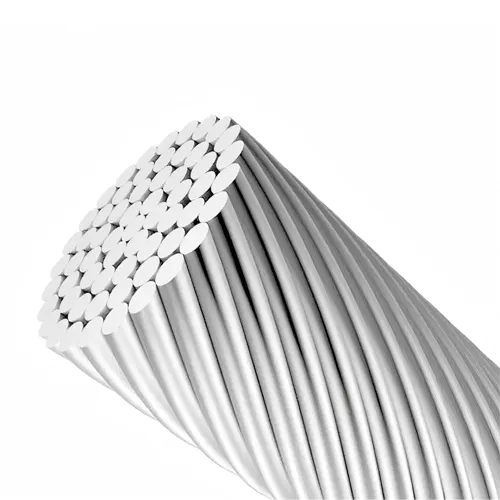
Manufacturing Defects in Stranded CCA Wire
Strand Uniformity Issues: Back Strands, Loose Strands, and Over-Torsion
Strand uniformity is critical in stranded CCA wire. During stranding, misalignment can produce three key defects: back strands, where a broken strand curls backward to form a raised bump; loose strands, caused by insufficient tension and resulting in gaps that reduce effective cross-section; and over-torsion, where excessive twist induces internal stress and premature breakage during bending. Each degrades both electrical performance—by increasing local resistance and creating hot spots—and mechanical integrity. Prevention hinges on precise tension control, consistent strand diameter, and regular in-process tension audits.
Surface and Material Flaws: Scratches, Pits, Brittle Wires, and Slag Inclusions
Surface flaws—including scratches, pits, brittle wires, and slag inclusions—originate from drawing die wear, cladding delamination, or process contamination. These defects act as stress concentrators, accelerating fatigue failure under vibration or flexing. Brittle wires often stem from improper annealing or excessive cold work, leading to fracture during crimping or bending. Slag inclusions from the aluminum core or copper cladding process create localized weak points prone to strand separation. A 2022 industry survey found surface flaws accounted for nearly 30% of field failures in solar installations using stranded CCA wire. To mitigate risk, manufacturers should enforce rigorous surface inspection—preferably via eddy-current testing—and maintain clean, controlled processing environments.
Corrosion and Oxidation Risks in Stranded CCA Wire
Stranded CCA (Copper-Clad Aluminum) wire faces inherent corrosion risks due to its bimetallic structure. The aluminum core naturally forms a high-resistance oxide layer upon air exposure, compromising termination integrity and accelerating degradation—especially at connection points. Field studies document accelerated failure rates in high-humidity environments, where galvanic corrosion between the copper cladding and aluminum core intensifies. Technicians can detect early-stage corrosion-induced cross-section loss by monitoring DC resistance unbalance—a reliable, non-invasive diagnostic tool.
Aluminum Core Oxidation and Splice Failures: Why Double-Lugging Accelerates Degradation
Termination practices profoundly influence corrosion progression. Double-lugging—placing two conductors under a single connector—creates micro-gaps that trap moisture and enable electrochemical reactions. These sites accelerate aluminum oxidation, increasing contact resistance by up to 600% within 18 months. The resulting localized heating initiates a self-sustaining degradation cycle. Industry guidance strongly discourages double-lugging, as compromised connections lose 95% of their current-carrying capacity before visible damage appears. Verified integrity requires full metal-to-metal contact without trapped air pockets.
DC Resistance Unbalance as an Early Indicator of Corrosion-Induced Cross-Section Loss
DC resistance unbalance is a sensitive, field-deployable indicator of developing corrosion in multi-strand CCA wiring. When oxidation reduces conductor cross-section unevenly, measurable conductivity shifts emerge across parallel paths. A comparative imbalance exceeding 15% signals incipient cross-sectional compromise—often months before thermal runaway or visible deterioration occurs. Research tracking exposed installations confirmed this correlation: affected circuits deteriorated at rates up to 15× faster than fully protected counterparts. Proactive resistance monitoring thus enables timely intervention before catastrophic failure.
Mechanical Degradation of Stranded CCA Wire in Service
Chafing and Abrasion at Conduit Entries and Tight Bend Radii
Stranded CCA wire is especially vulnerable to mechanical wear at conduit entries, termination boxes, and tight bends. NEMA reports link conduit abrasion to a 12% fault incidence rate in stranded aluminum-based conductors. Friction against metallic surfaces severs outer strands, raising localized resistance. Unlike pure copper, CCA’s thin copper cladding offers limited abrasion resistance. Exceeding NEC-mandated bend radii (e.g., NEC Article 360) causes permanent deformation and accelerates cladding loss. Mitigation includes using compatible entry bushings, applying anti-abrasive sleeves at tension points, and strictly adhering to minimum bend specifications. Unaddressed, abrasion combines with moisture-driven oxidation to trigger latent strand failure.
Vibration Fatigue in Dynamic Installations: Field Evidence vs. Pure Copper
| Factor | Stranded CCA Wire | Pure Copper Wire |
|---|---|---|
| Fault Rate (HVAC) | 6.1 faults/1000 hours | 1.3 faults/1000 hours |
| Strand Cut Frequency | High (48% of detected failures) | Low (12%) |
| Yield Threshold | 27% lower than copper-clad aluminum | Higher metallurgical stability |
| Service Life | Reduced by 30% in high-vibration | Up to 50% longer |
Field data from pumping, propulsion, and HVAC systems show stranded CCA wire suffers significantly higher strand fatigue near rigid mounts and ATS cabinets. Vibration-induced fretting and accelerated metal crystallization cause strand breakage at compression points. Loose strands further degrade electrical continuity through intermittent contact. Copper alloy wire consistently outperforms stranded CCA in critical infrastructure applications due to superior ductility, creep resistance, and fatigue endurance.
Installation and Termination Pitfalls Specific to Stranded CCA Wire
Crimp Failures and Wire Nut Misapplication: Noncompliance with UL 486A-B for Aluminum/CCA
Terminating stranded CCA wire requires methods distinct from those used for copper. Compression joints exceeding rated gauge capacity contribute to 38% of early failures in aluminum-alloy conductors. Standard wire nuts are particularly unsuitable above 10 AWG: thermal expansion mismatch accelerates spring relaxation, allowing stray strands to migrate and form oxidation-prone gaps within 6–12 months—even in moderate humidity. UL 486A-B compliance mandates torque-controlled set-screw lugs, anti-oxidant pastes, and crimp dies specifically validated for CCA. Noncompliant crimping introduces micro-fractures, increasing resistance by 15–63% in lab cycling tests at 75°F. This degrades ampacity below design thresholds and may precipitate thermal runaway. Maintaining proper bending radius during installation also reduces metallurgical fatigue—reinforcing field evidence that terminations remain the dominant failure locus.
Performance Limitations of Stranded CCA Wire in Critical Applications
Stranded CCA wire is fundamentally unsuited for applications demanding high reliability, signal fidelity, or mechanical resilience. Its aluminum core yields higher DC resistance than copper—increasing insertion loss and bit error rates in data transmission. Independent testing confirms CCA consistently fails to meet TIA-568 standards for twisted-pair cabling, limiting bandwidth and network stability. In power applications, elevated resistance drives voltage drop and heat generation, stressing terminals and insulation. Mechanically, CCA exhibits lower fatigue resistance: it fractures more readily under repeated bending or vibration—making it inappropriate for robotics, aerospace, or mobile equipment. Combined with susceptibility to galvanic corrosion, cold flow (creep), and thermal cycling degradation, these limitations confine stranded CCA to low-duty, non-critical uses—where cost and weight savings do not compromise safety, uptime, or regulatory compliance.
FAQ
Q: What are the main manufacturing defects in stranded CCA wire?
A: Common defects include back strands, loose strands, over-torsion, scratches, pits, brittle wires, and slag inclusions. These issues compromise both electrical performance and mechanical integrity.
Q: Why is corrosion a significant concern with stranded CCA wire?
A: The bimetallic structure of stranded CCA wire increases the risk of galvanic corrosion and oxidation, especially in humid environments, leading to failures at connection points and accelerated degradation.
Q: How can manufacturers mitigate surface and material flaws?
A: Rigorous surface inspections, eddy-current testing, clean processing environments, and maintaining proper tension control during manufacturing can reduce surface flaws and improve durability.
Q: What role does DC resistance unbalance play in diagnosing corrosion?
A: DC resistance unbalance helps detect early-stage corrosion by identifying uneven conductivity across strands, allowing for timely intervention before severe degradation.
Q: Is stranded CCA wire suitable for critical applications?
A: No, stranded CCA wire is unsuitable for critical uses due to its higher resistance, lower mechanical resilience, and susceptibility to corrosion. It is best suited for low-duty, non-critical applications.


