 EN


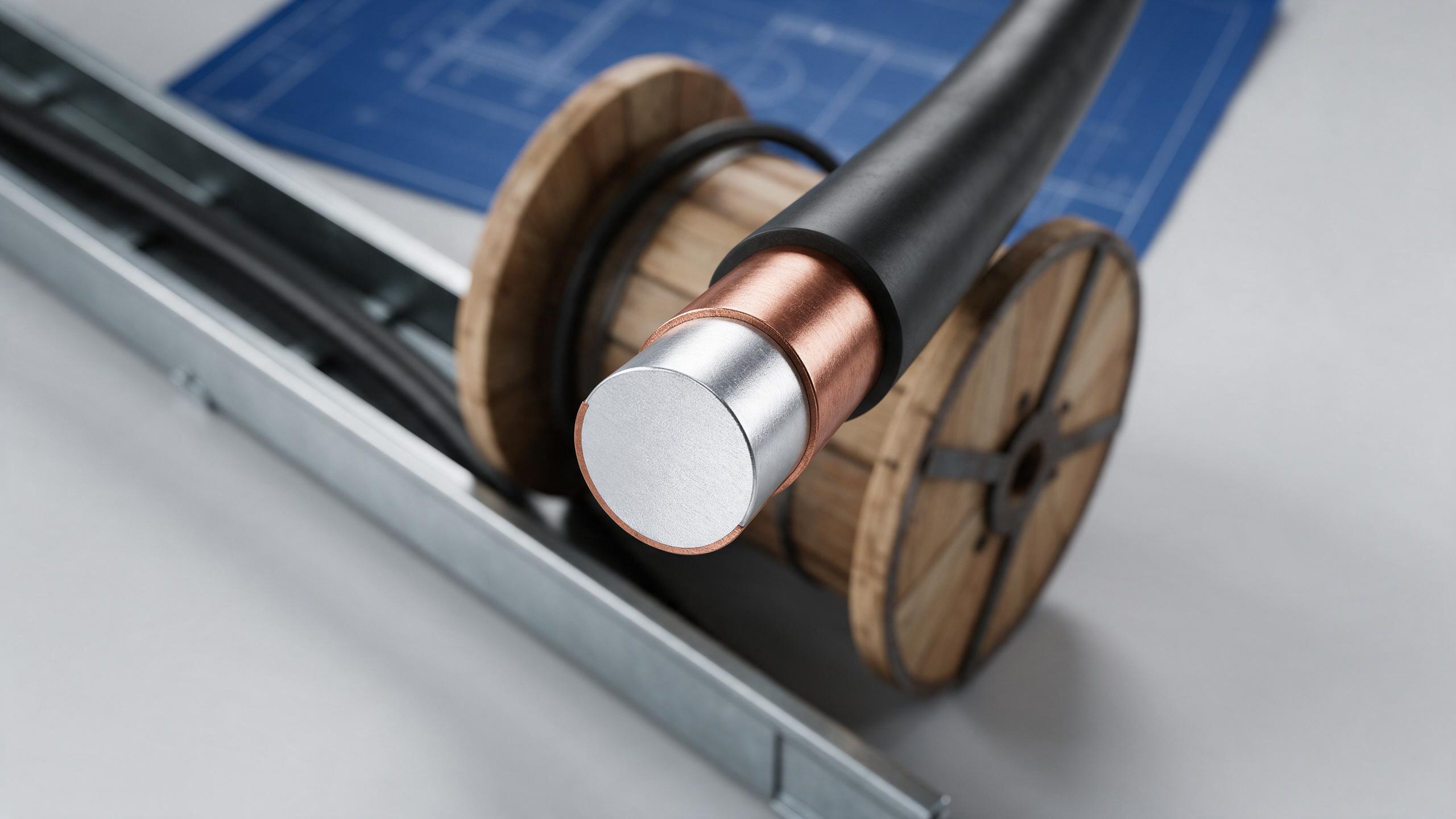
When a cable run extends across a plant, a utility corridor, or a large piece of equipment, conductor mass affects more than freight. It influences reel handling, pulling tension, tray loading, support spacing, and the people needed at installation. Copper clad aluminum wire places a copper layer around an aluminum core, so a designer can explore a lower-mass conductor while retaining a copper surface. From a conductor-material selection perspective, that is the starting point—not a substitute for confirming the complete cable design.
The practical question is whether the mass reduction still fits the project’s electrical, mechanical, thermal, and code requirements. For a long run, the right answer comes from a documented comparison at the required duty, not from nominal conductor size alone.
Why the aluminum core changes cable mass
Aluminum has substantially lower density than copper. Because the core makes up most of a copper clad aluminum wire conductor’s volume, it can lower the mass carried on each reel and in each installed cable length. One industry reference describes CCA as up to about 40% lighter than same-gauge copper wire. That figure is useful as an illustration, but it is not a project allowance: copper fraction, diameter, insulation, shielding, stranding, and jacket construction all change the finished cable weight.
Weight becomes cumulative over distance. A modest difference per metre can become a material handling issue when multiplied by several long pulls, spare lengths, and multiple circuits. Lower cable weight can make reels easier to move and may reduce the load transferred to trays, messenger systems, or supports. It can also make field pulling more manageable when the pulling plan is within the limits set by the cable manufacturer and installation method.
Do not compare equal gauge only
The important correction is that less mass does not mean equal electrical performance at the same cross-section. A copper clad aluminum wire construction has different conductivity from solid copper, and resistance rises with run length. For a DC or low-frequency power application, the design team should first calculate the allowable voltage drop and conductor temperature at the anticipated current, then choose a construction and area that meet those limits.
Published CCA examples often cite conductivity around 60–70% IACS, depending on the copper-clad construction. Such values help explain why a conductor may need a different cross-section from copper to provide comparable electrical behavior. They are not a substitute for the supplier’s current data sheet, test method, and applicable standard. In other words, compare electrically equivalent options before comparing their installed cable weight.
Where a lighter conductor can help on a long route
A lighter cable can improve planning in several ways:
- Reel logistics: lower conductor mass can reduce the handling burden for long delivery lengths.
- Installation planning: lower cable weight may reduce the mechanical demand of moving cable through trays or raceways, subject to pulling calculations.
- Support assessment: a lower dead load may be relevant where cable trays, aerial systems, or equipment structures have limited capacity.
- System-level design: reduced conductor mass can matter where several parallel circuits or mobile equipment add up quickly.
These benefits are conditional. The selected copper clad aluminum wire must still be suitable for bending, terminations, environment, fire performance, and the application’s governing requirements. A material choice that reduces reel mass but creates an unresolved termination issue is not a finished engineering decision.
Use a four-part comparison before selecting CCA
1. Establish the electrical duty
Document circuit length, current, voltage, permitted voltage drop, conductor operating temperature, frequency, and expected load profile. This makes it possible to compare a copper clad aluminum wire proposal against copper on a like-for-like duty basis. For signal, RF, or high-frequency applications, surface-related behavior and system construction may matter differently than for power distribution; clarify the use case before using general conductivity claims.
2. Calculate installed mass, not conductor mass alone
Request the mass per unit length for the finished cable. Then multiply it by the route length, planned slack, circuit count, and reasonable installation allowance. Include armor, screen, fillers, insulation, and jacket where applicable. This converts a material discussion into the cable weight figure that crews and support designers actually need.
3. Confirm joining and termination practice
Ask which lugs, connectors, stripping methods, torque settings, and preparation steps are specified for the supplied construction. Copper surface does not remove the need to follow the approved termination process. The cable supplier, connector supplier, and project engineer should align their documentation before materials are released for a long-distance installation.
4. Verify compliance and test evidence
Match the cable to the governing installation code, customer specification, temperature rating, flame requirements, and relevant test standards. Request identifiable data for conductor construction, conductivity, resistance, diameter, tensile behavior, and finished-cable mass. This is especially important when the route is difficult to access after installation.
How to turn the weight benefit into a usable project decision
A useful procurement request does not simply ask whether copper clad aluminum wire is lighter. It asks for two complete alternatives: the required copper design and the proposed CCA design, each with resistance, voltage-drop results, ampacity basis, finished diameter, finished cable weight, minimum bend radius, termination method, and supporting test documentation. The comparison should show the same service condition for both options.
This approach prevents a common mistake: choosing by material name or price before establishing the cable’s actual duty. A lower-mass construction can be valuable, but only where the compensating conductor size and all installation details remain practical. Where the run is very long, increasing cross-section to manage resistance may reduce part of the original weight advantage. The calculation reveals whether a net benefit remains.
Questions to send with an RFQ
- What is the required current, route length, ambient condition, and allowable voltage drop?
- Which copper clad aluminum wire construction and copper fraction are proposed?
- What are the resistance and conductivity values under the stated test conditions?
- What is the finished cable weight per unit length, including all cable layers?
- Which terminals and installation instructions apply to this construction?
- Which standard, test reports, and acceptance criteria support the proposal?
Conclusion
Copper clad aluminum wire can reduce the mass contribution of long cable runs because its aluminum core is lighter than copper. That reduction can support easier logistics, lower structural loading, and more manageable installation planning. The decision remains application-specific: electrical performance, voltage drop, termination compatibility, finished-cable mass, and compliance evidence must be reviewed together. By requesting a duty-matched comparison rather than relying on equal gauge alone, project teams can determine whether the lower cable weight delivers a practical advantage on the route they are building.


