 EN


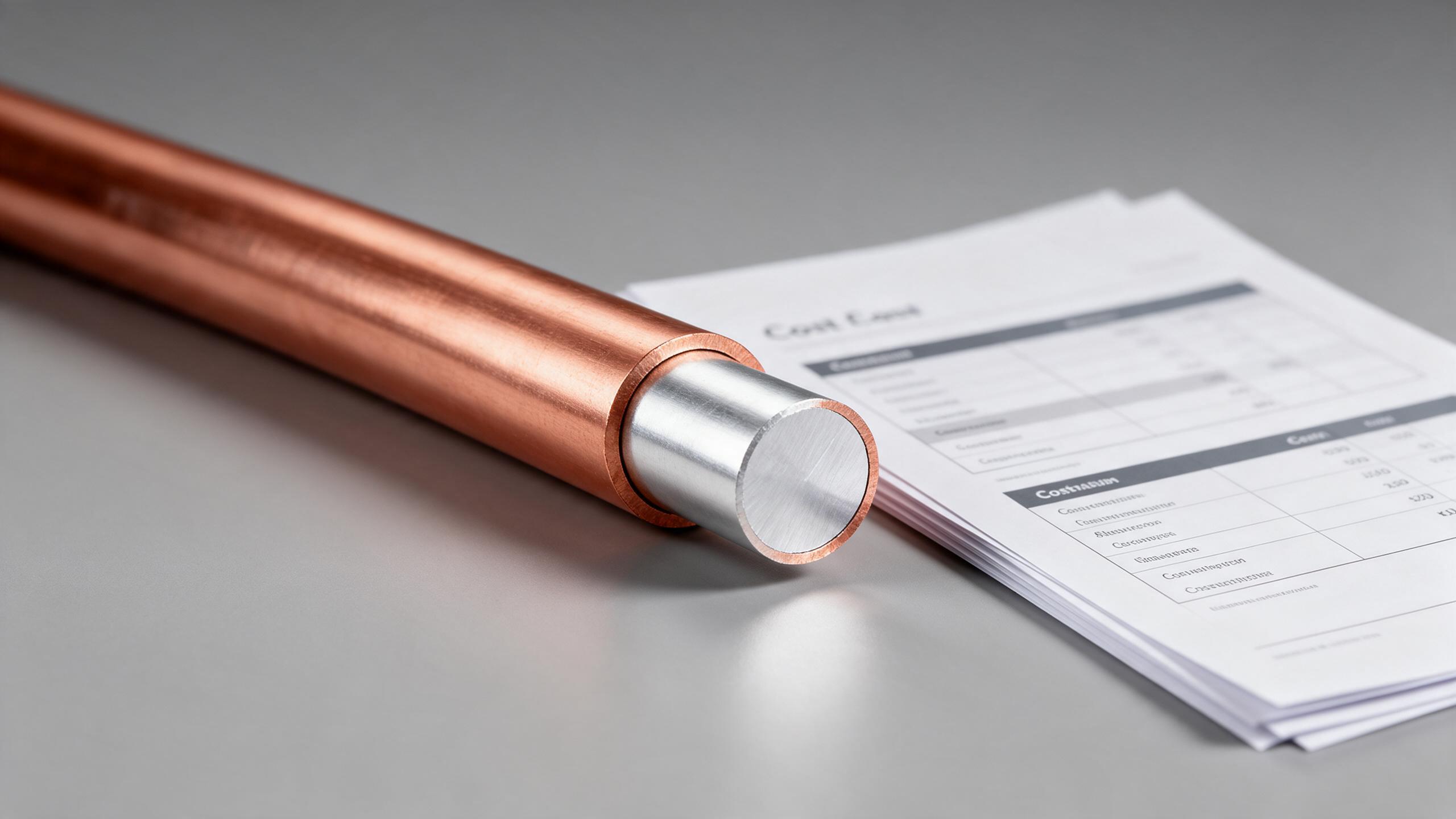
For a cable buyer, copper clad aluminum wire is not simply a lower-priced substitute for copper. It is a bimetallic conductor: an aluminum core carries most of the cross-sectional volume while a bonded copper layer provides a copper surface. That construction can change the raw-material mix in a cable, but the useful question is broader: can the finished cable meet its electrical, mechanical, processing, and applicable-standard requirements at a lower total material spend?
From a procurement-evaluation perspective, copper clad aluminum wire should be reviewed with the same discipline as any conductor change. A lower quote per kilogram is only one input. The conductor size, copper-cladding specification, insulation process, termination method, test plan, scrap rate, and freight all affect the final result. When those conditions fit the application, the aluminum core can reduce the copper portion of the bill of materials without treating performance as an afterthought.
Where the material-cost reduction begins
The central cost mechanism of copper clad aluminum wire is material substitution. Copper remains on the outside of the conductor, while aluminum supplies a substantial share of the core volume. Because a cable made with solid copper relies on copper throughout the conductor section, changes in copper pricing can have a large effect on conductor expenditure. With copper clad aluminum wire, the copper layer is still a cost driver, but it is not the whole conductor.
This does not mean every CCA design has the same saving. Copper thickness, specified copper percentage, final diameter, and order volume can materially change the calculation. A supplier's quote should therefore state the construction rather than rely on the name copper clad aluminum wire alone. Ask for the nominal size, copper-clad proportion or relevant construction definition, tolerance, and the test basis used for the delivered wire.
A useful way to frame the decision is to compare two finished-conductor options at the required function, not to compare equal weights of metal. Aluminum has lower density than copper, so a given length of copper clad aluminum wire may use less mass than a comparable all-copper conductor. That can influence incoming-material handling and shipping. At the same time, lower conductivity may require a revised cross section or a different cable design. The right comparison is the confirmed cable construction and performance target, not a headline price.
Conductivity determines how much design freedom exists
Electrical performance puts a boundary around the material-cost case. Published manufacturer guidance commonly places typical CCA constructions around the low-to-mid-60% range of annealed-copper conductivity, although the result depends on the copper fraction, geometry, and test method. That is why copper clad aluminum wire should not be assumed to replace copper conductor size-for-size in every application.
For example, if voltage drop, resistance, current capacity, signal behavior, or an application-specific standard governs the cable, the engineering team needs to establish the acceptable conductor resistance and completed-cable test criteria first. The material benefit of copper clad aluminum wire is meaningful only if the resulting design meets those requirements. In some designs, a larger CCA section may still produce an acceptable cost structure; in others, the additional size, insulation, or processing changes may narrow the difference.
More accurately, the choice is not “which metal is better?” It is “which conductor construction fits this cable's duty and verification plan?” This application-first approach avoids turning a material comparison into a claim that does not hold for the finished product.
Cost drivers beyond copper and aluminum
Raw material is important, yet it is not the only part of the cable material cost. When evaluating copper clad aluminum wire, include the following items in the costing sheet:
- Cladding specification: A different copper layer changes both the input mix and the wire's performance characteristics.
- Required conductor dimensions: If copper clad aluminum wire needs a revised area to meet resistance requirements, calculate the actual wire mass per cable length.
- Insulation and jacket consumption: A changed conductor diameter can affect polymer use and tooling selection.
- Process compatibility: Confirm drawing, stranding, extrusion, and termination conditions instead of assuming the existing route transfers unchanged.
- Quality-control scope: Include the agreed dimensional, resistance, adhesion, and finished-cable tests in the comparison.
- Logistics and yield: Coil configuration, minimum order quantity, packaging, freight, and normal manufacturing yield can move the delivered cost.
This list makes the analysis more useful than a simple copper-versus-aluminum price chart. It also gives purchasing and engineering a shared format for asking how a copper clad aluminum wire proposal affects the complete build.
Why the copper surface can still matter
The copper layer in copper clad aluminum wire is not decorative. Depending on the application and construction, it can be relevant to surface behavior during processing, connection design, and high-frequency performance considerations. Those details must be tested against the intended cable design; they are not universal advantages for every CCA product.
It is tempting to focus on one number, such as conductivity. In practice, a procurement review should pair that number with strand construction, annealing condition where relevant, diameter tolerance, insulation compatibility, and end-use requirements. This is where a material-cost discussion becomes a controlled technical decision rather than a commodity swap.
How to compare quotations fairly
Request like-for-like information before comparing a copper clad aluminum wire quotation with a copper-wire quotation. First define the required cable length and finished-cable performance. Then ask each supplier to identify conductor dimensions, material construction, unit basis, tolerances, test methods, packaging, lead time, and commercial assumptions. If the application has a governing customer specification or standard, provide it at the RFQ stage.
A practical comparison can use three columns: current copper design, proposed copper clad aluminum wire design, and validated finished-cable requirement. For each line, record conductor mass per unit length, material price basis, processing changes, expected test items, and total material cost. This exposes whether a low initial wire price is offset by a larger conductor or other downstream inputs.
Also separate a target estimate from a released production decision. A trial lot, sample evaluation, and documented acceptance criteria help a team test whether copper clad aluminum wire behaves as expected in its own equipment and cable system. The result should be recorded as evidence for that construction, not generalized to unrelated cables.
When CCA may not be the cost-effective choice
Copper clad aluminum wire may be a poor fit when an application requires a particular all-copper conductor, a fixed compact geometry, a resistance target that leaves little room for design change, or a connection system not validated for the proposed construction. It may also be unsuitable when the buyer cannot establish the relevant standard, test method, or end-use conditions. In these cases, forcing a material change can introduce uncertainty that outweighs the possible material saving.
The same principle applies to communications, power, and specialty cable applications: the construction needs an application-specific review. Copper clad aluminum wire is a conductor option, not a universal answer.
A concise RFQ checklist
- State the final cable application and required length.
- Specify the target resistance, dimensions, and any governing test or customer requirement.
- Request the proposed copper clad aluminum wire construction, tolerance, and test documentation.
- Compare material mass, processing implications, test scope, packaging, freight, and total material cost.
- Confirm a sample or trial validation plan before scaling the design.
Make the saving measurable
Copper clad aluminum wire can reduce overall cable material cost by replacing part of the copper volume with aluminum while retaining a copper-clad surface. The achievable outcome depends on the specified construction and the completed cable, not on the material name alone. A disciplined comparison of resistance, dimensions, processing, tests, and logistics helps buyers identify where copper clad aluminum wire supports a viable cost plan and where a conventional copper design remains the appropriate choice.


