 EN


What Specification Checks Help Avoid Galvanic Corrosion Risks for Bimetallic Copper Clad Aluminum Wire
For a cable buyer, galvanic corrosion is rarely prevented by a material name alone. A bimetallic copper clad aluminum wire combines copper and aluminum in one conductor, but the corrosion risk that matters in service is usually concentrated at exposed ends, splices, lugs, shields, or other interfaces where moisture and dissimilar metals can meet. The practical task is to turn that risk into written, inspectable specification requirements before a lot is approved.
This is not a claim that every copper/aluminum interface will fail. Galvanic action needs an electrical path and an electrolyte such as moisture or contamination. A sound specification therefore checks both the wire itself and the complete connection environment. In other words: confirm the construction first, then define how the finished bimetallic copper clad aluminum wire may be terminated, sealed, tested, and documented.
Start by separating two different corrosion questions
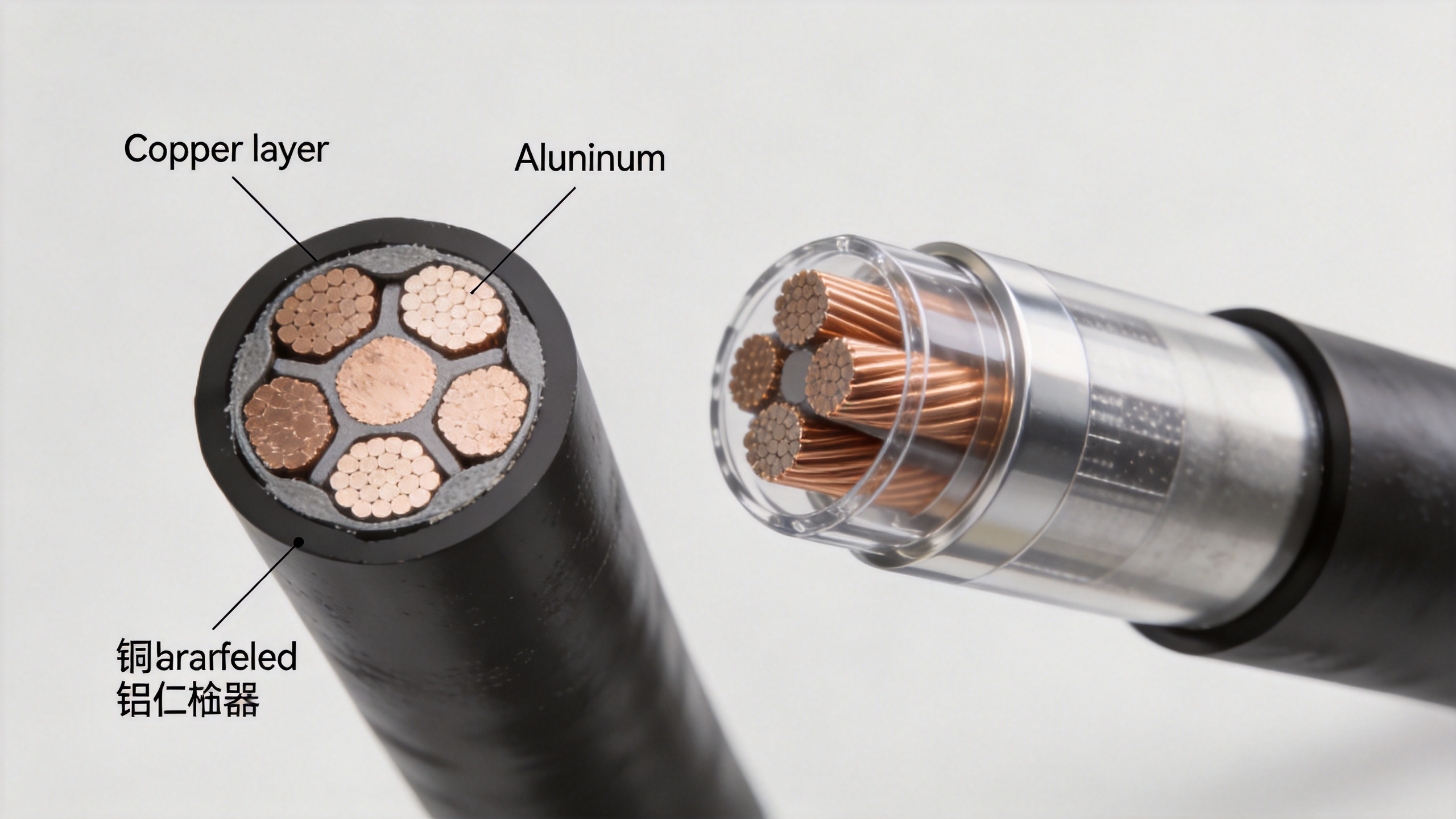
It helps to separate internal cladding integrity from external connection compatibility. The copper layer on bimetallic copper clad aluminum wire is intentionally bonded to the aluminum core; that construction is different from an uncontrolled copper-to-aluminum joint made during installation. The first question is whether the cladding is continuous, bonded, and consistent with the agreed product specification. The second is whether cut ends and terminations are protected from the service environment.
That distinction prevents a common mistake: specifying a nominal copper percentage but saying nothing about an exposed aluminum core at a crimp, connector, or damaged surface. A corrosion-control specification needs requirements for both conditions.
1. Identify the governing wire specification and revision
Put the applicable material standard, customer drawing, revision date, and any project-specific deviations directly on the purchase specification. For copper-clad aluminum wire, ASTM B566 is a useful verification direction because it addresses copper-clad aluminum wire and includes requirements associated with copper thickness or volume and adhesion testing. The buyer should not simply write “ASTM compliant,” however. Ask the supplier to state the exact edition applied, the ordered temper and dimensions, and the test methods used for the delivered lot.
For each bimetallic copper clad aluminum wire order, the specification should also distinguish a product-material requirement from an installation requirement. A material standard can establish the conductor construction; it does not automatically prove that a particular lug, plating system, enclosure, or coastal atmosphere is suitable.
2. Specify copper-cladding continuity, thickness, and adhesion evidence
Where galvanic risk depends on the copper layer acting as the intended exterior surface, request a measurable cladding requirement rather than relying on appearance. Define the required copper volume or equivalent agreed construction metric, the sampling basis, the measurement method, and acceptance criteria. If thickness is critical at a reduced diameter or a later processing stage, identify where on the wire it is to be evaluated.
Also request evidence of bond integrity. Repeated reverse-bend testing is referenced in ASTM B566 as an adhesion test direction. The meaningful acceptance question is not just whether a sample bent without breaking; it is whether the defined test method, number of bends, specimen condition, and observation criteria are recorded. This is especially important before drawing, stranding, stripping, or crimping can expose an imperfect interface on a bimetallic copper clad aluminum wire.
- Require lot identification tied to cladding and adhesion test records.
- Define treatment of exposed or discontinuous cladding found during receiving inspection.
- Request a documented disposition process for any deviation, not an informal visual judgment.
3. Write a termination-compatibility requirement
The highest-risk location is commonly the termination, not the intact wire length. State the approved connector, lug, ferrule, splice, or crimp family for the conductor size, temper, strand construction, and application. Require the termination supplier’s compatibility statement for the actual materials involved. A generic claim that a connector works with “aluminum” or “copper” may be too broad for a bimetallic copper clad aluminum wire application.
Include plating and contact-material requirements where they matter, plus tightening or crimp parameters, tooling identification, and inspection frequency. Avoid specifying a corrosion compound, inhibitor, or plating solely by trade name unless the project has already approved its application range. Instead, define the required compatibility, application method, coverage, and verification record.
4. Control moisture, contaminants, and exposed ends
Because an electrolyte is needed for galvanic corrosion, the specification should say how water, salt-bearing contamination, condensation, flux residue, and process chemicals will be controlled. This is a system question. A well-made bimetallic copper clad aluminum wire can still face risk if its cut ends are left unsealed in a wet enclosure or if cleaning and drying controls are undefined.
| Specification check | What to define | Why it matters |
|---|---|---|
| Environmental classification | Indoor, humid, condensing, salt-laden, chemical, or buried exposure | Sets the protection level instead of assuming one solution fits all. |
| End protection | Strip length, seal method, overmold, heat-shrink, boot, or enclosure interface | Limits electrolyte access to the copper/aluminum interface. |
| Cleanliness | Allowed residues, cleaning process, drying requirement, and handling controls | Contaminants can retain moisture or change the interface chemistry. |
| Damage criteria | Limits for nicks, scraped cladding, and post-processing inspection | Finds locations where the intended exterior layer may be compromised. |
5. Make validation and documentation part of acceptance
Ask for a traceable control plan, not a one-time certificate. It should connect incoming material identification, dimensional checks, cladding/bond evidence, termination process controls, and final inspection. If the application is moisture-prone or safety-critical, define an agreed qualification plan that reflects the actual assembly and environment. Salt-fog, humidity, thermal cycling, electrical-resistance stability, or pull testing may be relevant, but their duration and acceptance limits should be selected for the project rather than copied as universal numbers.
For additional material-quality questions, see LT CABLE’s CCA wire quality checklist for copper thickness, adhesion, and tests. It is a useful starting point for building an evidence list; final acceptance still needs to follow the buyer’s actual conductor and connection design.
A practical RFQ checklist
- Name the required wire construction, size, temper, and applicable standard revision.
- Define measurable copper-cladding, continuity, and adhesion evidence for each lot.
- Identify approved termination materials, plating, tooling, and process parameters.
- Classify the real exposure environment and specify moisture/contaminant controls.
- Set inspection, records, nonconformance handling, and project-specific validation requirements.
The central lesson is simple: the right bimetallic copper clad aluminum wire specification does not promise corrosion immunity. It identifies where galvanic conditions could form, assigns measurable checks to those locations, and requires evidence before release. That approach gives engineering, quality, and procurement teams a common basis for evaluating a bimetallic copper clad aluminum wire without substituting a generic material label for application-specific validation.


