 EN
EN

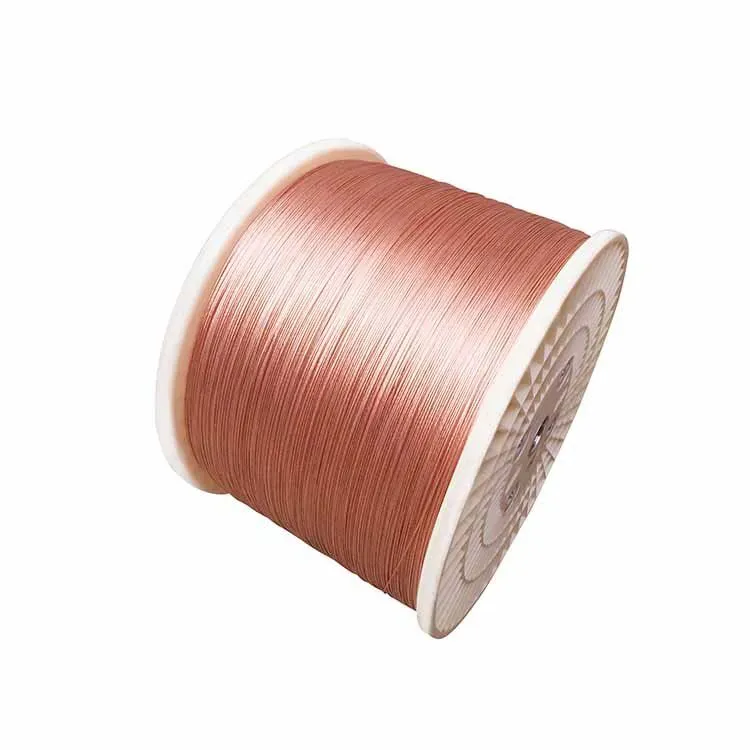
DIN Spool Standards and Mechanical Compatibility for Stranded CCA Wire
Dimensional Parameters (A–E) and How They Affect Stranded CCA Wire Winding Stability
DIN standards define five critical spool dimensions (A–E) that govern winding stability for stranded copper-clad aluminum (CCA) wire. Flange distance (Dimension A) prevents lateral slippage during high-speed payoff; spool width (Dimension C) must align with the wire’s minimum bend radius to avoid glass transition stress; and inner barrel clearance (Dimension E) minimizes plastic deformation under radial load. Misalignment between these parameters and the wire’s mechanical profile causes buckling in coiled strands and accounts for 24% of field failures linked to packaging mismatch, per a 2023 packaging resilience analysis. Because stranded CCA exhibits lower stiffness than solid conductors, it demands tightly controlled tension gradients—especially during start-stop cycles—to preserve strand integrity.
Flange Diameter, Core ID, and Max Winding Height: Preventing Deformation in Stranded CCA Wire
Flange diameter must exceed the radial compression threshold dictated by stranded CCA’s composite modulus—undersized flanges induce crush-induced fractures during transit vibration. Core internal diameter (ID) is equally critical: values below 1.1× the wire’s minimum bend radius accelerate aluminum-core fatigue, particularly in hybrid constructions where differential elongation between copper cladding and aluminum core amplifies strain. Maximum winding height must be constrained to maintain even sidewall load distribution; exceeding DIN-defined tiers increases plastic creep risk exponentially. Industry data shows hybrid aluminum-copper stranded configurations face 27% greater post-coiling distortion without strict core ID controls. Verifying dimensional compliance at the point of spool specification reduces rework triggers by 74%.
Stranded CCA Wire Properties That Dictate Optimal DIN Spool Size
Tensile Strength, Elongation, and Bend Fatigue: Why Stranded CCA Wire Demands Precise Spool Sizing
Stranded CCA wire’s tensile strength (98–150 MPa, depending on strand count and temper), elongation behavior, and bend fatigue resistance directly determine safe spool geometry. Its lower tensile capacity versus pure copper means oversized flanges or undersized cores can cause uneven tension distribution—leading to permanent elongation beyond the 6% threshold or micro-cracking in the aluminum core. Repeated bending over small core diameters during high-speed winding accelerates fatigue failure, especially when the bending radius falls below the wire’s fatigue limit. Therefore, the spool’s core ID must be large enough to keep bending radius within safe limits while maintaining winding tension between 15–20% of ultimate tensile strength—a balance only achievable through application-specific DIN sizing.
AWG-to-DIN Mapping: Matching Stranded CCA Wire Diameters (22–6 AWG) to DIN 400, 630, and 750
| AWG Range | Stranded CCA Diameter (mm) | Recommended DIN Spool | Rationale |
|---|---|---|---|
| 22–18 AWG | 0.64–1.02 mm | DIN 400 | Thin wires require smaller flange diameters to prevent tangling and maintain winding stability |
| 16–12 AWG | 1.29–2.05 mm | DIN 630 | Medium gauge wires benefit from balanced weight capacity (up to 20 kg) and controlled payout tension |
| 10–6 AWG | 2.59–4.11 mm | DIN 750 | Larger diameters demand higher tensile capacity spools (40–60 kg) to accommodate heavier cable loads |
This mapping ensures mechanical alignment between spool geometry and wire constraints. DIN 400 spools (400 mm flange diameter, ~100 mm core ID) provide optimal tension control for 22–18 AWG drop wire—preventing over-winding and bird-nesting. DIN 630 spools (630 mm flange, ~125 mm core ID) support 16–12 AWG applications up to 1,000 meters while respecting bend radius limits. For heavy-gauge 10–6 AWG CCA used in EV and solar cabling, DIN 750 spools (750 mm flange, 160 mm core ID) deliver the structural rigidity and load capacity needed to prevent flange deformation and ensure consistent, low-distortion payout in automated harnessing.
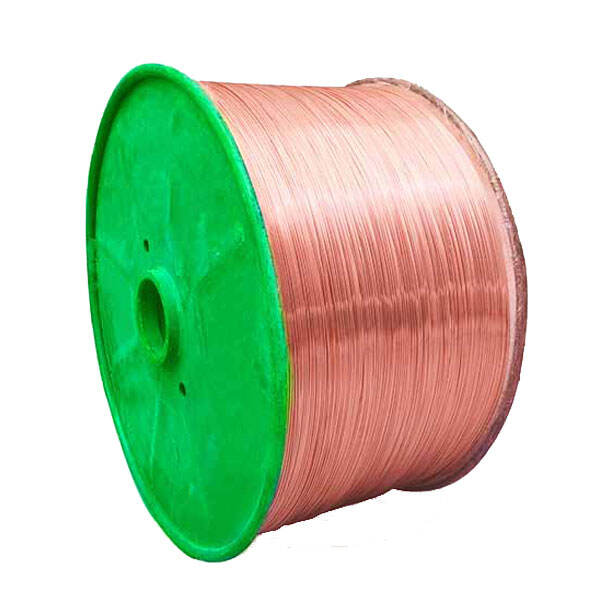
Application-Driven Spool Selection for Stranded CCA Wire
The right spool size for stranded CCA wire depends heavily on the application. Lightweight telecom drop wire favors smaller spools for handling ease, while heavy-duty EV and solar cabling requires larger spools to maintain process reliability.
Telecom Drop Wire: Why DIN 400 Maximizes Handling and Dispensing Efficiency
Telecom drop wire typically uses stranded CCA in 22–18 AWG. These lightweight cables are deployed from service vehicles requiring frequent, rapid spool changes. The DIN 400 spool’s compact footprint and sub-15 kg typical load enable one-handed handling and fit seamlessly into standard telecom dispensing equipment—eliminating retrofitting delays. This compatibility directly improves field technician throughput and reduces installation downtime, cementing DIN 400 as the de facto standard for drop wire logistics.
EV Harnessing and Solar PV Cabling: When DIN 630 or DIN 750 Ensures Process Reliability
EV battery harnesses and solar photovoltaic cabling rely on heavier stranded CCA (10–6 AWG), which exerts significantly higher winding and payoff tension. A DIN 400 spool lacks the flange rigidity and core diameter to distribute these forces evenly—risking flange deformation, strand separation, or birdcaging. DIN 630 and DIN 750 spools provide proportionally wider flanges and deeper core IDs to stabilize tension profiles across high-speed, high-cycle automated processes. Their structural margins ensure smooth, low-distortion pay-off during robotic crimping and routing—critical for maintaining electrical continuity and long-term reliability in safety-critical applications.
Frequently Asked Questions (FAQs)
What are the key DIN dimensions for stranded CCA wire spools?
The five critical dimensions (A–E) include flange distance, spool width, core ID, maximum winding height, and inner barrel clearance, which together determine winding stability for stranded wires.
Why is spool sizing important for stranded CCA wire?
Correct spool sizing ensures proper tension distribution, prevents deformation or buckling of the wire strands, and minimizes post-coiling distortion and fatigue-related failures.
What are the recommended DIN spool sizes based on AWG?
DIN 400 for 22–18 AWG, DIN 630 for 16–12 AWG, and DIN 750 for 10–6 AWG. These mappings help align spool geometry with the wire's tensile and fatigue properties.
How do DIN spools benefit telecom wire dispensing?
DIN 400 spools offer a compact design and lightweight capacity, improving handling efficiency and compatibility with telecom dispensing equipment for streamlined installation.
Why are DIN 630 and 750 spools better for EV and solar applications?
Heavier wires in EV and solar applications require wider, stronger spools to handle high tensile forces and prevent deformation and payout tension inconsistencies during automated routing.


