 EN
EN

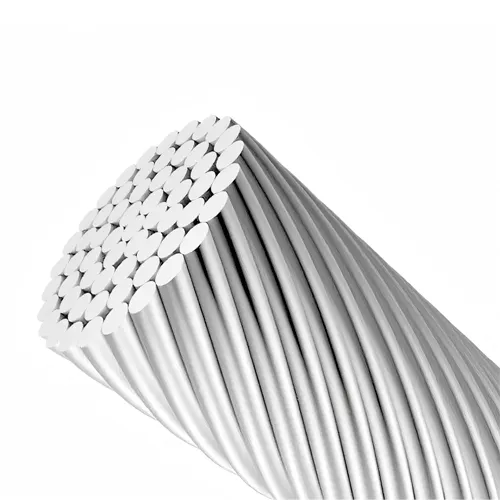
Strand Count Verification for Conductivity and Flexibility
How Strand Count Affects Ampacity and Bending Fatigue Resistance
Strand count in stranded CCA wire critically influences both electrical performance and mechanical resilience. Higher strand counts enhance flexibility by distributing bending stress across more individual wires—reducing fatigue failure risk in dynamic applications such as robotics, portable electronics, and automated equipment. However, precision matters: a 10% deviation from the specified strand count can reduce effective cross-sectional area by up to 15%, directly lowering ampacity and increasing thermal resistance. Resistance tolerance validation serves not only as an electrical check but also as an indirect indicator of metallurgical integrity—confirming consistent copper cladding and resistance to degradation under thermal cycling. Likewise, adequate strand density is essential to prevent metal displacement during termination, especially when compressing into lugs or passing through insulated seals.
Standardized Testing per IEC 60228 and ASTM B33 for Stranded CCA Wire
Manufacturers verify functional strand count in continuously corrugated aluminum (CCA) conductors using IEC 60228 and ASTM B33 as foundational standards. These define minimum conductor requirements for flex-grade applications and guide inspectors in evaluating compliance. Quality assurance includes artificial aging trials that quantify fatigue life differences at ±1-strand deviations, conducted under controlled tension replication with calibrated micrometers. Laboratories cross-validate results: optical microscopy identifies layer inconsistencies—including non-conforming strand integers—while precision calipers confirm aggregate geometry. Consistent strand numbering ensures interoperability across use cases, from static feeder lines to oscillating overhead segments.
Lay Geometry Control: Direction, Length, and Uniformity in Stranded CCA Wire
Lay geometry—encompassing direction, length, and uniformity—directly governs the mechanical stability and electrical consistency of CCA (Copper-Clad Aluminum) wire. Precise control over these parameters ensures predictable performance in demanding environments.
S-Lay vs. Z-Lay: Implications for Twisting Stability and Connector Termination
S-Lay (left-twist) and Z-Lay (right-twist) describe the helical orientation of strands within a conductor. The choice affects three key performance areas:
- Twisting Stability: S-Lay configurations resist unraveling under torsional stress, making them preferred for dynamic installations like robotics, conveyor systems, and articulating arms.
- Connector Termination: Z-Lay enables tighter strand packing and improved compression fit in lugs and terminals due to its clockwise alignment—enhancing contact surface area and reducing interfacial resistance.
- Flex-Life: Proper lay direction optimizes bending stress distribution, extending fatigue life by 12–15% compared to mismatched or misconfigured alternatives (IEEE Std 1185-2022).
Mismatched lay directions in multi-conductor cables induce internal torsional imbalance, accelerating insulation wear and compromising long-term reliability.
Lay Length Tolerance Bands and Their Critical Role in Mechanical Integrity
Consistent lay length—the axial distance required for one strand to complete a full 360° revolution—is essential for structural coherence. Industry standards enforce a tight ±3% tolerance band. Deviations beyond this range significantly increase mechanical failure risk:
| Tolerance Violation | Consequence | Failure Mode |
|---|---|---|
| +5% | Strand separation | Vibration-induced fretting and micro-arcing |
| -4% | Over-compaction | Reduced flex cycles and premature strand fracture |
Non-uniform lay geometry also distorts current distribution, elevating localized thermal hotspots by 7–9% (2023 off-spec field study). To maintain compliance at production speeds up to 40 m/min, manufacturers deploy inline non-contact vision systems that continuously monitor lay geometry in real time.
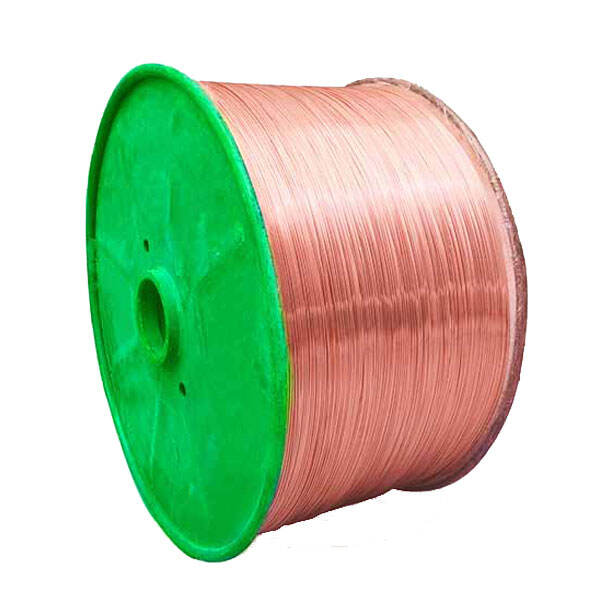
Dimensional and Electrical Tolerance Compliance in Stranded CCA Wire
Diameter Tolerance Limits and Their Impact on Cross-Sectional Area and Ampacity
Outer diameter control is fundamental to maintaining consistent cross-sectional area—and therefore ampacity—in stranded CCA wire. Because resistance is inversely proportional to conductor area, even minor diameter variations have outsized effects: a ±1% tolerance deviation corresponds to roughly a ±2% change in area, while a 10% diameter reduction cuts cross-section by ~19%, sharply increasing resistance and thermal stress. ASTM B566/B566M establishes precise diameter tolerance bands aligned with gauge-specific ampacity ratings. Micrometer verification during stranding and final inspection ensures early detection of out-of-spec conditions—preventing downstream issues such as excessive voltage drop, insulation degradation, or thermal runaway in installed systems.
Resistance Tolerance Validation Against EN 50522 and Field Performance Benchmarks
DC resistance testing against EN 50522 provides the definitive electrical benchmark for stranded CCA wire. This standard specifies maximum allowable resistance per unit length for each conductor size, explicitly accounting for the copper-clad aluminum composite structure. Compliance—typically verified within ±5% of the tabulated value—confirms both metallurgical consistency and dimensional fidelity. Real-world validation reinforces lab results: stable voltage drop profiles and minimal temperature rise across thousands of operational hours in commercial and residential installations confirm sustained performance. Four-wire Kelvin measurements applied to batch samples deliver traceable, certification-ready data—ensuring factory tests align meaningfully with field behavior.
Certification, Traceability, and QA Protocols for Stranded CCA Wire
Stranded CCA wire must satisfy a rigorous ecosystem of certifications and traceability protocols to ensure safety, performance, and regulatory compliance in real-world deployments. RoHS compliance verifies the absence of hazardous substances; UL and IEC 60228 validate conductivity, tensile strength, and flex durability; and ASTM B566/B566M sets the definitive specification for CCA wire used in electrical applications—governing bond integrity, cladding thickness, and dimensional accuracy. Increasingly, global buyers require ISO 14001 certification as evidence of responsible environmental management throughout the manufacturing lifecycle.
Traceability is embedded at the lot level via unique identification codes linked to comprehensive test reports—recording verified strand count, lay geometry, resistance values, and diameter measurements. QA protocols combine periodic destructive testing (e.g., cross-sectional analysis to validate diameter tolerances) with continuous process monitoring—especially of the copper cladding step, where bond quality determines long-term corrosion resistance and current-carrying stability. As affirmed in a 2022 letter from the U.S. Consumer Product Safety Commission, no remediation actions have been issued for homes wired with properly certified stranded CCA wire—underscoring its proven reliability when manufactured and installed to recognized standards.
FAQ
What is the importance of strand count in stranded CCA wire?
Strand count determines both the electrical performance and mechanical flexibility of the wire. Higher strand counts reduce bending stress and improve durability, especially in dynamic applications.
What are the key standards for stranded CCA wire testing?
Key standards include IEC 60228 and ASTM B33 for minimum conductor requirements, and EN 50522 for resistance validation.
What are S-Lay and Z-Lay configurations?
S-Lay refers to left-twist, and Z-Lay refers to right-twist strand orientations, impacting twisting stability, connector termination, and flex-life.
How does lay geometry affect wire performance?
Lay geometry—direction, length, and uniformity—controls mechanical stability and electrical consistency. Deviations can lead to strand separation, over-compaction, and thermal hotspots.
Why is diameter tolerance critical for stranded CCA wire?
Maintaining diameter tolerance ensures the correct cross-sectional area, directly affecting ampacity, resistance, and thermal stress.
What certifications are required for stranded CCA wire?
Certifications like RoHS, UL, IEC 60228, and ASTM B566/B566M confirm safety, conductivity, and environmental standards.
Table of Contents
- Strand Count Verification for Conductivity and Flexibility
- Lay Geometry Control: Direction, Length, and Uniformity in Stranded CCA Wire
- Dimensional and Electrical Tolerance Compliance in Stranded CCA Wire
- Certification, Traceability, and QA Protocols for Stranded CCA Wire
-
FAQ
- What is the importance of strand count in stranded CCA wire?
- What are the key standards for stranded CCA wire testing?
- What are S-Lay and Z-Lay configurations?
- How does lay geometry affect wire performance?
- Why is diameter tolerance critical for stranded CCA wire?
- What certifications are required for stranded CCA wire?


