 EN
EN

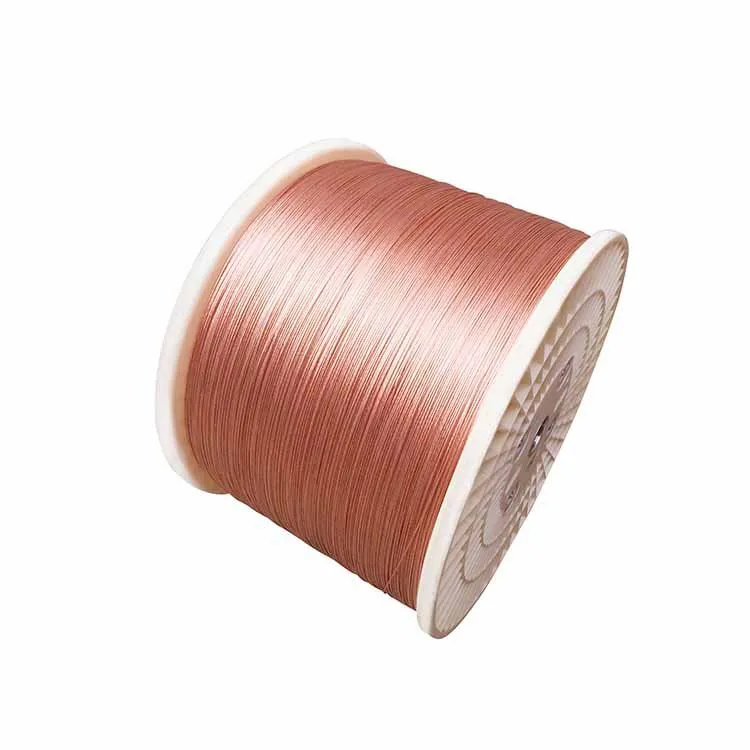
What Is Stranded CCA Wire? Composition, Standards, and Core Trade-offs
Copper-Clad Aluminum (CCA) vs. Pure Copper: Material Properties and Cost–Performance Balance
Stranded CCA wire features an aluminum core electroplated or rolled with a thin copper layer—typically 10–15% by volume. This hybrid construction delivers a lighter (up to 60% weight reduction) and more cost-effective alternative to pure copper, reducing material costs by 30–40%. While pure copper offers superior electrical conductivity (58.5 MS/m) and inherent corrosion resistance, CCA’s lower conductivity (~35 MS/m) and susceptibility to oxidation under humid or high-temperature conditions constrain its use in high-power, safety-critical, or long-life applications. Still, for low-voltage lighting, audio interconnects, and telecom drop cables—where current loads and ambient temperatures remain moderate—the balance of affordability, weight savings, and adequate performance makes stranded CCA a pragmatic choice.
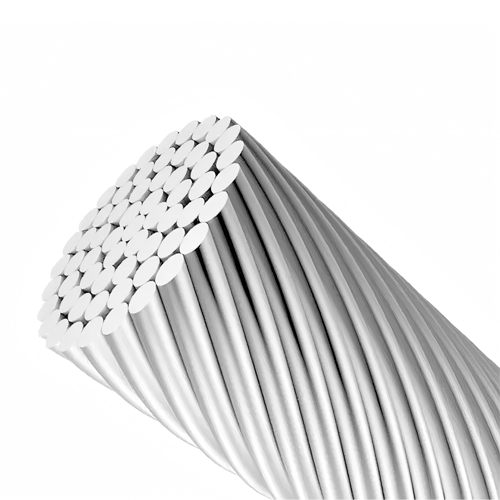
Standards Governing Stranded CCA Wire: IEC 60228 Class 2–5 and ASTM B33 Compliance Requirements
Consistent performance relies on adherence to internationally recognized standards. IEC 60228 classifies stranded conductors by flexibility: Class 2 (few strands, rigid), Class 3 (moderate strand count, general-purpose), Class 4 (high flexibility), and Class 5 (extra flexible, suited for repeated bending). Stranded CCA wire is assigned to the appropriate class based on its lay, strand diameter, and overall geometry—not just count—to ensure predictable bend radius, tensile strength, and fatigue resistance. ASTM B33 specifies critical requirements for the copper cladding itself, including minimum thickness (typically ≥10% of total diameter), adhesion integrity, and uniformity. Compliance with both standards ensures that DC resistance, mechanical durability, and surface stability meet published specifications. Engineers should verify third-party certification—such as UL E305947 or CSA LR20179—for ASTM B33 and IEC 60228 conformance before specifying stranded CCA wire in commercial or industrial projects.
Strand Count Explained: How 7-, 19-, and 37-Strand Configurations Define Performance
The number of individual wires in a stranded CCA conductor fundamentally shapes its mechanical behavior, installation suitability, and service life. Each configuration targets a specific engineering priority—rigidity, balanced flexibility, or extreme fatigue resistance—and must be matched carefully to application demands.
7-Strand: Rigidity-Focused Design for Static Applications (e.g., Building Wiring, Busbars)
The 7-strand construction uses relatively thick individual wires twisted around a central core. Its stiffness simplifies conduit pulling and supports high-tensile termination in fixed infrastructure like building risers, switchgear busbars, and panel feeders. With minimal movement after installation, it avoids the work-hardening and strand breakage associated with repeated flexing. However, its limited bend radius makes it unsuitable for routing near vibration sources or in areas requiring frequent reconfiguration.
19-Strand: Optimal Flexibility–Strength Ratio for Dynamic Installations (Automotive, Telecom Drop Cables)
Nineteen strands strike the most widely applicable compromise: finer than 7-strand yet robust enough for routine handling. This configuration allows tighter bends without permanent deformation, supporting reliable performance in automotive wiring harnesses, aerial drop cables, and control panels subject to incidental motion or thermal cycling. Its fatigue resistance exceeds 7-strand designs while retaining sufficient tensile strength for field termination—making it the go-to choice where flexibility matters but extreme cycling does not.
37-Strand: High-Cycle Fatigue Resistance for Robotics, Drones, and Portable Equipment
With 37 very fine, uniformly drawn strands, this configuration maximizes flexibility and cycle endurance. It achieves bend radii up to 50% tighter than equivalent 7-strand wire and withstands over 25,000 flex cycles before failure—far exceeding the ~5,000-cycle threshold of solid-core alternatives. This resilience stems from stress distribution across many filaments, minimizing localized strain. As confirmed by NEMA research, such multi-strand designs reduce fracture rates by 62% in high-movement industrial environments. Though slightly more expensive and marginally less space-efficient due to interstitial gaps, 37-strand CCA is unmatched for robotics, UAV power feeds, and portable test equipment where constant coiling, uncoiling, and articulation define operational life.
Engineering Implications: Flexibility, Fatigue Life, and Current-Carrying Capacity
Bend Radius, Cycle Endurance, and Conductor Fatigue: Why Strand Count Dictates Service Life
Strand count governs how stranded CCA wire responds to mechanical stress. Higher counts enable smaller bend radii and distribute cyclic loading across more individual filaments—delaying crack initiation and propagation. In practice, 37-strand wire maintains structural integrity at bend radii as low as 6× the overall diameter, whereas 7-strand requires ≥10×. That difference directly extends service life in dynamic applications: 19-strand configurations routinely exceed 25,000 flex cycles before measurable degradation, while 7-strand may fail after fewer than 5,000. In automotive and industrial settings, this translates to fewer field failures, reduced maintenance downtime, and improved system reliability.
Debunking the Interstitial Gap Myth: Does Higher Strand Count Reduce Ampacity in Stranded CCA Wire?
A common misconception holds that air gaps between strands significantly reduce effective cross-sectional area—and thus ampacity—in fine-strand CCA wire. In reality, interstitial voids occupy only ~15% of total area in 37-strand constructions, and their impact on DC or low-frequency AC current-carrying capacity is negligible. Peer-reviewed studies in the IEEE Transactions on Power Delivery confirm that, for frequencies up to 400 Hz, stranded CCA maintains 97–99% of the theoretical ampacity of an equivalently sized solid conductor. Skin effect at higher frequencies actually improves current distribution across outer strands, enhancing thermal efficiency. Thermal imaging validates uniform heat dissipation across all standard strand configurations—dispelling concerns about hotspots or uneven loading. For typical 50/60 Hz power distribution or 200–400 Hz control circuits, ampacity differences between 7-, 19-, and 37-strand CCA are well within ±3%, making strand count a mechanical—not electrical—selection criterion.
FAQ Section
What is stranded CCA wire?
Stranded Copper-Clad Aluminum (CCA) wire features an aluminum core covered with a thin copper layer, combining lightweight construction with cost benefits.
How does stranded CCA wire compare to pure copper?
Stranded CCA wire offers reduced weight and material costs but has lower electrical conductivity and corrosion resistance compared to pure copper.
Why is strand count important in CCA wires?
Strand count determines the wire's flexibility, fatigue resistance, and bend radius, making it suitable for specific applications.
Which standards regulate stranded CCA wire?
Standards like IEC 60228 (classifying flexibility) and ASTM B33 (copper cladding requirements) govern stranded CCA wire’s specifications.
Does strand count affect ampacity?
No, strand count has a minimal impact on ampacity for DC or low-frequency AC currents, with differences typically within ±3% compared to solid conductors.


