 EN
EN

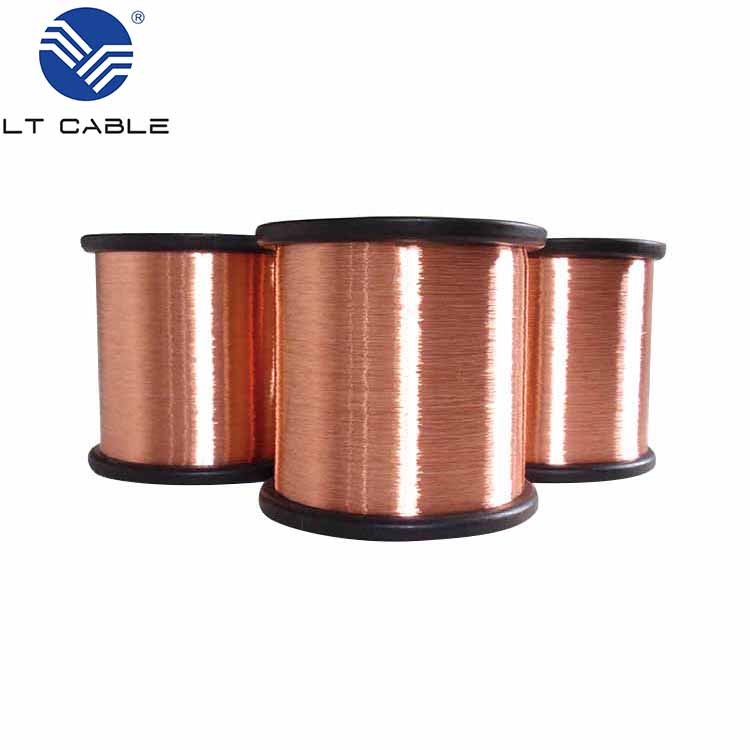
Why TCCA Wire Is Preferred for High-Performance EMI/RFI Shielding
Cost, Weight, and Performance Balance: How TCCA Outperforms Pure Copper and Aluminum in Real-World Harnesses
Tinned copper-clad aluminum (TCCA) wire directly addresses the economic and physical constraints of modern EMI/RFI shielding harnesses. A typical TCCA conductor with a 10% copper cladding layer is approximately 40% lighter than an equivalent-gauge pure copper wire—translating to measurable fuel or battery-range gains in automotive and aerospace platforms. By replacing the bulk of costly copper with an aluminum core, TCCA reduces raw-material expenditure by 30–50% while preserving the high-frequency conduction profile essential for effective shielding. Solid aluminum, though lighter and cheaper, forms a resistive oxide layer that degrades long-term shielding effectiveness at connection points. TCCA avoids this weakness through metallurgical bonding of copper to aluminum, followed by tin plating that protects both the copper surface and the core-clad interface from oxidation. Major harness manufacturers report that substituting TCCA for pure copper in multi-conductor shielded bundles cuts overall system weight by 15–20% without measurable degradation in attenuation below 1 GHz. This precise balance of weight, cost, and consistent RF performance makes TCCA the pragmatic choice for high-volume, performance-sensitive applications where every gram and every cent must be justified.
The Science Behind It: Skin Effect Optimization and Tin’s Oxidation Barrier at RF Frequencies
At frequencies above 100 kHz, electromagnetic energy travels predominantly in the outer skin of a conductor—the skin effect. For copper, the skin depth at 1 GHz is roughly 2 µm, meaning only the outermost layer contributes to conduction. TCCA exploits this phenomenon: its copper cladding, typically 10–15 µm thick, exceeds the functional skin depth by a comfortable margin, so the aluminum core adds no resistive penalty to the RF path. As a result, TCCA delivers shielding attenuation virtually identical to solid copper up to at least 1 GHz, while the lighter core reduces mechanical strain on connectors and supports. The tin plating plays a dual role. First, it seals the copper surface from atmospheric oxygen, preventing formation of non-conductive cuprous oxide—which would increase surface resistance and compromise shielding integrity. Second, it acts as a sacrificial barrier, maintaining low-resistance contact even in harsh environments. Long-term salt-spray tests demonstrate that tin-plated TCCA retains its shielding effectiveness with less than 5% degradation after 500 hours of exposure—a performance level that bare or even silver-plated copper often fails to match. This synergy of skin-effect optimization and robust oxidation resistance makes TCCA a reliable, high-performance solution for precision RF shielding.
Shielding Effectiveness of TCCA Across Critical Frequency Bands
Peak Performance Zone: 100 kHz–1 GHz—Where TCCA Delivers Optimal Attenuation and Consistency
TCCA wire harnesses achieve their most consistent shielding effectiveness between 100 kHz and 1 GHz. In this band, the skin effect confines RF currents to the highly conductive copper cladding, while the lightweight aluminum core reduces material costs without sacrificing performance. Well-braided TCCA shields routinely deliver 60–100 dB of attenuation—matching pure copper but at a fraction of the weight. The attenuation curve remains exceptionally flat: at 100 MHz, measured shielding effectiveness (SE) often exceeds 85 dB, and even at 1 GHz it typically stays above 72 dB. This stability stems from the tin plating, which preserves copper’s conductivity and prevents corrosion-induced impedance mismatches. For systems like VHF/UHF radios, GPS receivers, and cellular infrastructure operating below 1 GHz, TCCA provides a reliable, cost-effective shield with minimal variation across the band.
Extending Coverage: Hybrid Architectures Using TCCA + Ferrites for 1 GHz EMI Suppression
Above 1 GHz, the skin depth in the copper cladding becomes extremely thin (around 2 µm at 1 GHz), and TCCA alone can experience a drop in shielding effectiveness to 30–40 dB. To maintain performance, engineers combine TCCA wire with ferrite absorbers or cores. The ferrite’s magnetic loss mechanism absorbs high-frequency noise, converting it to heat, while the TCCA braid continues to suppress lower-frequency interference. This hybrid architecture can sustain an SE of 40–50 dB from 1 GHz to 18 GHz—meeting MIL-STD-461 requirements. Practical testing shows that adding a ferrite sleeve to a TCCA cable assembly reduces radiated emissions by 10–15 dB in the 2–6 GHz Wi-Fi bands compared to TCCA alone. The result is a lightweight, affordable shielding solution that covers the full frequency spectrum without resorting to all-copper construction—ideal for multi-band RF systems and high-speed digital interconnects.
Long-Term Reliability: How Tin Plating Preserves TCCA’s RF Shielding Integrity
Corrosion Resistance as a Shielding Enabler: ASTM B694-22 Validation of <5% SE Degradation After 500h Salt Spray
The primary threat to long-term shielding effectiveness (SE) is oxidation of the outer conductor layer. TCCA’s tin plating acts as a sacrificial barrier, preventing moisture and chlorides from reaching the copper-clad core. In accelerated corrosion testing per ASTM B694-22, TCCA-based braided shields exposed to 500 hours of neutral salt spray exhibited less than 5% degradation in SE across the 100 kHz–1 GHz band. This minimal loss stems from tin’s stable oxide film, which is conductive enough to maintain low-impedance current paths but dense enough to block further oxygen ingress. Unlike bare copper—which develops a semi-insulating patina that increases contact resistance and disrupts the skin-effect-driven return path—the tin surface remains galvanically active, preserving the uniform current distribution critical for RF attenuation. The result is a shield that retains its design-spec performance even after prolonged exposure to industrial or marine environments, directly linking corrosion resistance to sustained EMI/RFI integrity.
Practical Deployment of TCCA Wire in Modern EMI‑Sensitive Systems
TCCA wire integrates smoothly into modern EMI-sensitive systems—from automotive radar harnesses to industrial controllers—where consistent shielding and signal integrity are non-negotiable. In practice, deployment success depends on matching the conductor construction to the mechanical environment. Stranded TCCA is preferred for cable assemblies subject to vibration, flexing, or thermal cycling; its multi-filament structure resists microfractures that can develop in solid conductors under cyclic stress, preserving the low-impedance path needed for effective shielding. Proper termination is equally critical. Crimp contacts must maintain uniform pressure over the tin coating to prevent localized oxidation and impedance spikes that degrade RF attenuation. The tin layer itself doubles as a solderable barrier, enabling reliable, low-resistance connections that leverage the skin effect at high frequencies. For static installations like backplane interconnects, solid TCCA delivers stable clamping force in terminal blocks, minimizing long-term resistance creep. Field best practices include avoiding sharp bends that could crack the aluminum core, using strain relief, and verifying that all connectors are rated for the target frequency range. When deployed with these guidelines, TCCA cable assemblies deliver durable, cost-effective EMI suppression without the weight penalty of solid copper—making them a practical choice for next-generation shielded electronics.
FAQ
Why is TCCA wire preferred for EMI/RFI shielding?
TCCA wire offers a balance of weight reduction, cost-effectiveness, and consistent shielding performance up to 1 GHz, making it ideal for high-volume applications where economic and physical constraints are critical.
What role does tin plating play in TCCA wire performance?
Tin plating prevents oxidation of the copper cladding, maintains a low-resistance path for RF currents, and ensures long-term shielding effectiveness, even in harsh environmental conditions.
How effective is TCCA wire for frequencies above 1 GHz?
While TCCA experiences a drop in shielding effectiveness above 1 GHz, combining it with ferrite absorbers can maintain performance, meeting industry standards for high-frequency demands.
Can TCCA replace pure copper in all applications?
TCCA is suitable for many applications, particularly those requiring weight and cost savings, but pure copper may be necessary for extreme conditions or higher frequencies.
How does TCCA perform in corrosion tests?
TCCA demonstrates less than 5% degradation in shielding effectiveness after 500 hours of salt spray testing, proving its reliability in industrial and marine environments.


