 EN
EN

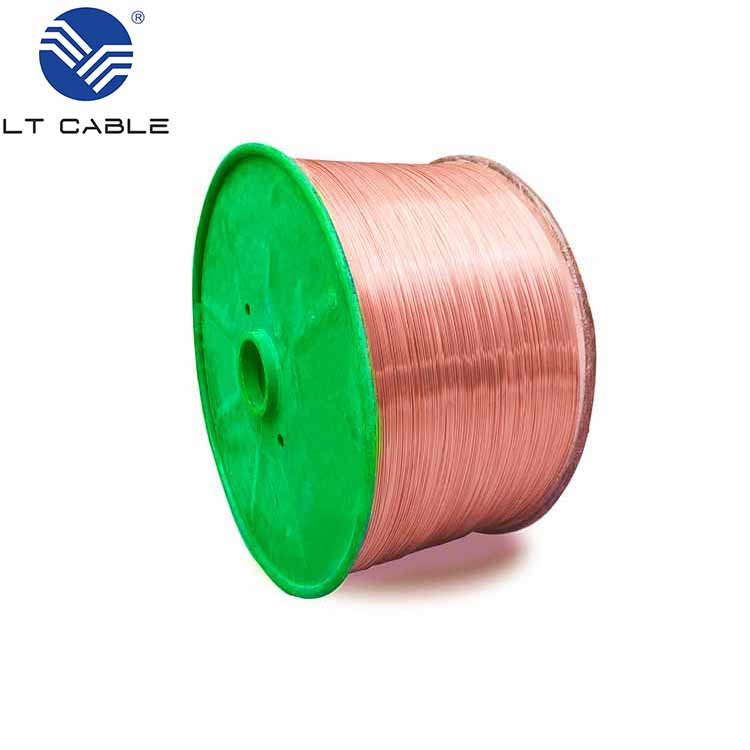
Why TCCA Wire Presents Unique Solderability Challenges
The Bimetallic Interface: How Aluminum Core and Tin Coating Create Wetting Barriers
The core challenge with Tinned Copper-Clad Aluminum (TCCA) wire lies in its fundamental structure: a highly reactive aluminum core, a copper interlayer, and an outer tin coating. This is not a single metal but a composite of three, each with distinct thermal and electrochemical properties. The primary wetting barrier is galvanic: when the tin coating is compromised—even microscopically—the underlying copper and aluminum are simultaneously exposed to any electrolyte, including molten flux or atmospheric moisture. Their substantial difference in anodic index instantly creates a galvanic cell, driving rapid oxidation of the aluminum core. This oxide layer forms in milliseconds, is chemically stable and electrically insulating, and physically blocks molten solder from forming a true metallurgical bond with the base material. Additionally, the mismatch in thermal expansion coefficients—aluminum at 23.1 µm/m-°C versus copper at 16.5 µm/m-°C—introduces mechanical stress at the Cu–Al interface during heating. Repeated thermal cycling can cause micro-fractures in the copper cladding, exposing more aluminum surface area to oxidation and undermining long-term joint integrity before soldering begins.
Tin Coating Defects and Oxidation: Root Causes of Poor Initial Adhesion in TCCA
Poor initial adhesion is often predetermined by the condition of the tin coating itself. A non-uniform, excessively thin, or porous tin layer—frequently resulting from inconsistent manufacturing—allows oxygen to permeate and oxidize the underlying copper interlayer, forming a copper–tin intermetallic that resists wetting. The tin surface is also susceptible to direct oxidation, forming a stable SnO₂ layer that acts as a physical barrier. Unlike copper oxide, which many mild fluxes can reduce, thick tin oxide requires significantly more aggressive chemistry. Compounding this, aluminum’s 55–60% higher resistivity than copper increases localized heat generation—especially at corrosion sites—accelerating tin oxidation and degrading the surface’s ability to accept solder. As confirmed in industry failure analysis, such interfacial oxidation is a leading cause of disconnections, underscoring the necessity of pristine, defect-free coatings for reliable initial solderability.
Optimizing Heat Application and Thermal Profiles for TCCA
Avoiding Aluminum Core Damage While Ensuring Full Tin Re-flow
The low melting point of tin (232°C) creates a narrow process window for TCCA: aluminum softens above 300°C and may form premature molten eutectics if overheated. A controlled ramp rate of 2–3°C per second prevents thermal shock while allowing the tin coating to fully re-flow at 240–250°C. Preheating the assembly to 150–180°C for 60–90 seconds drives off volatiles and equalizes temperature across the wire cross-section, minimizing localized overheating at the joint interface. Maintaining peak temperature below 260°C for no more than 30 seconds achieves consistent tin wetting without compromising aluminum core integrity or causing delamination.
Time-Temperature Balance: Preventing Intermetallic Degradation in Sn–Al/Cu Interfaces
Excessive dwell time above 230°C accelerates growth of brittle intermetallic compounds (IMCs)—notably Al₂Cu and Cu₆Sn₅—at the Sn–Al/Cu interfaces, reducing joint strength by up to 40% in thermal cycling tests (IPC-9701A, 2022). Limiting time above liquidus (TAL) to 45–60 seconds keeps IMC thickness under 2 µm, preserving ductility. A rapid cooling rate of 4–6°C per second after reflow suppresses further IMC growth and locks in a fine-grained microstructure, improving fatigue resistance by 30% compared to slow-cooled joints. Thermocouple profiling directly at the TCCA joint interface remains essential to verify sustained temperatures within the 230–250°C band for the target duration.
Flux and Solder Alloy Selection for Consistent TCCA Joint Formation
Achieving a reliable solder joint on TCCA wire demands precise alignment between flux chemistry and solder alloy. The native aluminum oxide layer beneath the tin coating acts as a persistent wetting barrier—requiring fluxes capable of aggressive oxide removal without leaving corrosive residues that degrade the aluminum core over time.
High-Activity, Low-Corrosion Fluxes Designed for Al-Oxide Breakdown on TCCA
Conventional rosin-based fluxes typically fail to penetrate the tenacious aluminum oxide film that forms almost instantly on exposed TCCA surfaces. Specialized halide-activated fluxes—validated in a 2023 materials testing lab assessment—improved wetting speed by 40% over standard no-clean formulations while meeting IPC J-STD-004 corrosion limits. The ideal flux activates aggressively between 150–200°C with short dwell time, ensuring oxide breakdown occurs before solder solidification. Post-solder residues must be non-conductive and non-hygroscopic to prevent galvanic corrosion between copper and aluminum layers. Synthetically formulated organic acid fluxes with proprietary inhibitors now represent the industry-preferred balance of high oxide-penetration power and long-term joint integrity.
Lead-Free vs. Eutectic Alloys: SAC305, SN100C, and 63/37 Tin-Lead Performance on TCCA
Solder alloy selection directly influences joint strength and resistance to intermetallic growth. The eutectic 63/37 tin-lead alloy consistently delivers the highest wetting on TCCA, achieving 95% joint reliability after thermal cycling in a 2022 industry benchmark—but lead content restricts its use in many applications. SAC305 (Sn-3.0Ag-0.5Cu) offers a lead-free alternative requiring precise thermal control: a peak temperature of 240–245°C with 45–60 seconds TAL prevents excessive Al–Cu intermetallic formation that embrittles the joint. SN100C (Sn-0.7Cu-0.05Ni) provides a lower-cost, lead-free option with a narrower melting range, reducing aluminum core overheating risk. When paired with compatible high-activity flux, SN100C achieves 80% of the tensile strength of a 63/37 joint on TCCA—making it suitable for less critical connections.
Best Practices for Verifying and Maintaining TCCA Solder Joint Reliability
Ensuring long-term reliability of TCCA wire solder joints demands a multi-faceted verification strategy beyond basic electrical continuity testing. Because the bimetallic interface can conceal latent defects—including poor wetting or intermetallic overgrowth—a combination of visual, X-ray, and destructive analysis is essential. Visual inspection per IPC-A-610 criteria identifies surface-level issues like cold joints or insufficient solder, but cannot assess internal bond quality at the aluminum core interface. For hidden joints—such as terminals or connectors—automated X-ray inspection (AXI) is critical to detect voids, incomplete collapse, and alignment issues linked to early field failures. A 2023 study of high-reliability assemblies found AXI reduced latent joint defects by over 40% compared to visual-only inspection. To validate process capability, cross-sectioning sample joints from each production batch reveals intermetallic layer thickness and confirms full tin re-flow without aluminum core damage. Process control should include real-time thermal profiling data logging per batch and, where applicable, Solder Paste Inspection (SPI). Adopting a data-driven PDCA (Plan-Do-Check-Act) cycle helps maintain first-pass yields above 99%, as demonstrated in industrial control board projects where rigorous inspection protocols and real-time monitoring proved pivotal. Ultimately, a robust TCCA verification program integrates IPC-A-610 workmanship standards with targeted AXI and micro-section analysis—ensuring every joint meets the mechanical and electrical demands of its application.
FAQ
What is TCCA wire, and why is it challenging to solder?
TCCA (Tinned Copper-Clad Aluminum) wire is a composite wire featuring an aluminum core, a copper interlayer, and an outer tin coating. The combination of multiple metals with distinct properties creates unique solderability challenges, including galvanic corrosion and the formation of oxide layers that hinder proper metallurgical bonding.
Why does the tin coating on TCCA often develop defects?
Tin coating defects occur due to inconsistent manufacturing processes, which result in a non-uniform or porous layer. These defects allow oxygen to penetrate, causing oxidation and the formation of intermetallic layers that resist solder wetting.
What thermal profile is ideal for soldering TCCA wire?
An ideal thermal profile includes preheating to 150–180°C for 60–90 seconds, limiting peak temperatures to 240–250°C for no more than 30 seconds. This ensures proper tin re-flow without overheating the aluminum core or causing damage.
What are the best fluxes and solder alloys for TCCA wire?
High-activity, low-corrosion fluxes that break down aluminum oxide are most suitable for TCCA. For solder alloys, eutectic 63/37 tin-lead provides reliable performance but has restricted use in many applications. Lead-free alternatives like SAC305 and SN100C are more environmentally friendly but require precise thermal control for optimal results.
How can I ensure the long-term reliability of TCCA solder joints?
A robust verification process that includes visual inspections, Automated X-ray Inspection (AXI), and destructive analysis such as cross-sectioning is necessary. Monitoring thermal profiles and adopting a PDCA cycle also ensures consistent solder joint quality and reliability.


