 EN
EN

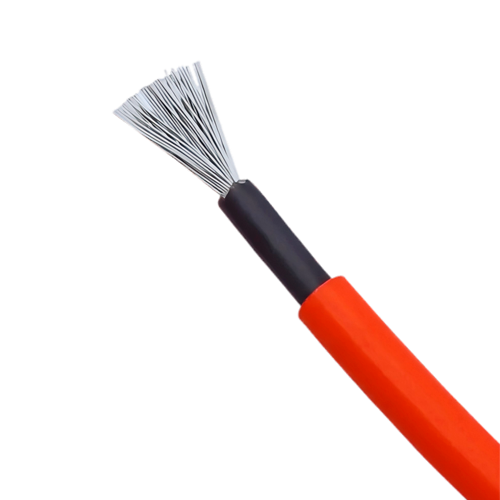
What Is CCS Wire? Composition, Manufacturing, and Core Properties
Steel Core + Copper Cladding: Defining the Hybrid Structure
CCS (Copper Clad Steel) wire is a bimetallic composite featuring a high-strength steel core—typically low- or high-carbon steel—encased in a continuous, metallurgically bonded copper cladding. The steel core delivers exceptional tensile strength (300–600 MPa), significantly exceeding that of solid copper wire (~220 MPa). Meanwhile, the copper layer provides the electrical conductivity required for grounding, signal transmission, and power applications. Thanks to the skin effect at high frequencies, current flows predominantly within the copper cladding—enabling CCS wire to match solid copper’s RF and telecom performance while using less copper. Cladding thickness is expressed as a percentage of total diameter, commonly ranging from 10% to 40%. Maintaining consistent copper-to-steel ratio during wire drawing is essential to ensure uniform conductivity and mechanical behavior along the full length. The result is a durable, efficient conductor engineered to resist delamination under bending, pulling, and thermal cycling.
Electroplating vs. Cold Weld Bonding: Key Manufacturing Methods
CCS wire is manufactured primarily via two validated methods: electroplating and cold weld bonding (also known as mechanical cladding). Electroplating immerses the steel core in an electrolytic bath to deposit a precise, uniform copper layer—ideal for fine-diameter wires used in coaxial cables and electronic connectors. Cold weld bonding wraps a copper strip around the steel core and fuses it using heat and pressure; the resulting billet is then drawn to final gauge, preserving the original cladding ratio. This method yields thicker, more robust cladding and is preferred for heavy-duty grounding conductors and overhead line applications where mechanical durability is critical. Both processes undergo rigorous inline quality control—including adhesion testing, concentricity verification, and resistance measurement—to ensure compliance with industry standards such as ASTM B759 and IEEE 80. The selection between methods hinges on application-specific needs: electroplating prioritizes dimensional precision and cost efficiency for signal-critical uses, while cold welding emphasizes long-term mechanical integrity in infrastructure-grade installations.
Balanced Performance: Conductivity, Tensile Strength, and Corrosion Resistance
CCS wire achieves a deliberate trade-off between conductivity and strength: its electrical conductivity typically ranges from 30% to 40% IACS (International Annealed Copper Standard), depending on cladding thickness. At frequencies above 5 MHz, the skin effect ensures current remains confined to the copper layer—making CCS electrically competitive with solid copper in RF, telecom, and signaling applications. Its tensile strength (300–600 MPa) enables longer unsupported spans, reducing pole counts, hardware, and installation labor—especially valuable in rural or rugged terrain. Corrosion resistance stems from the copper cladding acting as both a barrier and sacrificial layer. However, if breached—e.g., through abrasion or poor handling—the underlying steel can corrode. For buried or outdoor use, supplemental protection such as tin plating, zinc coating, or HDPE jacketing is common and extends service life without compromising conductivity. This balance of high strength, adequate high-frequency performance, and adaptable corrosion mitigation makes CCS wire a trusted solution for grounding grids, tracer wire, and overhead distribution systems.
Why CCS Wire Delivers Superior Value in Utility and Infrastructure Applications
CCS wire directly addresses the dual imperatives of cost control and mechanical reliability in utility-scale deployments. By replacing solid copper with a steel core and thin copper cladding, material costs drop by up to 40% across large-scale projects—savings that compound over thousands of linear meters in distribution networks. Its lower density also reduces weight by roughly 30–40%, easing handling, lowering equipment strain, and cutting labor time during installation. Higher tensile strength allows longer spans between supports, minimizing poles, brackets, and splice points—reducing both initial hardware outlay and long-term maintenance overhead.
Performance advantages reinforce economic value. The steel backbone resists wind loading, ice accumulation, and mechanical fatigue far better than annealed copper—critical for overhead lines exposed to environmental stress. In buried tracer wire applications, CCS withstands soil movement and accidental excavation impacts, lowering repair frequency and emergency call-outs. Crucially, its copper cladding maintains stable, low-resistance conductivity that meets IEEE and utility specifications for fault current handling and signal transmission. Together, these attributes produce a predictable, low-maintenance asset—transforming upfront material savings into sustained reductions in total cost of ownership.
Primary Applications of CCS Wire: Grounding, Tracer Wire, and Overhead Systems
Grounding Systems: IEEE 80 Compliance and Real-World Reliability
CCS wire is widely specified for grounding systems—particularly in substations—where IEEE 80 mandates reliable fault-current dissipation and personnel safety. Its steel core enables robust installation in rocky, frozen, or compacted soils without breakage, while the copper cladding ensures sufficient conductivity to establish a low-impedance path to earth. This hybrid construction sustains grid integrity over decades, resisting degradation from moisture, soil pH shifts, and chemical exposure. During fault events, CCS reliably channels excess energy, limiting step and touch potentials to safe levels. Field data from utilities confirm fewer maintenance interventions compared to alternatives—attributable to its mechanical resilience and stable corrosion profile. CCS wire is used for both horizontal ground grid conductors and vertical rods, with cladding percentages (10–40%) tailored to meet site-specific conductivity targets and IEEE 80 voltage limits. Installations across diverse geographies—from arid Southwest deserts to coastal salt marshes—validate its long-term functional reliability.
Buried Tracer Wire: Locating Water, Gas, and Sewer Lines Safely
CCS wire serves as the industry-standard tracer wire for locating underground water, gas, and sewer mains. Its steel core provides the tensile strength needed to survive directional drilling, conduit pulling, and attachment to drill bits—enabling accurate bore-path tracking and preventing damage to adjacent utilities. The copper cladding delivers strong, consistent signal transmission for electromagnetic detection, matching solid copper’s locatability at a lower cost. Unlike pure copper, CCS offers inherent theft deterrence due to its non-homogeneous composition and reduced scrap value. To enhance longevity in moist or aggressive soils, CCS tracer wire is routinely supplied with a high-density polyethylene (HDPE) jacket—proven to preserve signal integrity over 30+ years of service. Municipalities and contractors increasingly specify this configuration to reduce dig-ins, service interruptions, and associated liability—making CCS a cornerstone of safe, efficient underground infrastructure management.
Emerging Uses of CCS Wire in Renewable Energy and Telecom Infrastructure
Wind Farm Grounding and Lightning Protection: Texas ERCOT Case Insights
CCS wire is gaining traction in renewable energy grounding—particularly in lightning-prone regions like Texas’s ERCOT grid—where traditional conductors struggle with simultaneous demands for fault-current capacity, mechanical endurance, and corrosion resistance. In sprawling turbine fields, CCS’s steel core withstands soil settlement, vibration, and installation stresses, while its copper cladding ensures effective lightning energy dissipation—critical for protecting sensitive power electronics and ensuring grid stability. A 2023 review of West Texas wind farms operating under ERCOT found that transitioning to CCS-based grounding grids reduced lightning-related step-voltage incidents by over 40% and cut annual maintenance expenditures by approximately 22%, largely due to improved corrosion resistance in alkaline soils. Additionally, CCS mitigates copper theft—a persistent issue at remote sites—without sacrificing IEEE 80 compliance. These outcomes demonstrate how CCS supports the scalability, safety, and operational continuity of modern renewable assets.
FAQs
What is CCS wire used for?
CCS wire is widely used in applications such as grounding systems, tracer wire for locating underground utilities, and overhead power distribution lines. It combines the high tensile strength of steel with the conductivity of copper.
How is CCS wire manufactured?
CCS wire is primarily manufactured through electroplating or cold weld bonding methods. Electroplating is ideal for fine-diameter wires, while cold welding yields thicker, more durable cladding suited for heavy-duty applications.
What are the benefits of using CCS wire?
CCS wire offers a balanced combination of high tensile strength, adequate electrical conductivity, and corrosion resistance. It is cost-effective, lightweight, and durable, making it a reliable choice for utility and infrastructure applications.
How does CCS wire perform compared to solid copper wire?
At high frequencies, CCS wire can match the electrical performance of solid copper wire using less copper. It is also stronger and more resistant to mechanical stress, making it more durable in rugged environments.
Can CCS wire resist corrosion?
Yes, the copper cladding provides a barrier and acts as a sacrificial layer against corrosion. For enhanced durability, the wire can be further protected with tin plating, zinc coating, or HDPE jacketing for buried or outdoor uses.
Table of Contents
- What Is CCS Wire? Composition, Manufacturing, and Core Properties
- Why CCS Wire Delivers Superior Value in Utility and Infrastructure Applications
- Primary Applications of CCS Wire: Grounding, Tracer Wire, and Overhead Systems
- Emerging Uses of CCS Wire in Renewable Energy and Telecom Infrastructure
- FAQs


