 EN


What are the common packaging solutions for copper clad aluminum wire shipment
Packaging is part of the delivery specification, not a last-minute warehouse task. For copper clad aluminum wire, the package has to keep the winding stable, protect the outer wraps from rubbing, and give the receiver enough information to handle the load correctly. The right choice depends on coil weight, wire diameter, destination, transit time, lifting method, and whether the shipment will face humid storage or multiple transfers.
From a quality-verification perspective, copper clad aluminum wire should be packed against the risks identified for that particular route. A short domestic truck movement and a container shipment with port handling do not put the same demands on the reel, wrap, or load restraint. Asking a supplier to describe the package layer by layer is more useful than asking for “export packaging” as a general promise.
Start with the shipment form: spool, reel, or coil
The first packaging decision for copper clad aluminum wire is the form in which the material leaves the factory. Small-diameter or controlled-length orders commonly use spools because the flange supports the winding and helps users pay off wire in an orderly way. Larger quantities may be wound on wooden, plywood, plastic, or metal reels. A reel is usually practical when the customer will unwind the wire on production equipment or needs a clear lift point for receiving.
Coil packaging can suit copper clad aluminum wire when the specified coil size, handling equipment, and downstream process support it. Coils use less package material than a heavy reel in some cases, but their outer turns and edges need deliberate protection. The buyer should specify the coil inner diameter, outer diameter, maximum net weight, and whether eye-to-sky or eye-to-wall handling is expected. Those details affect both the package design and the loading plan.
For any format, the winding should be stable before the outer package is applied. Loose turns can shift in transit and make a package look intact while the copper clad aluminum wire underneath has been marked or distorted. That is why a dispatch inspection commonly checks winding condition, end fixation, and the package identification before the load is released.
Common protective layers in wire packaging
Most wire packaging uses several layers, with each layer serving a different job. The inner layer separates the copper clad aluminum wire from direct contact with packaging surfaces. The middle layers provide moisture and abrasion protection. The outer layers add impact resistance and keep the load together during handling. The exact materials should be agreed in the purchase specification rather than assumed from a catalog photo.
| Packaging element | Typical purpose | What to confirm |
|---|---|---|
| Inner wrap or liner | Separates the wire surface from the reel or outer wrap. | Material, coverage, and whether it contacts exposed wire ends. |
| Moisture-barrier film or bag | Limits exposure to water, condensation, and warehouse humidity. | Seal method, overlap, and any route-specific moisture requirement. |
| Stretch wrap or shrink film | Holds the package together and adds a handling barrier. | Film thickness, wrap coverage, and protection at exposed reel edges. |
| Edge, flange, or side protection | Reduces damage where the reel or coil is most exposed. | Material, placement, and compatibility with lifting equipment. |
| Straps and closures | Secure the package to its support or pallet. | Strap type, number, tension approach, and buckle or seal location. |
A moisture barrier is often requested for copper clad aluminum wire moving through humid climates or long logistics chains. It should be treated as one part of the package, not as a substitute for dry loading, sound container condition, and prompt receiving inspection. If desiccant is requested, the quantity and placement need route-specific confirmation instead of a generic statement.
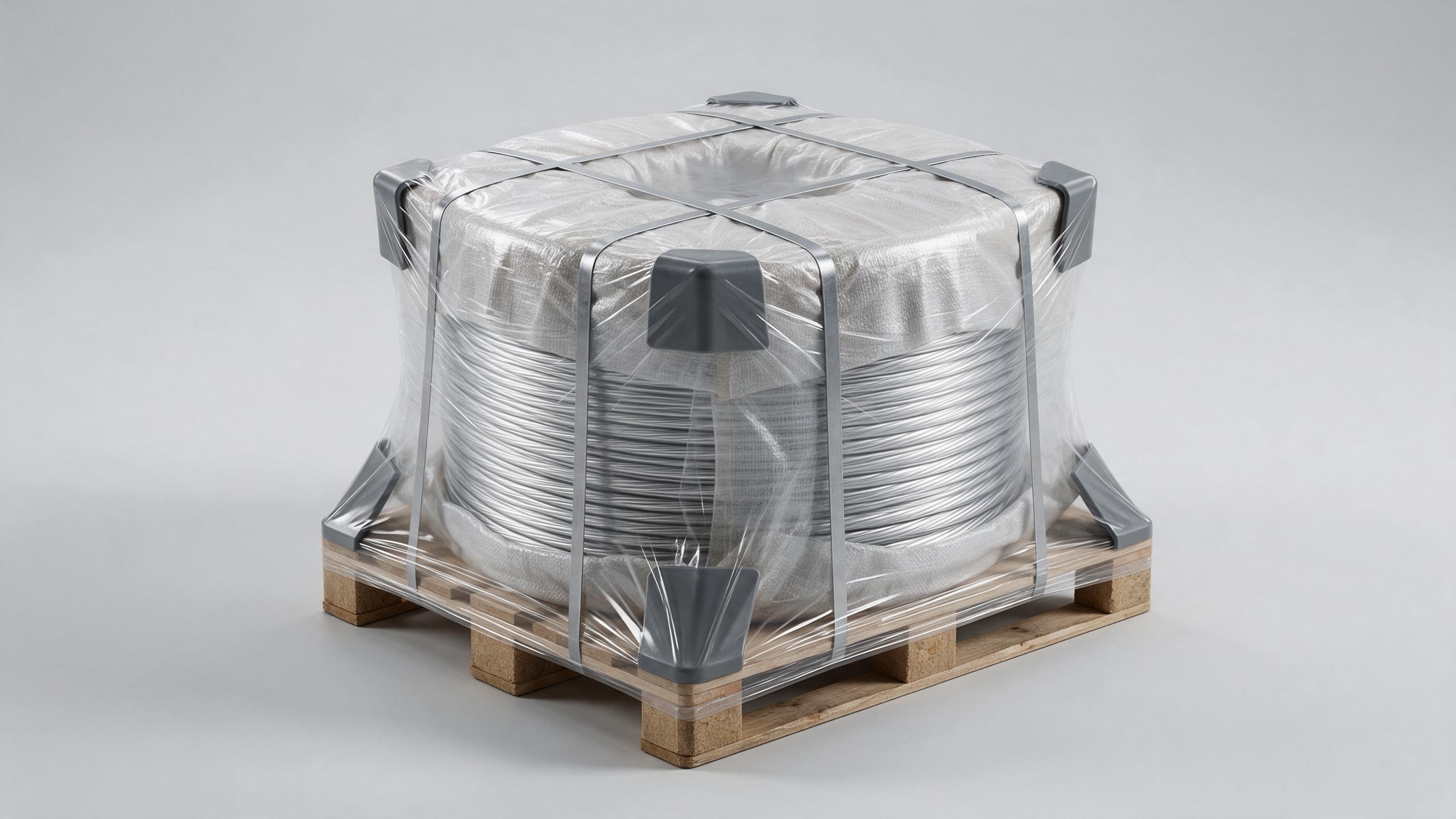
Reel protection for handling and transit
When copper clad aluminum wire is shipped on a reel, the flanges carry much of the handling risk. Flange guards, corrugated covers, or rigid side discs can reduce direct contact with fork tines, neighboring loads, and warehouse surfaces. Where lifting is planned through the reel bore, the bore size and axle method should be recorded on the packing instruction. A package that is secure on a pallet may still be unsuitable for the customer’s receiving equipment.
Outer wrap needs coverage at the flange edges as well as across the winding. A narrow wrap band can leave exposed turns vulnerable to scuffing. Conversely, a tightly sealed package may retain moisture if wet material is wrapped before dispatch. The practical sequence is to verify that the copper clad aluminum wire and packaging materials are dry, secure the winding ends, apply the agreed barrier layers, then inspect the label and physical condition before loading.
Coil packaging for compact shipments
For copper clad aluminum wire supplied in coils, common solutions include an inner core or support, a liner, overlapping protective film, edge protection, and straps or bands that keep the coil from opening. The coil may then be placed on a pallet, in a carton, or in a wooden case depending on size and route. The central question is not whether a coil package looks compact; it is whether it keeps the coil stable through the actual handling sequence.
Wire packaging for a coil should account for pressure from straps. Straps placed directly over unprotected outer turns can leave marks or concentrate load on the winding. Pads, edge guards, or a rigid outer support can distribute that contact. If a coil will be stacked, the supplier and buyer should agree on stack limits and orientation. These instructions belong on the packing list or handling mark so that the decision survives handoffs between warehouse teams.
Pallets, cases, and export packing
Palletizing can make copper clad aluminum wire easier to count, stage, and load, especially for multiple reels or smaller coils. The package should be blocked or chocked so that it cannot roll, and the pallet footprint should suit the reel diameter. Stretch wrap alone does not establish load restraint; bands, blocking, and the selected loading orientation matter as well.
For longer routes, wooden cases or reinforced outer protection may be used when there is a higher chance of impact, mixed cargo contact, or repeated handling. The choice should be proportional to the route and agreed receiving condition. Copper clad aluminum wire intended for container transport also benefits from clear separation from wet cargo, sound container flooring, and labels that remain readable after handling. These are operational controls, not material-performance claims.
What should appear on the package label?
A readable label helps the receiver verify that the delivered copper clad aluminum wire matches the order before it enters production. Common label fields include product description, size or specification, net and gross weight, reel or coil number, lot or batch reference, purchase order, origin information where required, and handling marks. If several packages are part of one order, sequential package numbering helps reconcile the packing list.
The label should also distinguish the customer-facing specification from internal shorthand. For example, the material description, dimensions, packing quantity, and handling orientation should be understandable to the receiving team. A photo of the final label and package is useful as a dispatch record, particularly when the buyer has requested a specific wire packaging configuration.
A practical packaging checklist for buyers
- Confirm whether copper clad aluminum wire will ship on a spool, reel, or coil.
- State the acceptable reel dimensions, coil dimensions, and maximum net weight.
- Specify moisture-barrier, liner, and outer-wrap requirements for the route.
- Identify required flange guards, edge protectors, pallet blocking, or outer cases.
- Describe lifting points, forklift restrictions, and stacking limits.
- Agree on label fields, package numbering, and photo-record expectations.
- Request that any unusual handling requirement is shown on the packing list and outer marking.
This checklist turns a broad request for copper clad aluminum wire into instructions that a production, warehouse, and freight team can use consistently. It also makes exceptions visible before the shipment is booked, when changes are generally easier to manage.
Choose packaging by risk, then document it
Common solutions for copper clad aluminum wire shipment range from protected spools and wrapped reels to lined coils on blocked pallets and reinforced export cases. There is no single package that fits every order. The sensible approach is to match the package to the wire format, route, handling points, storage exposure, and receiver’s equipment, then record those choices in the order and dispatch documents.
Before release, compare the finished copper clad aluminum wire package with the approved specification: stable winding, protected edges, appropriate barrier layers, secure restraint, readable labels, and usable handling information. That final check does not replace incoming inspection, but it gives both parties a clearer basis for verifying the shipment when it arrives.


