 EN


A photovoltaic aluminum alloy wire is not evaluated only at the moment it leaves a production line. In service, it can move through repeated heating and cooling as current, ambient temperature, enclosure conditions, and installation details change. Each cycle can create expansion and contraction. If a photovoltaic aluminum alloy wire loses too much tensile capacity, ductility, or dimensional consistency during that exposure, the concern is not merely a changed laboratory value: it can affect handling, terminations, strand geometry, and the consistency of the finished cable system.
For a quality-validation discussion, the useful question is not whether every photovoltaic aluminum alloy wire will behave in the same way. It is whether the agreed alloy, temper, diameter, construction, temperature range, cycle profile, and acceptance criteria have been tested together. That is especially important where an annealed photovoltaic aluminum alloy wire is specified, because annealing is a material-and-process condition, not a universal promise of long-term mechanical behavior.
In practical terms, stable mechanical property means that a photovoltaic aluminum alloy wire remains within the tensile-strength, elongation, and geometry limits agreed for its intended construction after relevant thermal exposure. The limits must come from the project specification and applicable test plan; this article does not substitute for them.
Thermal cycling turns a material property into a system issue
When temperature rises, a photovoltaic aluminum alloy wire expands; when it falls, it contracts. Aluminum-based conductors have a comparatively high thermal-expansion response, although the applicable value depends on the precise alloy and temperature range. The wire may be constrained by insulation, stranding, connectors, lugs, clamps, or cable routing. That constraint is why repeated movement deserves attention even when one individual cycle appears modest.
The connection boundary matters as much as the free length. General aluminum-conductor guidance notes that unequal thermal growth between conductor and connector can create stress during normal cycling. For photovoltaic aluminum alloy wire, this points to a verification need: evaluate conductor, joint design, contact preparation, torque or compression method, and temperature profile as a compatible set. A material result alone cannot confirm the whole connection.
Thermal cycling can also expose a mismatch between a product description and the actual use case. A wire intended for one installation geometry, conductor class, or termination method should not be assumed suitable for another without a documented review.
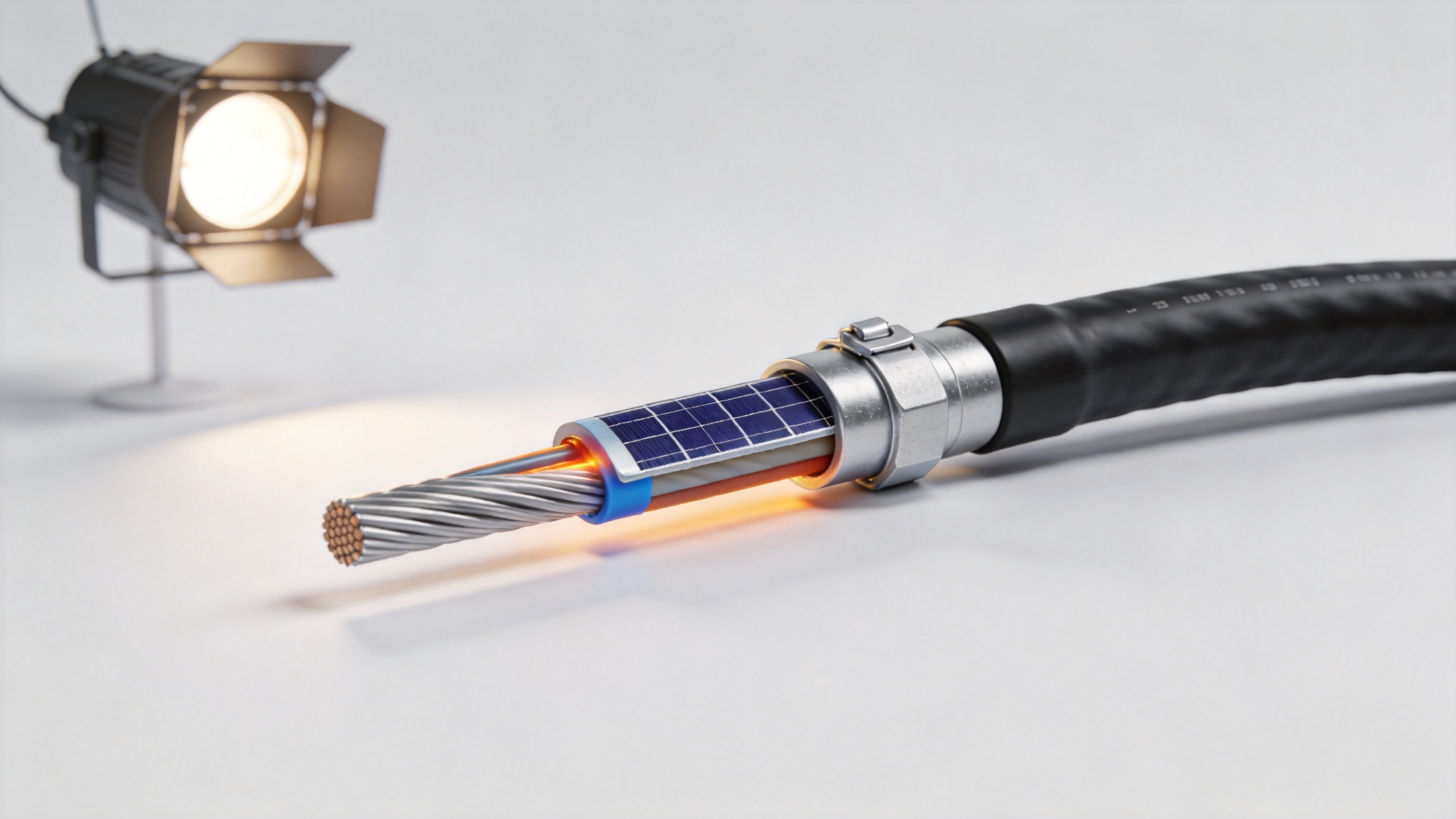
Which mechanical properties must stay controlled?
A photovoltaic aluminum alloy wire needs a balanced property profile rather than a single headline number. The most useful checks commonly include the following:
- Tensile behavior: confirm that post-cycle tensile results remain within the agreed range, so the conductor retains the handling and load-bearing behavior required by the cable design.
- Elongation or ductility: examine whether the wire retains sufficient deformation capacity for the specified bending, stranding, or termination operation. Higher strength alone does not answer this question.
- Surface and section condition: inspect for cracking, fretting marks, localized necking, corrosion-related changes, or irregular section geometry that could affect later processing.
- Strand and termination stability: where applicable, check lay condition, contact integrity, and evidence of movement at connection boundaries after the selected cycling sequence.
These measurements should be compared with a pre-agreed baseline. If the baseline, sampling method, conditioning period, and cycle endpoints are not written down, a later comparison may look precise while answering a different question.
Why alloy and annealing condition need separate confirmation
Aluminum conductor alloys can show different strength, elongation, conductivity, and thermal-stability balances. Published reviews of conductor alloys also show that annealing conditions can change mechanical and electrical values; those data cannot be transferred wholesale to a particular photovoltaic aluminum alloy wire. The relevant conclusion is simpler: the exact alloy designation and thermal history need to be part of qualification.
For an annealed photovoltaic aluminum alloy wire, confirm the stated temper or processing condition, the documented annealing window where available, and the properties required after production and after cycling. Do not equate the word “annealed” with a fixed tensile value, a fixed elongation value, or resistance to every service temperature. The cable design and actual thermal duty establish the conditions that matter.
It is also useful to separate short exposure from repeated exposure. A photovoltaic aluminum alloy wire may meet incoming tensile and elongation requirements yet still require a cycle-based evaluation if the application includes recurring electrical heating, outdoor temperature swings, or constrained terminations. The purpose is not to predict failure from a label; it is to reveal whether the selected material-and-system combination remains inside its agreed property window.
Build a thermal-cycle validation plan around the application
A repeatable plan gives engineering, quality, and procurement teams the same reference. The table below is a planning framework, not a substitute for an applicable standard or project test method.
| Validation item | Question to define | Record to retain |
|---|---|---|
| Wire identity | Which alloy, temper, diameter, and construction are being evaluated? | Specification revision, lot traceability, incoming inspection record |
| Cycle profile | What minimum/maximum temperatures, dwell times, ramp conditions, and number of cycles reflect the use case? | Approved test procedure and temperature log |
| Mechanical checks | Which tensile, elongation, bend, or dimensional limits apply before and after exposure? | Test method, sample count, results, acceptance decision |
| Connection boundary checks | Are connectors, lugs, clamps, or stranded sections included where they influence behavior? | Assembly detail, inspection observations, retest decision |
For photovoltaic aluminum alloy wire, the cycle profile should be chosen from the intended electrical and environmental duty, not copied from an unrelated cable application. Where a standard is named in a contract or technical specification, confirm its current edition, scope, sample preparation, and acceptance provisions before treating it as the governing method.
Use post-cycle results to guide decisions, not to make broad promises
After testing, review a photovoltaic aluminum alloy wire against the agreed criteria and the observed condition of its connection boundaries. If a result changes, isolate the possible contributors: alloy and temper, wire size, production history, stranding, connection design, contact pressure, cycle severity, or inspection method. This avoids assigning a single cause before the evidence supports it.
For buyers and cable manufacturers, an effective request for photovoltaic aluminum alloy wire should therefore include the intended cable construction, conductor dimensions, expected temperature range, termination concept, requested mechanical properties, required documentation, and any desired cycle test. That sequence makes a technical conversation more useful than asking for a generic “stable” wire.
A clear specification supports more reliable photovoltaic conductor decisions
Repeated thermal cycles are a reason to control—not assume—the mechanical behavior of photovoltaic aluminum alloy wire. A defensible evaluation joins material identity with the real thermal profile, mechanical acceptance limits, and connection boundary checks. LT CABLE’s wire-and-cable product focus can support application-led specification discussions, while final suitability should be confirmed through the buyer’s documented requirements and appropriate validation.
Start with the intended duty, define the post-cycle properties that matter, and keep the test and inspection record traceable. That is the practical route to judging whether photovoltaic aluminum alloy wire is appropriate for a specific PV conductor application.


