Dec 22,2025
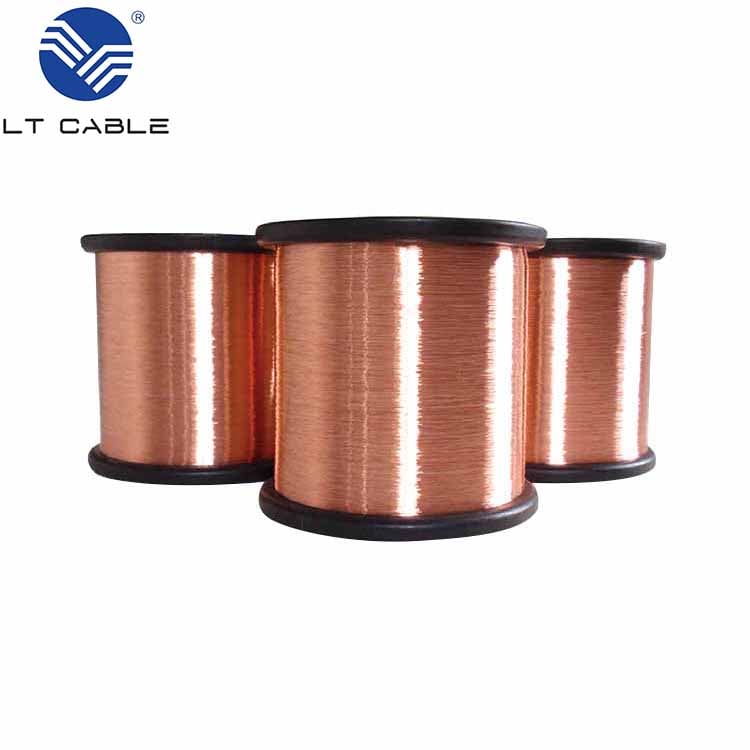
CCA wire actually has about 55 to 60 percent more DC resistance compared to pure copper because aluminum just doesn't conduct electricity as well. What does this mean? Well, there's going to be way too much voltage loss, which becomes a big problem especially with Power over Ethernet systems. When we talk about regular 100 meter cable runs, the voltage drops so low that things like IP cameras and wireless access points stop working properly. Sometimes they'll flicker on and off randomly, other times they just shut down completely. Tests done by third parties show that CCA cables keep failing the TIA-568 standards for DC loop resistance requirements, going well over the 25 ohm limit per pair. And then there's the heat issue too. All that extra resistance creates heat that wears out the insulation faster, making these cables unreliable over time in any setup where PoE is actively being used.
The idea that skin effect somehow cancels out CCA's material weaknesses doesn't hold up when looking at actual performance at high frequencies. When we get past 100 MHz, which is pretty standard for most Cat5e and Cat6 installations these days, CCA cables typically lose between 30 and 40 percent more signal strength compared to regular copper cables. The problem gets worse because aluminum has naturally higher resistance, which makes those skin effect losses even more pronounced. This leads to poor signal quality and more errors in data transmission. Tests on channel performance show that usable bandwidth can drop by as much as half in some cases. The TIA-568.2-D standard actually requires all conductors to be made from the same metal throughout the cable. This ensures stable electrical characteristics across the entire frequency range. But CCA just doesn't cut it here since there are these discontinuities where the core meets the cladding, plus aluminum itself attenuates signals differently than copper does.
The fact that aluminum melts at around 660 degrees Celsius, which is about 40 percent cooler than copper's melting point of 1085 degrees, creates real thermal risks for Power over Ethernet applications. When carrying the same electrical load, copper clad aluminum conductors run approximately 15 degrees warmer than pure copper wires. Industry professionals have reported instances where insulation actually melts and cables start to smoke in PoE++ systems that deliver over 60 watts. This situation goes against what's specified in NEC Article 334.80. That particular code section demands that any wiring placed inside walls or ceilings must stay within safe temperature limits when continuously powered. Plenum rated areas specifically cannot contain materials that might experience thermal runaway, and many fire officials now flag CCA installations as not meeting these standards during routine building inspections.
The TIA-568.2-D standard mandates solid copper conductors for all certified twisted pair structured cabling installations. The reason? Performance issues aside, there are serious safety concerns and lifespan problems with CCA that just don't cut it. Independent testing shows CCA cables fail the UL 444 standards when put through vertical tray flame tests and struggle with conductor elongation measurements too. These aren't just numbers on paper either they directly impact how well the cables hold up mechanically over time and their ability to contain fires if something goes wrong. Since getting a UL listing depends entirely on having uniform copper construction that meets specific resistance and strength criteria, CCA gets automatically ruled out of consideration. Anyone who specifies CCA for commercial work runs into major headaches down the road. Permits might get denied, insurance claims could be voided, and expensive rewiring becomes necessary especially in data centers where local authorities regularly check cable certifications during their infrastructure inspections.
Key violation sources: NEC Article 334.80 (temperature safety), TIA-568.2-D (material requirements), UL Standard 444 (communication cable safety)
While CCA wire carries a lower initial purchase price, its true cost emerges only over time. A rigorous Total Cost of Ownership (TCO) analysis exposes four major hidden liabilities:
When these factors are modeled across a 10-year horizon, pure copper consistently delivers 15–20% lower lifetime costs–even with its higher upfront investment–especially in mission-critical infrastructure where uptime, safety, and scalability are non-negotiable.
CCA wire can work for some situations where risk is low and duration is short. Think things like old school analog CCTV runs that don't go much beyond 50 meters or wiring for temporary events. These applications generally don't need strong power delivery, high quality signals, or meet all those permanent installation requirements. But there are limits. Don't try running CCA through walls, into plenum areas, or anywhere it might get too hot (over 30 degrees Celsius) according to NEC rules in section 334.80. And here's another thing nobody likes to mention but matters a lot: signal quality starts dropping off way before reaching that magical 50 meter threshold. At the end of the day though, what really counts is what the local building inspector says goes.
The use of CCA wiring remains strictly off limits across critical infrastructure applications. According to TIA-568.2-D standards, commercial buildings simply cannot use this type of cabling for backbone connections or horizontal runs because of serious issues including unacceptable latency problems, frequent packet losses, and unstable impedance characteristics. The fire hazards are particularly concerning for data center environments where thermal imaging reveals dangerous hot spots reaching over 90 degrees Celsius when subjected to PoE++ loads, which clearly exceeds what's considered safe operation. For voice communication systems, another major problem develops over time as the aluminum component tends to corrode at connection points, gradually degrading signal quality and making conversations harder to understand. Both NFPA 70 (National Electrical Code) and NFPA 90A regulations explicitly forbid installation of CCA cables in any permanent structured cabling setup, labeling them as potential fire risks that pose threats to life safety in buildings where people actually work and live.

Tailored advice, perfect fit solutions.

Efficient manufacturing, seamless supply.

Rigorous testing, global certifications.

Prompt assistance, ongoing support.
 EN
EN