Dec 23,2025
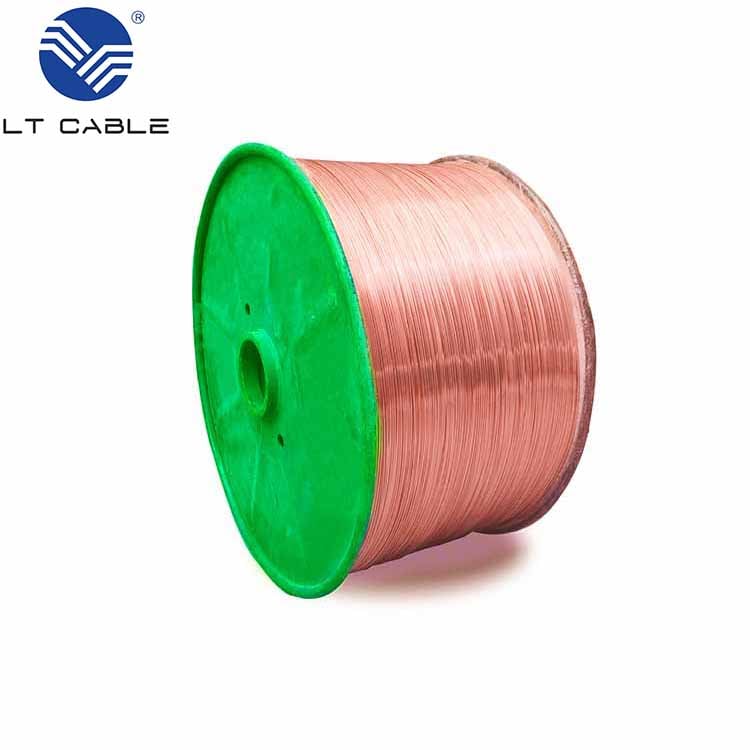
CCA wire has an aluminum core wrapped in a continuous copper coating, and copper makes up around 10% of the whole thing. The way these materials work together gives us something special. Aluminum is much lighter than copper, so CCA wires can be about 40% lighter than regular copper ones. At the same time, we get all the good stuff from copper too. Copper has great surface conductivity at 100% IACS which helps signals travel efficiently through the wire. Now here's where it gets interesting. While aluminum itself isn't as conductive as copper (only about 61% IACS), the copper layer is really thin, usually between 0.1 and 0.3 mm thick. This thin copper covering creates a path with very little resistance exactly where the high frequency currents need it most because of what's called the skin effect.
CCA wire is produced primarily through two metallurgical processes:
Rolling-bonded CCA is preferred for demanding applications like automotive harnesses and aerospace wiring, where mechanical integrity under vibration or thermal cycling is critical.
The skin effect basically describes how AC currents tend to bunch up near the surface of conductors, which is why CCA performs so well in RF and broadband applications. When we look at signals above 50 kHz, most of the actual current (over 85%) stays within just 0.2 mm from the outside of the wire. Since this outer layer is made of pure copper, CCA wires can deliver electrical characteristics almost exactly like regular solid copper cables used in coaxial systems, CATV installations, and short distance data transmission lines. But here's where it gets interesting for manufacturers: these cables still offer around 40% savings on materials costs compared to traditional copper solutions, plus they're much lighter too. That makes them particularly attractive for applications where weight matters but performance cannot be compromised.
CCA wire delivers a strategic balance of economic and functional benefits across three critical dimensions:
CCA wire has become pretty much standard stuff for coaxial cables and drop lines across today's CATV systems, broadband networks, and even 5G infrastructure setups. The main reason? Those aluminum cores inside cut down on overall cable weight somewhere around 40% which makes installing them overhead much easier and takes pressure off utility poles. Copper cladding does something pretty cool too - it helps maintain good high frequency transmission because of how signals tend to stick to the outer layers (that's called the skin effect if we get technical). Plus, these cables work great with all the old F-connectors and amplifier gear already out there. Most residential drop cables running from street poles to houses use CCA wiring nowadays since it offers decent value for money while still holding up over time and delivering clear signals. Just need to make sure folks follow those industry guidelines about signal loss limits when putting them in place though.
CCA works well in homes and other low voltage situations where circuits don't need maximum power. Most people see it in speaker wires since they don't require great conductivity, plus security systems that run on minimal electricity. When running Ethernet cables shorter than 50 meters, CCA can handle regular internet speeds found in Cat5e or Cat6 cables throughout most households and small offices. But watch out for Power over Ethernet setups because CCA just doesn't cut it there. The increased resistance causes bigger voltage drops and overheating problems. Another plus point? The outer layer resists corrosion better than pure copper, so these cables last longer in damp areas such as basements or underfloor spaces. Electricians should know that according to NEC regulations, CCA isn't allowed for main electrical wiring. They need to stick with proper materials for standard 120/240 volt circuits since aluminum expands differently when heated, which creates issues with connections over time.
According to the National Electrical Code (NEC), CCA wire is not allowed for branch circuit wiring which includes things like residential outlets, lighting systems, and appliance circuits because there are documented fire hazards associated with it. The problem comes down to aluminum having much higher electrical resistance compared to copper about 55 to 60 percent more actually. This causes significant heat buildup when electricity flows through especially at connection points. When we look at aluminum's properties, it melts at a lower temperature than copper and expands differently too. These characteristics lead to problems like loose connections over time, sparking, and damaged insulation. Because of all these issues, CCA wires fail to meet the UL/TIA fire safety requirements needed for wiring inside walls. Things get even worse in Power over Ethernet setups where continuous current flow adds extra strain on the system. Before anyone goes ahead with CCA installation, they should double check what their local building codes say and specifically review NEC Article 310.10(H) regarding conductor materials.
What is CCA wire?
CCA wire is a type of electrical wire featuring an aluminum core coated with a copper layer, combining benefits such as lighter weight and cost efficiency.
Why is CCA wire not used in branch-circuit installations?
The National Electrical Code restricts CCA wire for branch-circuit installations due to safety risks like fire hazards and loose connections associated with its higher electrical resistance.
Can CCA wire be used in high-frequency applications?
Yes, due to the skin effect, CCA wire efficiently handles high-frequency currents, making it suitable for RF and broadband applications.
What are the main applications of CCA wire?
CCA wire is mainly used in telecommunications, CATV systems, residential speaker and alarm wiring, and short-run Ethernet applications.

Tailored advice, perfect fit solutions.

Efficient manufacturing, seamless supply.

Rigorous testing, global certifications.

Prompt assistance, ongoing support.
 EN
EN