 EN
EN

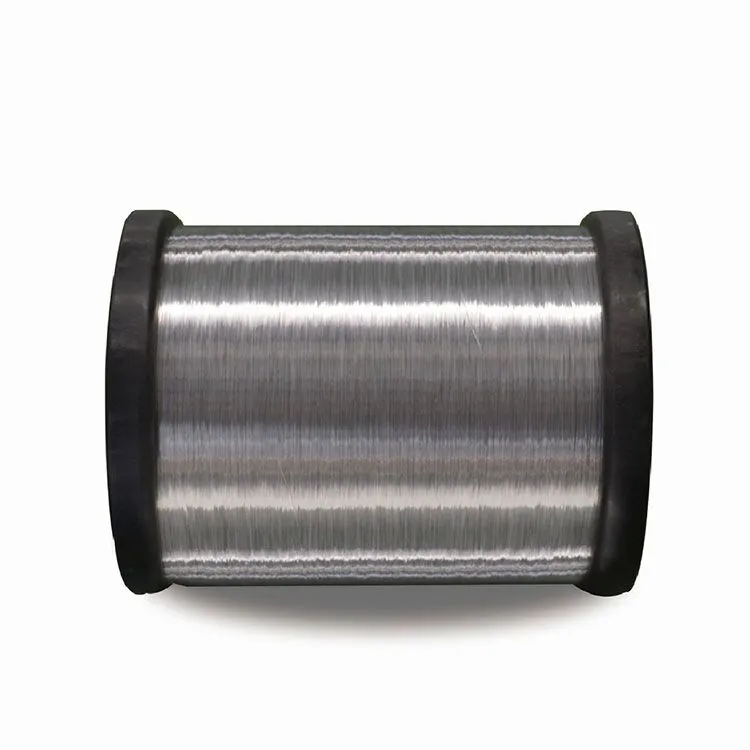
Why Aluminum Magnesium Alloy Wire Requires Specialized Packaging
Corrosion Sensitivity of 5xxx Series Wires Due to Magnesium Content
Aluminum magnesium alloy wire—particularly 5xxx series alloys containing 3–5% magnesium—is significantly more corrosion-prone than pure aluminum. Magnesium reacts readily with chloride ions (common in marine air or humid storage) to form hygroscopic compounds that attract and retain moisture, accelerating electrochemical degradation. Unprotected, this leads to pitting corrosion that can reduce electrical conductivity by up to 40% within six months (Kim et al., 2021). Because standard packaging fails to interrupt this reaction pathway, Vapor Corrosion Inhibitor (VCI) packaging is essential: it releases inhibiting molecules that adsorb onto the alloy surface and suppress corrosion during transit and storage.
Surface Integrity Risks: Oxidation, Galvanic Coupling, and Handling-Induced Damage
Three interrelated surface threats demand targeted packaging solutions:
- Oxidation: Exposure to ambient oxygen forms a non-conductive aluminum oxide layer exceeding 50 nm in thickness—enough to impair weld penetration and joint integrity.
- Galvanic coupling: Direct contact with dissimilar metals—such as steel pallets or copper-bearing tools—creates localized electrochemical cells, accelerating corrosion at rates up to 10× faster than normal.
- Handling damage: Abrasion during loading, unloading, or spooling exposes fresh, reactive aluminum, generating new nucleation sites for corrosion.
Specialized packaging—including non-metallic separators, edge protectors, and smooth-surface spools—mitigates all three risks while preserving the wire’s conductivity and surface finish required for precision applications like welding or aerospace stranding.
DIN-Compliant Spool Packaging for Aluminum Magnesium Alloy Wire
DIN 7622 & DIN 7623: Core Dimensions, Load Ratings, and Wood/Plastic Material Requirements
DIN 7622 (for metallic spools) and DIN 7623 (for wood and plastic spools) provide standardized dimensions, tolerances, and load-bearing specifications critical for aluminum magnesium alloy wire. These standards define precise flange diameters, barrel widths, bore sizes, and weight capacities—ranging from 100 kg to 1,500 kg depending on construction. While wood spools offer cost efficiency and vibration damping, their inherent moisture variability poses a corrosion risk for high-magnesium alloys. Plastic spools—typically HDPE or polypropylene—are preferred: they deliver consistent moisture resistance, lighter weight, and smoother barrel surfaces that minimize friction-induced abrasion. Compliance with DIN 7622/7623 also ensures seamless integration with automated unwinding systems, reducing setup time and feed errors at the point of use.
Secure Winding Protocols: Edge Protection, Tension Control, and Anti-Unwinding Locking
Preserving surface integrity begins at winding. Uniform tension—maintained within ±1–3% using programmable controllers—is vital to prevent telescoping, layer misalignment, or compression damage. Edge protection strips (e.g., felt or closed-cell foam) placed between flanges and wire eliminate galvanic contact points and mechanical scoring. An anti-unwinding lock—applied as a heat-shrink band or pressure-sensitive tape across the final wrap—secures the coil against vibration-induced loosening, especially important for spring-prone high-magnesium grades like 5056. Together, these protocols ensure clean, tangle-free wire delivery and reliable feeding into downstream processes such as welding, drawing, or cable stranding.
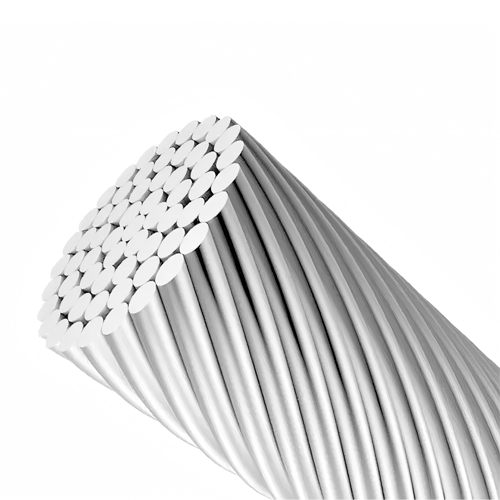
Moisture-Resistant Coil Packaging for Aluminum Magnesium Alloy Wire
Optimized Coil Diameter–Weight Ratios for Transport Stability and Handling Safety
Coil geometry directly impacts both physical stability and corrosion vulnerability. A low diameter-to-weight ratio yields tall, narrow coils prone to tipping during forklift handling; an excessively large diameter increases exposed surface area and oxidation risk. For 5xxx series wire, the optimal width-to-height ratio is ≥1.2:1—ensuring a low center of gravity and broad footprint for secure stacking and transport. As a practical example, a 500-kg coil with a 600-mm outer diameter and 300-mm height fits standard hoist equipment safely, minimizing rotational torque and eliminating the need for redundant strapping. This balance enhances logistics safety without compromising surface protection.
VCI Paper Wraps, Desiccant Integration, and Hermetic Sealing Best Practices
Moisture exclusion requires a layered defense. VCI paper wraps are applied directly to the coil surface: their volatile inhibitors selectively adsorb onto magnesium-rich grain boundaries, forming a nanoscopic barrier that disrupts galvanic corrosion. For extended or high-humidity shipments—especially transoceanic routes—a three-tier system is recommended: VCI wrap first, followed by desiccant (silica gel or molecular sieve) placed inside the coil core, then hermetic sealing in heat-sealed, metalized polyethylene. Seal integrity must be verified via vacuum-decay testing to confirm internal relative humidity remains below 5%. This integrated approach preserves original surface quality—eliminating pre-use cleaning and ensuring readiness for precision drawing or stranding operations.
Palletized Unit Loads: Stackability, Protection, and Logistics Efficiency for Aluminum Magnesium Alloy Wire
Palletizing transforms individual spools or coils into stable, stackable unit loads—critical for maintaining wire integrity across the supply chain. Because 5xxx series alloys are susceptible to stress cracking under uneven pressure, pallet design must ensure uniform weight distribution and avoid point-loading. Corner protectors, stretch-wrapping with moisture-resistant shrink hoods, and non-metallic strapping collectively shield against impact, vibration, and ambient humidity. Standardized footprints—800×1200 mm or 1000×1200 mm—optimize warehouse racking, container loading, and automated handling. This unified approach reduces per-unit freight costs by up to 20%, while consistently safeguarding surface quality from production through to end-user processing.
Table of Contents
- Why Aluminum Magnesium Alloy Wire Requires Specialized Packaging
- DIN-Compliant Spool Packaging for Aluminum Magnesium Alloy Wire
- Moisture-Resistant Coil Packaging for Aluminum Magnesium Alloy Wire
- Palletized Unit Loads: Stackability, Protection, and Logistics Efficiency for Aluminum Magnesium Alloy Wire


