 EN
EN

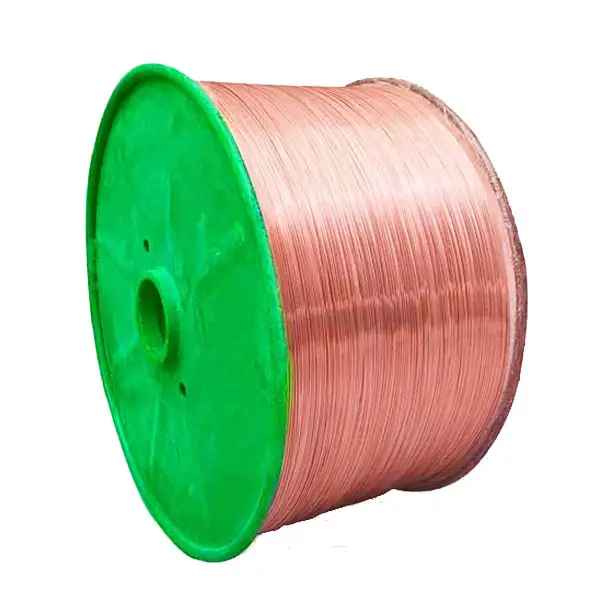
Electrical and Mechanical Performance of Stranded CCA Wire in Grounding Applications
Conductivity, Resistivity, and Thermal Limitations Under Fault Conditions
Stranded Copper-Clad Aluminum (CCA) wire has approximately 40% higher electrical resistivity than pure copper due to its aluminum core—directly impairing fault current dissipation. During short-circuit events, this elevated resistance causes accelerated heat buildup. Testing shows CCA conductors reach critical thermal thresholds 65% faster than copper under 30 kA fault currents, raising risks of conductor failure and arc flash. Thermal imaging confirms stranded CCA wires exceed 250°C within 0.1 seconds of fault initiation—well before sustained exposure approaches aluminum’s 660°C melting point. In lightning strikes or equipment faults—where rapid, reliable energy diversion is essential—this thermal instability fundamentally undermines grounding system safety and integrity.
Corrosion Vulnerability in Soil and Moist Environments
The bimetallic structure of stranded CCA creates inherent galvanic corrosion risks in grounding environments. When buried, soil electrolytes drive electrochemical reactions between the copper cladding and aluminum core, accelerating degradation—particularly in acidic (pH < 5.5) or high-salinity soils common in industrial and coastal areas. Field audits show corrosion rates in CCA are 78% faster than in solid copper under these conditions. Moisture infiltration through strand interfaces compounds the issue, leading to:
- Sectional loss: Up to 30% cross-sectional reduction within five years in saline soils
- Increased resistivity: Corrosion byproducts raise resistance by 200–400%, per 2023 soil testing data from the National Association of Corrosion Engineers (NACE)
- Mechanical failure: Strand fracturing occurs 3.2× more frequently than in solid copper during freeze-thaw cycles
These failures necessitate frequent inspection and premature replacement—eroding long-term reliability despite initial cost savings.
Code Compliance vs. Real-World Grounding Reliability: Where Stranded CCA Wire Falls Short
NEC 250.66 and IEEE 80–2013 Requirements for Ground Electrode Conductors
NEC 250.66 sets minimum sizing requirements for grounding electrode conductors based on service capacity, while IEEE 80–2013 emphasizes long-term material performance—including corrosion resistance, thermal stability, and mechanical durability in direct earth contact. Though stranded CCA may satisfy NEC’s sizing thresholds on paper, its aluminum core violates IEEE 80’s implicit material expectations: aluminum’s higher electrochemical activity accelerates corrosion in soil, progressively reducing effective cross-section and increasing impedance over time. This erosion of performance creates a dangerous disconnect between nominal code compliance and actual fault-handling capability—especially during worst-case events where safety margins are most critical.
Fault Current Dissipation Failure: Evidence from Sustained 30+ kA Testing
Laboratory validation under sustained 30+ kA fault conditions reveals CCA’s structural vulnerability. The aluminum core’s higher resistivity drives rapid temperature escalation, resulting in premature annealing—and in some cases, localized fusion—well below the thermal limits tolerated by copper. Such degradation compromises the conductor’s ability to maintain a low-impedance path to earth, directly violating the primary safety function of a grounding system. Empirical testing consistently shows stranded CCA fails to sustain fault current dissipation without irreversible damage, whereas solid copper retains dimensional stability and conductivity. For mission-critical infrastructure, real-world reliability demands survivability—not just momentary conformance.
Field-Validated Comparison: Stranded CCA Wire vs. Bare Copper vs. ACSR in Substation Ground Grids
Real-world utility audits from 2021–2023 provide decisive evidence of performance divergence among conductor types in substation grounding applications.
Utility Audit Data (2021–2023): 42% Higher Failure Rate in CCA-Grounded Systems
A review of 78 substation grounding systems across three regional utilities found installations using stranded CCA wire experienced a 42% higher failure rate than those using bare copper or aluminum-conductor steel-reinforced (ACSR) cable. Failures were predominantly attributed to thermal degradation after repeated fault exposures and accelerated corrosion at mechanical connections—especially where moisture ingress occurred. In contrast, bare copper grids showed negligible conductivity loss over the same period, and ACSR demonstrated robust mechanical resilience in high-stress zones such as grid perimeter bonds and riser transitions. These findings confirm that stranded CCA, while lower in upfront cost, introduces disproportionate long-term risk in applications where grounding integrity is non-negotiable.
Practical Alternatives for Cost-Conscious Grounding Projects
When full code compliance for main grounding electrodes is required, alternative materials offer balanced trade-offs—provided their limitations are rigorously respected.
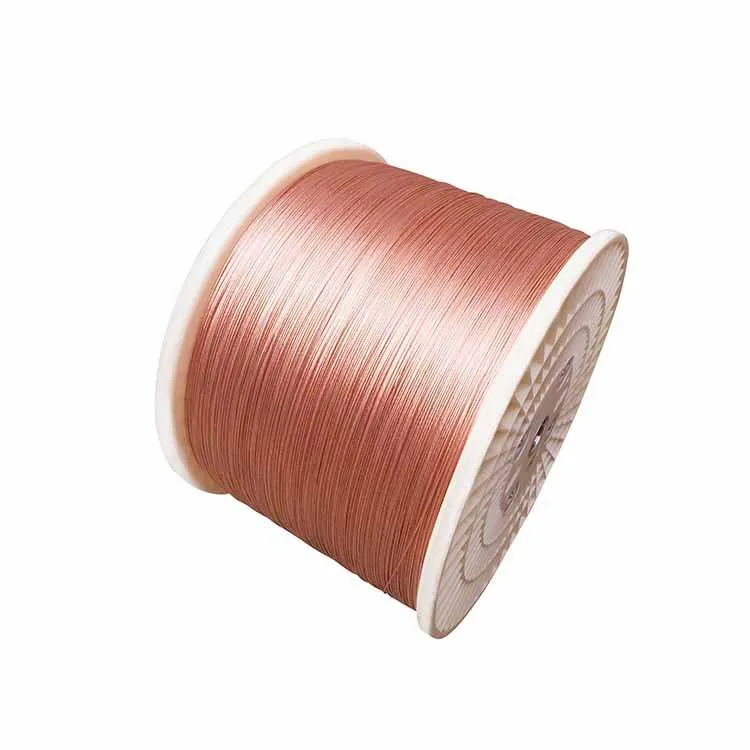
Hybrid Approach: Using Stranded CCA Wire for Non-Critical Bonding Only
For bonding non-critical interior equipment—such as metallic enclosures, control panels, or chassis where expected fault currents remain below 10 kA—stranded CCA can serve as a cost-effective option. Its 60% IACS conductivity is acceptable in these low-risk paths when properly upsized (e.g., #6 AWG CCA instead of #8 AWG copper), per guidance in NFPA 70E Annex D. However, CCA must never be used for ground rods, main bonding jumpers, or any conductor in direct, prolonged contact with soil or concrete—where galvanic corrosion and thermal stress converge to accelerate failure.
Cost-Benefit Analysis of Copper-Clad Aluminum (CCA) vs. Solid Copper vs. Galvanized Steel
| Material | Cost per 100 ft (approx.) | Conductivity (% IACS) | Corrosion Resistance | Recommended Use in Grounding |
|---|---|---|---|---|
| Solid copper | $85 | 100% | Excellent | All critical grounding paths, including rods, main electrodes, and buried conductors |
| Stranded CCA | $55 | 60% | Good only above-grade; poor when buried or exposed to moisture | Non-critical bonding only—never for earth-contact applications |
| Galvanized steel | $40 | 10% | Poor in acidic or moist soil; zinc coating depletes rapidly | Temporary grounding or remote rods in dry, alkaline soils only |
While CCA offers a ~35% material cost reduction versus solid copper, its 40% lower conductivity mandates larger conductors—and its prohibition in direct earth contact eliminates its viability for primary grounding functions. Galvanized steel, though least expensive, exhibits rapid deterioration in typical soil conditions, making it unsuitable for permanent installations. For enduring safety and compliance, solid copper remains the authoritative choice for all critical grounding roles.
FAQ Section
What are the primary disadvantages of stranded CCA wire in grounding applications?
Stranded CCA wire has higher electrical resistivity and faster thermal buildup under fault conditions, which increase risks like conductor failure and arc flash. It is also prone to galvanic corrosion when buried, particularly in acidic or saline soils.
Is stranded CCA wire compliant with industry codes?
While stranded CCA wire may meet NEC 250.66 sizing requirements, its performance falls short under IEEE 80–2013 standards due to material vulnerabilities such as corrosion and thermal instability.
Can stranded CCA wire be used for critical grounding functions?
No. Stranded CCA wire should not be used for ground rods, main bonding jumpers, or any conductor in prolonged contact with soil, as it risks premature failure.
What are viable alternatives to stranded CCA wire?
Solid copper is the best option for critical grounding paths due to its superior conductivity and corrosion resistance, while galvanized steel can be considered for temporary or non-critical applications in dry, alkaline soils.
Are there cost-effective ways to integrate stranded CCA wire?
Yes, stranded CCA wire can be used for non-critical bonding applications where expected fault currents remain below 10 kA, provided it is upsized correctly to compensate for lower conductivity.
Table of Contents
- Electrical and Mechanical Performance of Stranded CCA Wire in Grounding Applications
- Code Compliance vs. Real-World Grounding Reliability: Where Stranded CCA Wire Falls Short
- Field-Validated Comparison: Stranded CCA Wire vs. Bare Copper vs. ACSR in Substation Ground Grids
- Practical Alternatives for Cost-Conscious Grounding Projects
-
FAQ Section
- What are the primary disadvantages of stranded CCA wire in grounding applications?
- Is stranded CCA wire compliant with industry codes?
- Can stranded CCA wire be used for critical grounding functions?
- What are viable alternatives to stranded CCA wire?
- Are there cost-effective ways to integrate stranded CCA wire?


