 EN
EN

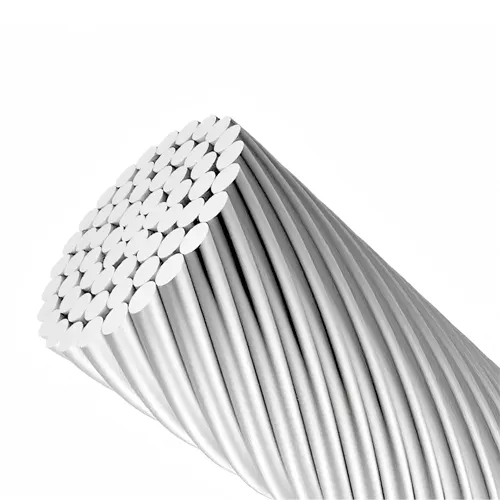
Why Stranded CCA Wire Resistance Differs from Pure Copper or Aluminum
Stranded CCA wire combines a high-purity aluminum core with a thin copper cladding. While this design reduces weight and cost, it fundamentally alters electrical performance compared to solid copper or pure aluminum conductors. The aluminum core has an electrical resistivity of roughly 0.0282 Ω·mm²/m at 20 °C—nearly 61% higher than copper’s 0.0175 Ω·mm²/m. As a result, even with the copper outer layer, the overall DC resistance is significantly higher than that of an equivalent-gauge pure copper wire. At direct current or low frequencies, current flows through the entire cross-section, so the aluminum dominates the resistance. The copper cladding improves performance only at high frequencies (above ~5 MHz) due to the skin effect, where current concentrates near the surface. Additionally, the stranded construction introduces air gaps and inter-strand contact resistance, further raising effective resistance versus a solid conductor of the same nominal size. These material and structural factors explain why stranded CCA wire typically exhibits 55–65% higher DC resistance than pure copper—and about 10–15% lower resistance than pure aluminum—of identical dimensions.
Key Electrical Properties and Resistivity Values for Stranded CCA Wire
Effective resistivity (ρ) range: 0.031–0.035 Ω·mm²/m and IACS-based correction
Stranded CCA wire does not share the resistivity of either pure copper or pure aluminum. Its effective resistivity falls between the two—typically 0.031 to 0.035 Ω·mm²/m at 20 °C—depending on the volume ratio of copper to aluminum in the cladding. This range reflects both the bulk contribution of the aluminum core and the limited influence of the thin copper layer under DC conditions. For standardized comparison, the International Annealed Copper Standard (IACS) defines pure copper as 100% conductivity (ρ = 0.01724 Ω·mm²/m). Stranded CCA generally achieves 60–65% IACS, meaning its conductivity is less than two-thirds that of copper. Designers can apply this correction directly: to estimate DC resistance, divide the theoretical copper resistance by 0.60–0.65. This avoids overestimating performance and ensures realistic system modeling.
Temperature coefficient and strand geometry effects on effective cross-sectional area
The temperature coefficient of resistance (α) for stranded CCA is approximately 0.0038–0.0040 per °C at 20 °C, slightly lower than pure copper (0.00393) due to aluminum’s dominant thermal response. Engineers must adjust resistance for operating temperature using:
R₂ = R₁ [1 + α(T₂ – T₁)],
particularly in environments with wide ambient fluctuations.
Strand geometry also impacts resistance. Twisting strands increases the effective current path length and introduces small air gaps between conductors. As a result, the effective cross-sectional area is reduced by 2–5% relative to the nominal circular area—depending on strand count and lay length. Crucially, resistance calculations must use the net metal area, not the overall bundle diameter. Using the full circle area overstates conductive capacity and underestimates resistance; referencing only the actual copper-plus-aluminum cross-section ensures accuracy aligned with real-world performance.
Step-by-Step DC Resistance Calculation for Stranded CCA Wire
Step 1: Measure or obtain nominal diameter, strand count, and total conductive area
First, gather the physical specifications: individual strand diameter and total strand count. Calculate the cross-sectional area of one strand using πd²/4, then multiply by the number of strands to determine total conductive area (A) in mm². For example, a 7-strand bundle with 0.25 mm-diameter strands yields:
A = 7 × (π × 0.25² / 4) ≈ 0.344 mm².
This net metal area—not the overall insulated or bundled diameter—is the correct value for resistance calculation.
Step 2: Apply CCA-specific resistivity and temperature adjustment
Use an effective resistivity (ρ) of 0.031–0.035 Ω·mm²/m, selecting the upper end for thinner copper cladding or higher aluminum content. Then adjust for operating temperature using:
R₂ = R₁ [1 + α(T₂ − 20)],
where α ≈ 0.00393 per °C is appropriate for most CCA formulations. This accounts for the ~0.4% resistance increase per degree above 20 °C.
Step 3: Compute resistance and validate against industry benchmarks (e.g., 21.00 Ω limit)
Apply the standard DC resistance formula:
R = (ρ × L) / A,
where L is conductor length in meters and A is the net conductive area from Step 1. For instance, a 100-meter length of the 7-strand CCA wire above (A ≈ 0.344 mm², ρ = 0.033 Ω·mm²/m) yields:
R ≈ (0.033 × 100) / 0.344 ≈ 9.6 Ω at 20 °C.
Always compare results against relevant industry limits—such as the 21.00 Ω/km maximum for certain telecom-grade cables—to verify compliance. If calculated resistance exceeds the benchmark, consider increasing strand count, gauge size, or switching to a higher-copper-content CCA variant.
FAQs
Why does stranded CCA wire have a higher DC resistance than pure copper wire?
The higher DC resistance in stranded CCA wire is primarily due to the aluminum core, which has higher resistivity than copper. Additionally, stranded construction introduces air gaps and inter-strand contact resistance, further increasing overall resistance.
What is the effective resistivity of stranded CCA wire?
The effective resistivity of stranded CCA wire typically ranges from 0.031 to 0.035 Ω·mm²/m at 20 °C, depending on the copper-to-aluminum volume ratio.
How does temperature affect stranded CCA wire resistance?
Stranded CCA wire has a temperature coefficient of resistance (α) of approximately 0.0038–0.0040 per °C. Its resistance increases by about 0.4% for every degree above 20 °C. Engineers can calculate resistance at different temperatures using the formula: R₂ = R₁ [1 + α(T₂ – T₁)].
What is the significance of strand geometry in resistance calculations?
Strand geometry affects the effective cross-sectional area, as twisting strands and air gaps reduce it by 2–5%. Using the actual net metal area ensures accurate resistance calculations and prevents overestimating the wire's conductive capacity.


