 EN
EN

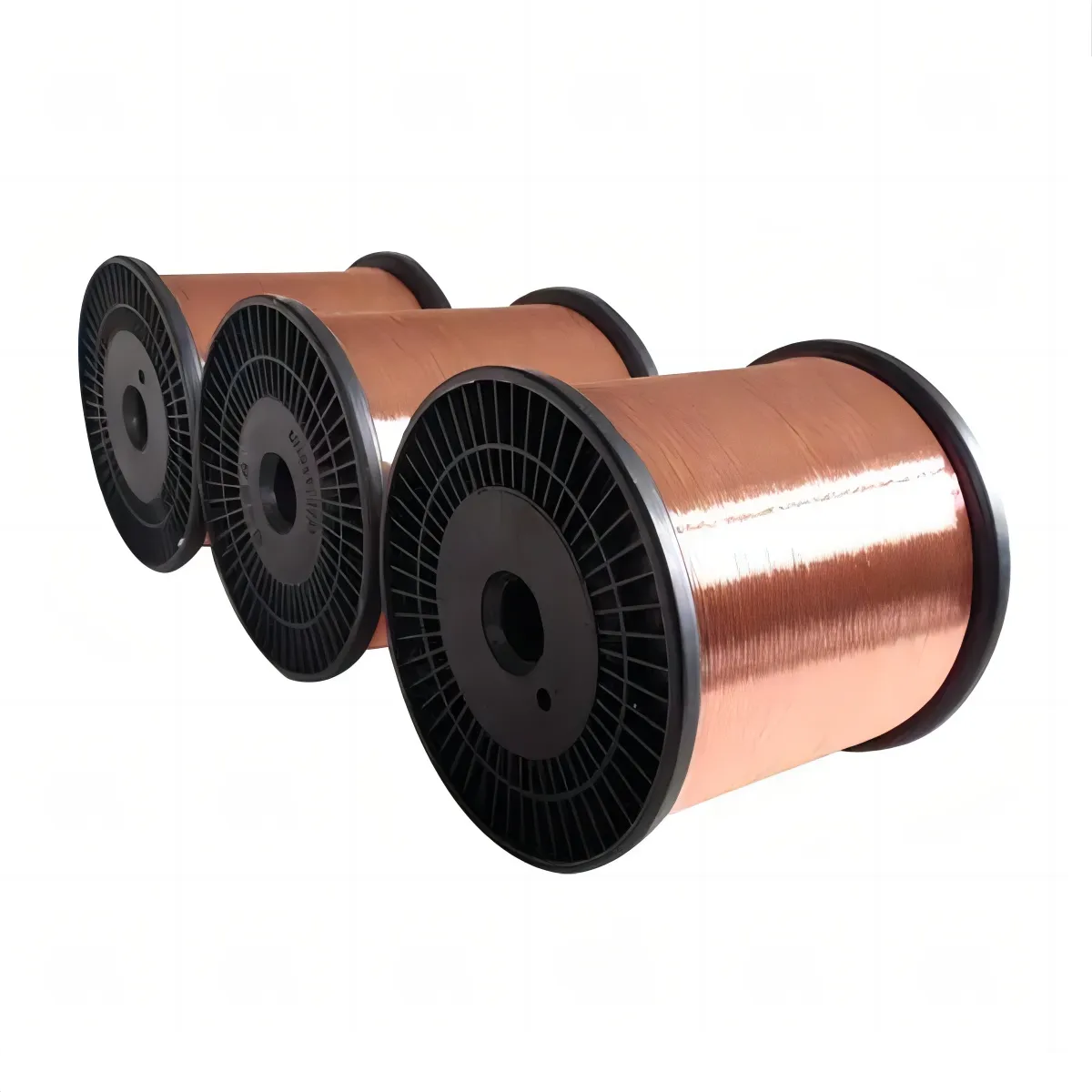
Moisture Control for Stranded CCA Wire Export Shipments
Why moisture degrades conductivity and accelerates oxidation in stranded CCA wire
Moisture is the primary threat to stranded CCA wire during long-haul sea freight. Water vapor penetrating packaging initiates galvanic corrosion at the aluminum–copper interface—increasing electrical resistance and reducing conductivity by up to 15% within weeks. Stranded construction compounds the risk: its greater surface area provides more entry points for moisture than solid wire. Over time, localized corrosion creates hot spots that can trigger premature failure in downstream equipment. Even trace humidity on humid equatorial routes is enough to compromise electrical integrity before the wire reaches the buyer.
ASTM D5667-22 compliance: Enforcing ≤0.1% moisture threshold and verification methods
ASTM D5667-22 mandates a maximum moisture content of 0.1% by weight for stranded CCA wire. Compliance is verified using Karl Fischer titration or loss-on-drying testing on representative samples from each production lot—conducted immediately before packaging. Documentation of pre-packaging dryness is essential: failure to meet the standard risks container rejection and demurrage fees at destination ports. Consistent testing also strengthens the exporter’s position against post-delivery corrosion claims. Inline moisture sensors during extrusion support real-time control without disrupting throughput.
Desiccant vs. vacuum-sealed packaging: Efficacy comparison from ASEAN port audit data (2023)
A 2023 ASEAN port audit compared packaging strategies for stranded CCA wire. Vacuum-sealed bags with metallized film maintained internal relative humidity below 20% throughout the full 30-day shipping cycle—even under tropical temperature fluctuations. In contrast, desiccant packs inside polyethylene wraps failed to sustain equivalent dryness under the same conditions. Vacuum sealing reduced moisture-related conductivity losses by over 90% versus desiccant-only packaging. Though vacuum packaging adds ~12% to material costs and demands puncture-aware handling, its reliability justifies the investment for high-value or extended-transit shipments.
Optimized Loading Protocols for Stranded CCA Wire Containers
Preventing coil deformation: Weight distribution, stacking height limits, and vibration mitigation for sea freight
Coil deformation during transit directly impairs conductivity and accelerates corrosion. Prevention starts with balanced weight distribution across transport units and strict adherence to stacking height limits—no more than 1.8 meters—to avoid compression damage, validated per ISO 22H2 tray testing. Shock-indicator cards installed at tier connection points verify vibration-dampening performance throughout transit. Compression-resistant edge protectors must be used on all reels, and elevation supports must withstand ≥11.3 kg/cm² without buckling, as confirmed in the Container Safety Association’s 2024 report. Cross-tie securing reduces coil movement probability by 78% compared to end-blocking alone—and when combined with pneumatic trailer suspension, these measures significantly reduce structural fatigue in maritime logistics chains.
Case study: Maximizing 40-ft HQ container utilization for 2.5 mm² stranded CCA wire (1,280 kg net load, 92% volume efficiency)
A benchmark shipment loaded 14 reels—each containing 91.4 kg of 2.5 mm² stranded CCA wire—into a 40-ft High Cube container while fully complying with FMGSCP 11.1 weight distribution standards. The configuration featured triple stacking on reinforced wire frames, diagonal strapping at 45° intervals for lateral stabilization, and overhead clearance limited to 6 cm. Replacing traditional pallets with collapsible wire cages enabled direct reeving-layer anchoring and improved wall utilization. Post-transit inspections confirmed zero deformation incidents at 92% volumetric efficiency—exceeding the industry baseline of 85% and validating this approach for high-volume exporters.
Global Regulatory Marking Requirements for Stranded CCA Wire Exports
Exporting stranded CCA wire requires precise alignment with regional labeling regulations. Certification marks, conductor specifications, and language requirements vary significantly across markets—and noncompliance triggers customs delays, fines, or rejected consignments.
Harmonizing UL 44, IEC 60228, and GSO labeling mandates on reels, tags, and packaging
UL 44 governs safety marking for North American markets; IEC 60228 defines global conductor classification; and GSO mandates bilingual labeling and additional symbols for Gulf Cooperation Council countries. All three standards require the certification mark, conductor size, and temperature rating to appear directly on the reel and accompanying tag. Rather than redesigning packaging per order, exporters should develop a master label template accommodating all three schemes—and apply region-specific overlays (e.g., UL or GSO stickers) just prior to shipment. This harmonized strategy ensures compliance across jurisdictions while streamlining production and reducing labeling errors.
FAQ
Why is moisture control essential for stranded CCA wire shipments?
Moisture can initiate galvanic corrosion in stranded CCA wire, reducing conductivity and increasing the risk of failure. Effective moisture control prevents these issues during transit.
What is ASTM D5667-22, and why is it important?
ASTM D5667-22 sets a maximum moisture content of 0.1% for stranded CCA wire. Compliance ensures product quality, minimizes corrosion risks, and meets international standards.
How does vacuum-sealed packaging differ from desiccant-only packaging?
Vacuum-sealed packaging is more effective in maintaining low humidity levels during transit, thereby significantly reducing moisture-related losses compared to desiccant-only packaging.
What are the loading protocols to prevent coil deformation?
Protocols include balanced weight distribution, strict stacking height limits, edge protection, and vibration mitigation measures to minimize coil deformation and maintain product integrity.
How can exporters meet global regulatory labeling requirements?
Developing a master label template compliant with UL 44, IEC 60228, and GSO standards and applying region-specific overlays ensures seamless compliance with labeling regulations.
Table of Contents
- Moisture Control for Stranded CCA Wire Export Shipments
- Optimized Loading Protocols for Stranded CCA Wire Containers
- Global Regulatory Marking Requirements for Stranded CCA Wire Exports
-
FAQ
- Why is moisture control essential for stranded CCA wire shipments?
- What is ASTM D5667-22, and why is it important?
- How does vacuum-sealed packaging differ from desiccant-only packaging?
- What are the loading protocols to prevent coil deformation?
- How can exporters meet global regulatory labeling requirements?


