 EN
EN

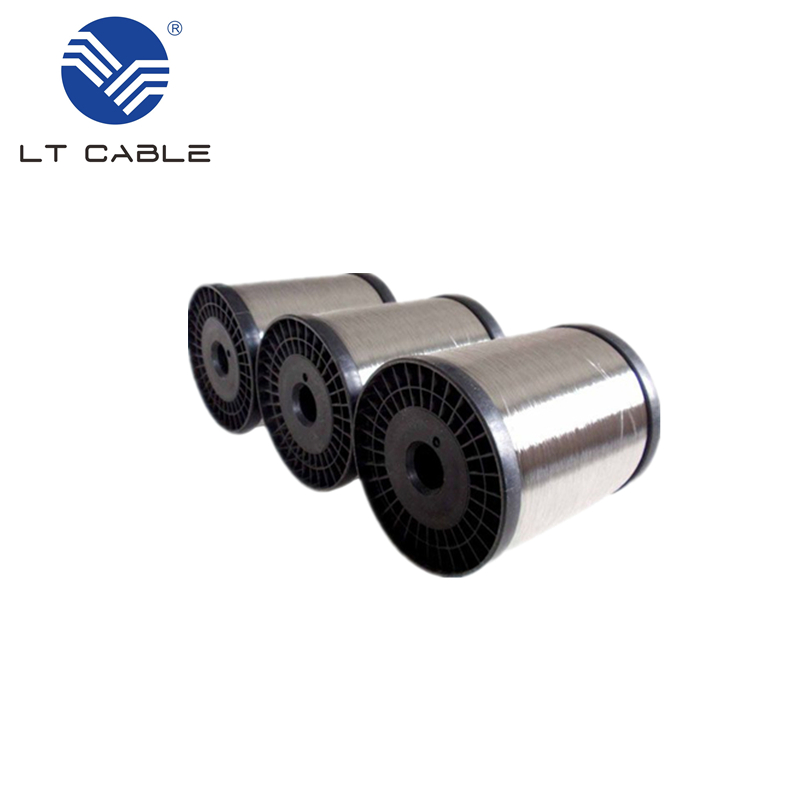
How TCCA Wire Achieves Superior Corrosion Resistance in Salt-Rich and High‑Humidity Conditions
TCCA (Tin‑Plated Copper Clad Aluminum) wire merges an aluminum core with a copper cladding and an outer tin coating to create a robust defense against corrosion in marine and high‑humidity settings. The tin layer not only bars moisture and chloride ions but also shifts the electrochemical balance at the metal interface, preventing the galvanic reactions that rapidly degrade bare conductors. This section details the protective mechanism and validates it through standardized salt‑spray testing.
The Electrochemical Role of Tin Plating in Blocking Galvanic Corrosion
Galvanic corrosion occurs when two dissimilar metals—such as copper and aluminum—in contact form a corrosion cell in the presence of an electrolyte like seawater or humid air. In bare CCA, aluminum’s more anodic potential causes it to corrode preferentially, leading to pitting, conductor thinning, and eventual failure. TCCA wire disrupts this cycle: the tin plating acts as a sacrificial anode with a half-cell potential intermediate between aluminum and copper. It corrodes slowly and uniformly, forming a stable, self-limiting oxide film that passivates the surface and blocks electrolyte ingress. Crucially, even if scratched, tin provides localized cathodic protection—maintaining integrity across adjacent areas. Unlike copper, which forms non-adherent red rust when exposed to chlorides, tin forms a tightly adherent, corrosion-inhibiting chloride compound. This dual action—barrier formation and electrochemical stabilization—ensures long-term conductor integrity through repeated wet-dry cycles, reducing maintenance and harness replacements.
ASTM B117 Salt Spray Test Results: TCCA vs. Bare CCA (500‑Hour Benchmark)
The ASTM B117 continuous salt‑spray test provides a rigorous, industry‑standard benchmark for corrosion resistance. In 500‑hour exposures at 35 °C with 5 % NaCl solution, TCCA wire consistently outperforms bare CCA across all key degradation metrics. The table summarizes representative results for 16 AWG conductors:
| Parameter | TCCA Wire (500 h) | Bare CCA (500 h) |
|---|---|---|
| Surface condition | Minimal white rust, no red rust | Heavy red rust, extensive pitting |
| Mass loss | < 0.15 % | 1.8 % |
| Electrical resistance change | + 3.2 % | + 28.5 % |
| Visual copper exposure | None | Visible copper layer erosion |
Bare CCA shows deep pitting and sharp resistance rise—evidence of aggressive galvanic attack. TCCA retains a smooth, uniform surface and negligible performance drift. These results confirm the tin layer’s effectiveness in sealing the underlying copper-aluminum structure from salt-laden moisture, preserving both conductivity and mechanical strength in conditions typical of offshore, coastal, and tropical deployments.
Beyond Corrosion: Enhanced Electrical Reliability and Mechanical Resilience of TCCA Wire
Improved Solderability and Vibration-Tolerant Joint Integrity in Marine Wiring Harnesses
TCCA wire delivers dependable solderability and vibration-resistant connections essential for marine wiring harnesses. The tin coating prevents oxidation during storage and handling, enabling rapid, consistent solder wetting and minimizing cold joint formation. Beneath the tin, the copper layer ensures strong intermetallic bonding with solder, while the lightweight aluminum core reduces overall harness mass—a critical advantage in high-vibration shipboard environments. In service, TCCA joints resist fatigue cracking and fretting corrosion, maintaining low contact resistance even after prolonged exposure to engine vibration and salt spray. Field data from offshore installations show a marked reduction in intermittent electrical faults compared to bare CCA assemblies, confirming the combined benefit of tin plating, stranded construction, and optimized metallurgy for long-term joint integrity.
Flex Life Performance: Meeting IEC 60228 Class 5 After 10,000+ Bending Cycles
Stranded TCCA wire meets the demanding flex-life requirements of IEC 60228 Class 5, enduring over 10,000 bending cycles without loss of conductivity. Fine-strand geometry distributes mechanical stress evenly, mitigating work hardening and strand breakage common in solid conductors. Critically, the tin plating remains ductile and crack-free under repeated flexing—preserving its corrosion barrier function over time. Accelerated lab testing confirms TCCA achieves up to ten times the flex life of solid CCA before failure, making it ideal for dynamic applications such as articulated marine machinery and cable carriers. Independent verification shows full retention of electrical integrity and mechanical stability after 10,000 cycles—meeting the Class 5 standard for flexible conductors used in tight routing and moving parts on vessels. This resilience directly translates into fewer maintenance interventions and greater system uptime in harsh, high-motion marine environments.
TCCA Wire Lifespan Economics: Lower Total Cost of Ownership in Harsh Environments
Real-World Validation: 42% Reduction in Wiring Replacement on Offshore Vessels Over 8 Years
Field data from offshore support vessels operating in North Sea conditions demonstrates a 42% drop in wiring harness replacements across an 8‑year monitoring period. This reduction is directly attributable to TCCA wire’s tin‑plated copper‑clad aluminum construction, which resists galvanic corrosion and creep under constant salt spray. Maintenance crews previously replaced unprotected CCA conductors every 24–30 months; with TCCA, service intervals now exceed five years. Fewer unplanned repairs have extended vessel uptime and lowered labor costs—validating the material’s reliability in mission‑critical applications where wiring failure can trigger safety incidents.
Lifecycle Cost Analysis: Balancing Upfront Premium Against Maintenance, Downtime, and Safety Risk Savings
A lifecycle cost analysis shows that TCCA wire’s 15–20% purchase premium is offset by substantial operational savings:
| Cost driver | Bare CCA wire | TCCA wire | Net saving |
|---|---|---|---|
| Initial procurement | Lower | Moderate premium | – |
| Corrective maintenance | Frequent (every 2–3 yr) | Rare (typically 5 yr) | 60% fewer call‑outs |
| Planned downtime | 4–6 days/year | <1 day/year | 80% reduction |
| Replacement parts | 3–4 cycles over 8 years | 1–2 cycles | 42% lower frequency |
| Safety & liability risk | Elevated | Significantly reduced | Avoided cost |
When downtime costs approach $15,000 per day, the TCCA premium is recovered within the first two years. Procurement teams using total cost of ownership (TCO) models consistently select TCCA for environments where humidity and salt accelerate decay—prioritizing long-term reliability over short-term cost.
Cross-Industry Applications of TCCA Wire Where Humidity and Corrosion Threaten System Integrity
TCCA wire solves critical reliability challenges across industries where moisture, salt spray, and aggressive chemicals rapidly degrade conventional conductors. By combining the lightweight economy of aluminum with a tin barrier that blocks galvanic corrosion, TCCA consistently outperforms bare copper and standard CCA in harsh environments. Key applications include:
- Marine and offshore – Navigation lights, bilge pump wiring, and deck sensors enduring constant salt‑water exposure.
- Coastal infrastructure – Wind turbine condition monitoring, bridge structural health systems, and port automation.
- Wastewater treatment – Submersible pump cables, level transmitters, and control panels exposed to hydrogen sulfide and humidity.
- Agricultural automation – Irrigation controllers, greenhouse climate sensors, and soil moisture probes in high‑humidity zones.
- Humid industrial environments – Paper mills, food processing lines, and cooling tower instrumentation where wet‑process conditions accelerate corrosion.
A longitudinal study of offshore supply vessels documented a 42% reduction in wiring harness replacements over eight years after switching to TCCA—directly attributable to the tin‑plated barrier’s ability to preserve joint integrity even under continuous salt fog. Such proven durability makes TCCA the go‑to medium for any system where moisture intrusion would otherwise cause premature failure, unplanned downtime, and elevated safety risks.
FAQs About TCCA Wire Usage in Corrosive Environments
What is TCCA wire, and how is it constructed?
TCCA wire is Tin-Plated Copper-Clad Aluminum wire, constructed with an aluminum core, a copper cladding, and an outer tin coating. This unique structure provides superior corrosion resistance and mechanical reliability in salt-rich and high-humidity environments.
How does the tin plating prevent corrosion?
The tin plating acts as a sacrificial anode, forming a stable oxide film that blocks electrolyte ingress and neutralizes galvanic reactions between copper and aluminum. It also provides localized cathodic protection if scratched.
What evidence supports TCCA wire’s corrosion resistance?
According to ASTM B117 salt spray tests, TCCA wire outperformed bare Copper-Clad Aluminum (CCA) across key parameters like corrosion, mass loss, and electrical resistance changes after 500 hours of salt exposure.
Can TCCA wire resist long-term mechanical stress?
Yes, TCCA wire meets IEC 60228 Class 5 standards, enduring over 10,000 bending cycles without losing conductivity, making it suitable for dynamic applications like cable carriers and marine machinery.
Does using TCCA wire save on costs over time?
Yes, despite its higher upfront cost, TCCA wire offers lower maintenance, downtime, and safety risk costs. A lifecycle cost analysis shows a significant reduction in replacement and correctional maintenance expenses, making it more cost-effective over time.
What industries benefit most from TCCA wire?
Industries like marine, coastal infrastructure, wastewater treatment, agriculture, and humid industrial settings benefit significantly from the durability and corrosion resistance that TCCA wire provides.
Table of Contents
- How TCCA Wire Achieves Superior Corrosion Resistance in Salt-Rich and High‑Humidity Conditions
- Beyond Corrosion: Enhanced Electrical Reliability and Mechanical Resilience of TCCA Wire
- TCCA Wire Lifespan Economics: Lower Total Cost of Ownership in Harsh Environments
- Cross-Industry Applications of TCCA Wire Where Humidity and Corrosion Threaten System Integrity
- FAQs About TCCA Wire Usage in Corrosive Environments


