 EN
EN

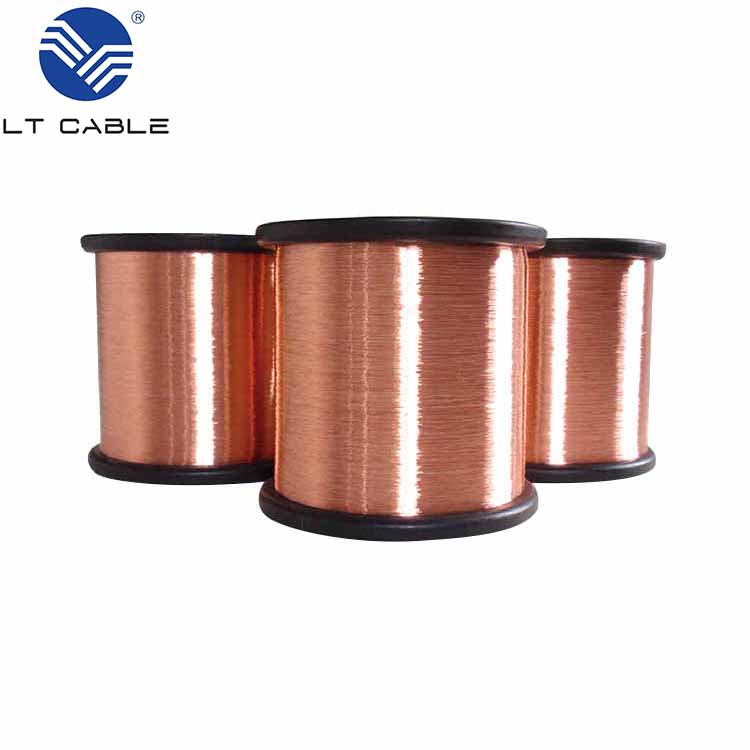
Why TCCA Wire Is Prone to Oxidation in Transit
Tin plating limitations: How micro-pores and galvanic coupling with aluminum substrate accelerate corrosion
TCCA wire uses a tin coating over copper-clad aluminum to improve solderability and corrosion resistance—but the tin layer is inherently porous. Microscopic voids formed during electroplating allow moisture and oxygen direct access to the copper-aluminum interface. Once exposed, the aluminum core rapidly forms a non-conductive aluminum oxide film, increasing joint resistance even before energization. More critically, in the presence of an electrolyte—such as condensed humidity—a galvanic cell forms among tin, copper, and aluminum. Aluminum acts as the anode and corrodes preferentially; the cathodic tin coating accelerates this process. Unlike copper oxides, which remain conductive, aluminum oxide is an electrical insulator. Vibration and thermal expansion during shipping further widen micro-pores, continuously exposing fresh aluminum and driving progressive degradation that can lead to premature field failures.
Environmental triggers: Humidity, salt aerosols, and thermal cycling in marine and air freight environments
Transit conditions intensify TCCA wire’s inherent vulnerabilities. Marine shipments expose spools to persistent high humidity and chloride-rich salt aerosols, which penetrate packaging and form a corrosive electrolyte at the tin-copper-aluminum interface. Air freight subjects cargo to extreme temperature swings—from sub-freezing at altitude to high ground temperatures—stressing the metallurgical bond between copper cladding and aluminum core. Repeated thermal cycling creates micro-gaps at the interface; per SAE USCAR-21 testing, just 200 cycles can increase electrical resistance by 15–20%. When combined with condensation, these conditions accelerate galvanic corrosion beneath the tin layer. Even brief exposure to tropical maritime environments can initiate oxidation, compromising wire suitability for high-reliability connections by the time it reaches the installation site.
VCI Packaging Solutions Optimized for TCCA Wire
Selecting VCI materials compatible with tin coatings: Bags vs. stretch film vs. paper—performance trade-offs
VCI (Volatile Corrosion Inhibitor) selection for TCCA wire requires precise chemical compatibility with its tin plating. Standard amine-based inhibitors—effective for ferrous metals—can react with tin to form a dark, non-conductive tarnish, a critical failure mode for an electrical conductor. The material carrier—bag, film, or paper—dictates inhibitor release rate and physical durability. Key trade-offs are summarized below:
| VCI Material | Key Advantages | Primary Limitations for TCCA Wire |
|---|---|---|
| VCI Bags (Polyethylene) | Excellent moisture barrier (<0.5 g/m²/day); strong heat-seal integrity; high puncture resistance. | Slower initial VCI emission; requires sufficient enclosed air volume to saturate—potentially impractical for a single spool. |
| VCI Stretch Film | Rapid VCI emission due to high surface area; conforms tightly to spools, eliminating air pockets where condensation can pool. | Lower inherent moisture barrier than sealed bags; prolonged surface contact may concentrate inhibitor residue on the tin coating. |
| VCI Paper | Fastest vapor-phase saturation; dual function as desiccant and acid-gas scavenger; robust against shock and vibration. | Zero standalone moisture barrier; requires outer waterproof wrap; physical contact under pressure may imprint patterns on soft tin surfaces. |
The optimal solution is often hybrid: wrapping the spool first in neutral-grade VCI paper for immediate dry-surface protection, then sealing it in a high-barrier VCI bag. This decouples corrosion inhibition from moisture exclusion, shielding both the tin plating and aluminum substrate from galvanic and atmospheric attack. Crucially, avoid direct contact between the tin coating and films containing aggressive inhibitor chemistries—instead prioritize formulations validated for multi-metal compatibility via ASTM B117 salt spray testing for 450 hours.
Validating VCI efficacy: Emission rate, tropical stability, and shelf-life retention under real-world shipping conditions
Supplier certification alone is insufficient; VCI performance must be verified under simulated shipping conditions. Emission rate—measured as weight loss of a VCI emitter over 24 hours at 20°C—is foundational. Too low a rate fails to saturate the package quickly, leaving TCCA wire vulnerable early in transit; too high a rate depletes vapor pressure prematurely, shortening protection during extended ocean voyages.
Tropical stability is the definitive test. A 30-day chamber cycle—alternating between 35°C/85% RH and 45°C/95% RH every 12 hours—mimics equatorial container ship conditions. Effective VCI must prevent both white rust on tin and filiform corrosion, which initiates at tin micro-pores and propagates via the tin-aluminum galvanic couple.
Shelf-life retention is equally vital. Intact, sealed VCI packaging must maintain full protective efficacy for at least 18 months in controlled warehouse storage. This is confirmed via gas chromatography analysis of headspace vapor, verifying inhibitor concentration remains above the threshold required to sustain a protective monolayer on metal surfaces—establishing a reliable expiration date for end-user inventory.
Moisture Barrier Strategies That Work for TCCA Wire
Effective moisture exclusion is the primary defense against rapid TCCA wire oxidation during overseas shipping. Because tin-plated surfaces are permeable to water vapor through micro-pores—and because the aluminum substrate forms a galvanic couple that accelerates corrosion once moisture condenses—a robust physical barrier is mandatory.
Standard polyethylene packaging falls short: low-density PE can exceed 10 g/m²/day MVTR under tropical conditions (ASTM F1249, 2022). In contrast, laminated foil barrier bags—with integrated aluminum layers—reduce MVTR to less than 0.01 g/m²/day, effectively blocking water vapor transport. For TCCA wire shipments, these foil-laminated pouches are routinely paired with desiccant packs to absorb residual internal moisture and sealed with heat-welded closures for hermetic integrity.
Vacuum packaging removes ambient air and moisture entirely, minimizing condensation risk from temperature fluctuations in air or sea freight. Integrated humidity indicator cards provide visual confirmation of dry internal conditions throughout transit. For reels and coils, a secondary over-wrap of moisture-resistant stretch film—or drum liners with gasketed lids—adds critical protection against physical damage and moisture ingress. Selection depends on shipping duration, climate exposure, and end-use sensitivity—but all TCCA wire packaging must maintain near-zero internal humidity to prevent field failures.
End-to-End Packaging Controls to Minimize Field Failures
Drum sealing, plastic overwrap, gasketed lids, and oxidized-end trimming: Proven manufacturer interventions
Sustaining product integrity demands systemic process controls—not just material choices. Across multi-zone logistics chains, a single spool may experience repeated humidity and temperature shifts; inconsistency at any step risks cascade failure. A 2023 analysis of electrical distribution failures identified improper drum sealing as the root cause in 18% of moisture-related claims (per a leading material testing laboratory).
The foundation is rigorous spooling discipline: wire ends showing even minor discoloration must be trimmed back to bright, oxide-free metal before primary wrapping begins. Surface oxides can seed galvanic corrosion that propagates undetected beneath protective layers.
Post-spooling, a high-barrier plastic overwrap—typically co-extruded with ultra-low MVTR—is essential. It must be tightly heat-sealed, not taped, to ensure hermetic closure. For heavy-gauge TCCA wire on large wooden reels, overwrap alone is inadequate. Leading manufacturers use gasketed metal or rigid plastic drum lids that clamp securely, preventing both physical damage and water ingress during vertical stacking.
The final control is a documented quality gate: vacuum-decay testing on a statistical sample of sealed drums detects microscopic leaks far more reliably than visual inspection. This end-to-end protocol—from cut to container seal—directly correlates with reduced incidence of field-deployed oxidation anomalies.
FAQ
Why is TCCA wire prone to oxidation during transportation?
TCCA wire is vulnerable to oxidation due to the porous nature of the tin plating, exposure to humidity, salt aerosols, and thermal cycling during transit, which accelerate the formation of non-conductive aluminum oxide and galvanic corrosion.
How does galvanic corrosion affect TCCA wire?
When moisture acts as an electrolyte, it creates a galvanic cell between the tin, copper, and aluminum layers. Aluminum serves as an anode and corrodes preferentially, resulting in increased electrical resistance and potential field failures.
What VCI materials are best for protecting TCCA wire?
The optimal solution combines neutral-grade VCI paper for immediate protection and a high-barrier VCI bag to exclude moisture. VCI films and bags must be compatible with tin to prevent tarnishing.
What testing ensures VCI packaging is effective for TCCA wire?
Tests include emission rate evaluation, tropical stability simulations, and shelf-life retention studies. These ensure that VCI provides sustained protection under shipping conditions.
Why is end-to-end packaging control necessary?
End-to-end control eliminates vulnerabilities during transit, such as ensuring hermetic sealing, trimming oxidized wire ends, and protective overwraps, which reduce the risk of field failures due to oxidation.


