 EN
EN

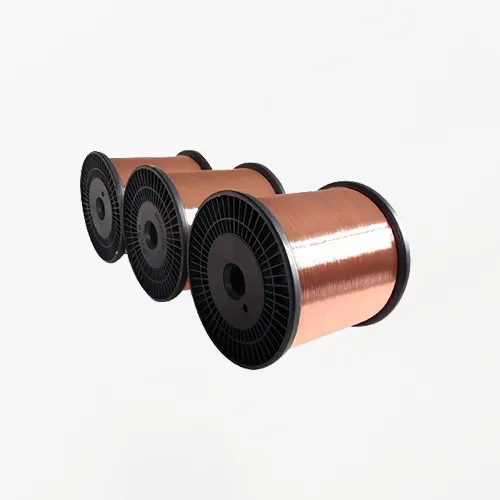
Tin Coating Percentage in TCCA Wire: Balancing Conductivity, Solderability, and Reliability
Standard tin % ranges for TCCA wire and their impact on electrical performance vs. solder joint integrity
Tin coating percentages in TCCA (tin-coated copper-clad aluminum) wire typically range from 0.5 % to 2 % of total wire weight, with a corresponding thickness of 0.5–1.5 µm. This narrow window is essential: the layer must be thick enough to ensure reliable solderability and corrosion protection, yet thin enough to avoid measurable increases in DC resistance. Industry testing in 2023 found that a tin thickness of 0.8–1.0 µm—roughly 0.3–0.5 % of the wire’s cross-sectional area—delivers solder joint integrity above 95 % while retaining 99 % of the base conductor’s conductivity. Below 0.3 % tin, solderability declines sharply, increasing the risk of dry joints and field failures. Above 2 %, benefits plateau: added cost and weight offer no meaningful improvement in joint strength, and tin’s higher resistivity may slightly elevate overall resistance. Precision within this range is therefore critical to balancing electrical performance with robust, long-lasting terminations.
How reputable TCCA suppliers ensure precise tin % control—spectrometry, coulometric titration, and ASTM B656 verification
Leading TCCA wire suppliers use a multi-stage verification protocol to maintain exact tin coating thickness. Inline X-ray fluorescence (XRF) spectrometry provides real-time, non-destructive measurement on every spool, detecting deviations as small as 0.1 µm. For laboratory validation, coulometric titration—performed per ASTM B656, the standard guide for coulometric thickness measurement of metallic coatings—electrochemically strips the tin layer and measures the charge required, delivering highly accurate, traceable results. A 2022 quality audit of top-tier suppliers showed that combining XRF screening with quarterly coulometric checks reduced coating thickness variation by 40 % compared to visual inspection alone. These suppliers also tightly control electroplating parameters: bath chemistry, current density, and wire speed are continuously monitored, with automated alerts triggering immediate correction if tin thickness drifts outside the 0.5–2.0 µm specification. This layered approach ensures every shipment meets the precise tin percentage required for its application.
Tin Adhesion Quality: Critical for Durability and Assembly Success in TCCA Wire
Validated adhesion testing methods: ASTM D3359 tape test, IEC 60851-5 bend test, and real-world mechanical stress simulation
Tin adhesion in TCCA wire directly governs long-term termination reliability. The ASTM D3359 cross-hatch tape test applies a 1 mm grid and pressure-sensitive tape; a rating of 4B or better—indicating less than 5 % coating removal—is the industry benchmark for acceptable adhesion. The IEC 60851-5 bend test subjects the wire to repeated 180° flexing around a mandrel, requiring no visible tin delamination or cracking after 200–500 cycles. To bridge lab conditions and real-world use, leading suppliers supplement these with mechanical stress simulations—including wire stripping, crimping, and thermal cycling from –40 °C to +125 °C—to confirm the tin layer remains intact through assembly and service life. A rigorous adhesion test program ensures continuous electrical contact and corrosion protection—even under vibration, micro-motion, and thermal expansion.
Common adhesion failure root causes—and how leading TCCA suppliers prevent them through surface activation and process control
Adhesion failures in TCCA wire most often stem from inadequate surface preparation: residual lubricants, native oxides, or insufficient activation of the copper substrate hinder metallurgical bonding. Inconsistent plating bath chemistry—especially fluctuations in pH, temperature, or dissolved tin concentration—also weakens the interface. Top-tier suppliers mitigate these risks through controlled surface activation: alkaline degreasing followed by micro-etching or plasma treatment removes contaminants and establishes a uniform surface roughness (Ra 0.4–0.8 µm) ideal for tin adhesion. Tin bath parameters are held within ±2 °C and ±0.5 g/L tin using automatic dosing and continuous monitoring. Post-plating, a controlled annealing step (150–200 °C for 1–2 hours) relieves internal stresses and promotes interdiffusion at the copper–tin interface—significantly strengthening bond durability. These controls ensure the tin layer remains securely anchored to the copper core across decades of thermal and mechanical cycling.
Salt Spray Corrosion Resistance: Interpreting ASTM B117 Results for TCCA Wire Applications
Decoding salt spray performance: white rust onset, red rust failure thresholds, and alignment with IPC-TR-576 and MIL-DTL-23053
ASTM B117 exposes TCCA wire to a continuous 5 % NaCl fog at 35 °C to accelerate corrosion and assess coating integrity. White rust—comprising tin oxide or aluminum hydroxide—typically emerges within 24–72 hours, signaling initial coating degradation. Unlike steel substrates where red rust indicates base metal failure, TCCA wire fails when aluminum base metal corrosion becomes visible, often appearing as voluminous white aluminum hydroxide. Industry standards IPC-TR-576 and MIL-DTL-23053 set the minimum acceptance threshold at no base metal corrosion after 96 hours. Leading suppliers routinely exceed this benchmark, targeting 200 hours without white rust propagation to ensure dependable performance in harsh environments.
Beyond ASTM B117: Why TCCA wire qualification requires complementary tests for humidity, sulfur exposure, and galvanic compatibility
ASTM B117 alone is insufficient—it simulates only static saline exposure and cannot replicate real-world variables like cyclic wet-dry conditions, industrial pollutants, or galvanic interactions. In automotive or marine applications, TCCA wire endures humidity cycling (IEC 60068-2-30), sulfur dioxide exposure (ASTM G85 Annex A4), and galvanic coupling with dissimilar connector metals. Sulfur compounds cause tarnish and elevated contact resistance; humidity accelerates under-insulation corrosion; and galvanic incompatibility can drive preferential corrosion of the aluminum core. Per ASTM G71, galvanic compatibility testing confirms TCCA wire does not corrode excessively when mated with common tin-plated terminals. Comprehensive qualification therefore includes combined cyclic corrosion, sulfur/humidity exposure, and galvanic testing—aligning with best-practice benchmarks for long-term reliability.
FAQ
What is the ideal tin coating percentage for TCCA wire?
The ideal tin coating percentage for TCCA wire typically ranges from 0.5 % to 2 %, with 0.8–1.0 µm thickness performing best in terms of solderability, conductivity, and reliability.
Why is adhesion quality important for TCCA wire?
Adhesion quality ensures the tin layer remains intact during assembly and throughout the wire’s service life, minimizing risks like corrosion, delamination, or failure under mechanical stress.
How do suppliers verify tin coating thickness?
Suppliers use inline X-ray fluorescence spectrometry, coulometric titration, and electroplating parameter control to ensure precise and consistent tin coating thickness.
What tests are performed to assess corrosion resistance?
Corrosion resistance is evaluated with ASTM B117 salt spray testing, humidity cycling (IEC 60068-2-30), sulfur exposure tests (ASTM G85 Annex A4), and galvanic compatibility testing (ASTM G71).


