 EN
EN

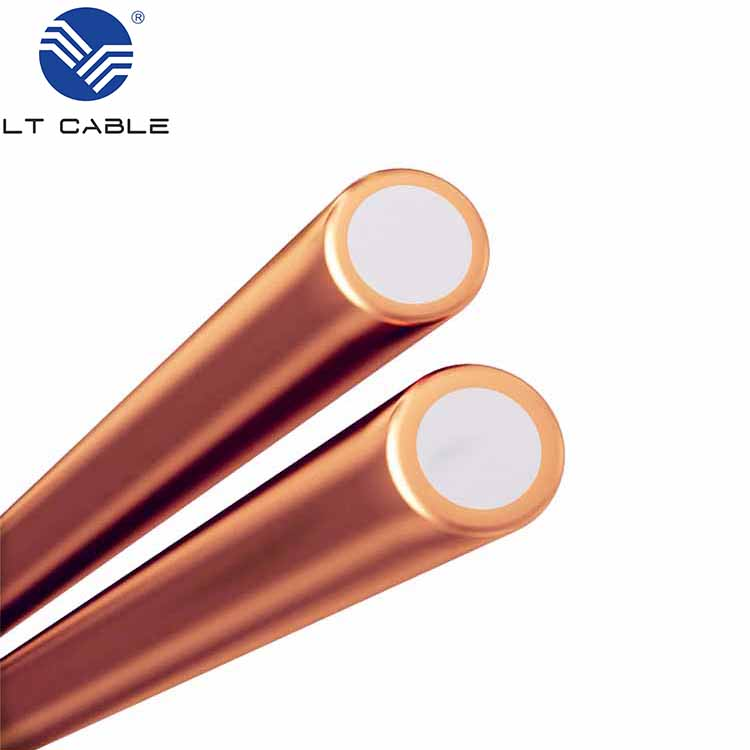
How TCCA Enhances Corrosion Resistance Over Bare CCA
Oxidation Pathways in Bare CCA Under Humidity and Salt Exposure
Bare copper-clad aluminum (CCA) wire features an aluminum core metallurgically bonded to a thin copper cladding. In humid environments, the copper surface oxidizes to form a non-conductive cuprous oxide layer—increasing contact resistance and degrading signal integrity. Salt exposure dramatically accelerates this degradation: chloride ions penetrate the oxide, inducing pitting and compromising the copper–aluminum interface. Once microcracks expose the aluminum core, galvanic coupling with copper drives rapid aluminum dissolution—a well-documented failure mode in saline conditions. Industry testing under ASTM B117 conditions (5% NaCl fog at 35°C) shows bare CCA loses 12–15% of its copper cladding thickness within just 200 hours, resulting in high-resistance oxide buildup and irreversible mechanical and electrical deterioration.
Tin Coating Functionality: Barrier Protection and Galvanic Compatibility with Copper
TCCA wire adds a tin coating over the copper cladding, delivering three complementary corrosion defenses: physical barrier protection, galvanic compatibility, and limited sacrificial action. Tin effectively blocks moisture and oxygen from reaching the underlying copper, preventing initial oxidation. Critically, tin’s electrode potential (−0.14 V vs. SHE) is closely aligned with copper (+0.34 V), minimizing galvanic current if the coating is scratched—unlike the highly unfavorable Cu–Al couple (ΔE ≈ 0.7 V). While not classically sacrificial like zinc, tin does preferentially corrode over copper in localized breaches, delaying exposure of both copper and aluminum. This multi-layered protection preserves interfacial integrity and maintains low, stable resistance—key for long-term reliability in marine, automotive, and outdoor electronics.
ASTM B117 Salt Spray Test Data: Quantifying TCCA’s Superior Corrosion Performance
ASTM B117 salt spray testing remains the industry-standard benchmark for comparative corrosion evaluation. In a controlled 500-hour test (5% NaCl fog, 35°C), TCCA wires show no visible corrosion and exhibit less than 2% increase in electrical resistance. By contrast, bare CCA develops extensive green corrosion products, surface pitting, and a resistance rise exceeding 60%. This performance gap—validated across multiple independent lab validations—directly correlates with field reliability: TCCA enables robust operation in harsh environments where bare CCA fails prematurely due to interfacial degradation and galvanic-driven aluminum loss.
Why TCCA Delivers Consistent, High-Yield Solderability
Tin’s Role in Promoting Solder Wettability and Stable Intermetallic Formation
The tin coating on TCCA provides a clean, oxide-free surface that eliminates solderability challenges inherent to bare CCA. Unlike copper, which rapidly forms a tenacious Cu₂O layer that impedes wetting, tin remains metallurgically active and readily dissolves into molten solder. Wetting balance tests confirm this advantage: tin-coated surfaces achieve a wetting angle less than 15° within 1.5 seconds, versus over 35° for oxidized bare CCA (J. Mater. Sci., 2022). This rapid, uniform wetting initiates controlled formation of the Cu₆Sn₅ intermetallic compound (IMC)—a critical interface layer that stabilizes at 1–2 µm thickness during standard reflow. Unlike direct Cu–solder interfaces, which risk brittle, excessive IMC growth under thermal stress, the tin-mediated bond delivers consistent strength and fatigue resistance.
Reflow and Hand-Soldering Results: Joint Strength, Voiding, and Process Window Advantages of TCCA
Real-world assembly data underscores TCCA’s process advantages. In high-reliability production using SAC305 solder, TCCA-terminated leads achieved 38.5 N pull strength—22% higher than bare CCA’s 31.5 N—and demonstrated 45% less voiding area after 1,000 thermal cycles (−40°C to +125°C), meeting IPC-610 Class 3 criteria (2023 study). The tin coating significantly widens the process window: joints remain fully solderable after 8 hours of steam aging (vs. less than 2 hours for bare CCA) and tolerate peak reflow temperatures of 245–260°C without dewetting. Hand-soldering trials show TCCA requires only mild rosin-based flux, eliminates pre-tinning, and forms shiny, concave fillets in under 2 seconds. These attributes contribute to first-pass yields exceeding 99.5% in volume manufacturing—reducing rework, scrap, and field failures.
Balancing Reliability Gains with Cost and Supply Chain Realities
While TCCA delivers measurable gains in corrosion resistance and solderability, engineering teams must assess these benefits against cost and supply chain implications. The tin plating adds material and processing expense—typically increasing per-meter cost by 15–25% versus bare CCA. In high-volume consumer electronics, this premium may constrain adoption. Yet total cost of ownership often favors TCCA when factoring in reliability: reduced oxidation lowers connector rework rates by up to 40%, while stronger, void-free joints extend service life in humid or salt-laden applications—cutting warranty claims and field service costs. From a supply-chain standpoint, tin plating is a mature, widely available process; qualifying secondary plating sources mitigates single-supplier risk, and modest buffer inventory of finished wire further enhances resilience. The decision hinges on application context: for mission-critical systems where downtime carries steep operational or safety consequences, TCCA’s modest upfront cost represents a sound investment in long-term reliability. In low-stress, cost-sensitive applications, bare CCA remains viable—but only where environmental exposure and soldering process control are tightly managed.
FAQs
What is TCCA wire?
TCCA wire refers to tin-coated copper-clad aluminum wire. It features a layer of tin over the copper cladding, providing enhanced corrosion resistance and solderability compared to bare CCA wire.
Why is tin used as a coating material?
Tin acts as an effective barrier against moisture and oxygen, prevents oxidation of the underlying copper, and improves solderability by forming stable intermetallic layers during assembly. It also has good galvanic compatibility with copper.
What is the main advantage of TCCA over bare CCA in harsh environments?
TCCA provides superior corrosion resistance by preventing degradation caused by humidity, salt exposure, and galvanic reactions, ensuring long-term mechanical and electrical reliability.
How does TCCA improve solderability?
The tin coating on TCCA prevents the formation of non-conductive oxides, ensuring rapid and consistent solder wetting. It also widens the soldering process window, reducing defects like voiding or brittle intermetallic growth.
Is TCCA more expensive than bare CCA?
Yes, the tin plating increases the material and processing costs by 15–25%. However, the improved reliability and reduced rework and warranty costs often offset this premium in critical applications.
How does TCCA perform in salt spray tests?
TCCA significantly outperforms bare CCA in ASTM B117 salt spray tests, exhibiting less than 2% resistance increase after 500 hours, compared to more than 60% for bare CCA, which also experiences visible corrosion and pitting.
For which applications is TCCA most suitable?
TCCA is ideal for mission-critical systems in marine, automotive, and outdoor electronics where corrosion resistance and long-term reliability are required. It may also be used in other high-reliability contexts where failure is not acceptable.


