 EN
EN

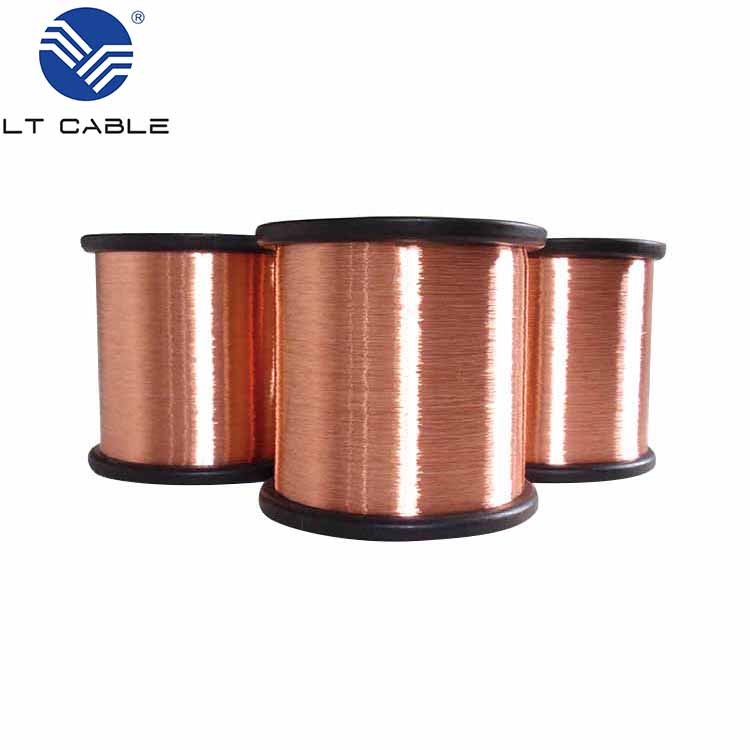
What Is TCCA Wire? Composition, Structure, and Core Advantages
Tinned copper-clad aluminum (TCCA) wire is a three-layer composite conductor: an aluminum core, a bonded copper cladding, and an outer tin coating. The aluminum core—comprising roughly 90% of the cross-sectional area—delivers substantial weight savings and raw material cost reduction versus solid copper. The copper layer (≈10% volume) preserves high electrical conductivity, while the tin plating forms a durable, solderable barrier that inhibits oxidation and enhances long-term reliability. This architecture yields a wire up to 40% lighter than pure copper, with material costs reduced by approximately 40%. It also enables 2.6–3.2× greater length per unit weight and diameter—critical for high-volume spooling and installation. The aluminum core contributes inherent flexibility, easing routing and termination in complex assemblies, while the tin surface ensures consistent solderability and corrosion resistance. These attributes make TCCA a strategic choice across automotive, telecommunications, and industrial equipment where weight, cost, manufacturability, and service life are tightly interlinked.
Why Tin Plating Matters: Corrosion Resistance and Environmental Protection
Passive Oxide Barrier Formation in Humid and Outdoor Environments
When exposed to moisture, the tin layer on TCCA wire rapidly forms a dense, self-passivating SnO₂ film. Unlike bare copper-clad aluminum (CCA), whose native aluminum oxide is porous and weakly adherent, tin’s oxide is compact, chemically stable, and highly resistant to electrolyte penetration. This barrier effectively suppresses galvanic corrosion at the aluminum–copper interface—even under sustained humidity or coastal exposure. Independent field assessments confirm intact tin-plated conductors show no red rust after five years in offshore wind installations, whereas bare CCA exhibits visible degradation within weeks. Crucially, the oxide layer is self-healing: minor mechanical abrasions re-oxidize instantly, restoring protection without intervention. This passive resilience makes tin plating indispensable for outdoor and maintenance-constrained applications.
Sacrificial Protection Confirmed by ASTM B117 Salt Spray Testing
Beyond passive protection, tin acts as a sacrificial anode—corroding preferentially due to its higher electrochemical activity relative to copper and aluminum. This dual-action mechanism ensures continued defense even if the plating is compromised. ASTM B117 salt spray testing validates this behavior: in a 2023 independent evaluation, TCCA wire endured 1,500 hours of continuous salt fog without red rust or pitting, while equivalent bare CCA samples failed catastrophically within 200 hours. The tin layer dissolved gradually and uniformly, preserving both the copper cladding and aluminum core throughout. These results confirm tin plating functions not as a cosmetic finish, but as an engineered, fail-safe corrosion mitigation system—particularly vital in marine, transportation, and industrial settings.
Functional Benefits of TCCA: Solderability, Weldability, and Thermal Performance
TCCA’s tin coating transforms its functional performance during manufacturing and operation—significantly improving solderability, weldability, and thermal stability over bare CCA. While bare CCA suffers from rapid aluminum oxide formation that impedes wetting and demands aggressive fluxes, TCCA maintains a consistently solderable surface. Its tin layer prevents interfacial oxide growth, enabling reliable intermetallic bonding with mild, no-clean fluxes. This reduces post-solder cleaning, eliminates corrosive residue risks, and accelerates throughput—lowering rejection rates and rework in high-speed harness assembly. In resistance welding, the uniform tin surface improves electrode contact consistency and minimizes spatter, yielding stronger, more repeatable joints. Thermally, TCCA benefits from the low coefficient of thermal expansion mismatch between tin and aluminum—reducing stress at terminations during thermal cycling. Combined with its high conductivity-to-weight ratio, these traits support robust, long-life connections in vibration-prone and thermally dynamic environments.
Where TCCA Delivers Real-World Value: Marine, Automotive, and Industrial Applications
TCCA wire delivers measurable value where weight, durability, and manufacturability intersect—particularly in marine, automotive, and industrial systems. Its proven performance stems from the synergy of aluminum’s lightness, copper’s conductivity, and tin’s environmental and processing advantages.
Field-Proven Reliability in Offshore Wind, NEMA 4X Enclosures, and EV Harnesses
In offshore wind farms, TCCA has demonstrated zero significant degradation after five years of continuous salt-laden exposure—validated by industry assessments published in 2024. Its tin layer serves as both a passive barrier and sacrificial anode, preventing galvanic attack at the aluminum–copper interface. Within NEMA 4X-rated enclosures—designed for high-pressure washdowns and chemical exposure—the tinned surface resists oxidation and fretting at connection points, maintaining signal integrity and reducing unplanned maintenance. For electric vehicle (EV) high-voltage harnesses, TCCA reduces overall vehicle mass without compromising connection reliability: automotive OEMs report stable conductivity and joint integrity across 100,000+ miles of real-world operation, even under road-salt exposure and extreme thermal cycling. Its thermal expansion compatibility with aluminum components further minimizes fatigue at crimps and solder joints—enhancing longevity amid vibration and temperature swings. These use cases reflect TCCA’s role not as a compromise, but as a purpose-built solution for mission-critical wiring where lifecycle cost, safety, and performance must align.
Frequently Asked Questions (FAQ)
What is TCCA wire composed of?
TCCA wire is composed of an aluminum core, a bonded copper cladding, and an outer tin coating, forming a three-layer composite conductor.
Why is tin plating important for TCCA wire?
Tin plating protects TCCA wire against corrosion by forming a passive oxide barrier and acting as a sacrificial anode, ensuring long-term reliability in moisture-prone and outdoor environments.
What industries can benefit most from using TCCA wire?
TCCA wire is ideal for industries like marine, automotive, and industrial manufacturing where weight reduction, durability, and corrosion resistance are crucial.
How does TCCA wire perform in salt spray testing?
In ASTM B117 salt spray testing, TCCA wire endured 1,500 hours of exposure without red rust or pitting, confirming its durability and corrosion resistance.
What advantages does TCCA wire offer in manufacturing?
TCCA wire’s tin coating improves solderability, weldability, and thermal stability, reducing manufacturing costs and enhancing long-term connection reliability.
Table of Contents
- What Is TCCA Wire? Composition, Structure, and Core Advantages
- Why Tin Plating Matters: Corrosion Resistance and Environmental Protection
- Functional Benefits of TCCA: Solderability, Weldability, and Thermal Performance
- Where TCCA Delivers Real-World Value: Marine, Automotive, and Industrial Applications
- Frequently Asked Questions (FAQ)


