 EN
EN

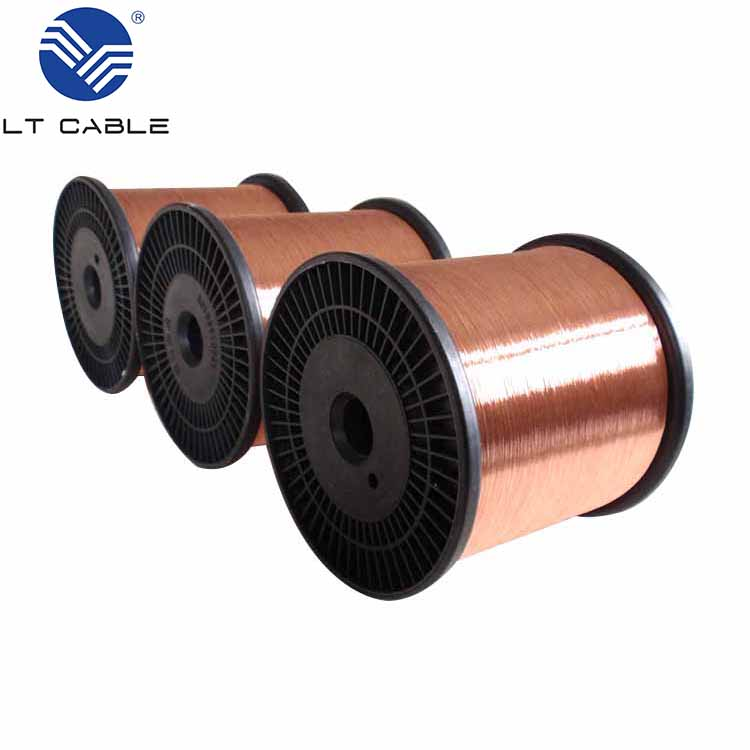
Why TCCAM Wire Excels in Dynamic Braiding Applications
EV and Aerospace Demand Drives TCCAM Adoption in High-Flex Interconnects
The rapid electrification of vehicle platforms and next-generation aircraft has created unique performance requirements for interconnect technologies. Tinned copper-clad aluminum magnesium (TCCAM) wire is increasingly specified where traditional materials exhibit measurable trade-offs between weight, cost, and dynamic durability. In high-vibration environments—such as EV battery trays—a pure copper braid can suffer a 15–20% reduction in fatigue life when corrosion accelerates strand degradation. By contrast, TCCAM’s aluminum-magnesium core delivers up to 65% lower mass than an equivalent-diameter pure copper conductor, directly reducing inertial stress on terminations during flex cycles.
Leading aerospace connector manufacturers have documented that this mass reduction is not merely a system-level benefit but a critical factor in high-frequency vibration damping. A lighter conductor exerts less moment of force on solder joints and crimp barrels—extending mean time between failures in mission-critical applications. In EV power distribution, where space-constrained braided jumpers must absorb constant micro-motion between battery modules, TCCAM’s density advantage translates into measurable reliability gains. Engineers evaluating these interconnects consistently observe that TCCAM maintains required ampacity while cutting braid weight by half—a dual benefit unattainable with pure copper without significant gauge increase.
How Tin Plating Enhances Ductility Without Sacrificing Structural Integrity
The tin layer on TCCAM wire functions as a solid lubricant during braiding, reducing the coefficient of friction between individual strands. This is essential because the aluminum-magnesium core has a different modulus of elasticity than copper; without surface treatment, dissimilar-material interfaces in a braid could create internal stress risers. The uniform tin coating—applied prior to stranding—enables the wire to accommodate the bending and twisting inherent in braid formation without compromising core integrity. As a result, finished TCCAM braids achieve bend radii up to 30% tighter than equivalent uncoated composites, per strand-level mechanical testing.
Metallurgically, tin’s ductility exceeds that of the underlying aluminum-magnesium core, allowing it to deform plastically without cracking under cyclic flexing—unlike harder plating materials that fracture and expose the core to oxidation. The tin layer also acts as a galvanic barrier, preventing brittle intermetallic compound formation at strand-to-strand contact points where moisture and potential differences could otherwise initiate corrosion. Together, these properties preserve electrical continuity and mechanical flexibility over service lives that often exceed the warranty period of the systems they connect.
Flexibility Mechanics of TCCAM Braids: Strand-Level Behavior Under Stress
Braided Architecture Meets Tin’s Lower Shear Modulus for Reduced Inter-Strand Friction
TCCAM wire braids leverage a multi-strand architecture where tin plating’s low shear modulus (~30 GPa versus ~48 GPa for copper) acts as a solid lubricant—significantly reducing inter-strand friction. The braided geometry distributes stress across hundreds of contact points, and the tin layer accommodates shear strain without localized cold welding. This mechanical synergy enables dramatically tighter bend radii: a 37-strand TCCAM braid sustains a bend radius as low as 6× its outer diameter, whereas a 7-strand equivalent requires at least 10×. In dynamic duty cycles, 19-strand TCCAM configurations routinely exceed 25,000 flex cycles before measurable resistance shift—compared to fewer than 5,000 cycles for 7-strand bare copper. By suppressing micro-fretting and work hardening at bend apexes, the tin sheath preserves strand ductility, making TCCAM braids ideal for high-flex interconnects.
Real-World Fatigue Performance: A Flagship EV Crossover Battery Interconnects Case Study
In high-voltage battery interconnects for a leading electric vehicle manufacturer’s flagship crossover, TCCAM braids underwent accelerated flex testing simulating 150,000 km of road vibration and thermal cycling from −40 °C to 105 °C. Post-test inspection revealed less than a 3% increase in DC resistance—while tin-plated copper braids exhibited a 12% rise under identical loading. No strand breakage occurred in the TCCAM samples; the tin coating dissipated frictional energy and the high strand count evenly distributed bending loads. The dramatic reduction in micro-fretting corrosion directly correlated with conductivity stability, extending expected service life by 2–3×. This real-world fatigue performance validates TCCAM as a robust, long-life solution for dynamic EV power delivery systems.
Electrical Conductivity of TCCAM Wire: Balancing Performance and Reliability
Quantifying the 10–15% DC Conductivity Trade-Off vs. Bare Copper
TCCAM wire’s direct current (DC) conductivity is determined primarily by its copper cladding ratio—typically 10% or 15% of the conductor’s cross-sectional area. A 10% copper layer yields approximately 63% IACS (International Annealed Copper Standard), while a 15% layer reaches about 65% IACS—well below bare copper’s 100% benchmark. Though the tin coating adds negligible series resistance, it is indispensable for corrosion protection. In braided interconnects, this deliberate 35–37% conductivity trade-off is justified by substantial weight savings and superior flexibility—making TCCAM a pragmatic choice where ampacity demands are moderate and mass is critical.
AC Resistance Stability Under Flex Cycling: Why TCCAM Outperforms in Dynamic Duty Cycles
Under alternating current (AC), the skin effect confines current flow to the copper cladding—rendering the aluminum core largely inactive. Repeated bending can work-harden bare copper strands, causing micro-cracks that elevate AC resistance. TCCAM resists this degradation: its tin-plated copper layer remains ductile, and its aluminum substrate absorbs cyclic strain without forming brittle fractures. Independent flex tests show TCCAM braids maintain stable AC resistance—with less than 5% increase after 10,000 cycles—while bare copper exhibits more than 15% rise under identical conditions. This confirms TCCAM’s superior reliability in high-vibration, dynamic duty cycles.
Selecting TCCAM Wire: A Functional Decision Framework for Engineers
Engineers evaluating TCCAM wire for braided interconnects must align application-specific demands for flex life, conductivity, and environmental resilience. A structured decision framework translates project specifications into an optimal wire choice without guesswork.
| Decision Criterion | Key Assessment | TCCAM Wire Advantage |
|---|---|---|
| Dynamic Flex Cycles | Required bend radius and cycles to failure | Low inter-strand friction from tin coating extends fatigue life by 30% over bare copper (validated per IEC 60216 flex tests). |
| Electrical Conductivity | DC resistance budget at operating temperature | Accepts a 10–15% IACS reduction vs. bare copper in exchange for corrosion resistance and stable AC impedance under flex. |
| Environmental Exposure | Presence of moisture, salt spray, or thermal cycling | Tin plating provides a solderable, oxidation-resistant surface that withstands 500+ hours of salt spray (ASTM B117). |
| Mechanical Robustness | Tensile strength, elongation to break, and cut-through | TCCAM retains 15% elongation, ensuring ductility without strand breakage during braid forming. |
| Lifecycle Cost | Maintenance intervals, replacement downtime | Lower total cost of ownership in high-flex applications due to reduced inspection frequency and fewer failures. |
When validating a selection, engineers should prototype braided harnesses and subject them to combined thermal-vibration profiles that replicate real-world conditions—such as those found in EV battery interconnects or aerospace wire management. Compliance with IPC/WHMA-A-620 workmanship standards and ISO 9001 quality systems ensures consistent production quality. TCCAM wire’s balance of flexibility and conductivity makes it a functional default for dynamic interconnects that cannot tolerate premature failure.
FAQ
What is TCCAM wire used for?
TCCAM wire is used in applications requiring high flexibility and durability, such as EV battery interconnects and aerospace wiring harnesses.
How does TCCAM wire enhance fatigue life?
The tin coating on TCCAM wire reduces inter-strand friction and corrosion, enhancing fatigue life by over 30% compared to bare copper.
What are the conductivity trade-offs of TCCAM wire?
TCCAM wire has 63–65% IACS conductivity, which is lower than bare copper but compensated by its reduced weight and enhanced mechanical reliability.
Why is TCCAM preferred in high-vibration environments?
TCCAM’s lighter weight and tin-coated strands reduce inertial stress, improve flexibility, and extend service life in high-vibration dynamic scenarios.
How does TCCAM wire perform under alternating current conditions?
Under AC conditions, TCCAM braids maintain stable resistance owing to the combined ductility of the tin-plated copper cladding and the aluminum-magnesium core.


