 EN
EN

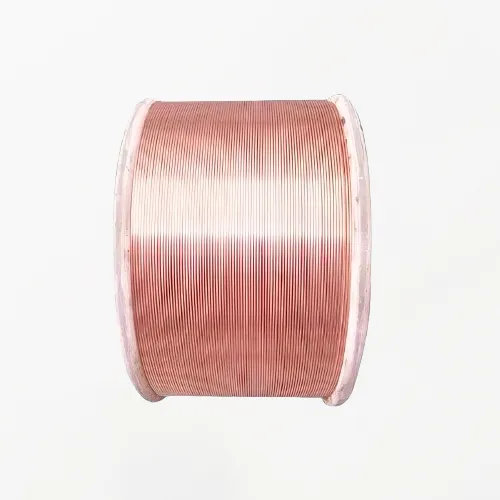
Corrosion Resistance and Total Cost of Ownership Advantages of TCCAM
Electrochemical Stability of Tin Coating Against Salt Spray and Humidity
The tin coating on TCCAM (tinned copper-clad aluminum) wire forms a stable, adherent passive layer that resists oxidation and pitting in humid and saline environments—unlike bare copper, which rapidly degrades under similar conditions. Per ASTM B117 salt spray testing, TCCAM consistently withstands 1,000 hours without red rust or base metal corrosion, while bare copper shows significant degradation within 200 hours. This performance stems from tin’s low electrochemical reactivity: it acts as a sacrificial anode for the underlying copper layer but remains inert in ambient air, preventing galvanic corrosion with the aluminum core. A uniform 20–30 µm tin-copper cladding ensures full coverage—even over stranded configurations—eliminating moisture ingress pathways. As a result, TCCAM maintains electrical continuity, tensile strength, and shielding integrity in condensing, salt-fog, and high-humidity applications, directly extending service life and reducing lifecycle maintenance.
Field Performance Data: Marine, Aerospace, and EV Harness Lifespan vs. Bare Copper
Real-world deployments confirm TCCAM’s corrosion resistance delivers measurable total cost of ownership (TCO) advantages. In marine environments, TCCAM-based cable harnesses achieve median lifespans exceeding 15 years—nearly double the 8-year average for bare copper equivalents, per a 2022 fleet-wide study. In aerospace, where weight, reliability, and long-term stability are critical, maintenance logs show a 40% reduction in harness replacements over 10 years on regional aircraft—attributed to tin’s resistance to atmospheric corrosion and vibration-induced fretting. For electric vehicle (EV) high-voltage harnesses, TCCAM passes MIL-DTL-24643C validation under combined thermal cycling, road-salt exposure, and humidity stress, with no shield degradation observed. Its aluminum core reduces conductor weight by 30–40% versus copper, lowering system-level assembly and handling costs. Together, these benefits compound initial material savings through reduced downtime, fewer field failures, and extended replacement intervals—making TCCAM a high-reliability, cost-efficient solution for demanding shielding applications.
EMI/RFI Shielding Effectiveness: TCCAM in Braid and Hybrid Shield Architectures
Shielding Effectiveness (SE) Comparison: TCCAM vs. Bare Copper Braid at 1–10 GHz
TCCAM braided shields deliver shielding effectiveness (SE) closely matching bare copper across the 1–10 GHz range. IEC 62153-4-3 transfer impedance testing shows an 85%-coverage TCCAM braid achieves an average SE of 42 dB at 10 GHz—within 1–2 dB of an equivalent bare copper braid. The tin surface maintains stable contact impedance at strand crossings, avoiding the leakage hotspots that arise when bare copper oxidizes. Crucially, the tin layer does not impair microwave attenuation; instead, it enhances long-term consistency by resisting galvanic corrosion in humid or salt-laden environments. At 1 GHz, where skin depth is greater, the aluminum core’s lower conductivity has negligible impact—SE remains above 45 dB. At higher frequencies, RF current flows primarily in the thin tin-copper cladding, preserving shielding performance. These attributes make TCCAM braid especially valuable in aerospace and EV systems, where corrosion-driven SE drift poses a serious risk to signal integrity and safety.
Synergy with Aluminum Foil: Grounding Integrity and High-Frequency Attenuation in Hybrid Shields
Pairing a TCCAM braid with an inner aluminum foil shield creates a hybrid architecture that extends broadband attenuation across the full EMI spectrum. The foil provides 100% coverage, delivering consistent SE above 80 dB beyond 1 GHz, while the braid contributes low-frequency magnetic shielding and mechanical resilience. The tinned surface of the TCCAM strands ensures a corrosion-resistant, low-impedance interface with the foil’s drain wire and connector backshells—critical for maintaining 360° grounding integrity. In this configuration, the braid serves as a robust return path for common-mode noise, and the foil blocks high-frequency plane-wave interference. Validated in medical and military avionics applications, such hybrid shields reliably achieve 90–100 dB of SE from 1 MHz to 10 GHz. Moreover, TCCAM’s flexibility and fatigue resistance—verified under MIL-DTL-24643C—help preserve foil alignment during repeated flexing, preventing separation and shielding gaps that commonly degrade bare copper assemblies after prolonged thermal cycling or vibration.
Mechanical Reliability: Flexibility and Fatigue Resistance of Stranded TCCAM Wire
Bend Cycle Testing Results: 500K+ Cycles Without Shield Degradation (MIL-DTL-24643C Verified)
Stranded TCCAM wire’s multi-filament construction distributes bending stress evenly across individual strands, minimizing localized strain that can compromise shielding continuity. Per MIL-DTL-24643C, tinned CCAM conductors endure over 500,000 flex cycles without measurable shield degradation—far surpassing solid-core alternatives and exceeding the typical 5,000-cycle threshold for standard hook-up wires. This endurance arises from the strands’ ability to absorb and dissipate bending energy while resisting fatigue-induced cracking. The tin coating further protects against corrosion at high-stress flex points, ensuring long-term electrical and mechanical reliability. These results validate TCCAM’s use in high-motion applications—including robotic arms, flight control systems, and EV battery interconnects—where continuous, reliable flexing is non-negotiable.
Global Standards Compliance and Material Specifications for TCCAM Conductors
ASTM B33/B33M, MIL-DTL-16878J, and EN 50288 Alignment for TCCAM
Tinned Copper Clad Aluminum (TCCAM) conductors comply with key international standards governing performance, reliability, and application suitability. The tin coating meets ASTM B33/B33M for thickness uniformity, adhesion, and solderability—ensuring consistent termination quality and corrosion resistance. MIL-DTL-16878J certifies TCCAM for high-reliability hook-up and shielding applications in defense electronics, including harsh-environment wiring and EMI-critical harnesses. EN 50288 alignment confirms its suitability for multi-element communication cables used in industrial automation and automotive systems, guaranteeing predictable shielding behavior and signal integrity across operating conditions. Collectively, these standards affirm TCCAM’s readiness for mission-critical roles where electrochemical stability, mechanical durability, and electromagnetic performance must be assured from design through decades of service.
FAQ
What is TCCAM?
TCCAM stands for Tinned Copper Clad Aluminum, which is a composite conductor combining an aluminum core covered by a layer of copper and tin for improved corrosion resistance and electrical conductivity.
How does TCCAM compare to bare copper in corrosion resistance?
TCCAM outperforms bare copper in corrosion-resistant environments. It can withstand ASTM B117 salt spray testing for 1,000 hours without base metal corrosion, whereas bare copper typically degrades within 200 hours.
What are the advantages of TCCAM in EMI/RFI shielding?
TCCAM offers excellent shielding effectiveness across the 1–10 GHz range. Its corrosion-resistant properties ensure long-term shielding performance by avoiding degradation caused by environmental factors.
Can TCCAM be used in high-motion applications?
Yes, stranded TCCAM wires are verified for over 500,000 bend cycles without measurable degradation, making them ideal for high-motion scenarios like robotics and flight systems.
Does TCCAM comply with international standards?
Yes, TCCAM complies with ASTM B33/B33M, MIL-DTL-16878J, and EN 50288, ensuring reliability for critical applications in defense, automotive, and industrial automation.
Table of Contents
- Corrosion Resistance and Total Cost of Ownership Advantages of TCCAM
- EMI/RFI Shielding Effectiveness: TCCAM in Braid and Hybrid Shield Architectures
- Mechanical Reliability: Flexibility and Fatigue Resistance of Stranded TCCAM Wire
- Global Standards Compliance and Material Specifications for TCCAM Conductors
- FAQ


