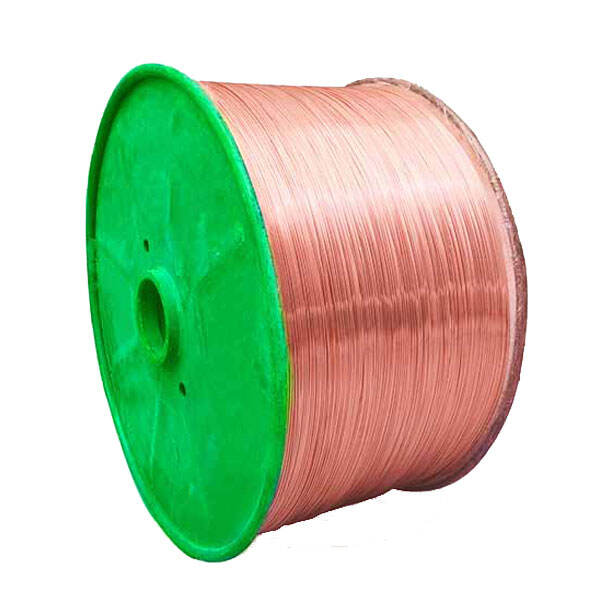
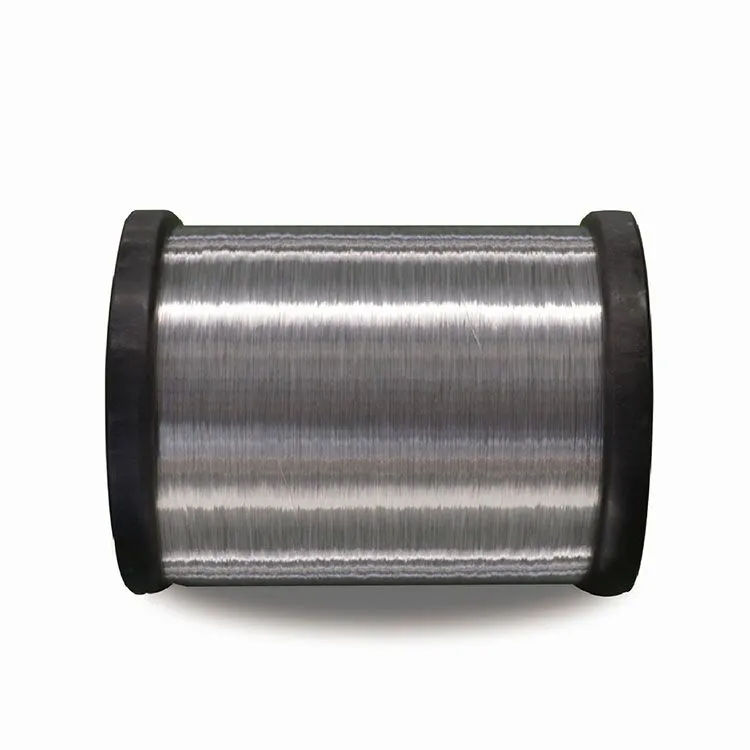
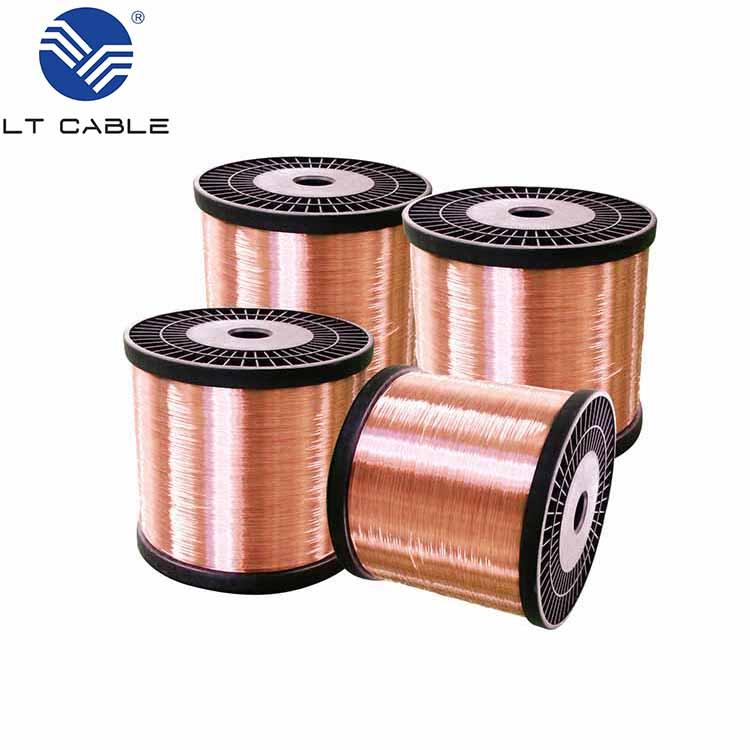
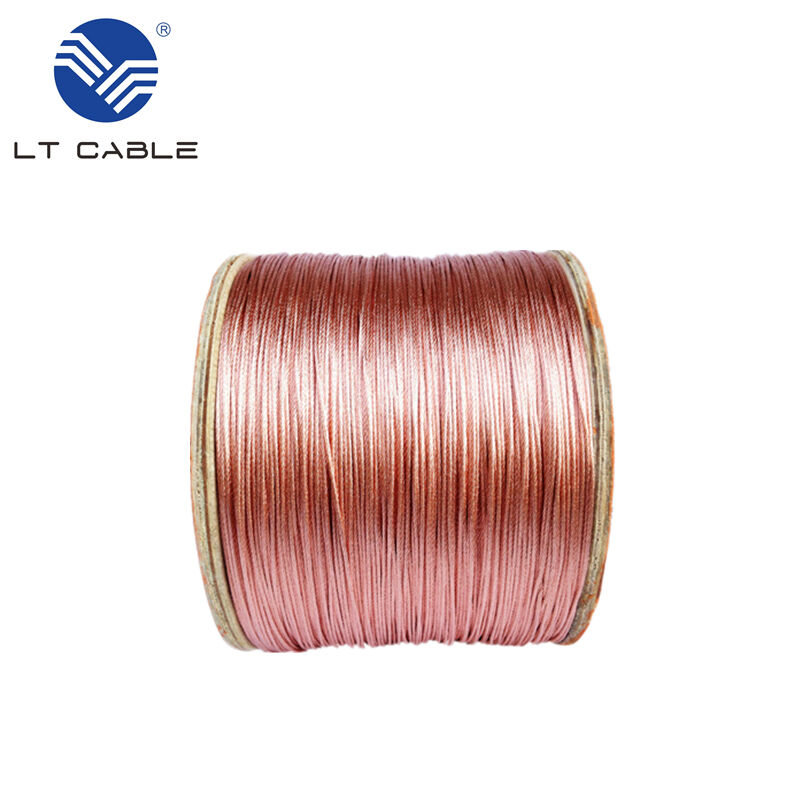
Bunched Stranded CCA Wire: Lightweight, High-Conductivity Solution

Get a Free Quote

Our representative will contact you soon.
Name
Email
Mobile
Country/Region
Choose the product you want
Message
0/1000
Unmatched Quality and Performance of Bunched Stranded CCA Wire

Unmatched Quality and Performance of Bunched Stranded CCA Wire

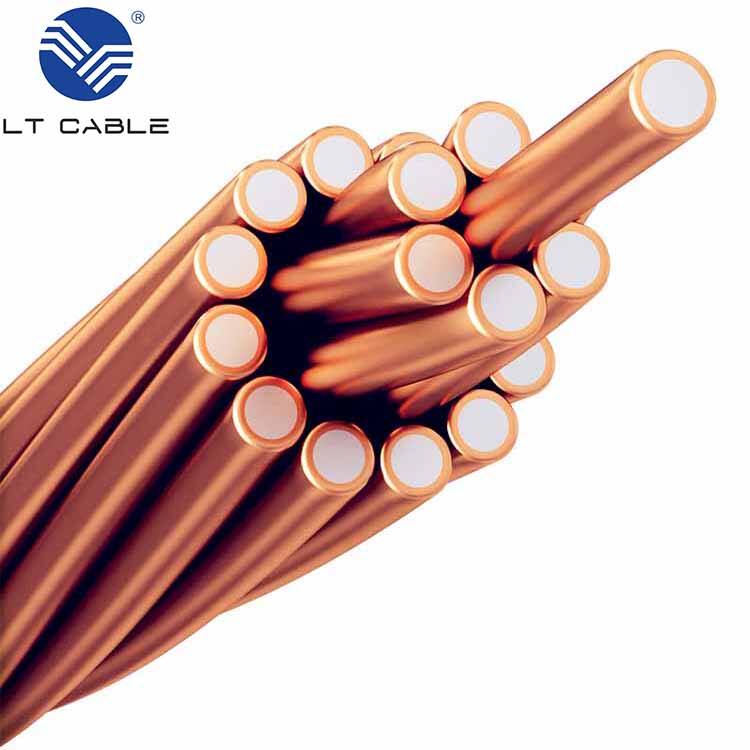
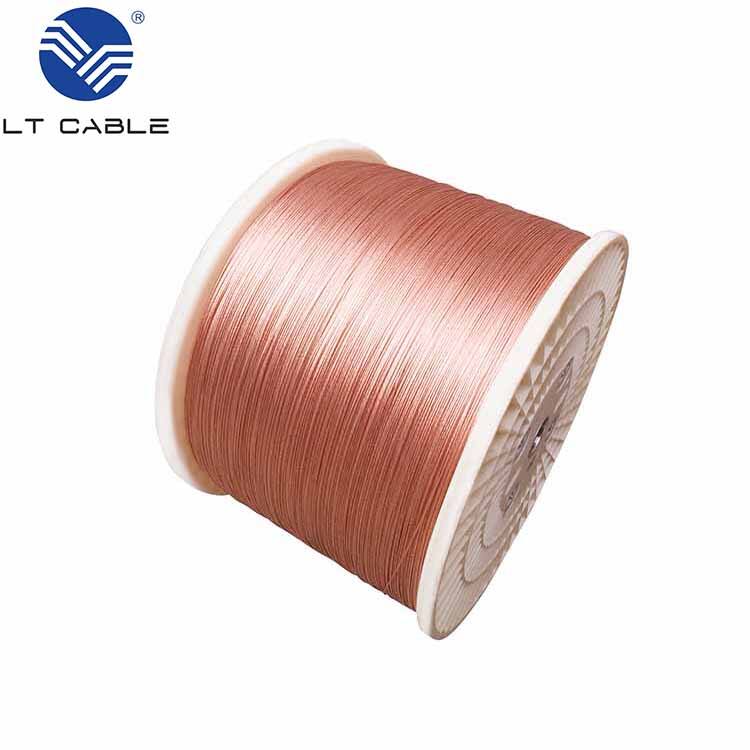
Our Bunched Stranded CCA Wire stands out in the market due to its superior conductivity, lightweight design, and excellent flexibility. This wire is manufactured using high-quality copper-clad aluminum (CCA) materials, ensuring a perfect balance between performance and cost-effectiveness. The bunched stranded construction allows for enhanced flexibility and ease of installation, making it ideal for a variety of applications including automotive, telecommunications, and electrical systems. With our fully automated production lines, every step of the manufacturing process—from raw material production to the final product—is meticulously controlled, ensuring consistent quality and reliability. Our commitment to customer value creation means we offer customized solutions tailored to meet your specific needs, guaranteeing satisfaction and performance.
Get A Quote

Case Studies

Transforming Electrical Systems with Bunched Stranded CCA Wire

A leading automotive manufacturer faced challenges with weight and conductivity in their electrical systems. By integrating our Bunched Stranded CCA Wire, they achieved a significant reduction in weight while enhancing electrical performance. The wire's flexibility allowed for easier routing within tight spaces, leading to faster assembly times. Additionally, the cost savings from using CCA instead of pure copper contributed to a more efficient production process. This case exemplifies how our product not only meets industry standards but also provides innovative solutions to complex engineering challenges.

Enhancing Telecommunication Infrastructure with Our CCA Wire

A prominent telecommunications company required a reliable solution for their network infrastructure. By utilizing our Bunched Stranded CCA Wire, they improved signal quality and reduced installation times. The wire's lightweight nature facilitated easier handling and installation, while its superior conductivity ensured minimal signal loss. This partnership resulted in enhanced network performance and customer satisfaction, showcasing the versatility and effectiveness of our CCA wire in high-demand applications.

Revolutionizing Home Electrical Systems with Bunched Stranded CCA Wire

A residential construction firm sought to upgrade their electrical wiring solutions to enhance energy efficiency. By incorporating our Bunched Stranded CCA Wire, they not only improved the overall conductivity but also reduced the installation costs. The wire's bunched stranded design allowed for easier manipulation and fitting into existing structures, which significantly cut down labor time. As a result, homeowners experienced improved electrical performance and lower energy bills, demonstrating the practical benefits of our innovative wire solutions.

Related products

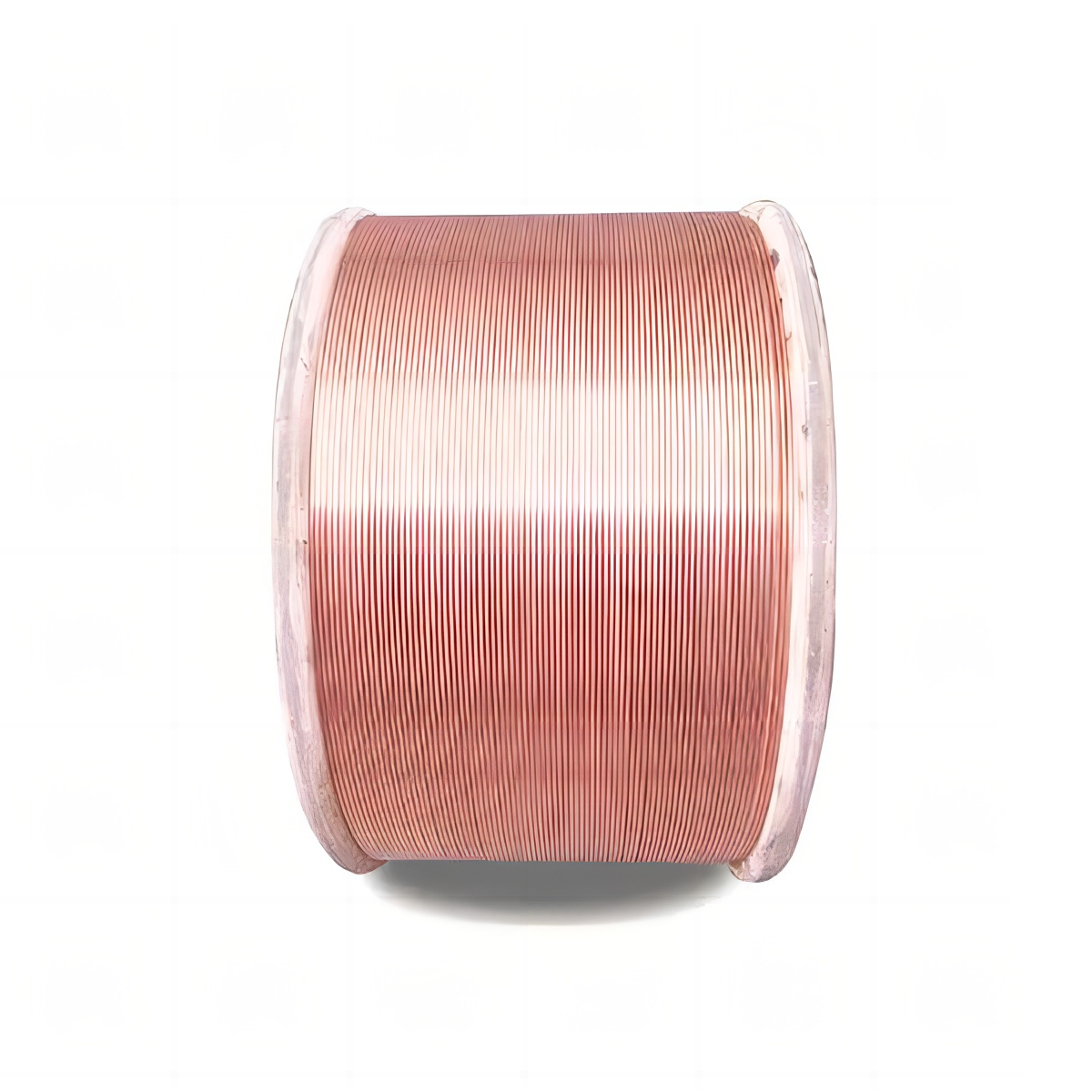
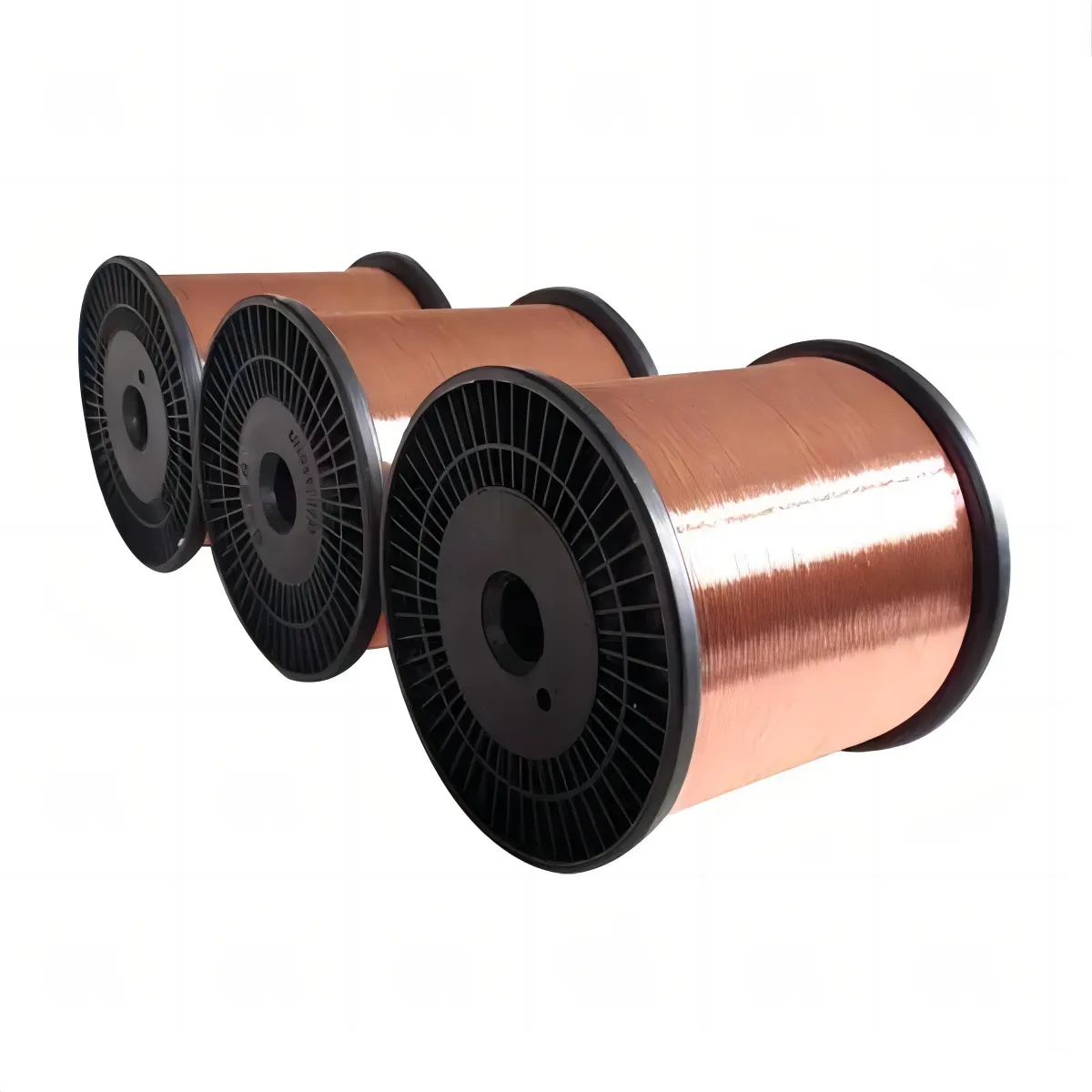
All wires made by Litong Cable are Bunched Stranded CCA. They are designed with top-tier engineering. Litong wires start with high-grade aluminum and copper. The pair of metals is compounded together to make a wire with lightweight and high conductivity. Litong Cable uses a fully automated process of wire drawing and annealing.
Each Bunched Stranded wire has a 'bunched stranded' pattern. This is top-tier design in line with industry standards of efficiency. Bunched stranded wires lead to installation efficiencies as they are less likely to break when wires are tangled in a bundle. Litong Cable is a leader in Bunched Stranded CCA wire manufacturing. They are equipped with the latest technological offerings from the industry.

Frequently Asked Questions about Bunched Stranded CCA Wire

What is Bunched Stranded CCA Wire and its benefits?

Bunched Stranded CCA Wire is a type of electrical wire made from copper-clad aluminum, designed to offer improved conductivity and flexibility. Its bunched stranded construction allows for easier handling and installation, making it ideal for various applications such as automotive and telecommunications. The wire provides a cost-effective alternative to pure copper while maintaining excellent performance.
At Litong Cable, our manufacturing process is fully automated and closely monitored at each stage. From raw material selection to final production, we utilize advanced technology and stringent quality control measures to ensure that our Bunched Stranded CCA Wire meets the highest industry standards. This meticulous attention to detail guarantees a reliable and high-performing product.

Related article

Copper-Clad Aluminum Wire: Why CCA Is Popular in Cable Industry

22

Jan

Copper-Clad Aluminum Wire: Why CCA Is Popular in Cable Industry

What Is Copper-Clad Aluminum Wire? Structure, Manufacturing, and Key Specifications

Metallurgical Design: Aluminum Core with Electroplated or Rolled Copper Cladding

Copper clad aluminum wire, or CCA for short, basically has an aluminum core wrapped in copper through processes like electroplating or cold rolling. What makes this combo so interesting is that it takes advantage of aluminum being way lighter than regular copper wires—about 60% less heavy actually—while still getting the good conductivity properties from copper plus better protection against oxidation. When making these wires, manufacturers start with high quality aluminum rods that get treated on the surface first before applying the copper coating, which helps everything stick together properly at a molecular level. How thick the copper layer is matters a lot too. Usually around 10 to maybe 15% of the total cross section area, this thin copper shell affects how well the wire conducts electricity, resists corrosion over time, and holds up mechanically when bent or stretched. The real benefit comes from preventing those pesky oxides from forming where connections meet, something pure aluminum struggles with badly. This means signals stay clean even during high speed data transfers without degradation issues.

Cladding Thickness Standards (e.g., 10%–15% by volume) and Impact on Ampacity and Flex Life

Industry standards—including ASTM B566—specify cladding volumes between 10% and 15% to optimize cost, performance, and reliability. Thinner cladding (10%) lowers material costs but limits high-frequency efficiency due to skin effect constraints; thicker cladding (15%) improves ampacity by 8–12% and flex life by up to 30%, as confirmed by IEC 60228 comparative testing.

Cladding Thickness Ampacity Retention Flex Life (Cycles) High-Frequency Efficiency
10% by volume 85–90% 5,000–7,000 92% IACS
15% by volume 92–95% 7,000–9,000 97% IACS

When copper layers get thicker, they actually help cut down on galvanic corrosion problems at connection points, which is really important stuff if we're talking about installations in damp areas or near the coast where salt air hangs around. But there's a catch here. Once we go past that 15% mark, the whole point of using CCA starts to fade away because it loses its edge in terms of being lighter and cheaper compared to regular old solid copper. The right choice depends entirely on what exactly needs to be done. For things that stay put like buildings or permanent installations, going with around 10% copper coating works just fine most of the time. On the flip side, when dealing with moving parts such as robots or machinery that gets shifted around regularly, folks tend to bump up to 15% cladding since it stands up better to repeated stress and wear over long periods.

Why Copper-Clad Aluminum Wire Delivers Optimal Value: Cost, Weight, and Conductivity Trade-Offs

30–40% Lower Material Cost vs. Pure Copper—Validated by 2023 ICPC Benchmark Data

According to the latest ICPC Benchmark numbers from 2023, CCA cuts down on conductor material expenses by around 30 to 40 percent when compared to regular solid copper wiring. Why? Well, aluminum just costs less at the market level, and manufacturers have really tight control over how much copper gets used in the cladding process. We're talking about only 10 to 15% copper content in these conductors overall. These cost savings make a big difference for expanding infrastructure projects while still keeping those safety standards intact. The impact is especially noticeable in high volume scenarios such as running the main cables through massive data centers or setting up extensive telecom network distributions across cities.

40% Weight Reduction Enables Efficient Aerial Deployment and Reduces Structural Load in Long-Run Installations

CCA weighs about 40 percent less than copper wire of the same gauge, which makes installation much easier overall. When used for aerial applications, this lighter weight means less strain on utility poles and transmission towers something that adds up to thousands of kilograms saved across long distances. Real world testing has shown workers can save around 25% of their time because they're able to work with longer sections of cable using regular equipment instead of specialized tools. The fact that these cables are lighter during transport helps cut down on shipping expenses too. This opens up possibilities where weight matters a lot, like when installing cables on suspension bridges, inside old buildings that need preservation, or even in temporary structures for events and exhibitions.

92–97% IACS Conductivity: Leveraging Skin Effect for High-Frequency Performance in Data Cables

CCA cables hit around 92 to 97 percent IACS conductivity because they take advantage of something called the skin effect. Basically, when frequencies go above 1 MHz, electricity tends to stick to the outer layers of conductors rather than flowing through the whole thing. We see this in action across several applications like CAT6A Ethernet at 550 MHz speeds, 5G network backhauls, and connections between data centers. The copper coating carries most of the signal while the aluminum inside just gives structural strength. Tests have shown that these cables maintain less than 0.2 dB difference in signal loss over distances up to 100 meters, which is basically the same performance as regular solid copper wires. For companies dealing with massive data transfers where budget constraints matter or installation weight becomes an issue, CCA offers a smart compromise without sacrificing much on quality.

Copper-Clad Aluminum Wire in High-Growth Cable Applications

CAT6/6A Ethernet and FTTH Drop Cables: Where CCA Dominates Due to Bandwidth Efficiency and Bend Radius

CCA has become the go to conductor material for most CAT6/6A Ethernet cables and FTTH drop applications these days. Weighing in at about 40% less than alternatives, it really helps when running cables both outdoors on poles and indoors where space matters. The conductivity levels sit between 92% and 97% IACS which means these cables can handle all the way up to 550 MHz bandwidth without issues. What's particularly useful is how flexible CCA naturally is. Installers can bend these cables pretty tightly, down to four times their actual diameter, without worrying about losing signal quality. This comes in handy when working around tight corners in existing buildings or squeezing through narrow wall spaces. And let's not forget the money aspect either. According to ICPC data from 2023, there are roughly 35% savings on materials costs alone. All these factors together explain why so many professionals are turning to CCA as their standard solution for dense network installations that need to last into the future.

Professional Audio and RF Coaxial Cables: Optimizing Skin Effect Without Premium Copper Costs

In professional audio and RF coaxial cables, CCA delivers broadcast-grade performance by aligning conductor design with electromagnetic physics. With 10–15% copper cladding by volume, it provides surface conductivity identical to solid copper above 1 MHz—ensuring fidelity in microphones, studio monitors, cellular repeaters, and satellite feeds. Critical RF parameters remain uncompromised:

Performance Metric CCA Performance Cost Advantage
Signal Attenuation ∼0.5 dB/m @ 2 GHz 30–40% lower
Velocity of Propagation 85%+ Equivalent to solid copper
Flex Cycle Endurance 5,000+ cycles 25% lighter than copper

By placing copper precisely where electrons travel, CCA eliminates the need for premium-priced solid copper conductors—without sacrificing performance in live sound, wireless infrastructure, or high-reliability RF systems.

Critical Considerations: Limitations and Best Practices for Copper-Clad Aluminum Wire Use

CCA definitely has some good economic advantages and makes sense logistically, but engineers need to think carefully before implementing it. The conductivity of CCA sits around 60 to 70 percent compared to solid copper, so voltage drops and heat buildup become real issues when working with power applications beyond basic 10G Ethernet or dealing with high current circuits. Because aluminum expands more than copper (about 1.3 times as much), proper installation means using torque controlled connectors and checking connections regularly in areas where temperature changes happen often. Otherwise those connections can loosen over time. Copper and aluminum don't play nice together either. Corrosion problems at their interface are well documented, which is why electrical codes now require applying antioxidant compounds wherever they connect. This helps stop the chemical reactions that degrade connections. When installations face humidity or corrosive environments, going with industrial grade insulation like cross linked polyethylene rated for at least 90 degrees Celsius becomes absolutely necessary. Bending cables too sharply beyond eight times their diameter creates tiny fractures in the outer layer, something best avoided altogether. For critical systems such as emergency power supplies or main data center links, many installers opt for a mixed strategy these days. They run CCA through distribution paths but switch back to solid copper for final connections, balancing cost savings with system reliability. And let's not forget recycling considerations. While CCA can technically be recycled through special separation methods, proper end of life handling still needs certified e waste facilities to manage materials responsibly according to environmental regulations.
View More
High-Quality CCA Wire for Improved Electrical Performance

26

Dec

High-Quality CCA Wire for Improved Electrical Performance

The use of CCA Wire in Electrical Engineering and its Benefits

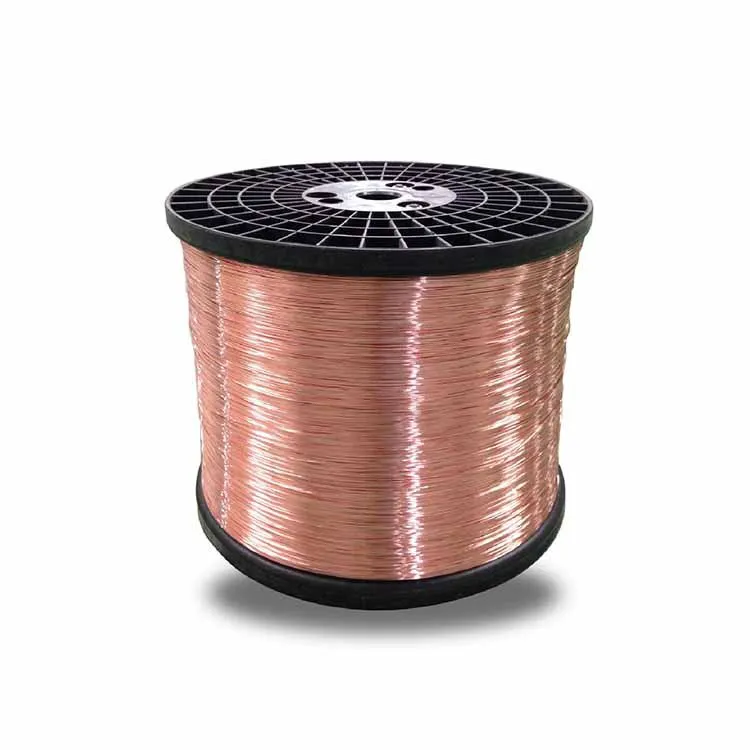
In the world of electrical engineering, the type of conductor material utilized can to some degree determine the performance and functionality of electrical devices. CCA wire or copper clad aluminum wire is basically an alloy which contains all the advantages of aluminum with the aluminum clad on it with copper. Due to this unique combination, the wire is not only lighter in weight in comparison to pure copper wire, but has a potential higher electrical conductivity as well.

The functionality and performance of CCA Wire in Electrical Engineering Applications

Using CCA wire in electrical works ensures cost effective use in that it increases efficiency while reducing energy costs. Its lower weight as compared to copper wire ensures easy handling and installation benefits while its high conductivity assures low resistance leading to minimal power loss. Because of these advantages, CCA wire proves to be the best in applications where weight and efficiency are of utmost importance.

LT CABLE’s Values in Upholding CCA Wire Quality

LT CABLE has invested a lot of its focus in ensuring that production of CCA Wire products is done to standard and to the requirements of its clientele. Our processes are engineered in a way that guarantees delivery precision, reliability as well as an enhanced supply chain. Combined with global qualifications and our stringent KQA policies, our CCA Wire solutions are fully certified by us.

LT CABLE’s CCA Wire Products Are Compatible With Most CCA Wire Solutions

Our product portfolio includes a diverse range of CCA Wire options to suit various industrial and commercial needs. In a bid to obtain and maintain a solid customer base and retain it, LT CABLE has made sure that it provides a large variety of CCA Wire products that best meet our industrial and commercial spectrum at reasonable prices without sacrificing the expected performance.

3.png

View More
How can a wire product solve the problem of signal interference?

14

Jul

How can a wire product solve the problem of signal interference?

Fundamentals of Signal Interference in Wiring

What Causes Signal Interference in Electrical Systems?

Most signal problems in electrical systems come from electromagnetic interference or EMI for short. Basically, outside electromagnetic fields mess with normal signal transmission. When this happens, signals get weaker and communication errors pop up all over the place, which makes electrical systems work less efficiently and reliably. A specific form of EMI called radio frequency interference creates special headaches because it really messes with communication signals, particularly bad in wireless setups. Poor grounding and not enough shielding inside equipment just makes these problems worse. Good grounding helps cut down on voltage differences that cause interference issues. Proper shielding blocks those pesky outside signals from getting in. That's why EMC standards matter so much in this field. These standards make sure different devices can coexist without messing each other up, something manufacturers take very seriously when designing new products.

Types of Interference: EMI vs RFI Explained

Getting clear on what separates EMI from RFI makes all the difference when dealing with signal problems. EMI basically messes with electronics everywhere, coming from things like lightning strikes (natural) or machines running nearby (artificial). If left unchecked, it can really throw sensitive equipment off track. Then there's RFI, which falls under the broader EMI category but specifically relates to radio waves. Think about how cell towers or Wi-Fi routers create this kind of interference. When technicians know whether they're facing EMI or RFI issues, they pick the right protective measures for cables and shielding materials. Standards bodies like CISPR and the FCC set limits on acceptable levels of both types of interference. Engineers follow these guidelines closely when building systems so everything works together without causing electromagnetic chaos.

Wire Types for Minimizing Signal Interference

Stranded Wire vs Solid Wire: Flexibility and Performance

Stranded wire is basically just lots of tiny wires twisted together, and this gives it way more flexibility than other types. That's why electricians love using it when they need to run cables around corners or through tight spaces. Think about those complicated home theater setups where wires have to snake through walls all over the place. On the flip side, solid wire comes as one big chunk of metal. It conducts electricity better because there's less resistance, but don't expect much bendiness from it. The downside? Those stiff wires can be real pain to work with in tricky installations. Still, they're pretty good for things like power lines or industrial equipment where the cable stays put most of the time without needing constant adjustment.

In situations where things get shaken around or moved frequently, most engineers go with stranded wire because it handles those conditions better without breaking down over time. When deciding between stranded versus solid wire, folks need to think about how easy it will be to install alongside what kind of electrical work needs doing. Solid wires might be simpler to run through walls but struggle when there's any flexing involved. Stranded offers flexibility at the cost of slightly different conductivity characteristics. Getting this right matters a lot for making sure wiring jobs last long term without causing headaches later on.

Advantages of Enameled Wire for EMI Reduction

Enameled wire has that thin coating which actually makes it pretty good at fighting off electromagnetic interference or EMI for short. Because of this property, it works really well in all sorts of delicate electronic setups where even small amounts of interference can cause problems. The best part? These wires take up much less room during installation compared to other options, yet they still keep signals clean and strong throughout their operation. A lot of studies have shown how useful these wires are specifically in motor designs and transformer constructions. They cut down on unwanted noise between components and generally make everything run smoother than standard alternatives would allow.

Different types of enamel coatings offer additional benefits, providing thermal and mechanical protection. This versatility makes enameled wire a reliable option across various demanding environments requiring both durability and precision. By integrating enameled wire into electrical systems, one can achieve efficient EMI mitigation without compromising on space or integrity.

Bare Stranded Copper Wire Applications

Bare stranded copper wire shows up all over the place where good grounding and bonding are needed. The stuff conducts electricity so well that electricians love using it whenever they need to move current efficiently through a system. But there's a catch - copper corrodes pretty easily when exposed to moisture and chemicals, which means most installations end up with some kind of protective coating or treatment applied. We see this type of wiring everywhere from telephone lines running across neighborhoods to high voltage power grids spanning entire regions. The combination of flexibility and minimal resistance makes it workhorse material for these critical infrastructure projects despite those maintenance requirements.

Understanding environmental conditions is crucial when selecting bare stranded copper wire, as it needs proper protection against potential corrosive elements. These considerations ensure this wire type remains an optimal choice for specific applications looking for both flexibility and conductivity without compromising on durability.

Selecting Wires to Combat Signal Issues

Interpreting Stranded Wire Size Charts for Optimal Performance

Getting the right wire size for whatever job we're working on really matters if we want our electrical systems to perform well. The American Wire Gauge system measures wire sizes, and this actually impacts how much resistance there will be plus what kind of current load the wire can carry. Larger diameter wires simply handle more power, which makes sense why they work best when dealing with higher wattage requirements like big appliances or industrial equipment. When looking at those stranded wire charts, folks often get confused between different gauges so it pays off to double check everything carefully. This helps prevent issues down the road where devices might not function properly because of voltage drops across long runs. Before making any purchases though, always look at what the manufacturers recommend for their products and follow established codes in the field. Taking these steps ensures our installations run smoothly without unnecessary energy waste or safety concerns later on.

Material Considerations: Copper vs Other Conductors

Picking the correct wire material matters a lot, which is why copper stays so widely used despite other options available. Copper conducts electricity really well and generally holds up better over time in most electrical work. Aluminum wires do weigh less and cost less upfront, but they just don't conduct as efficiently and tend to resist current flow more than copper does. When it comes down to choosing between different conductor materials, folks need to look at what their particular project needs, where it will be installed, and how much money they actually want to spend. Looking at actual test results from similar installations gives a good idea about how these materials hold up in practice. For instance, copper might be worth the extra investment in high load situations even though aluminum could save cash in smaller jobs where weight isn't such an issue.

Shielding Essentials: Foil vs Braided Shields

Good shielding matters a lot when protecting electronics from electromagnetic interference or EMI as it's commonly called. Foil shielding works really well against those high frequency signals but doesn't perform so great at lower frequencies where braided shielding tends to shine. Braided options have another advantage too they're much more flexible and handle physical stress better than their foil counterparts. Many engineers actually recommend using both types together when dealing with mixed frequency environments. Knowing what kind of interference exists in a given setting helps determine which shielding solution makes sense for maintaining strong signals and reliable operation over time.

Implementation and Testing Strategies

Proper Grounding Techniques for Interference Prevention

Getting the grounding right creates a safe route for those pesky stray currents while cutting down on interference problems throughout electrical systems. A star grounding setup works wonders here since it ties everything back to one central point instead of letting multiple paths create those annoying ground loops that mess with signals so much. Companies need to check their grounding regularly not just because regulations demand it but also to make sure things actually work properly over time. Research keeps coming out showing how important good grounding really is for keeping systems running reliably day after day without unexpected issues popping up from nowhere. When looking at electrical installations across different industries, making sure every component has proper grounding remains fundamental if we want environments where interference simply doesn't happen.

Testing Wire Performance in EMI/RFI Environments

When testing how wires perform in EMI/RFI environments, what we're really looking at is their ability to withstand electromagnetic and radio frequency interference. Tools like oscilloscopes, spectrum analyzers, and those specialized EMI receivers help track signal quality while watching how the wires behave when exposed to different conditions. Getting good baseline readings before installing anything makes sense if we want to compare things later once everything's up and running. The data collected during these tests does more than just inform what's happening right now. It actually helps shape decisions for upcoming projects too. Manufacturers find this information particularly useful when they're trying to tweak their designs for better performance. While no test is ever completely foolproof, these assessments provide real value for anyone serious about making improvements to existing installations or planning new ones down the road.

Common Installation Mistakes to Avoid

Getting installation right matters a lot when it comes to keeping wires performing well and cutting down on interference problems. A lot of folks mess up by routing cables wrong or not putting enough space between them and things that cause interference, which can really hurt signal quality. Not following the installation rules properly is another big problem we see all the time, and this just makes everything worse for the wires and increases those pesky interference issues. Shielding cables properly and making sure all connections are tight might seem basic, but these steps get ignored surprisingly often during installations. We've found that proper training for installers makes a huge difference in reducing these kinds of errors. When teams know what they're doing, systems tend to last longer and work better overall, which saves money in the long run for everyone involved.

View More
The potential future innovations of a wire product are both exciting and full of possibilities.

14

Jul

The potential future innovations of a wire product are both exciting and full of possibilities.

Emerging Materials in Wire Manufacturing

Copper Clad Aluminum (CCA) Wire Advancements

Copper Clad Aluminum or CCA wire is gaining popularity because it's light weight and conducts electricity pretty well, which makes it a go to option across many different fields. Manufacturers have been improving how they make these wires lately, so now they last longer and work better even when put through tough conditions that would break regular wires. A lot of people working in the field are starting to recommend CCA wire more often, especially for things like electrical systems and electronic devices since the improvements really show there. Looking at market numbers, we see construction companies and car makers using more CCA wire than before. The construction business alone saw around 20 percent more CCA wire being used last year compared to previous years, mainly because builders need materials that aren't heavy but still get the job done efficiently. Most industry analysts believe this shift toward CCA will keep picking up speed as countries around the world invest in building new roads, bridges and other infrastructure projects.

Enameled Wire Applications in Modern Electronics

Enameled wires play a really important part in today's electronics, especially when it comes to things like motors and transformers because they offer great insulation. We've seen some pretty big improvements lately in how well these wires handle heat and perform overall, which makes them perfect for demanding applications. Take electric vehicles for instance - many manufacturers now rely on enameled wires in their motor designs since the wires can stand up to higher temperatures without breaking down over time. Looking at the bigger picture, companies using enameled wire in their products tend to save energy in the long run while also getting better performance from their devices. This trend is showing up across various industries, with engineers increasingly choosing materials that not only work better but also help cut down on power usage and waste generation during product lifecycles.

Stranded vs Solid Wire: Breakthroughs in Flexibility

When it comes to choosing between stranded and solid wire, mechanical flexibility and what works best for different applications matters a lot. Stranded wires get their reputation from being flexible, but recent tech advances have made them perform even better in tight spots. Installers find these wires much easier to work with when dealing with cramped or complicated spaces. Most electricians will tell anyone who asks that stranded wires beat solid ones in situations where there's regular movement or bending required. On the flip side, solid wires remain popular because they hold their shape well and stay stable over time, especially in installations that don't need much movement at all. According to recent market analysis, companies switching to stranded options report up to 30% improvement in installation speed for projects involving frequent adjustments. For factory managers and plant engineers trying to decide which wire type suits their operations, looking at actual usage conditions makes all the difference in picking the right solution.

Smart and Connected Wire Technologies

IoT-Enabled Wiring Systems for Industrial Automation

Wiring systems connected to the Internet of Things are changing how factories operate, mainly because they let managers keep tabs on everything happening in real time. The sensors built right into these wires help get things done faster and with better accuracy across the board. Take manufacturing facilities for instance, where smart wires cut down on equipment breakdowns, speed up work processes, and generally make day-to-day running smoother. One big car maker saw their production numbers jump by around 30% once they started using this tech throughout their assembly lines. And it's not just one company either. Many businesses that have made the switch to IoT wiring report noticeable improvements. Industry data shows some firms actually improved their overall performance metrics by as much as 40% after rolling out these new systems. Makes sense when you think about it really, since having constant visibility into operations just opens up so many opportunities for optimization.

High-Speed Data Transfer Cables for 5G Infrastructure

The rollout of 5G networks simply wouldn't work without those high speed data transfer cables running behind the scenes. These special cables handle massive amounts of information at lightning fast speeds, cutting down lag time while keeping up with all the extra bandwidth needed for next generation connectivity. Manufacturers have been making big strides lately too, developing new materials and better construction methods that actually make these cables faster and more dependable than ever before. Cities across the country are already seeing results from installing this tech in their fiber optic networks, proving just how essential these components really are. Most folks in the telecom business agree we'll keep needing more of these cables as 5G expands everywhere. Market research suggests the cable industry could see something like 35% growth each year going forward, which makes sense when looking at how quickly businesses and consumers are jumping on board with 5G services.

Self-Monitoring Wire Harnesses with Embedded Sensors

The latest self monitoring wire harness tech is changing the game when it comes to predictive maintenance work. These systems have tiny sensors built right into them that pick up on things like wear patterns, stress points, and other warning signs before they become big problems. What makes this so valuable is that the sensors keep checking the wiring condition all the time, which means technicians get alerts way ahead of any actual breakdown happening. One factory reported cutting their maintenance budget down by around 25% after switching to these smart harnesses. For industries where equipment downtime simply isn't an option, these monitoring systems have become absolutely essential. Companies are seeing real money savings because they catch small issues before they escalate into expensive repairs. The ability to spot trouble spots early definitely gives manufacturers a competitive edge in keeping their machinery running smoothly for longer periods.

Sustainability in Wire Production

Recyclable Halogen-Free Cable Compounds

The wire manufacturing sector has long struggled with environmental issues because many traditional materials contain dangerous halogens. Things are changing though, as more companies turn to recyclable, halogen-free cable compounds across the industry. These new materials keep up with performance expectations while cutting down on environmental impact. Research shows that businesses switching to these cables see real benefits beyond just going green. They actually reduce harmful emissions and get better fire protection too. Take flame retardants in particular - these materials make buildings and factories much safer places to work. The market for these eco options is exploding fast. Recent industry reports suggest around 30% of all cable production in Europe and North America now uses sustainable alternatives, and this number keeps climbing every year.

Energy-Efficient Manufacturing of Enameled Wires

Manufacturing enameled wires in an energy efficient manner makes a big difference both for the environment and bottom line costs. The process generally focuses on streamlining operations so less power gets used while getting more done with available resources. Take companies at the forefront of this movement they're investing in things like induction heating systems and smart quality checks that automatically flag issues during production runs. What these technological upgrades actually do is cut down on how much electricity goes into making each batch of wire, which means fewer greenhouse gases released and money saved on utility bills too. Real world data from factories implementing these methods shows around 15 to 20 percent less energy consumed overall. That kind of savings isn't just good for profits it's becoming essential as regulators tighten emission standards and customers demand greener products from manufacturers across the wire industry.

Circular Economy Models for Stranded Wire Recycling

Circular economy principles are now playing a major role in making wire production more sustainable, particularly when dealing with stranded wire. The basic idea revolves around keeping materials in circulation instead of letting them become waste, which cuts down on both trash and environmental harm. New methods have emerged recently that allow recyclers to pull valuable components out of old stranded wires, making the whole process much greener than traditional approaches. We're seeing more collaboration happening between wire makers and recycling plants too, as they work together to keep materials flowing through the system. From a business standpoint, going circular makes good sense financially while also helping the planet. Companies that switch to this model typically save money on raw materials and send far less stuff to landfills. Industry data shows some firms cutting their production waste by around 40%, though results can vary depending on the specifics of each operation. These numbers are encouraging enough for many wire producers to consider making similar changes.

Advances in Manufacturing Processes

AI-Driven Quality Control for CCA Wire Production

The introduction of AI tech is changing how quality control works for Copper Clad Aluminum (CCA) wires. Factories using AI see fewer defects and much better consistency in what they produce. These smart systems actually learn from data to spot problems during wire making, cutting down on wasted materials and speeding things up overall. Many businesses who switched to AI talk about better products coming off the line plus quicker turnaround times. A big name manufacturer told us their story where after putting AI into operation, defects dropped around 30% and production got noticeably faster too. All these improvements show just how important AI has become for updating traditional methods in CCA wire manufacturing today.

3D Printing Applications in Custom Wire Harness Design

3D printing plays a big role in creating custom wire harnesses that fit exactly what different applications need. The tech lets manufacturers prototype quickly and produce at lower costs, which works really well when only small batches are needed. Companies can cut down on waiting time thanks to 3D printing, so they respond faster to what customers want with made-to-order solutions. Take the automotive and aerospace sectors for instance they've started using this tech extensively, resulting in all sorts of new designs and much better customization options. Market reports suggest we'll see a lot more growth in how 3D printing gets used for wire harnesses going forward, showing that businesses across many fields are getting serious about adopting these kinds of advanced manufacturing methods to get more flexible and efficient designs.

Robotic Automation in Stranded Wire Assembly Lines

Stranded wire assembly lines are seeing major changes thanks to robotic automation, which brings better precision and speeds things up considerably. Companies save money on labor while cranking out products at much higher rates than before, giving them an advantage over competitors who haven't made the switch yet. Take XYZ Manufacturing for instance they installed robots last year that cut down on manual tasks during assembly, resulting in production cycles that run about 30% faster now with almost no mistakes slipping through. Industry reports point to rising numbers across the board when it comes to automation adoption rates in recent years. What we're witnessing isn't just another tech fad but rather a fundamental shift toward smarter manufacturing practices where quality control remains top priority even as output levels climb steadily month after month.

View More

Customer Testimonials on Bunched Stranded CCA Wire

John Smith
Exceptional Quality and Performance

We have been using Litong Cable's Bunched Stranded CCA Wire for our automotive projects, and the results have been outstanding. The wire's flexibility and conductivity have significantly improved our electrical systems, and we appreciate the customization options available. Highly recommended!

Sarah Johnson
Reliable Partner for Telecommunications

As a telecommunications provider, we rely on high-quality materials for our infrastructure. Litong Cable's Bunched Stranded CCA Wire has exceeded our expectations in terms of performance and installation efficiency. Their customer service is also top-notch!

Get a Free Quote

Our representative will contact you soon.
Email
Name
Company Name
Message
0/1000
Superior Conductivity and Weight Efficiency

Superior Conductivity and Weight Efficiency

Our Bunched Stranded CCA Wire is designed to offer superior conductivity while being significantly lighter than traditional copper wire. This unique combination allows for reduced energy loss during transmission, making it an ideal choice for energy-efficient applications. The lightweight nature also simplifies installation processes, reducing labor costs and time. Clients in the automotive and telecommunications sectors have reported enhanced performance metrics after switching to our CCA wire.
Advanced Manufacturing Techniques

Advanced Manufacturing Techniques

At Litong Cable, we employ state-of-the-art manufacturing techniques that ensure the highest quality of our Bunched Stranded CCA Wire. Our fully automated production lines are designed to minimize human error and maximize precision. Each step, from material selection to final testing, is conducted under strict quality control measures. This commitment to excellence ensures that our customers receive a product that is reliable and consistent, ready to meet the demands of various applications.
  • Product Consultation & Selection

    Product Consultation & Selection

    Tailored advice, perfect fit solutions.

  • Production & Supply Chain

    Production & Supply Chain

    Efficient manufacturing, seamless supply.

  • Quality Assurance & Certification

    Quality Assurance & Certification

    Rigorous testing, global certifications.

  • Post-Sales Support & Tech Help

    Post-Sales Support & Tech Help

    Prompt assistance, ongoing support.

Get a Free Quote

Our representative will contact you soon.
Name
Email
Mobile
Country/Region
Title
Message
0/1000