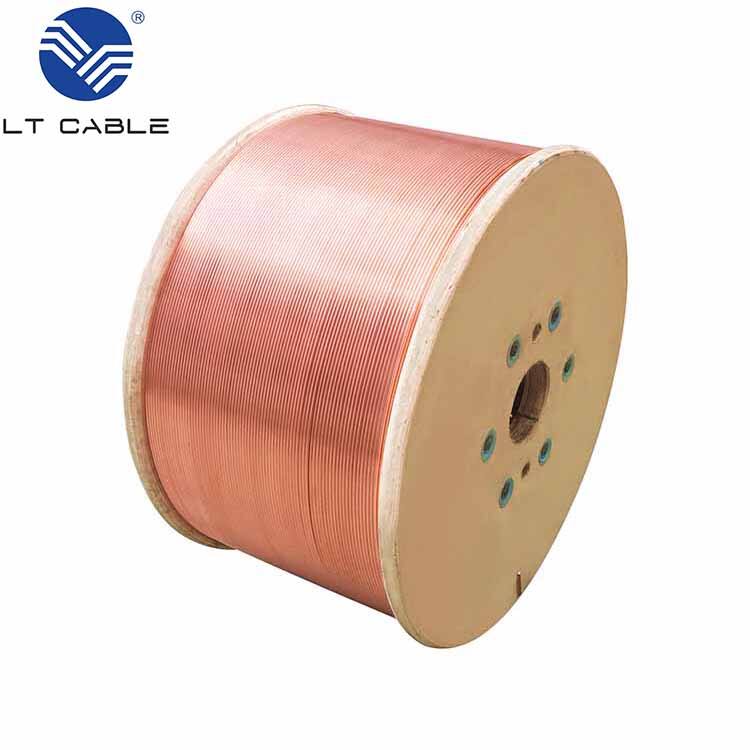
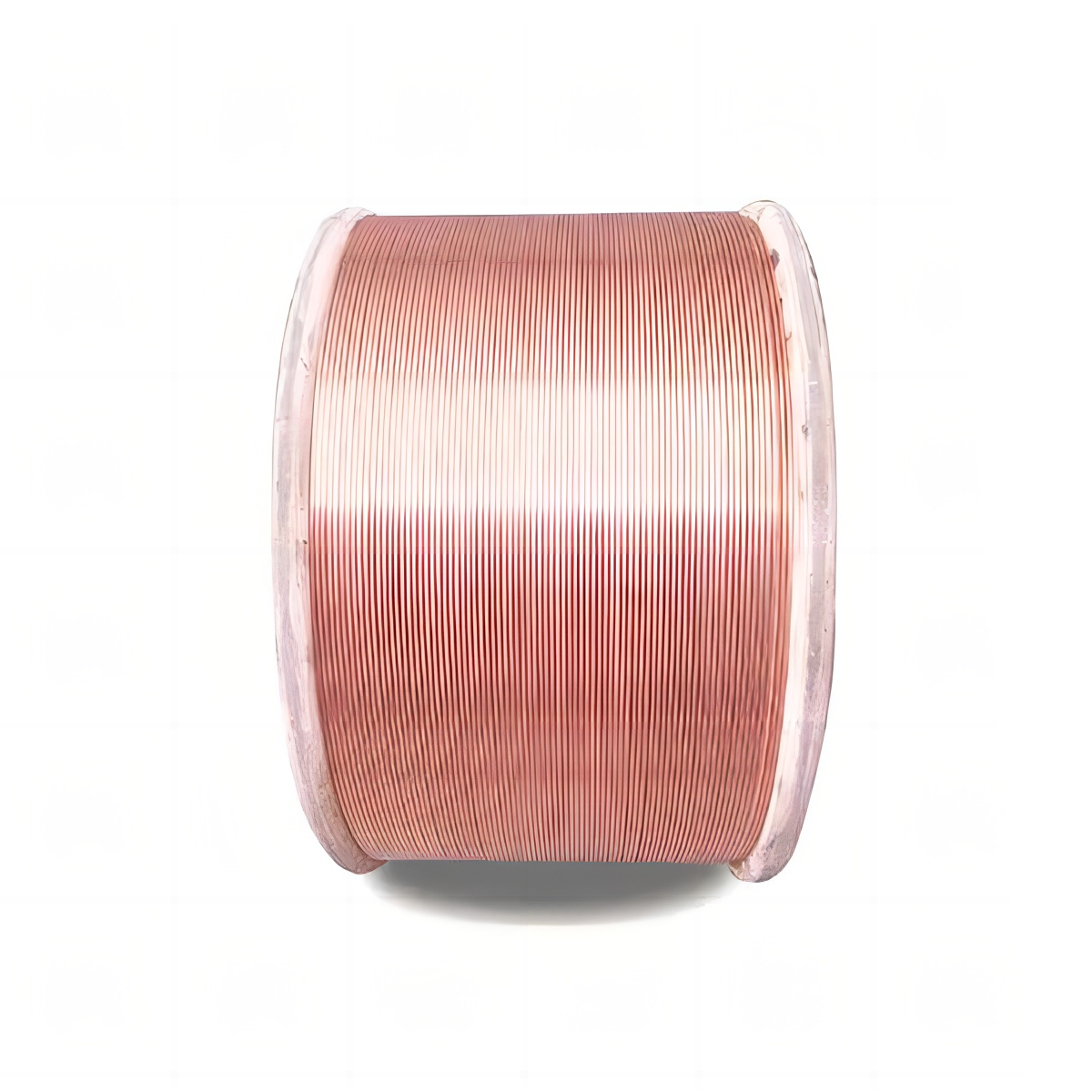
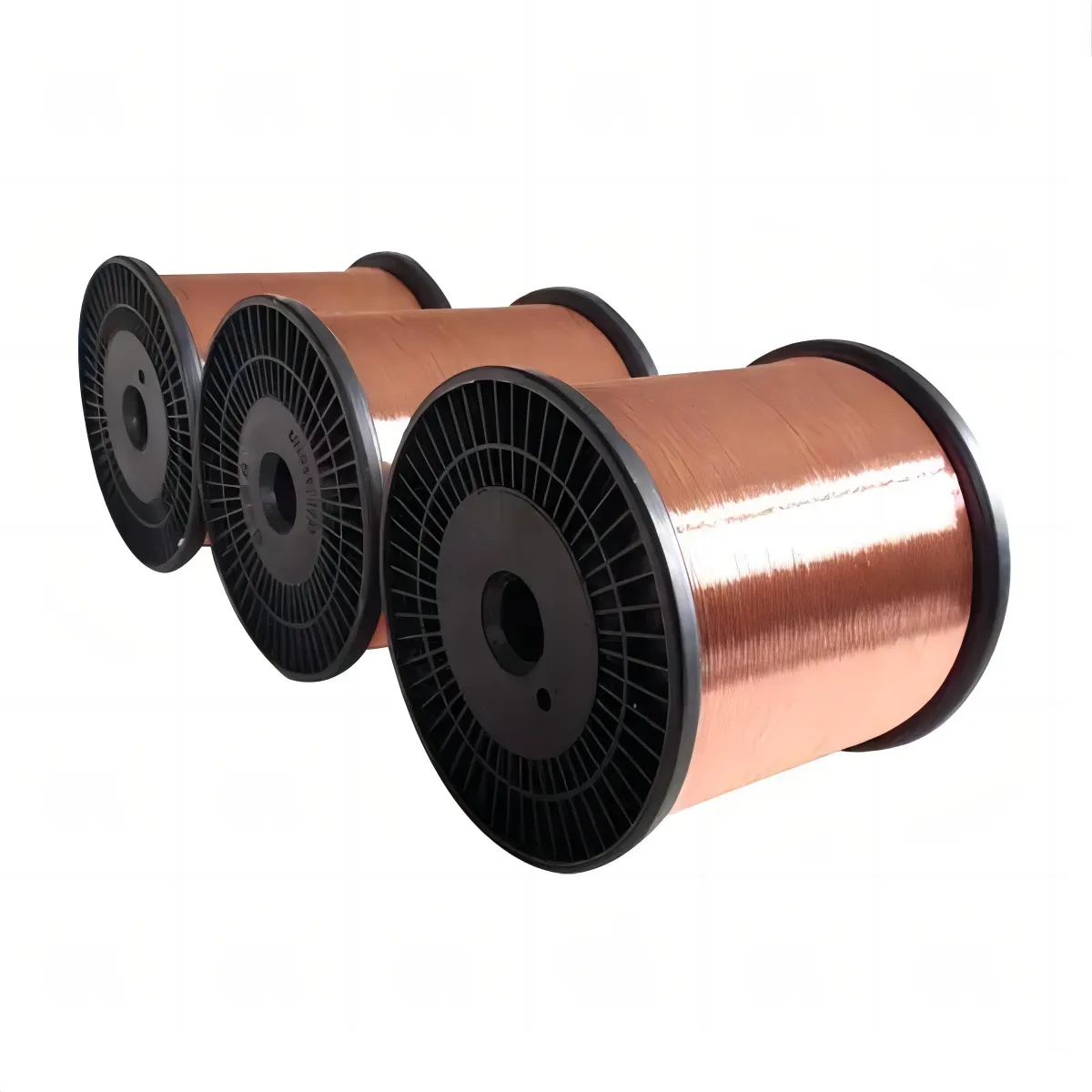
Copper Clad Steel Wire: Strength, Conductivity & Cost Savings

Get a Free Quote

Our representative will contact you soon.
Name
Email
Mobile
Country/Region
Choose the product you want
Message
0/1000
Unmatched Quality of Copper Clad Conductors

Unmatched Quality of Copper Clad Conductors

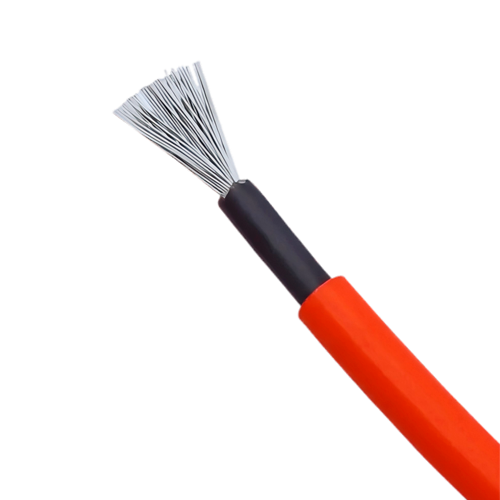
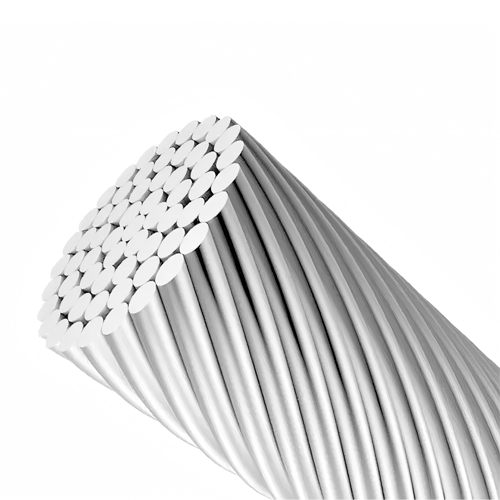
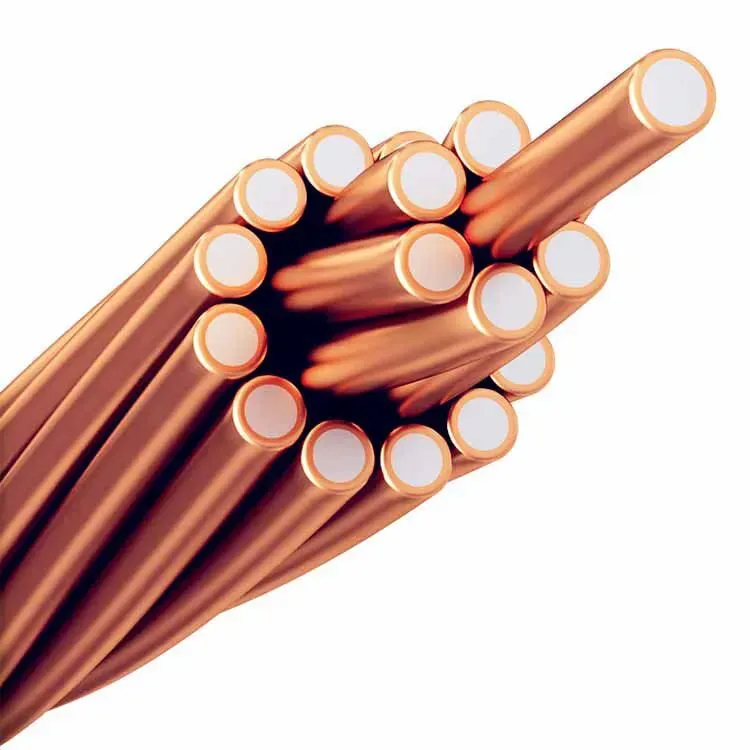
Copper clad conductors are engineered to offer superior electrical performance and durability. By combining a conductive core with a copper cladding, these conductors provide excellent conductivity while maintaining the mechanical strength necessary for various applications. Our fully automated production lines ensure that every step—from raw material production to wire drawing and annealing—is precisely controlled, resulting in a product that meets the highest industry standards. The unique structure of copper clad conductors allows for reduced weight and cost, making them an ideal choice for industries ranging from telecommunications to automotive. Our commitment to quality and customer satisfaction ensures that we can provide customized solutions tailored to meet specific client needs.
Get A Quote

Transforming Electrical Systems with Copper Clad Conductors

Telecommunications Innovation

In a recent project, a leading telecom provider integrated our copper clad steel conductors to combat signal loss in their high-density urban networks. The solution leveraged the material's unique dual advantages: the high-strength steel core ensured durability against physical stress in complex installations, while the copper cladding guaranteed superior signal integrity. This resulted in a 30% increase in signal transmission efficiency. The conductors’ lightweight nature also accelerated deployment, significantly cutting project timelines. The upgrade translated directly into enhanced network reliability and a better end-user experience, solidifying the client's service quality in competitive markets.

Automotive Industry Upgrade

A major automotive manufacturer aimed to reduce vehicle weight for improved fuel efficiency without sacrificing electrical performance. By adopting our copper clad steel conductors for key wiring harness components, they achieved a significant 20% reduction in wiring weight. This material provides an optimal balance, where the steel core offers necessary mechanical strength and the copper layer ensures consistent, high conductivity. The transition contributed directly to enhanced fuel economy and increased overall vehicle reliability. This successful application demonstrates how advanced materials can address core automotive challenges of weight reduction and performance optimization.

Renewable Energy Solutions

Collaborating with a renewable energy provider, our copper clad steel conductors were deployed in extensive solar farm installations. The material’s excellent conductivity maximized energy harvest from panels, while its exceptional corrosion resistance ensured long-term, stable performance under diverse and harsh environmental conditions—from coastal salt spray to extreme temperature swings. This durability is key to minimizing maintenance in remote locations. The client documented a 15% increase in consistent energy output, validating the effectiveness of our conductors in enhancing the efficiency and longevity of sustainable energy infrastructure.

Related products

Copper clad conductors are easily one of the greatest advancements in the electrical industry. They combine the best aspects of the most common electrical conductors, copper and other conductive materials. Because of the innovative design of our fully automated production lines, we are able to manufacture our copper clad conductors at the greatest efficiencies. Our copper clad conductors contain a solid core, allowing for easy mechanical support, and are nicely coated with a layer of copper, ensuring world class electrical conductivity. Because of this design, we are able to achieve significant cost savings in materials without any trade off in performance. With over 20 years of experience in the industry, we guarantee the highest quality copper clad conductors. Because we understand the importance of using only the best materials, our production process starts with the best raw materials and the best wires. This is followed with the best precision wire drawing and controlled annealing. Each process in our production is monitored to guarantee that our copper clad conductors achieve the best results. We understand that different industries have different needs and we are therefore proud to offer a variety of customizable options for our copper clad conductors. Our team is readily available to provide the best tailored specifications to best meet the needs of our clients. As we continue to innovate and enhance our processes, we stay devoted to our philosophy of creating value for our customers. With our high-quality products and exceptional service, we are confident that we can help our clients achieve their goals and drive success in their markets.

Frequently Asked Questions about Copper Clad Conductors

What are copper clad conductors?

Copper clad conductors consist of a conductive core coated with a layer of copper, combining the benefits of different materials to enhance electrical performance and mechanical strength. They are used in various applications, including telecommunications, automotive, and renewable energy.
Copper clad conductors are lighter and more cost-effective than traditional copper wires while maintaining excellent conductivity. Their unique structure allows for reduced material usage, making them a more sustainable choice for many applications.

Related article

Al-Mg Alloy Wire Conductivity Calculation: A Practical Example

15

Jan

Al-Mg Alloy Wire Conductivity Calculation: A Practical Example

Al-Mg Alloy Wire Composition and Its Direct Impact on Electrical Conductivity

The electrical conductivity of aluminum-magnesium alloy wire really hinges on how much magnesium is present. As magnesium content ranges between 0.5 to 5 weight percent, it gets incorporated into the aluminum's crystal structure, which messes with the way electrons move through the material. This happens because the magnesium creates tiny distortions at the atomic level that act as obstacles for electron flow. For every additional 1% magnesium added, we generally see around a 3 to 4% drop in conductivity according to the International Annealed Copper Standard benchmark. Some sources claim a 10% reduction, but that number tends to exaggerate what actually occurs in standard commercial products. It also mixes up normal alloy behavior with situations involving very high levels of impurities. The main reason behind this conductivity loss? More magnesium means more scattering events for electrons encountering those dissolved atoms, and naturally leads to higher resistance as magnesium concentration increases.

How magnesium content (0.5–5 wt%) governs electron scattering in aluminum magnesium alloy wire

Magnesium atoms substitute for aluminum in the lattice, distorting local symmetry and impeding electron motion. The magnitude of scattering intensifies nonlinearly above ~2 wt% Mg, where solubility limits are approached. Key experimentally observed impacts include:

  • At 1 wt% Mg: resistivity rises ∼3 nΩ·m versus pure aluminum (ρ = 26.5 nΩ·m)
  • Above 3 wt% Mg: electron mean free path shortens by ~40%, accelerating resistivity growth
    Staying within the equilibrium solid solubility limit (~1.9 wt% Mg at room temperature) is essential—excess Mg promotes β-phase (Al₃Mg₂) precipitation, which introduces larger, less frequent scattering sites but degrades long-term stability and corrosion resistance.

Solid solution hardening vs. precipitate formation: Microstructural drivers of conductivity loss in cold-drawn aluminum magnesium alloy wire

Cold drawing enhances strength but also amplifies microstructural influences on conductivity. Two interrelated mechanisms dominate:

  1. Solid solution hardening: Dissolved Mg atoms elastically strain the Al lattice, acting as distributed scattering centers. This mechanism dominates in low-Mg alloys (<2 wt%) and during cold working below ~150°C, where diffusion is suppressed and precipitates remain absent. It delivers high strength gains with relatively modest conductivity penalties.

  2. Precipitate formation: Above ~3 wt% Mg—and especially after thermal aging—β-phase (Al₃Mg) particles nucleate. While these larger obstacles scatter electrons less efficiently per atom than dissolved Mg, their presence signals supersaturation and instability. Precipitates reduce lattice strain but introduce interfacial scattering and accelerate localized corrosion.

Mechanism Conductivity Impact Dominant When Practical Implication
Solid solution High resistivity Low Mg (<2 wt%), cold-worked Best for applications prioritizing stable, predictable conductivity
Precipitates Moderate resistivity High Mg (>3 wt%), thermally aged Acceptable only with strict process control and corrosion mitigation

Optimal processing balances these effects: controlled aging minimizes coarse precipitate formation while leveraging fine, coherent clusters to enhance strength without disproportionate conductivity loss.

Standardized Conductivity Measurement and Calculation for Aluminum Magnesium Alloy Wire

From Resistivity to %IACS: ASTM E1004-Compliant Four-Point Probe Calculation Workflow

Getting accurate conductivity readings for aluminum-magnesium alloy wires means following the ASTM E1004 guidelines pretty closely. The standard calls for using a four-point probe on wire segments that have been straightened out and stripped of any oxides. Why? Because this approach actually gets rid of those pesky contact resistance issues that plague regular two-point measurements. Labs need to keep things really tight when taking these readings - temperatures should stay within 20 degrees Celsius plus or minus just 0.1 degree. And of course, everyone needs to be working with properly calibrated equipment and standards that can trace back to NIST. To figure out the International Annealing Copper Standard percentage, we take the bulk resistivity value (measured in nanoohm meters) and plug it into this formula: %IACS equals 17.241 divided by resistivity multiplied by 100. That number, 17.241, represents what standard annealed copper looks like at room temperature. Most certified labs can get within about 0.8% accuracy if everything goes right. But there's another trick too: the distance between the probes has to be at least three times the actual wire diameter. This helps create an even electric field across the sample and prevents those annoying edge effect problems that throw off results.

Measurement Factor Four-Point Probe Requirement Impact on %IACS Accuracy
Temperature stability ±0.1°C controlled bath ±0.15% error per 1°C deviation
Probe alignment Parallel electrodes ±0.01mm Up to 1.2% variance if misaligned
Current density ∼100 A/cm² Prevents Joule heating artifacts

Eddy Current vs. DC Four-Wire Measurement: Accuracy Trade-offs for Sub-2 mm Aluminum Magnesium Alloy Wire

For thin aluminum–magnesium alloy wire (<2 mm diameter), method selection hinges on accuracy requirements and production context:

  • Eddy current testing
    Offers non-contact, high-speed scanning ideal for inline quality sorting. However, its sensitivity to surface condition, near-surface segregation, and phase distribution limits reliability when Mg exceeds ~3 wt% or microstructure is inhomogeneous. Typical accuracy is ±2% IACS for 1 mm wire—sufficient for pass/fail screening but inadequate for certification.

  • The DC four wire Kelvin measurement technique can achieve around plus or minus 0.5 percent IACS accuracy even when dealing with thin wires as small as 0.5 mm that contain higher magnesium levels. Before getting accurate readings though, there are several preparation steps needed. First, specimens need to be properly straightened out. Then comes the tricky part - removing surface oxides through methods like gentle abrasion or chemical etching. Thermal stability during testing is also crucial. Despite needing all this prep work and taking about five times longer than other methods, many still rely on it because it's currently the only approach recognized by ASTM E1004 standards for official reports. For applications where electrical conductivity directly affects how well a system performs or meets regulatory requirements, this extra time investment often makes sense despite the slower process.

Step-by-Step Conductivity Calculation: A Real-World Example for 3.5 wt% Aluminum Magnesium Alloy Wire

Input validation: Resistivity measurement, 20°C temperature correction, and Mg solubility assumptions

Getting accurate conductivity calculations starts with making sure all input data is properly validated first. When measuring resistivity, it's essential to use ASTM E1004 compliant four point probes on wires that have been straightened out and thoroughly cleaned. The readings then need adjustment to account for temperature differences from the standard 20 degree Celsius reference point. This correction follows the formula rho_20 equals rho_measured multiplied by [1 plus 0.00403 times (temperature minus 20)]. The value 0.00403 per degree Celsius represents how much resistivity changes with temperature for aluminum magnesium alloys around room temperatures. Something worth noting about these measurements: when working with a 3.5 weight percent magnesium alloy, we're actually looking at something beyond what's normally possible since the equilibrium solubility limit sits around just 1.9 weight percent at 20 degrees Celsius. What this means in practice is that the resistivity numbers obtained don't only reflect solid solution effects but probably include some contribution from either metastable or stable beta phase precipitates forming within the material. To really understand what's going on here, microstructural analysis through methods like scanning electron microscopy combined with energy dispersive spectroscopy becomes absolutely necessary for meaningful interpretation of test results.

Numerical walkthrough: Converting 29.5 nΩ·m to %IACS with ±0.8% uncertainty

Consider a measured resistivity of 29.5 nΩ·m at 25°C:

  1. Temperature-correct to 20°C:
    ρ_20 = 29.5 × [1 + 0.00403 × (25 − 20)] = 30.1 nΩ·m
  2. Apply %IACS formula:
    %IACS = (17.241 / 30.1) × 100 = 57.3%

The plus or minus 0.8% uncertainty comes from putting together all those calibration errors, temperature effects, and alignment issues we always have to deal with during testing. It doesn't actually reflect any natural variation in the materials themselves. Looking at real world measurements for cold drawn wire that's been aged a bit, around 3.5 weight percent magnesium content usually shows conductivities between about 56 and 59 percent IACS. Something worth remembering though is that this rule of thumb about losing 3% conductivity for every additional weight percent magnesium works best when magnesium levels stay under 2%. Once we go past that threshold, things start breaking down faster because of these little precipitates forming and the whole microstructure getting more complicated as well.

Practical Implications for Engineers Selecting Aluminum Magnesium Alloy Wire

When specifying aluminum–magnesium alloy wire for electrical applications, engineers must balance three interdependent parameters: conductivity, mechanical strength, and environmental durability. Magnesium content (0.5–5 wt%) sits at the center of this trade-off:

  • Conductivity: Every 1 wt% Mg reduces conductivity by ~3% IACS below 2 wt%, rising to ~4–5% IACS loss near 3.5 wt% due to scattering from early-stage precipitates.
  • Strength: Yield strength increases ~12–15% per 1 wt% Mg—primarily via solid solution hardening below 2 wt%, then increasingly via precipitation hardening above 3 wt%.
  • Corrosion resistance: Mg improves atmospheric corrosion resistance up to ~3 wt%, but excess Mg promotes grain boundary β-phase formation, accelerating intergranular corrosion—especially under cyclic thermal or mechanical stress.

When dealing with important stuff like overhead transmission lines or busbars, it's better to go with ASTM E1004 compliant DC four wire resistivity measurements instead of relying on eddy current methods for those tiny sub 2 mm wires. Temperature matters too folks! Make sure there are mandatory baseline corrections at 20 degrees Celsius because even a 5 degree swing can throw off readings by about 1.2% IACS, which messes up meeting specs. For checking how materials hold up over time, run those accelerated aging tests using standards like ISO 11844 with salt spray and thermal cycling. Research indicates that if materials aren't properly stabilized, corrosion along grain boundaries jumps up around three times after just 10,000 load cycles. And don't forget to double check what suppliers claim about their products. Look at actual composition reports from reliable sources, especially when it comes to iron and silicon content that should stay below 0.1% total. These impurities really hurt fatigue resistance and can lead to dangerous brittle fractures down the road.
View More
Why Twisted Wire is the Key to Stable Car Electrical Connections

22

Mar

Why Twisted Wire is the Key to Stable Car Electrical Connections

Understanding Twisted Wire Technology in Automotive Systems

Basic Structure: Twisted vs. Solid vs. Stranded Wire

In automotive systems, twisted, solid, and stranded wires all serve different purposes thanks to their unique structures. Take twisted wire for instance it usually has those enameled strands wrapped together. People love this type because it bends easily and cuts down on that annoying electromagnetic interference we all know as EMI. The way these strands twist around each other actually helps the wire handle bumps and shakes better while still working properly. Stranded wire works similarly but just has more individual strands bundled together, which makes it super flexible for getting into tight spots where space matters most. Solid wire takes a completely different approach with one big solid core inside. This gives it great conductivity and lasting power, so it's typically used in places where the wire won't be moved much after installation.

Twisted wire has one big plus point when it comes to fighting off electromagnetic interference. The way these wires are constructed actually cuts down on EMI pretty well, something that matters a lot in cars where there's plenty of high frequency noise floating around. Take enameled wire for instance. When manufacturers twist this type together, they get that protective enamel coating working overtime to prevent shorts. This kind of setup shows up all over the place in motor windings and other critical components inside electric motors. With modern vehicles relying so heavily on clean signal paths, knowing what separates twisted from straight wiring makes all the difference. Engineers spend hours debating which wire type works best for different parts of the vehicle because getting this right can mean smoother operation and fewer headaches down the road.

How Twisting Affects Electrical Signal Integrity

When wires are twisted together, it actually helps maintain better electrical signals, which matters a lot in car electronics where signal loss can be problematic. The main benefit comes from how this twisting works against electromagnetic interference. Basically, when current flows through parallel wires, they create magnetic fields that interfere with each other. But twist those wires just right and those fields start cancelling each other out instead. Research into cable design shows that increasing the number of twists along a given length makes this cancellation even more effective. Most automotive engineers will tell you that properly twisted cables can bring down EMI to almost nothing across their entire run, keeping data transmission clean and reliable throughout the vehicle's wiring system.

Twisting wires works mainly because it cancels out magnetic fields. Current running through these twisted pairs creates opposing magnetic fields in each half of the twist. The result? Much less interference from unwanted voltages and outside noise sources. Tests back this up consistently. Car manufacturers rely heavily on this technique since their vehicles operate in all sorts of electromagnetic environments. From engine compartments to passenger cabins, there's always background electrical noise competing with important signals. That's why properly twisted wiring remains so critical throughout modern cars' increasingly complicated electrical systems.

Key Benefits of Twisted Wire for Car Electrical Connections

EMI Reduction Through Magnetic Field Cancellation

Twisting wires remains a popular approach for cutting down on electromagnetic interference (EMI) problems inside cars and trucks. When wires get twisted together, they create opposing magnetic fields that basically cancel each other out. The result? Less unwanted electrical noise messing with sensitive equipment. Research indicates these twisted arrangements knock EMI levels way down compared to regular straight wires running parallel. Some tests even found reductions exceeding 70% in certain situations. Makes sense why automotive engineers love this trick so much. In modern vehicles packed full of electronic components, keeping those signals clean matters a lot. Safety systems need reliable connections after all, and twisted wiring helps ensure communication stays intact between different parts of the vehicle's complex network.

Enhanced Durability in High-Vibration Environments

Twisted wires tend to hold up really well over time, especially when used in cars that constantly vibrate and move around. What makes them special is how they're built - the twisting lets them bend without breaking as easily as regular solid or stranded wires would under the same rough treatment. Car makers have noticed this firsthand too. Some big names in the industry report their twisted wire connections stay intact much longer when subjected to those relentless vibrations we see in vehicles day after day. Stranded wires just don't cut it in these situations since they wear down faster, and solid ones? Well, they often just snap right off completely. For anyone looking at long term reliability in automotive wiring systems where shaking and rattling is basically part of the job description, twisted wires simply offer advantages that other types just cant match up to.

Improved Flexibility for Complex Routing

Twisted wire designs offer real advantages when it comes to routing through the cramped spaces inside modern vehicles. Solid wires and those made from copper clad aluminum just don't bend well enough for all those tight corners and awkward angles that come standard in today's car interiors. The twist gives these wires the flexibility needed to snake through engine compartments and dashboards where straight runs simply won't work. For mechanics and installers, this means fewer headaches during assembly and better integration with other components. Automotive engineers appreciate this too since they can create more advanced electrical layouts without constantly fighting against the limitations of traditional wiring options. Better installation times translate into cost savings on production lines, while also helping maintain the reliability and performance standards expected from modern vehicle electrical systems.

Twisted Wire vs. Solid and Stranded Conductors

Current Capacity Comparison: Twisted vs. Solid Wire

When it comes to cars, how much electricity twisted wire can carry makes all the difference compared to regular solid wire. The twisty design actually works better for moving current because of the way the strands are woven together, creating more surface area that helps get rid of heat faster. This matters a lot in car electrical systems where keeping things running smoothly without overheating is critical. Some research published in an engineering journal found that twisted wires handle about 15 percent more current than their solid counterparts. Most car makers follow guidelines from groups like the IEC when picking out wiring materials. These rules help them choose wires that won't overheat or fail under normal driving conditions, which keeps everyone safer on the road.

Flexibility Advantage Over Copper Clad Aluminum (CCA) Wire

When it comes to flexibility, twisted wire definitely outperforms copper clad aluminum (CCA) wire, particularly in those complicated vehicle layouts we see these days. Twisted wire just bends and twists right through all those tight spots in cars without snapping, while CCA might be lighter but tends to break down when things get really complicated. Take modern car designs where wires need to snake through engine compartments and under dashboards. Mechanics actually report faster installations with twisted wires since they don't kink up so easily. Most major car manufacturers now specify twisted wire for their production lines simply because these wires hold up better during assembly and after years of vibration from everyday driving conditions something every mechanic knows matters a lot in keeping vehicles running smoothly.

Why Stranded Wire Complements Twisted Pair Designs

In automotive wiring applications, stranded wire works alongside twisted wire designs to boost performance across different vehicle systems. When combined properly, these wires maintain good connections even when subjected to vibrations and temperature changes common in cars. We see this happening in critical areas like engine management controls where reliable signal transmission matters most. The automotive industry has noticed this trend too many manufacturers now prefer using mixed wiring approaches because they get better results from combining flexible stranded conductors with the structural benefits of twisted pairs. This practice helps meet strict performance requirements while keeping electrical systems running smoothly for longer periods without failures.

Practical Applications in Modern Vehicle Systems

Stable Sensor Data Transmission for ADAS

Twisted wire is really important for keeping data transmission stable in those Advanced Driver-Assistance Systems (ADAS) found in today's cars. When manufacturers twist the wires together, it cuts down on electromagnetic interference problems. This matters a lot now that cars have so many different electronic systems packed into them. Industry numbers show that when using twisted wiring instead of other approaches, data errors drop quite a bit, making these driver assistance features both safer and more dependable over time. Take Tesla for instance they actually implemented twisted pair wiring throughout their vehicle line-up. Their engineers noticed much better sensor communication between components, especially under real world driving conditions where all sorts of electrical signals are bouncing around inside the car.

Noise-Free Audio in Infotainment Systems

Twisted wire tech plays a big role in getting clean audio from car infotainment systems. These wires work really well against electromagnetic interference, something that causes those annoying noises drivers hear while on the road. Car audio specialists will tell anyone serious about sound quality that good wiring matters a lot, especially when we're talking about twisted pairs. Take the BMW 7 Series as an example. They actually use these special wires in their audio setup so people can enjoy music without all that background static messing things up during their drive. Most car owners probably don't think about this stuff, but it makes a real difference in how satisfying the whole listening experience feels inside the vehicle cabin.

Reliable Ignition and ECU Communication

Good wiring is absolutely necessary for proper functioning of ignition systems and those important computer parts called ECUs. We've seen plenty of cars on the road with bad wiring that just plain breaks down. Take some models from a few years back where people had all sorts of trouble starting their vehicles because the wires couldn't handle the job. Twisted wire stands out because it conducts electricity better and holds up longer under stress, which keeps those vital signals moving between parts without interruption. When manufacturers invest in quality wiring solutions, they're not just preventing breakdowns but actually making cars run smoother and last longer overall. The difference might seem small at first glance, but over time it adds up to fewer repairs and happier customers.

View More
Shielded Cables: The Backbone of Reliable Communications

22

Mar

Shielded Cables: The Backbone of Reliable Communications

Understanding Shielded Cables in Communication Networks

What Makes Shielded Cables Essential for Data Transmission?

Shielded cables are really important for keeping data safe during transmission since they block out external electromagnetic interference, or EMI as it's commonly called. We see this protection working well in places such as data centers and industrial areas where clear signals matter a lot. Take EMI for example it messes with signals and can cause problems like lost or corrupted data. Shielded cables help fix these issues by stopping those unwanted signals from getting through. Plus, these cables let data travel longer distances without losing strength, which makes them reliable across different situations. Industry studies show that switching from regular cables to shielded ones cuts down errors by around 80 percent, especially noticeable in spots with lots of EMI like manufacturing plants and hospitals.

Key Components: Enameled Wire and Conductive Materials

Enameled wire plays a big role in shielded cables because it offers excellent insulation and stands up well against corrosion issues. When installed properly, these wires help keep cables working reliably for years on end while shielding the inner conductors from outside damage and unwanted interference. Shielded cables often incorporate different metals too, with copper and aluminum being popular choices among manufacturers looking to boost conductivity and preserve signal integrity throughout their systems. Take copper for instance it has really high conductivity which means less resistance when transmitting signals, so data moves through the network much faster without losing strength along the way. Most professionals in the field will tell anyone who asks that using good quality materials during cable manufacturing isn't optional if companies want top notch performance out of their infrastructure since poor material selection directly affects how well those cables handle electromagnetic interference problems in real world conditions.

Stranded vs. Solid Wire in Cable Construction

When building cables, deciding between stranded and solid wire really comes down to what the job actually needs. Stranded wires bend better and hold up against wear and tear, so they work great when cables get moved around a lot or exposed to vibrations, think about car parts or factory equipment that moves constantly. Solid wire isn't as flexible but stands up to abuse much longer, which is why electricians usually go for this type when running power through walls or ceilings where things stay put. For sending signals through cables, stranded versions are harder to snap because they flex without breaking, though they do carry some extra resistance compared to their solid counterparts. Most people pick whichever fits their setup best, going with stranded if the cable will see action and sticking with solid for those permanent installations where stability matters most.

Electromagnetic Interference (EMI) and Signal Integrity

How EMI Disrupts Communication Network Performance

Electromagnetic interference, or EMI for short, really messes with how well communication networks work because it gets in the way of signals traveling through them. Most of the time this interference comes from other electrical devices sitting close by, and when it happens, important data either gets lost completely or becomes corrupted somehow. Take factories with lots of big machines running all day long, or places packed full of electronics - these spots tend to have constant problems with their signals getting disrupted, which makes everything run slower and less reliably. Looking at actual numbers shows something interesting too. Networks dealing with serious EMI issues lose way more data packets than they should, sometimes cutting down overall efficiency by around 30%. We've seen this happen in hospitals where doctors struggle to maintain reliable wireless connections because medical equipment creates so much EMI. That's why many tech professionals now recommend using shielded cables and other protective measures to keep networks functioning properly despite all the electromagnetic noise floating around.

The Role of Shielding in Preserving Signal Quality

Good shielding is essential for keeping signals clean since it blocks out unwanted electromagnetic interference. When cables get wrapped in conductive stuff like aluminum foil or copper braid, they create barriers against those pesky EM waves that mess with data transmission. Some studies indicate that certain methods work better than others. For instance, layering different materials together or mixing foil with braided shields tends to keep signal loss minimal even when dealing with those tricky high frequency transmissions. The field has seen some interesting developments lately too. Manufacturers are coming up with new conductive compounds and creative ways to build shields into cable structures. This progress should lead to stronger protection options down the road, especially important as our communication networks grow more complicated and operate under tougher conditions day after day.

Stranded Copper Wire Resistance Per Foot: Impact on EMI Protection

How much resistance there is in each foot of stranded copper wire really affects how well it blocks electromagnetic interference. Wires with lower resistance generally work better at stopping EMI, so picking the right gauge matters a lot. Take a look at what happens when we go down in wire gauge sizes. The resistance goes down too, which means better shielding against those pesky electromagnetic signals. According to some actual field tests from engineers working on this stuff daily, getting the wire size right for whatever environment it'll be used in makes all the difference for proper EMI protection. Anyone looking at installing wiring where strong EMI shielding is needed should definitely pay attention to these resistance numbers. Getting this part wrong could lead to problems later on with equipment malfunctioning or needing replacement sooner than expected.

Foil Shielding: Lightweight Protection for High-Frequency EMI

Foil shielding works really well at blocking out those pesky high frequency electromagnetic interferences (EMI) thanks to a thin metal layer wrapped around the cable. Usually made from copper or aluminum, this foil creates a complete barrier along the whole length of the cable. That's why we see it so much in areas plagued by high frequency signals. What sets foil apart from other shielding methods is how light it is. Installation becomes way simpler compared to bulkier options like braided shields. Sure, foil isn't as tough as some alternatives, but when weight matters most, like in tight spaces or long runs, it wins hands down. We find foil shielding all over the place actually. Data centers rely on it heavily because they can't afford signal disruptions. Same goes for telecom infrastructure where even small amounts of interference could cause major problems for communications networks.

Braided Shielding: Durability and Flexibility in Industrial Settings

Braided shielding consists of copper wires woven together into a mesh pattern, which gives it good strength while still being flexible enough for tough industrial conditions. Compared to foil shielding, this braided version covers around 70% to maybe even 95% of the surface area, though how well it works really depends on how tightly those wires are woven together. Industrial settings love this kind of shielding because it can take a beating without breaking down or losing function when subjected to harsh factory floor conditions. What makes braided shielding stand out is its flexibility factor too. Cables with this shielding can bend and move around all day long without affecting their performance. That's why we see so much of it in manufacturing plants where cables get moved around constantly and face plenty of mechanical stress over time.

Spiral Shielding Applications in Dynamic Communication Systems

Spiral shielding works really well in situations where cables get moved around a lot or bent frequently. The way the conductive material wraps around in spirals lets these cables stay flexible but still blocks out electromagnetic interference pretty effectively. That's why many engineers prefer them when dealing with equipment that moves constantly, think industrial robots or automated assembly lines for instance. Looking at recent developments, manufacturers keep finding ways to improve how these shields work better over time. With modern tech needing reliable connections even under tough conditions, we're seeing more companies switch to spiral shielding solutions across different sectors from manufacturing floors to medical devices.

Choosing the Right Shielded Cable for Communication Systems

Environmental Factors: EMI Sources and Cable Routing

Knowing where electromagnetic interference (EMI) comes from and how it travels matters a lot when picking out shielded cables for communication systems. Industrial equipment, old fashioned fluorescent lights, and nearby radio transmitters all create EMI that messes with signal quality. Getting the cable paths right helps reduce this problem. A good rule of thumb? Keep signal cables away from power lines and don't run them parallel. Also maintain some distance between sensitive signal lines and those pesky EMI sources. This becomes especially important in factories and plants where strong signals are needed. Real world experience tells us that cables kept at proper distances from EMI sources work better and maintain cleaner signals over time. Many engineers have seen this firsthand in their installations.

Balancing Conductivity and Flexibility: Bare Stranded Copper Wire Considerations

When selecting bare stranded copper wire, engineers need to weigh conductivity against flexibility based on what the job requires. The copper composition gives this type of wire outstanding electrical properties, which explains why it works so well in demanding applications like power transmission lines. But don't overlook the flexibility factor either. This characteristic makes installation easier in areas where components move around regularly, such as factory automation systems or vehicle wiring harnesses. Industry experience shows that stranded configurations retain their conductive qualities over longer runs while still bending around tight corners in cramped machinery compartments. Getting the mix right between these two attributes means better results down the road, whether the priority is maintaining signal strength through extended cable runs or accommodating frequent movements in mechanical assemblies.

Interpreting Stranded Wire Size Charts for Optimal Performance

Getting stranded wire size charts right makes all the difference when it comes to getting good cable performance. These charts basically tell us about wire sizes and how they impact things like impedance and what kind of electrical load they can handle. When picking the right size, we're looking at minimizing resistance along each foot of cable while keeping signals strong throughout the system. Otherwise, problems like cables getting too hot or losing signal strength become real headaches. A lot of folks miss important factors like temperature changes in the environment where the cables will be installed, or forget to check exactly what kind of load demands their particular setup has. Taking time to really understand these charts helps prevent those costly errors down the road, so communication systems run smoothly without unexpected issues popping up later on.

کردن: فهمیدن و استفاده از نمودارهای اندازه سیم فلزی برای عملکرد بهینه امری ضروری است که به کاهش مقاومت و بهبود انتقال سیگنال کمک می‌کند.

View More
CCAM Wire Reducing Copper Use in Bulk Coaxial Orders

11

Aug

CCAM Wire Reducing Copper Use in Bulk Coaxial Orders

How CCAM Wire Reduces Copper Consumption in Coaxial Cables

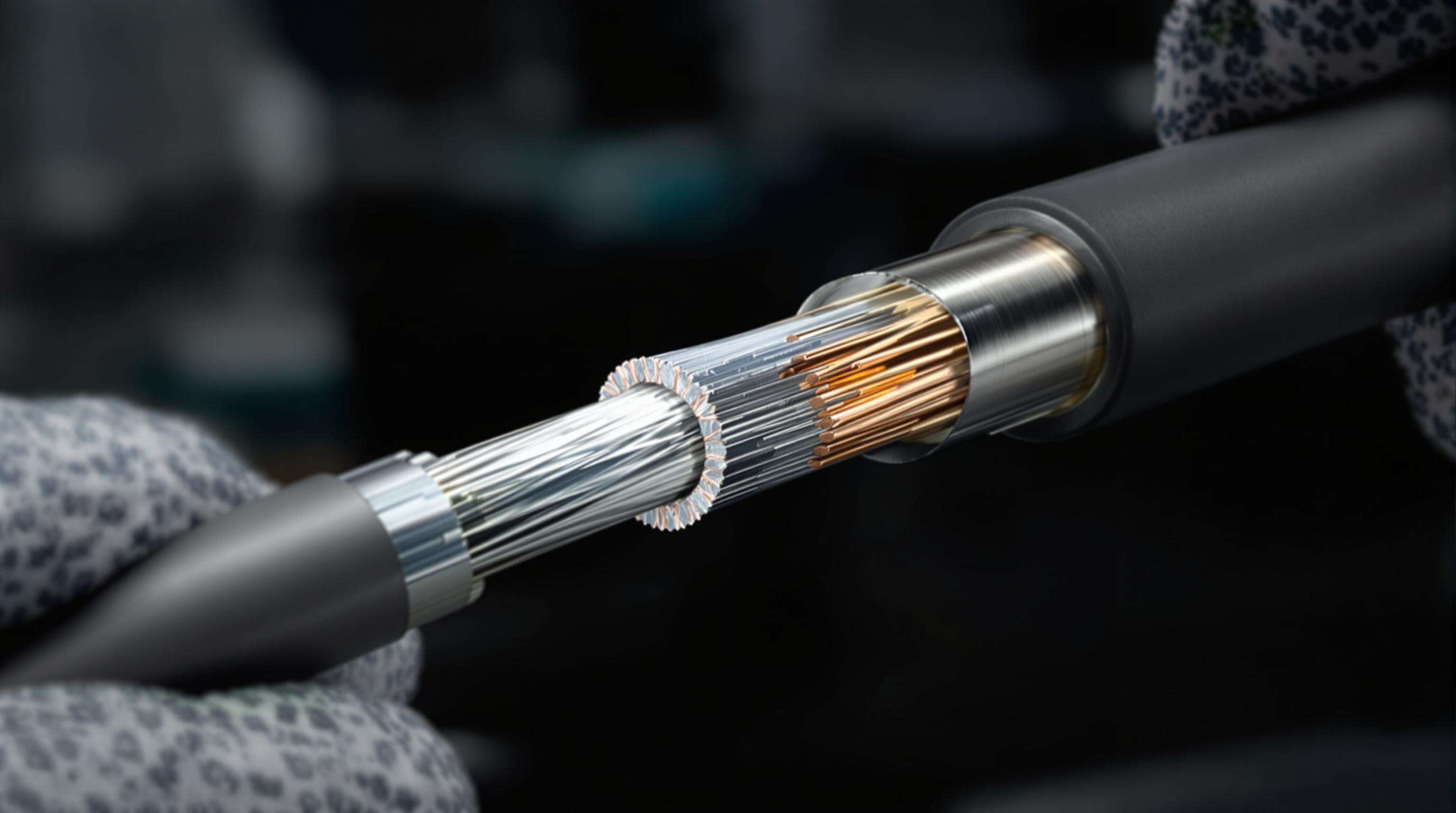
A close-up of a CCAM coaxial cable cross-section displaying aluminum core and copper cladding with technician handling it

Understanding Copper Clad Aluminum (CCA) and CCAM Wire Structure

Copper Clad Aluminum or CCA wire basically has an aluminum center covered by a thin copper coating. What this does is combine the light weight advantage of aluminum, which weighs about 30 percent less than regular copper, with copper's better surface conductivity properties. The result? Electrical performance that's pretty much on par with solid copper wires, but with around 60 to 70 percent less actual copper needed according to Wire Technology International from last year. Then there's CCAM wire which takes things further. These wires use improved bonding methods so they don't peel apart when bent back and forth repeatedly. This makes them much more reliable for applications where the wiring gets moved around a lot or experiences constant motion.

Material Efficiency: Core Benefits of Aluminum Core With Copper Cladding

When manufacturers replace around 90 percent of the conductor mass with aluminum instead of copper, they end up using much less copper but still get about 85 to 90 percent of what pure copper can do electrically. For big cable purchases over 1,000 meters long, this means companies save roughly 40% on materials according to Cable Manufacturing Quarterly from last year. What's interesting is how the copper coating actually stands up better against rust than regular aluminum wires would. That makes CCAM cables last longer especially when installed where there's lots of moisture or chemical exposure problems.

Comparison of CCAM, Pure Copper, and Other Conductive Materials in Coaxial Cables

CCAM has a conductivity rating around 58.5 MS/m which puts it right up there with pure copper that ranges from about 58 to nearly 60 MS/m. The numbers look much better than what we get from copper coated steel, which typically sits somewhere between 20 and 30 MS/m. For frequencies above 3 GHz, most engineers still reach for pure copper as their go to material. But when looking at broadband systems running under 1.5 GHz, CCAM works just fine in practice. What makes this material stand out is how it balances good performance with real money savings and lighter weight too. That's why many companies are turning to CCAM for things like last mile connections within buildings or between structures where some small amount of signal loss isn't going to cause major problems.

Cost Advantages of CCAM Wire in Large-Scale Coaxial Production

Reduced Material Costs with CCAM in Bulk Cable Manufacturing

CCAM wire combines aluminum core with copper cladding in its hybrid design, which means about 40 to 60 percent less copper is needed compared to regular solid copper wires. Despite using less material, it still keeps around 90% of what makes copper so good at conducting electricity. For manufacturers producing these wires in bulk quantities, this translates into real money saved. The production cost drops somewhere between $18 and $32 for every thousand feet made, something that adds up fast when telecom companies need to install massive networks across regions. And there's another benefit too: since CCAM cables weigh about 30% less than traditional ones, shipping them becomes cheaper as well. Logistics companies report savings ranging from $2.50 to almost $5 per spool during those long hauls across country, making transportation budgets stretch further without compromising quality standards.

Mitigating Copper Price Volatility Through Material Substitution

Copper prices have swung wildly by about 54% since 2020, making CCAM wire an attractive option for companies wanting to protect themselves from these ups and downs. Aluminum stands out as much more stable, with price changes only 18% smaller than copper according to LME data from last year. This stability helps manufacturers keep their costs predictable when signing those long term contracts. Companies that switch to CCAM see around 22% fewer unexpected expenses during big projects. Think about something like rolling out 5G networks or expanding broadband across entire regions where they need tens of thousands of cables. These real world applications show how switching materials can lead to better control over project budgets and overall financial planning.

Performance and Reliability of CCAM vs. Pure Copper Coaxial Cables

Electrical Conductivity and Signal Attenuation in CCAM Cables

CCAM works with what's called the skin effect. Basically, when signals have high frequencies, they tend to stick to the outer part of conductors rather than going all the way through. This means the copper coating on CCAM cables does most of the work for transmitting signals efficiently. When looking at frequencies around 3 GHz, about 90% of the electrical current stays right in that copper layer. The difference in performance compared to solid copper wires isn't huge either, only about 8% signal loss every 100 meters or so. But there's a catch. Aluminum has higher resistance than copper (around 2.65 × 10⁻⁸ ohm meters versus copper's 1.68 × 10⁻⁸ ohm meters). Because of this, CCAM actually loses about 15 to 25% more signal strength in those middle frequency ranges between 500 MHz and 1 GHz. That makes CCAM not as great for situations where signals need to travel far distances or carry strong power levels in analog systems.

Durability, Corrosion Resistance, and Long-Term Performance

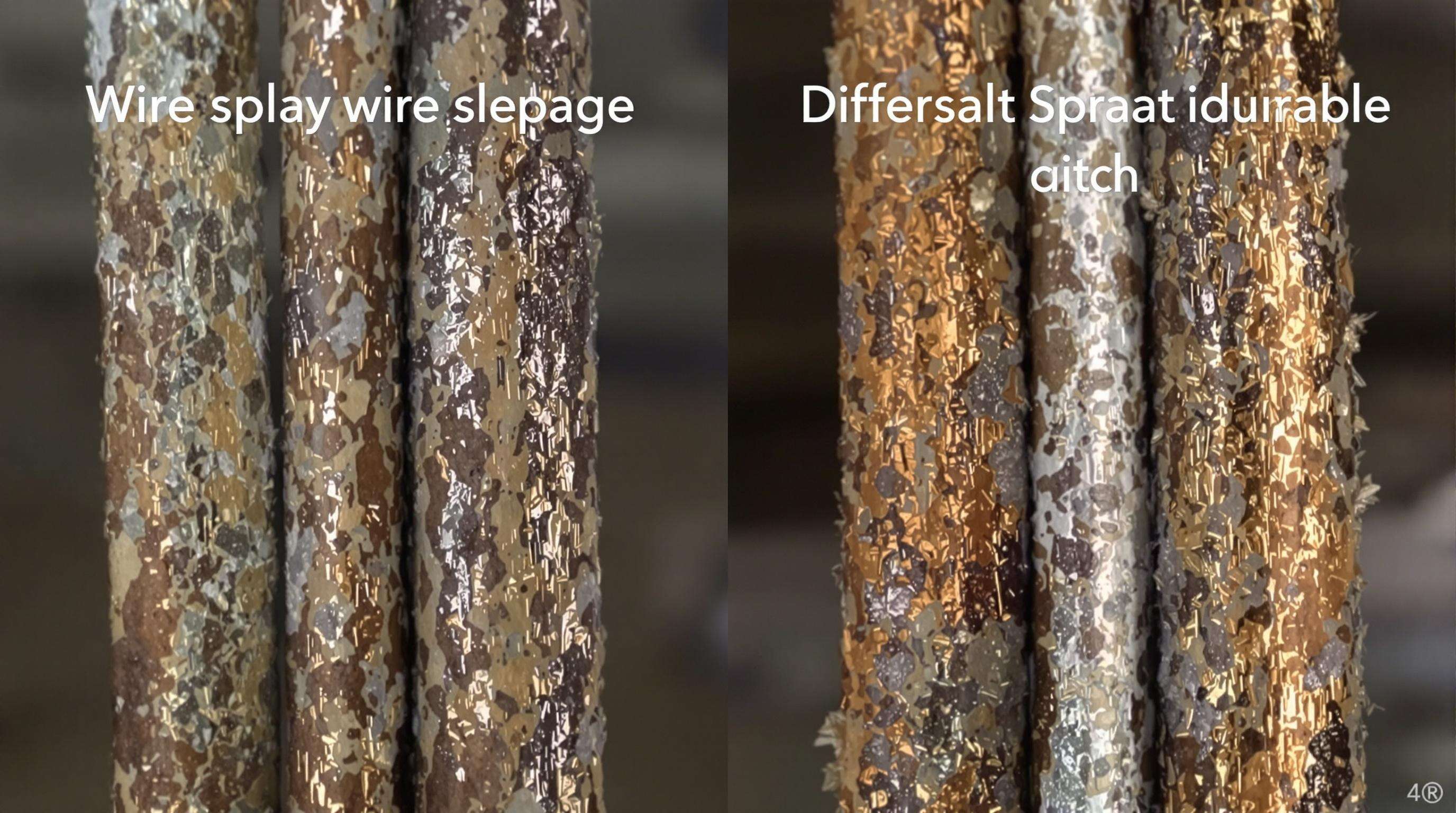
Two wire samples in a lab chamber showing differences in corrosion and durability under salt spray conditions

While the copper cladding protects against oxidation in dry conditions, CCAM is less robust under mechanical and environmental stress than pure copper. Independent testing highlights these differences:

Property CCAM Wire Pure Copper
Tensile strength 110–130 MPa 200–250 MPa
Bend cycles before fail 3,500 8,000+
Salt spray corrosion 720 hrs 1,500+ hrs

In coastal environments, CCAM cables often develop patina at connection points within 18–24 months, necessitating 30% more maintenance than copper-based systems.

Evaluating Performance Trade-Offs in High-Frequency and Long-Distance Transmissions

CCAM works great for short range high frequency stuff like those little 5G cells in cities. At 3.5 GHz it only loses about 1.2 dB per 100 meters which fits right into what LTE-A needs. But there's a catch when it comes to Power over Ethernet (PoE++). Because CCAM has roughly 55% more DC resistance than regular copper, it gets tricky for longer runs beyond 300 meters where the voltage just drops too much. Most installers have found that mixing things up helps. They use CCAM for the drop cables going to individual devices but stick with pure copper for the main trunk lines running through buildings. This mixed method cuts down on material costs somewhere around 18 to 22 percent while keeping signal loss under 1.5 dB. It's basically finding that sweet spot between getting good performance without breaking the bank.

Market Trends Driving Adoption of CCAM Wire in Telecommunications

Growing Demand for Cost-Effective Materials in Broadband Infrastructure

Global spending on broadband infrastructure is expected to hit around $740 billion by 2030 according to Ponemon Institute research from last year, and telecom companies are increasingly turning to alternatives like CCAM wire to cut costs. Compared to traditional copper cables, CCAM reduces material expenses by roughly 40 percent while weighing about 45 percent less, which speeds things up when installing new lines in overhead or final stretch connections. What really matters though is that CCAM retains approximately 90% of what copper can do in terms of conducting electricity, making it work well for coaxial systems ready for 5G rollout. This becomes especially valuable in crowded city areas where getting heavy copper cables into tight spaces creates all sorts of headaches for installers who need something that bends easier and handles better during actual field work.

Global Raw Material Scarcity and Sustainability Pressures Accelerating CCA Adoption

The jump in copper prices has been staggering really, going up around 120% since 2020 alone. Because of this many telecom companies have switched to CCAM instead. About two thirds of them actually. Aluminum makes sense here because it's just so much more plentiful than copper. Plus refining aluminum takes way less energy too, roughly 85% less according to industry reports. The carbon footprint difference is huge when we look at actual numbers. For CCAM products, it's about 2.2 kilograms of CO2 per kilogram produced compared to nearly 8.5 kg for regular copper cables. Another big plus point for CCAM is that almost all of it can be recycled again later on. And unlike copper which fluctuates wildly in price year after year, CCAM stays pretty stable with only about plus or minus 8% variation annually. This stability helps companies meet their green targets while keeping costs predictable. Many European countries are already pushing for greener networks through policies aligned with the Paris Agreement framework. As a result, over ninety percent of telecom operators across the EU now require low carbon materials for any new infrastructure projects they undertake these days.

Real-World Applications of CCAM Wire in Modern Network Infrastructure

Use Cases in Urban Broadband Expansion and Last-Mile Connectivity

CCAM wire has become a go-to solution for citywide broadband projects thanks to its impressive 40 percent lighter weight compared to traditional options. This makes it much easier and safer to install overhead in crowded urban environments. The lightweight nature works wonders in apartment complexes with multiple floors and old neighborhoods where the existing infrastructure simply can't handle the bulk of standard copper cables. Installers report that working with CCAM cuts down their job time somewhere between 15 and 20 percent, which means service providers can bridge those stubborn last-mile connections without breaking a sweat or causing unnecessary disruption to communities.

Case Study: Successful Deployment of CCAM Cables in Large-Scale Telecom Projects

One big telecom company in Europe saved around €2.1 million each year after swapping out old copper distribution cables for CCAM versions in 12 different city areas as part of their national FTTH expansion. After installation, tests showed that signal loss stayed under 0.18 dB per meter at 1 GHz frequencies, which is actually comparable to what they used to get from copper. Plus, because these new cables are lighter, crews could install them 28% quicker when running them along power lines. What started as just one project has now turned into something other companies look at when planning their own upgrades. The results show that CCAM materials really work well against tough performance requirements and still manage to cut costs and simplify logistics at the same time.

FAQ Section

What is CCAM wire?

CCAM wire is a type of coaxial cable that features a copper cladding over an aluminum core, which reduces copper consumption while maintaining good conductivity and performance.

How does CCAM wire compare to pure copper cables?

CCAM wire provides similar electrical performance to pure copper cables for certain applications, especially at frequencies below 1.5 GHz, while offering cost advantages and reduced weight.

Can CCAM cables be used for high-frequency applications?

CCAM cables perform well for high-frequency applications up to 3.5 GHz but may not be suitable for long-distance transmissions due to increased signal attenuation compared to pure copper.

Are CCAM wires durable?

While CCAM wires offer corrosion resistance, they are less durable than pure copper cables under mechanical stress and require more maintenance in coastal environments.

Why are telecom companies adopting CCAM wire?

Telecom companies are adopting CCAM wire due to its cost-effectiveness, reduced weight, and sustainability benefits, helping them meet green targets and manage project budgets effectively.

View More

Customer Testimonials

John Smith
Exceptional Performance in Telecommunications

The copper clad conductors we sourced from Litong Cable have significantly improved our network's efficiency. Their lightweight design made installation a breeze, and we've seen a noticeable enhancement in signal quality.

Sarah Johnson
Reliable Partner in Automotive Solutions

Switching to Litong Cable's copper clad conductors was a game-changer for our wiring harnesses. The reduction in weight has contributed to better fuel efficiency in our vehicles. Highly recommend their products!

Get a Free Quote

Our representative will contact you soon.
Email
Name
Company Name
Message
0/1000
Superior Conductivity and Strength

Superior Conductivity and Strength

Our copper clad steel conductor delivers an unmatched dual benefit: the high electrical conductivity of copper combined with the superior mechanical strength of steel. This synergy is essential in demanding applications like telecommunications (resisting environmental stress while maintaining signal integrity) and automotive systems (offering durable, lightweight wiring solutions). The result is a reliable, long-lasting product that outperforms traditional alternatives, ensuring optimal performance and reducing the frequency of maintenance or replacements.
 Cost-Effective Solution

Cost-Effective Solution

Our copper clad conductors offer substantial cost savings without sacrificing performance. By strategically using steel at the core, we significantly reduce the copper content required compared to solid copper wires, directly lowering material costs. This innovative design also contributes to a more sustainable manufacturing process by conserving copper resources. Clients achieve a better total cost of ownership, making it a financially and environmentally smarter choice for large-scale projects.
  • Product Consultation & Selection

    Product Consultation & Selection

    Tailored advice, perfect fit solutions.

  • Production & Supply Chain

    Production & Supply Chain

    Efficient manufacturing, seamless supply.

  • Quality Assurance & Certification

    Quality Assurance & Certification

    Rigorous testing, global certifications.

  • Post-Sales Support & Tech Help

    Post-Sales Support & Tech Help

    Prompt assistance, ongoing support.

Get a Free Quote

Our representative will contact you soon.
Name
Email
Mobile
Country/Region
Title
Message
0/1000