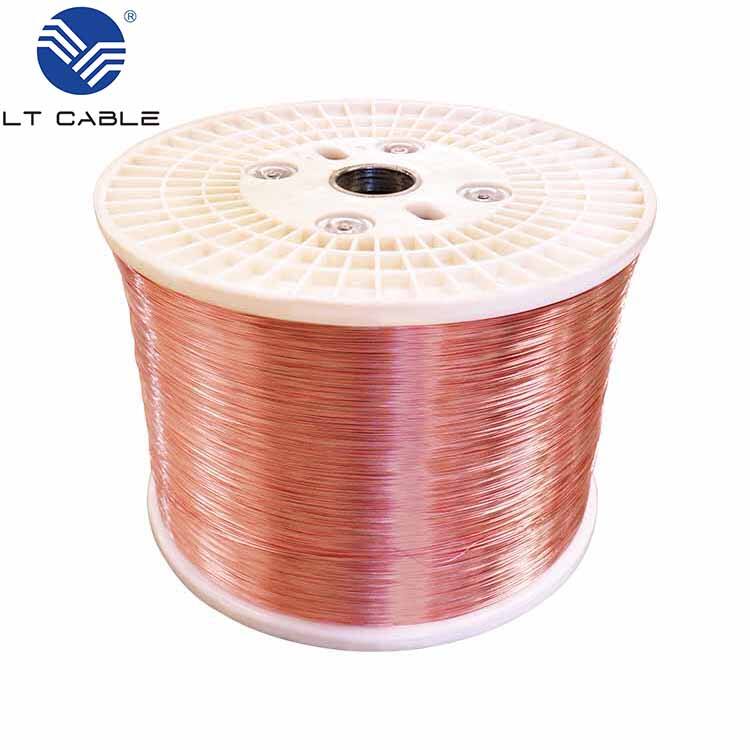
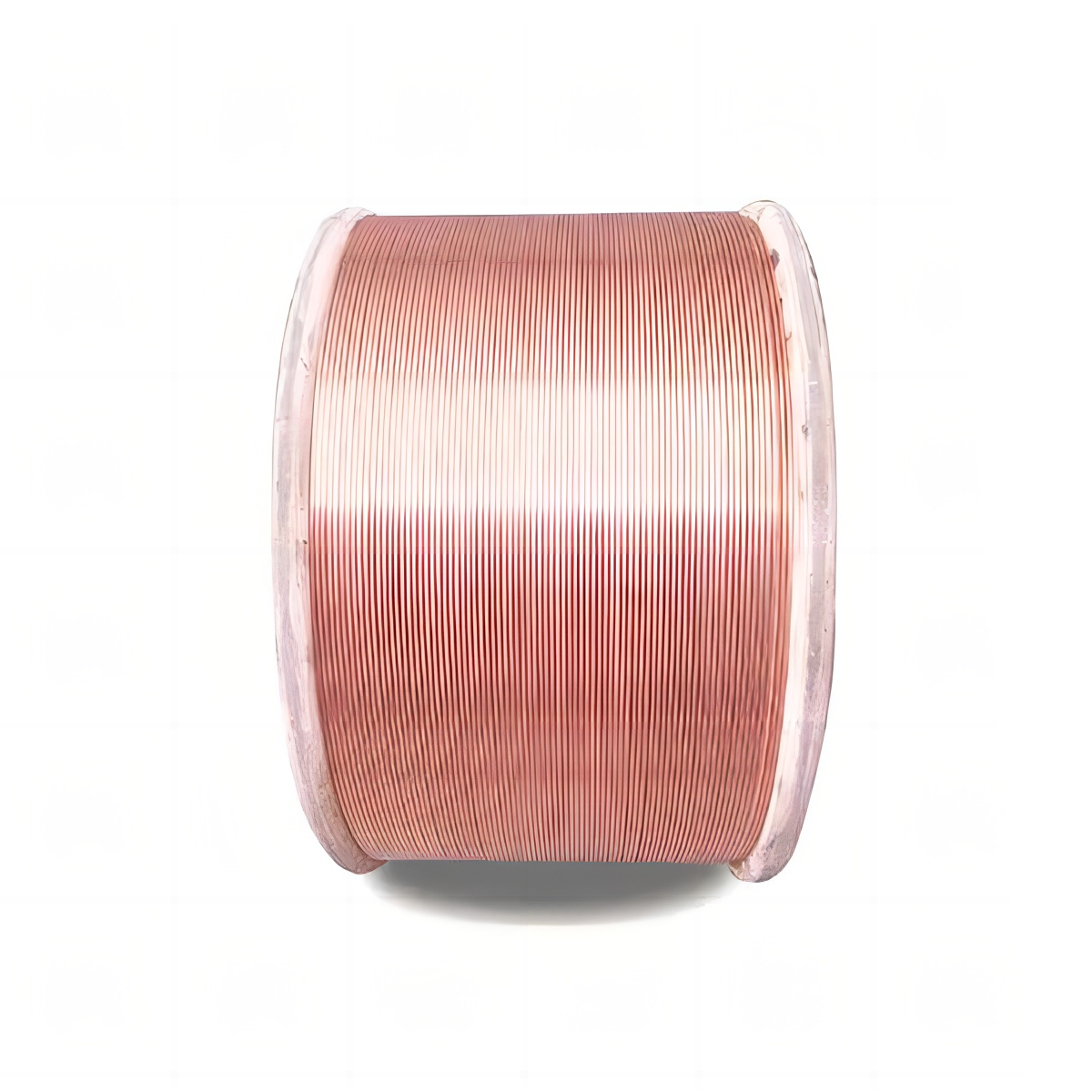
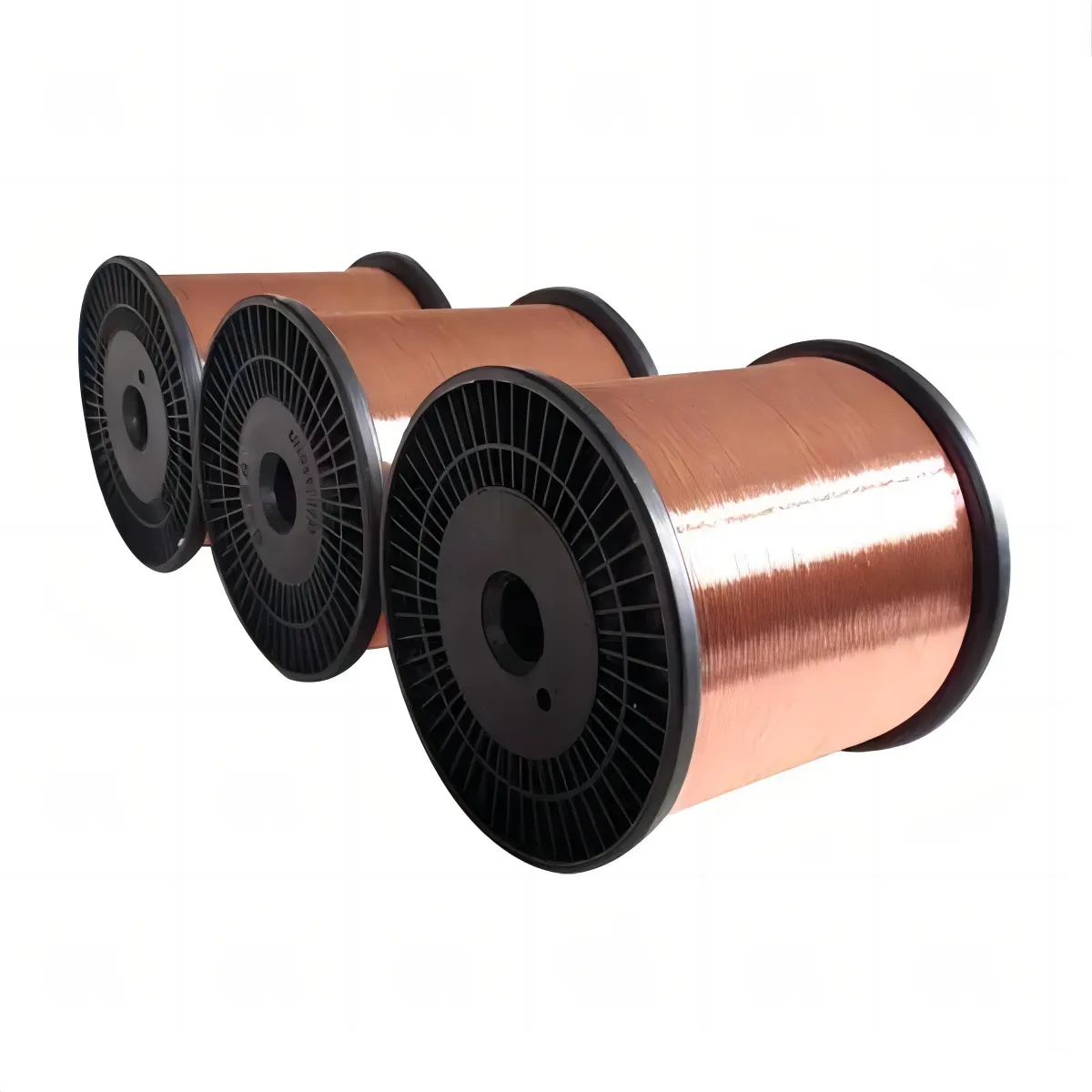
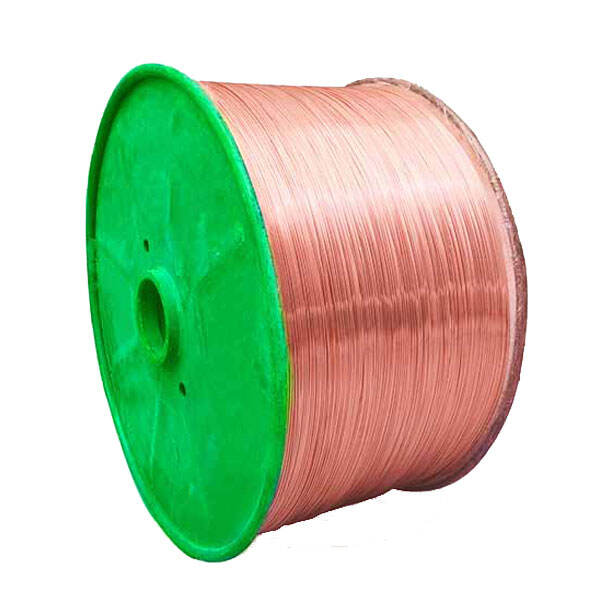
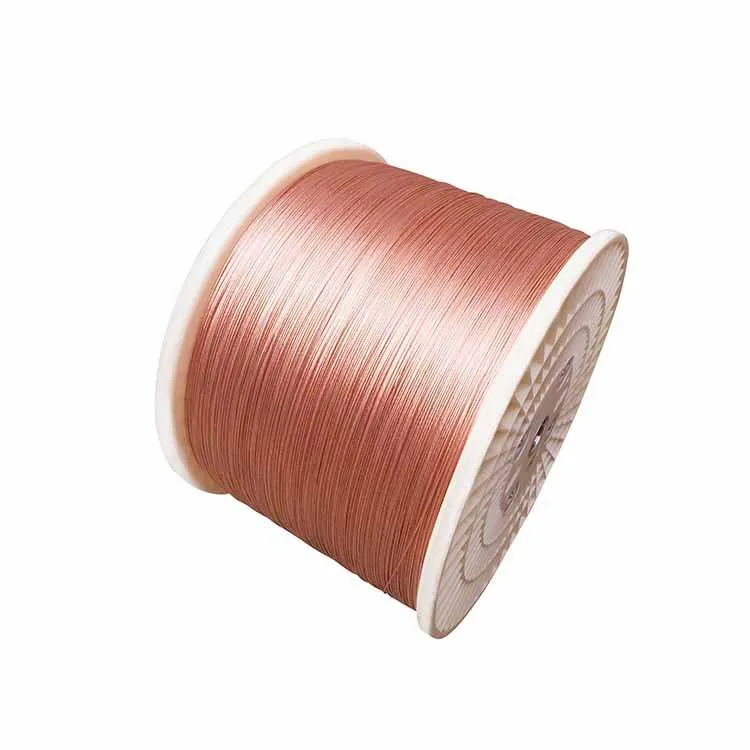
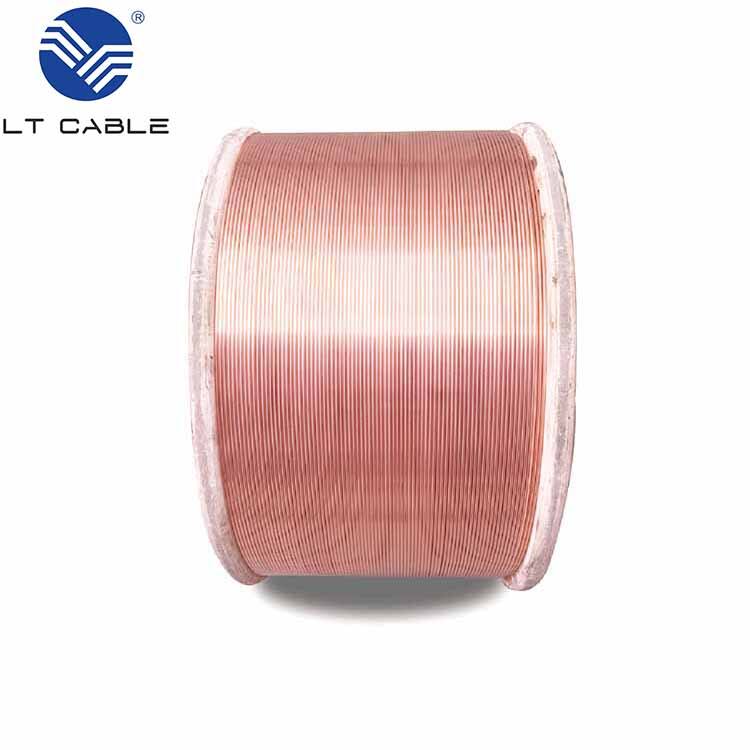
Standard Copper Clad Aluminum: Lightweight, High-Conductivity Wire

Get a Free Quote

Our representative will contact you soon.
Name
Email
Mobile
Country/Region
Choose the product you want
Message
0/1000
Discover the Exceptional Benefits of Standard Copper Clad Aluminum

Discover the Exceptional Benefits of Standard Copper Clad Aluminum

Standard Copper Clad Aluminum (CCAL) combines the excellent conductivity of copper with the lightweight properties of aluminum, making it an ideal solution for various applications. Our CCAL products offer superior electrical performance, reduced weight, and enhanced corrosion resistance compared to traditional copper wiring. This unique composite material ensures lower installation costs and improved efficiency in power transmission. At Litong Cable, we implement automated production processes that guarantee precision in every step, from raw material selection to final product delivery. Our commitment to quality and customer satisfaction ensures that you receive only the best in CCAL technology.
Get A Quote

Successful Applications of Standard Copper Clad Aluminum

Revolutionizing Telecommunications with CCAL

In a recent project, a leading telecommunications company sought to improve the efficiency of their network infrastructure. By switching to our Standard Copper Clad Aluminum cables, they achieved a 30% reduction in weight without compromising on signal quality. The CCAL’s superior conductivity ensured minimal signal loss, allowing for faster data transmission. The client reported improved operational efficiency and significant cost savings in installation and maintenance.

Enhancing Power Distribution in Renewable Energy

A renewable energy provider faced challenges with traditional copper wiring in their solar panel installations. They turned to our Standard Copper Clad Aluminum solutions, which provided a lighter, more durable alternative. This transition not only reduced the overall weight of the installations but also improved energy efficiency. The client was able to expand their reach into more challenging terrains, enhancing their project capabilities and overall output.

Automotive Industry Innovations Using CCAL

An automotive manufacturer needed a lightweight wiring solution for their electric vehicles. Our Standard Copper Clad Aluminum cables were the perfect fit, offering high conductivity while significantly reducing weight. This innovation led to increased vehicle efficiency and performance, allowing the manufacturer to enhance their product offerings in a competitive market. The client praised the durability and reliability of our CCAL in their rigorous testing environments.

Related products

Standard Copper Clad Aluminum (CCAL) has become popular in many different industries. At Litong Cable, we have a strong commitment to our highly modern system of production, which guarantees the highest quality CCAL. Litong Cable employs automated production and assembly systems to ensure the highest level of precision and the best possible consistency. All our production procedures go through a great number of quality control steps. Our CCAL cables have a competitive advantage when coarser cables and lower inductive reactance values are required in telecommunication, renewable energy and automotive industries. We have specialized techniques in meeting the needs and the specific requirements of our international customers, in optimizing cost and providing customized solutions. Litong Cable guarantees a CCAL product that has been engineered to excel, be reliable, and perform at the highest possible level.

Frequently Asked Questions about Standard Copper Clad Aluminum

What is Standard Copper Clad Aluminum?

Standard Copper Clad Aluminum (CCAL) is a composite material that consists of an aluminum core coated with a layer of copper. This combination provides the electrical conductivity of copper while benefiting from the lightweight and cost-effective properties of aluminum, making it suitable for various applications.
CCAL offers several advantages over traditional copper, including reduced weight, lower installation costs, and enhanced corrosion resistance. These benefits lead to improved efficiency in power transmission and reduced overall project costs, making it an attractive alternative for many industries.

Related article

CCA Wire Resistivity & Performance: What Buyers Should Check

15

Jan

CCA Wire Resistivity & Performance: What Buyers Should Check

Understanding CCA Wire and Its Importance

Copper Clad Aluminum (CCA) wire has emerged as a popular choice in various electrical applications, offering a balance of performance, cost-effectiveness, and versatility. As a bimetallic conductor, it consists of an aluminum core with a concentric copper cladding, combining the beneficial properties of both metals. The aluminum core contributes to lightweight and cost savings, while the copper cladding enhances conductivity and corrosion resistance. For buyers, understanding the resistivity and overall performance of CCA wire is crucial to ensure it meets the specific requirements of their applications. Whether used in telecommunications, automotive wiring, or power distribution, the performance of CCA wire directly impacts the efficiency and reliability of the end product.

Key Factors Affecting CCA Wire Resistivity

Resistivity is a fundamental property of any conductor, including CCA wire, and it plays a significant role in determining its electrical performance. Several key factors influence the resistivity of CCA wire, and buyers should be aware of these when evaluating potential suppliers. One of the primary factors is the copper content. Typically, CCA wire is available with copper content ranging from 10% to 15% by cross-sectional area. Higher copper content generally results in lower resistivity and better conductivity. For example, CCA wire with 15% copper content has a conductivity of approximately 64.4% IACS (International Annealed Copper Standard), compared to 62.9% IACS for 10% copper content.
Another important factor is the manufacturing process. The quality of the metallurgical bond between the aluminum core and copper cladding directly affects the wire's resistivity. A strong, uniform bond ensures efficient current transfer between the two metals, minimizing resistance. Additionally, the purity of the copper and aluminum used in the wire can impact resistivity. Higher purity metals typically offer better conductivity and lower resistivity. Finally, the operating temperature can also affect the resistivity of CCA wire, as resistance generally increases with temperature. Buyers should consider the expected operating temperature range of their application when selecting CCA wire.

Performance Parameters to Evaluate

When assessing CCA wire, buyers should consider several performance parameters beyond resistivity to ensure it meets their specific needs. One critical parameter is tensile strength, which measures the wire's ability to withstand pulling forces without breaking. CCA wire typically has a tensile strength ranging from 100 to 150 MPa, depending on the manufacturing process and copper content. Higher tensile strength is particularly important in applications where the wire may be subjected to mechanical stress during installation or operation.
Another important parameter is elongation, which measures the wire's ability to stretch before breaking. A higher elongation percentage indicates greater flexibility and resistance to fatigue, making the wire more suitable for applications that require bending or flexing. CCA wire generally has an elongation percentage of 8% or higher for annealed wires and 1% or higher for hard-drawn wires.
Corrosion resistance is also a key consideration, especially for applications in harsh environments. The copper cladding on CCA wire provides excellent corrosion resistance, but the aluminum core can be susceptible to corrosion if exposed. Buyers should ensure that the wire is properly insulated and protected from moisture and other corrosive elements.

How to Choose the Right CCA Wire Supplier

Selecting a reliable and reputable CCA wire supplier is essential to ensure the quality and performance of the product. Buyers should consider several factors when evaluating potential suppliers, including their manufacturing capabilities, quality control processes, and industry certifications. A supplier with advanced manufacturing facilities and strict quality control measures is more likely to produce high-quality CCA wire that meets the required specifications.
Industry certifications, such as ISO 9001, can also provide assurance of the supplier's commitment to quality. Buyers should verify that the supplier's CCA wire meets relevant industry standards, such as ASTM B566 for copper-clad aluminum wire. Additionally, buyers should consider the supplier's experience and reputation in the industry. A supplier with a proven track record of delivering high-quality products and excellent customer service is more likely to provide a reliable and satisfactory experience.
Finally, buyers should consider the supplier's pricing and delivery capabilities. While cost is an important factor, it should not be the sole determining factor. Buyers should balance cost with quality and delivery time to ensure they get the best value for their money. A supplier that can offer competitive pricing, fast delivery, and flexible payment terms is more likely to be a good partner for long-term business relationships.
View More
Struggling with cable management? A specific product can be your savior. Here's how.

14

Jul

Struggling with cable management? A specific product can be your savior. Here's how.

The Critical Role of Cable Management in Modern Workspaces

Safety Hazards: Reducing Trips and Electrical Risks

When cables aren't managed properly around offices and factories, it creates real safety problems on the job site. We've all seen those messy cords strewn across floors near desks or equipment areas, waiting to trip someone up and possibly cause injury. The National Safety Council actually reports that tripping over cables accounts for quite a few workplace accidents each year, which makes good cable organization essential for any business concerned about employee well being. There's another angle too: when cables get damaged from being dragged around or not routed correctly, they can malfunction electrically and in worst case scenarios might even start fires. Groups such as OSHA definitely stress how important it is to keep cables neatly arranged and make sure nothing gets overloaded, because preventing these issues isn't just about compliance but also about protecting people who work there day after day.

Productivity Impacts of Cable Clutter

All those tangled cables around the office really do hurt productivity, pulling workers away from what they need to be doing. Research points out that when desks and work areas get too messy, people just don't work as well or feel good about their jobs because their minds keep drifting off track. Take a look at companies that clean up their spaces - some reports suggest staff there actually get things done 20% faster according to various productivity consultants. Getting control of all those cords isn't just about looks either. When everything's neat and tidy under desks or behind monitors, folks stay focused longer without constantly tripping over wires or hunting for the right plug. It makes such a difference when someone doesn't have to pause every five minutes to untangle something before continuing with their actual work.

Aesthetic Value and Professional Appearance

When cables are properly managed, workspaces look better and come across as more professional overall. Companies spending time to organize all those wires tend to project a tidier image that really matters when clients walk through the door. Take RGB Networks for instance they completely changed how their office looked after getting serious about cable organization, which boosted their reputation in the industry too. These days, most design trends push for clean spaces without unnecessary visual distractions, making good cable management even more important than before. Beyond just looking nice, having everything organized shows attention to detail that customers notice and appreciate, especially during meetings or presentations where first impressions count.

Essential Cable Management Solutions for Every Setup

Cable Trays and Raceways for Structured Routing

Cable trays and raceways make managing power and data cables much easier by keeping things organized and reducing all that messy congestion. When installed properly, these systems let cables run neatly through spaces while cutting down on dangerous tangles and knots. Most people find them pretty simple to install too, which means getting to cables for repairs or upgrades doesn't take forever. Plus, they follow standard safety regulations so there's no guesswork involved. Offices, server rooms, and educational institutions especially benefit from these systems since they often deal with hundreds of cables at once. Beyond just looking better, proper cable management actually creates safer working conditions and gives any space a far more professional appearance overall.

Reusable Clips and Velcro Ties for Flexible Organization

Clips that can be reused and those sticky Velcro straps make life so much easier when dealing with all those wires in places where things keep changing around. Most people find these pretty straightforward to handle since they just snap on and off as needed for different arrangements. The price point is another big plus, which means offices don't have to spend a fortune while individuals can still get decent options without breaking the bank. Since there's no need for drilling holes or installing anything permanently, rearranging everything becomes quick work whenever new gear gets added or old stuff gets moved out. Anyone who has ever struggled with tangled cords knows what a difference these little gadgets can make in keeping work areas looking neat instead of resembling an electronics graveyard.

Sleeves and Concealment Boxes for Visual Cleanliness

Cable sleeves and those little box things really make workspaces look cleaner than they otherwise would. Most stores carry them in all sorts of colors and materials these days, from plastic to fabric covers that actually match office decor sometimes. When we bundle wires together and tuck away those ugly power strips, the whole room just feels less chaotic. Cleaner spaces tend to impress visitors when they walk in, plus nobody wants to trip over loose cords anyway. A few bucks spent on cable management goes a long way toward making an office feel organized and put together.

Understanding Wire Types: Stranded vs Solid for Different Applications

Knowing the difference between stranded and solid wire makes all the difference when picking out the right kind for different jobs. Stranded wire basically consists of several thin wires twisted together, which gives it more flexibility. That's why it works so well for things that move around or need to bend often, like cables in machinery or appliances. Solid wire on the other hand has just one thick strand running through it, making it much stronger but less flexible. These types are better for permanent setups where movement isn't required. Getting this wrong can cause problems down the road, from broken connections to wasted energy. Take cars for example they rely heavily on stranded wire throughout their electrical systems. Meanwhile most building wiring uses solid conductors because they stay put once installed. The bottom line is matching wire type to application keeps everything working smoothly across countless environments.

Implementing Effective Cable Routing Strategies

Planning Optimal Cable Pathways

Good cable routing starts with careful planning of where cables should go to get the best performance without causing interference problems. First things first, someone needs to look at how the space is laid out, figure out where all the cables are coming from and going to, then map out paths that keep everything organized. Safety groups like the National Electrical Code have rules about how to install and route cables properly. Following these guidelines helps put cables in places that reduce dangers and makes them easier to reach when something needs fixing or upgrading down the road. The right placement saves headaches later on when technicians need access to those wires.

Segregation Techniques for Power and Data Cables

Keeping power cables separate from data cables matters a lot for avoiding electromagnetic interference problems that can mess with system performance. Electrical codes actually specify certain minimum distances between these different types of wiring to cut down on unwanted cross talk between them. The separation becomes really important in places like data centers or big office buildings where so many cables are crammed together in tight spaces. When wires get too close, signals start interfering with each other and network speeds drop off noticeably. We've seen this happen plenty of times during installations where someone didn't follow proper cable management practices from the beginning.

Future-Proofing with Modular Systems

Workspaces can stay ahead of the curve when equipped with modular cable management solutions designed for changing tech demands. The real advantage comes from how these systems let businesses adjust their setup quickly without tearing out cables or rewiring everything from scratch. Take Google's offices as an example they've been using this approach for years now. Tech companies and internet service providers especially benefit since their needs shift constantly as new equipment gets rolled out. What matters most is avoiding those costly shutdowns during upgrades while keeping operations running smoothly day after day. And over time, this kind of forward thinking pays off big time both in terms of money saved on maintenance and staying competitive in fast moving markets.

Copper Clad Aluminum vs Traditional Copper Solutions

Copper clad aluminum (CCA) wire serves as an affordable option compared to standard copper when managing cables, especially where certain performance needs matter most. Regular copper still beats out CCA in terms of conducting electricity and lasting longer overall. But there are plenty of situations where CCA works just fine, cutting down on what something costs while still getting the job done properly. The right choice between these materials really depends on what exactly needs to be accomplished. For instance, CCA tends to shine in applications that need something lightweight and bendable rather than super strong conductors. Many electricians find it particularly useful for running wires through tight spaces or when budget constraints are tight but basic connectivity remains essential.

Copper Wiring

Understanding the nuances of these wire types ensures effective utilization in suitable circumstances, augmenting overall workspace efficiency and wire management success.

Home Office Cable Management Challenges and Solutions

Space-Saving Techniques for Compact Setups

When dealing with cables in small home office spaces, getting creative with storage is essential if we want things to stay organized but still work properly. Start off by putting those cable trays and raceways under the desk area so all those wires don't just hang around everywhere creating mess. Management boxes come in handy too since they let us hide those bulky power strips yet still reach them when needed. Looking at furniture options makes sense as well. Desks that already have those built in channels or cabinets for wires save tons of room. And dont forget about those little helpers like cable clips and sleeves which really make a difference in grouping everything together neatly. A tidy setup means better workflow and less frustration trying to find what connector goes where.

Under-Desk Management for Standing Workstations

Getting those cables organized underneath a standing desk takes some thinking ahead if we want to avoid messy knots and keep things stable. Most folks find that mounting cable trays or mesh baskets below their desks works pretty well since the cables stay put when adjusting desk heights. For smaller bundles, adhesive clips stick just about anywhere, while Velcro straps are great for grouping together several wires at once. When shopping around, look for specialized under-desk solutions made specifically for adjustable workstations. These products usually offer better flexibility as the desk moves up and down throughout the day, though sometimes they need a little tweaking to fit exactly right.

Concealing Adapters and Power Strips

Hiding those power strips and adapters makes a big difference in how nice a workspace looks while keeping things safe too. Cable management boxes work great for tucking away power strips so they don't take up space on desks. Just stick them somewhere out of sight with clips or adhesive mounts so nobody bumps into them and knocks everything over. Run cables through plastic channels or metal conduits that match whatever surface they're going across. Some folks swear by color coded Velcro straps or labeled tags to know which cord goes where when reaching for their phone charger or laptop adapter. Makes life easier in the long run. And remember to check those cords every now and then for fraying or damage. A small tear can lead to bigger problems down the road if ignored.

Safety and Maintenance Protocols for Long-Term Efficiency

Preventing Overheating in Enameled Wiring

Keeping enameled wiring from getting too hot matters a lot for electrical safety and preventing dangerous situations. These wires get their name because they're coated with enamel that acts as insulation, which works great when handled properly. But if things go wrong, the wires can overheat and potentially start electrical fires. Checking these wires on a regular basis makes sense since they show signs of wear or damage over time. A good rule of thumb? Don't overload circuits because too much current flowing through them raises temperature fast. Also worth mentioning is making sure there's enough space around the wires so heat can escape naturally. Looking at what actually happens in practice shows most electrical fires come down to overheating issues, which just goes to show why taking care of this stuff before problems happen really pays off in the long run.

Routine Inspection Best Practices

Checking cable management systems regularly isn't just good practice—it's absolutely necessary if we want to keep things safe and running smoothly long term. When someone takes a look at those cables now and then, they might spot small problems early on, like wires that are starting to fray or connections that have come loose somehow. Most experts suggest doing quick monthly looks around plus getting professionals in twice a year for proper assessments. What should these inspections focus on? Look out for any kind of wear and tear, rust spots, or actual physical damage to the cables themselves. Setting up a proper schedule for these checks makes all the difference in keeping cables in good shape. Not only does this cut down on potential hazards, but it also means the whole system lasts much longer without constant replacements.

Handling Wear in Stranded vs Solid Cables

When dealing with wear on different cable types, it really helps to know what makes stranded and solid cables tick. Stranded wires are super flexible which means they don't snap easily under stress, though they do have their weaknesses like getting untwisted or frayed over time. Solid cables tell a different story altogether. They're tougher on breaks but just can't handle as much current flow compared to their stranded counterparts. For checking how worn out cables get, look closely at any signs of damage to the outer layer or weird bends in the structure. Early detection matters a lot when deciding whether to replace something. Going with quality cables upfront saves headaches down the road. Fixing problems usually involves either splicing together broken sections or redoing the ends properly so connections stay strong and last longer. Keep an eye on things regularly too because catching small issues before they become big ones keeps everything running smoothly without unexpected downtime.

Future Trends in Cable Management Technology

IoT-Enabled Smart Cable Systems

Smart cables connected to the Internet of Things are changing how people handle their electrical systems in real ways. Compared to old school methods, these new tech solutions bring better monitoring options and let companies catch problems before they happen through predictive maintenance. Take for example when these systems constantly watch how cables perform day to day. They spot issues early on which makes everything safer and runs smoother in the long run. As more businesses adopt this technology, we're seeing changes everywhere from manufacturing floors to residential buildings where homeowners want smarter control over their power usage. What stands out most is that these improvements don't just save money; they actually push forward what's possible in different sectors of industry right now.

Eco-Friendly Materials for Sustainable Solutions

Cable management companies are seeing a big move toward greener materials these days because people care more about what happens to the environment after they throw things away. We're talking about stuff like cables made from plant-based plastics or old plastic bottles turned into new products through recycling processes. What's pushing this change? Simple really most customers now want their office supplies to match their values when it comes to sustainability. The good news is that switching to these environmentally friendly alternatives actually cuts down on landfill waste while saving energy during production too. Looking at recent market research, sales of sustainable cable products have jumped by around 35% last year alone, showing this isn't just a passing fad but something here to stay for manufacturers who want to keep up with changing customer expectations.

Innovations in CCA Wire Implementation

Copper clad aluminum wire, or CCA for short, has been getting some pretty interesting upgrades lately that are expanding where we can actually use it. The main improvements revolve around better conductivity and how well it stands up against rust and wear, which makes this stuff a real budget friendly option compared to regular copper wiring. What's really cool is that these upgrades don't sacrifice quality at all, so engineers can spec it out for demanding jobs without worrying about reliability issues. From a financial standpoint, switching to CCA saves money because aluminum is cheaper than copper, plus the whole thing weighs less. This matters a lot in sectors like telecommunications and automotive manufacturing where both wallet impact and performance count heavily in decision making processes.

Modular Track Systems for Industrial Applications

Modular track systems have become quite popular across various industrial settings because they offer both flexibility and scalability. What makes these systems stand out is how straightforward it becomes to make changes or expand them when needed something that matters a lot for businesses dealing with fast paced growth and shifting demands. When companies implement modular tracks, they typically see better organization throughout their facilities, find maintenance tasks much simpler, and save money since installation takes less time overall. Looking ahead, most experts believe manufacturers will keep working on making these modular solutions even more scalable so they can handle increasingly complicated situations in different types of factories and warehouses. This ongoing development helps ensure industries stay efficient while adapting quickly to whatever challenges come next.

View More
Aluminum Alloy Wire for Lightweight Power Cables in Solar Farm Exports

11

Aug

Aluminum Alloy Wire for Lightweight Power Cables in Solar Farm Exports

Why Lightweight Power Cables Are Critical for Solar Farm Exports

Global Expansion of Utility-Scale Solar Farms and Transportation Challenges

Worldwide, the solar industry needs around 2.8 million miles worth of cables every year, and most of this demand comes from big utility scale projects according to the Global Solar Council report from 2023. Take India for instance where solar power is expanding at about 20% growth rate yearly until 2030. The country really needs cables that can handle brutal weather conditions like those found in Rajasthan where temperatures hit 50 degrees Celsius, all while keeping transportation volumes down. Regular copper cables make things harder logistically speaking because they require special oversized load permits which cost between $18 to $32 extra per ton mile when transporting them. Lighter aluminum options just make more sense practically speaking.

The Impact of Cable Weight on Installation and Logistics Costs

Cutting down on cable weight by about 10% can actually save around $1.2 to $2.1 for every watt installed at solar farms. Aluminum alloy wires help with this because they cut down on manual labor needed during installation by roughly 30%, according to Renewables Now from last year. With the US Energy Information Administration predicting nearly tripled solar production within just two years, there's real pressure on project developers to get their infrastructure sorted out efficiently. Copper cables are heavy beasts that need special transportation for almost half of all components, while aluminum systems only need it for about one eighth of parts. This difference adds up fast, creating a gap of about seven hundred forty thousand dollars in logistics expenses when comparing a standard 100 megawatt solar installation using these different materials.

Logistical Advantages of Aluminum in International Solar Exports

Because aluminum weighs about 61% less than copper, companies can fit roughly 25% more cable into each standard shipping container. This translates to significant savings on trans-Pacific freight costs, somewhere between $9.2 and $15.7 per kilowatt for solar components being shipped overseas. The cost benefits have really taken off in recent years, especially with increased demand from Southeast Asian markets. Shipping accounts for around two thirds of all material costs in these regions, so lighter materials make a huge difference. Many manufacturers are now getting their aluminum alloy cables certified for long term use in coastal areas, which is particularly important given Vietnam's ambitious plans for 18.6 gigawatts of offshore solar capacity development along its coastline.

 ## Aluminum vs. Copper: Cost, Performance, and Material Economics  ### Material Economics: 60% Lower Cost with Aluminum Alloys   Aluminum alloys reduce material costs by up to 60% compared to copper, with bulk prices averaging $3/kg versus $8/kg (2023 Market Analysis). This gap becomes decisive in utility-scale solar farms, which often require over 1,000 km of cabling. A 500 MW solar export project can save $740k in raw materials alone by using aluminum conductors, according to energy infrastructure ROI models.  ### Balancing Conductivity and Budget in Solar Power Transmission   While pure aluminum has 61% of copper’s conductivity (IACS 61 vs 100), modern alloys achieve 56–58% conductivity with significantly greater flexibility. Today’s 1350-O aluminum cables deliver 20% higher current-carrying capacity per dollar than copper in 20–35kV solar transmission systems. This balance allows developers to maintain under 2% efficiency loss while reducing cable budget allocations by 40% in commercial export projects.  ### Overcoming Historical Reliability Concerns with Modern Aluminum Alloys   AA-8000 series aluminum alloys have eliminated 80% of the failure modes seen in mid-20th century applications, thanks to controlled annealing and zirconium additives. Recent field studies show:  - 0.02% annual oxidation rate in coastal zones (vs 0.12% for legacy alloys)  - 30% higher cyclic flexural strength than EC-grade copper  - Certification for 50-year service life in direct-buried solar farm installations (2022 Industry Durability Report)  These improvements establish aluminum as a technically sound and economically superior option for next-generation solar export infrastructure. 

Engineering Advancements in Aluminum Alloy Conductivity and Strength

Technician examining an aluminum alloy power cable in a laboratory for strength and conductivity testing

Alloying Elements (Zr, Mg) and Their Role in Performance Enhancement

When it comes to modern aluminum cables, zirconium (Zr) and magnesium (Mg) play pretty important roles. Zr creates those tiny precipitates that stop grains from growing when cables go through temperature changes, which actually makes them stronger too. Some tests show strength can jump by around 18%, yet they still conduct electricity just fine. Magnesium works differently but equally well. It helps with work hardening so manufacturers can make wires thinner and lighter while keeping their ability to carry current intact. Put these two together and what do we get? Aluminum cables that satisfy the IEC 60228 Class B requirements but weigh about 40% less than traditional copper options. That kind of weight reduction matters a lot for installation costs and overall system efficiency.

AA-8000 Series Alloys: Breakthroughs in Durability and Conductivity

The AA-8000 series manages around 62 to 63 percent IACS conductivity thanks to careful management of trace elements, which is quite a jump compared to the old AA-1350 formulas that were used before. What makes these new alloys really stand out is their ability to handle stress better - about 30% more resistant to fatigue than previous materials. This matters a lot for solar installations since they often face constant vibration from wind across open fields. When we look at accelerated aging tests, these materials show less than 2% loss in conductivity after 25 years. That actually beats copper in places with high humidity where oxidation tends to slowly eat away at performance characteristics over time.

Case Study: High-Strength Aluminum Conductors in South Korean Solar Projects

South Korea's Honam solar belt implemented AA-8030 conductors back in 2023 which cut down cable tray loads by around 260 kg per kilometer on those 33kV power lines. Going with aluminum saved about $18 for every MWh produced through balance of system costs, plus it shaved off roughly 14 days from the installation timeline. After everything was up and running, the numbers told the story too - system availability hit 99.4% even during typhoon season. That speaks volumes about how reliable aluminum really is when facing those harsh weather conditions that are so typical in many export markets across Asia.

Global Demand and Export Trends for Aluminum Alloy Power Cables

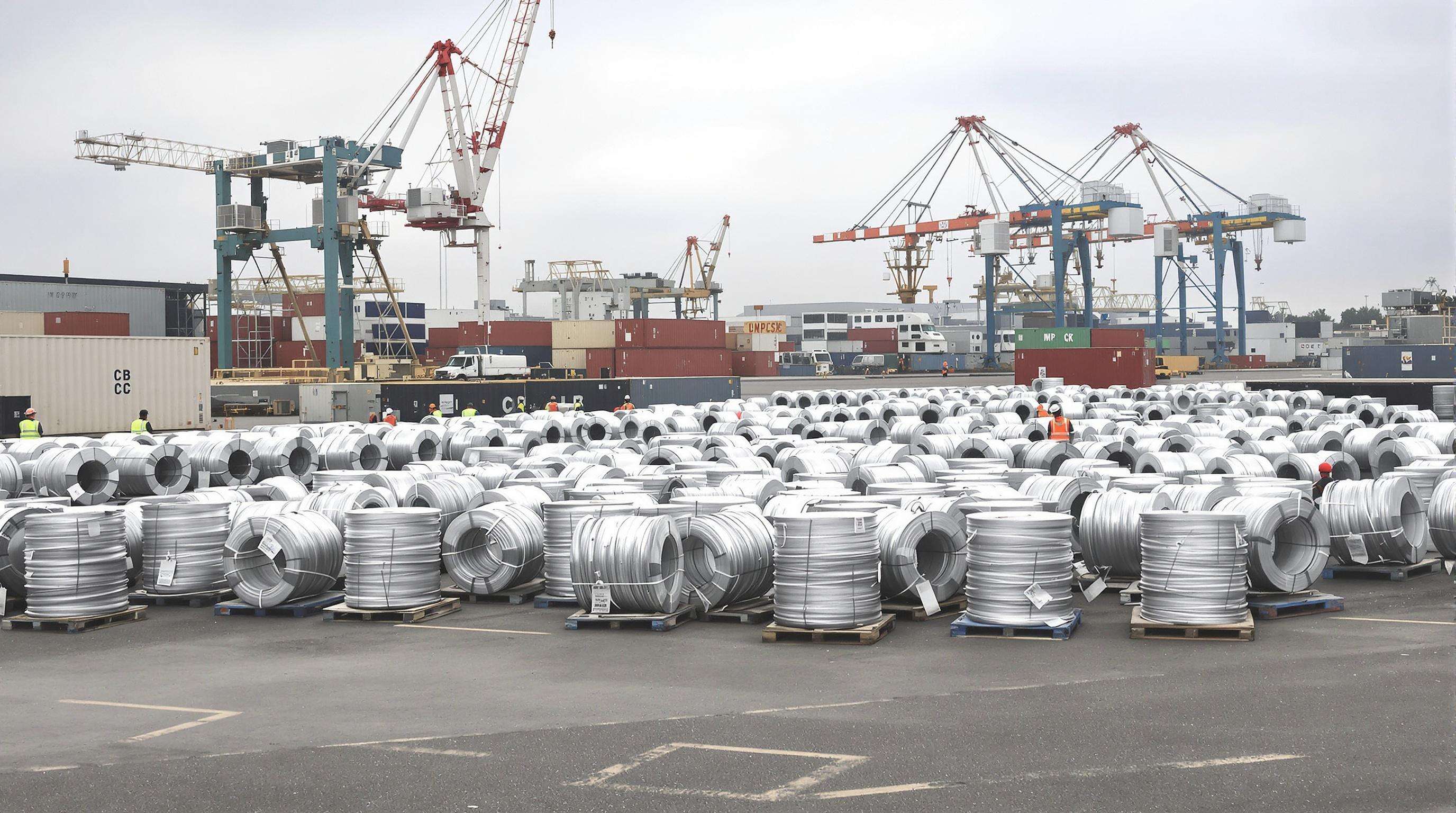
Shipping yard with aluminum cable spools being prepared for export, workers and cranes in view

As countries around the world push harder toward clean energy sources, there's been a huge spike in need for lighter power cables lately. Aluminum alloys have become pretty much the go-to choice for this stuff. According to recent data from IEA (2025), about two thirds of all large scale solar installations these days are going with aluminum conductors because they weigh roughly 40 to 50 percent less than alternatives. Makes sense when looking at ambitious goals like India aiming for 500 gigawatts of renewables by 2030 or Saudi Arabia's plan to get 58.7 gigawatts from solar power. These kinds of targets mean governments need transmission systems that won't break the bank while still being able to handle massive amounts of electricity over long distances.

Rising Solar Energy Targets Driving Aluminum Wire Demand

Chinese aluminum wire and cable exports jumped nearly 47% from February to March 2025, hitting around 22,500 metric tons last month, per the latest Renewable Energy Materials Report. The spike makes sense when looking at global solar trends too there are now over 350 gigawatts installed each year worldwide, and switching to aluminum saves about two cents per watt on big solar farms. According to forecasts from the International Energy Agency, most solar farms will be wired with aluminum conductors by 2030. This seems likely given how countries in development are pushing forward with their grid expansions so quickly these days.

Key Export Markets: Middle East, India, Southeast Asia, and Latin America

Four regions lead in aluminum cable adoption:

  • Middle East: UAE’s 2 GW Al Dhafra Solar Project uses aluminum to resist sand corrosion
  • India: National Solar Mission mandates aluminum conductors in 80% of grid-connected PV systems
  • Southeast Asia: Vietnam’s Ninh Thuan solar cluster saved $8.7 million using aluminum wiring
  • Latin America: Chile’s Atacama Desert projects leverage aluminum’s UV resistance for 30-year service

Africa’s electrification push—targeting 300 million new connections by 2030—now represents 22% of China’s aluminum cable exports.

Policy Incentives and Industry Shifts Favoring Lightweight Solutions

Government policies are accelerating aluminum adoption through:

  1. Tax rebates for projects using aluminum (e.g., Brazil’s Pro-Solar program)
  2. Material substitution mandates in building codes (India’s 2024 Power Grid Amendment)
  3. Logistics subsidies covering 15–20% of shipping costs for lightweight components

These incentives amplify aluminum’s inherent 60% cost advantage, fueling a $12.8 billion export market for alloy power cables by 2027 (Global Market Insights 2025). Industry leaders increasingly adopt AA-8000 series alloys, which achieve 61% IACS conductivity—effectively closing the performance gap with copper.

The Future of Copper-to-Aluminum Substitution in Renewable Energy

Industry Adoption Trends in Solar vs. Traditional Utility Transmission

The solar industry has been switching to aluminum alloy conductors at about three times the rate seen in conventional power systems lately. This shift makes sense when we look at materials shortages and how fast installations need to happen. According to some recent studies from the University of Michigan (2023), photovoltaic setups actually need between 2.5 and 7 times as much conductive metal for each megawatt compared to what fossil fuel plants require. Looking ahead, the 2024 specs for exporting solar equipment show that these lighter weight cables account for nearly 8 out of 10 parts in the balance of system components. What makes aluminum so attractive is how well it works with modular design approaches, which speeds things up considerably. Traditional grid systems still stick with copper though, mostly because people keep believing old reliability myths about the material despite newer alternatives being available.

Modular Design and Scalability: Advantages for Export-Focused Projects

The flexible nature of aluminum makes it possible to create prefabricated cable reels that really shorten on site assembly times, probably around 40% less work needed compared to traditional methods. For exporters, there's another big plus point here. Shipping containers can hold about 30% more aluminum cables than copper ones, which is why this material works so well in places like parts of Southeast Asia where ports just don't have much space or capacity. Contractors working on international projects find these kinds of solutions invaluable when dealing with those super tight deadline situations. And despite all these advantages, the conductivity remains pretty close to standard levels at roughly 99.6% for mid voltage solar installations too.

Market Growth Projections for Aluminum Stranded Wire Exports

The global market for aluminum-stranded solar cables seems set to expand rapidly, growing at around 14.8% annually until 2030 and beating copper adoption by roughly three to one. The biggest changes are happening in developing economies. After India reformed its solar tariffs in 2022, aluminum cable imports there jumped nearly 210%, while in Brazil most utility companies now go with aluminum for almost all their new small-scale power projects these days. To keep up with this demand, factory owners across the world are pouring about $2.1 billion into expanding production lines for AA-8000 alloy cables. These special cables meet the needs of solar farms that want lighter materials which won't corrode easily when transmitting electricity over long distances.

FAQ

Why are lightweight power cables important for solar farm exports?

Lightweight power cables, especially those made from aluminum alloys, are important for solar farm exports because they reduce installation and logistics costs. Aluminum cables weigh less than copper ones, enabling more efficient transport and installation, which is crucial for large-scale projects.

How do aluminum cables compare performance-wise with copper cables?

While pure aluminum has lower conductivity than copper, modern aluminum alloys have improved significantly in terms of conductivity and strength. Aluminum alloys can maintain a conductivity close to copper and, thanks to advanced alloying techniques, achieve high durability and flexibility, making them ideal for solar power transmission.

What regions are adopting aluminum cables, and why?

Regions like the Middle East, India, Southeast Asia, and Latin America are adopting aluminum cables mainly because of their cost-effectiveness, lightweight nature, and ability to handle harsh environmental conditions. These regions have ambitious solar energy targets, making aluminum a preferred choice for grid expansion projects.

View More
CCAM Wire Reducing Copper Use in Bulk Coaxial Orders

11

Aug

CCAM Wire Reducing Copper Use in Bulk Coaxial Orders

How CCAM Wire Reduces Copper Consumption in Coaxial Cables

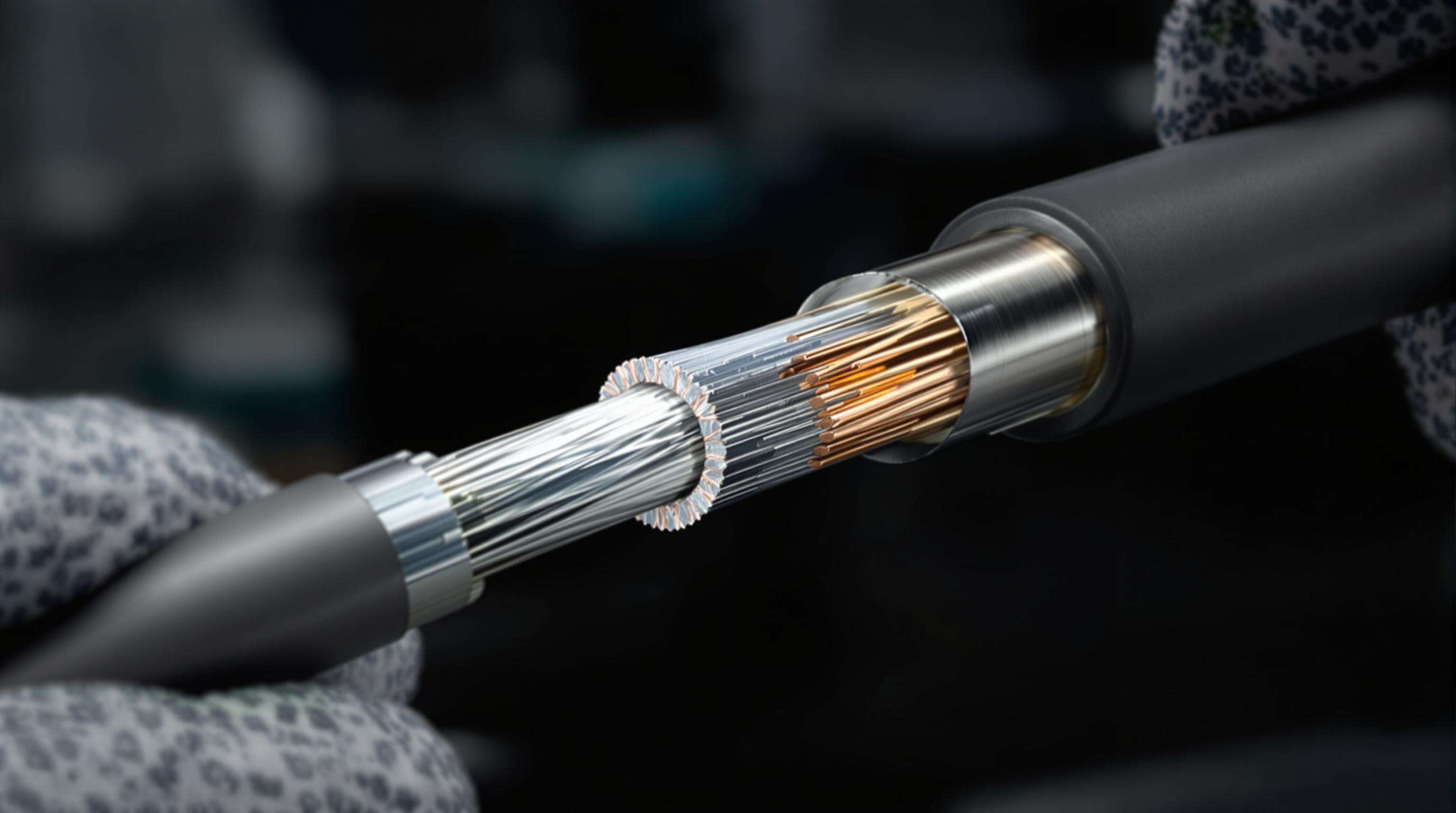
A close-up of a CCAM coaxial cable cross-section displaying aluminum core and copper cladding with technician handling it

Understanding Copper Clad Aluminum (CCA) and CCAM Wire Structure

Copper Clad Aluminum or CCA wire basically has an aluminum center covered by a thin copper coating. What this does is combine the light weight advantage of aluminum, which weighs about 30 percent less than regular copper, with copper's better surface conductivity properties. The result? Electrical performance that's pretty much on par with solid copper wires, but with around 60 to 70 percent less actual copper needed according to Wire Technology International from last year. Then there's CCAM wire which takes things further. These wires use improved bonding methods so they don't peel apart when bent back and forth repeatedly. This makes them much more reliable for applications where the wiring gets moved around a lot or experiences constant motion.

Material Efficiency: Core Benefits of Aluminum Core With Copper Cladding

When manufacturers replace around 90 percent of the conductor mass with aluminum instead of copper, they end up using much less copper but still get about 85 to 90 percent of what pure copper can do electrically. For big cable purchases over 1,000 meters long, this means companies save roughly 40% on materials according to Cable Manufacturing Quarterly from last year. What's interesting is how the copper coating actually stands up better against rust than regular aluminum wires would. That makes CCAM cables last longer especially when installed where there's lots of moisture or chemical exposure problems.

Comparison of CCAM, Pure Copper, and Other Conductive Materials in Coaxial Cables

CCAM has a conductivity rating around 58.5 MS/m which puts it right up there with pure copper that ranges from about 58 to nearly 60 MS/m. The numbers look much better than what we get from copper coated steel, which typically sits somewhere between 20 and 30 MS/m. For frequencies above 3 GHz, most engineers still reach for pure copper as their go to material. But when looking at broadband systems running under 1.5 GHz, CCAM works just fine in practice. What makes this material stand out is how it balances good performance with real money savings and lighter weight too. That's why many companies are turning to CCAM for things like last mile connections within buildings or between structures where some small amount of signal loss isn't going to cause major problems.

Cost Advantages of CCAM Wire in Large-Scale Coaxial Production

Reduced Material Costs with CCAM in Bulk Cable Manufacturing

CCAM wire combines aluminum core with copper cladding in its hybrid design, which means about 40 to 60 percent less copper is needed compared to regular solid copper wires. Despite using less material, it still keeps around 90% of what makes copper so good at conducting electricity. For manufacturers producing these wires in bulk quantities, this translates into real money saved. The production cost drops somewhere between $18 and $32 for every thousand feet made, something that adds up fast when telecom companies need to install massive networks across regions. And there's another benefit too: since CCAM cables weigh about 30% less than traditional ones, shipping them becomes cheaper as well. Logistics companies report savings ranging from $2.50 to almost $5 per spool during those long hauls across country, making transportation budgets stretch further without compromising quality standards.

Mitigating Copper Price Volatility Through Material Substitution

Copper prices have swung wildly by about 54% since 2020, making CCAM wire an attractive option for companies wanting to protect themselves from these ups and downs. Aluminum stands out as much more stable, with price changes only 18% smaller than copper according to LME data from last year. This stability helps manufacturers keep their costs predictable when signing those long term contracts. Companies that switch to CCAM see around 22% fewer unexpected expenses during big projects. Think about something like rolling out 5G networks or expanding broadband across entire regions where they need tens of thousands of cables. These real world applications show how switching materials can lead to better control over project budgets and overall financial planning.

Performance and Reliability of CCAM vs. Pure Copper Coaxial Cables

Electrical Conductivity and Signal Attenuation in CCAM Cables

CCAM works with what's called the skin effect. Basically, when signals have high frequencies, they tend to stick to the outer part of conductors rather than going all the way through. This means the copper coating on CCAM cables does most of the work for transmitting signals efficiently. When looking at frequencies around 3 GHz, about 90% of the electrical current stays right in that copper layer. The difference in performance compared to solid copper wires isn't huge either, only about 8% signal loss every 100 meters or so. But there's a catch. Aluminum has higher resistance than copper (around 2.65 × 10⁻⁸ ohm meters versus copper's 1.68 × 10⁻⁸ ohm meters). Because of this, CCAM actually loses about 15 to 25% more signal strength in those middle frequency ranges between 500 MHz and 1 GHz. That makes CCAM not as great for situations where signals need to travel far distances or carry strong power levels in analog systems.

Durability, Corrosion Resistance, and Long-Term Performance

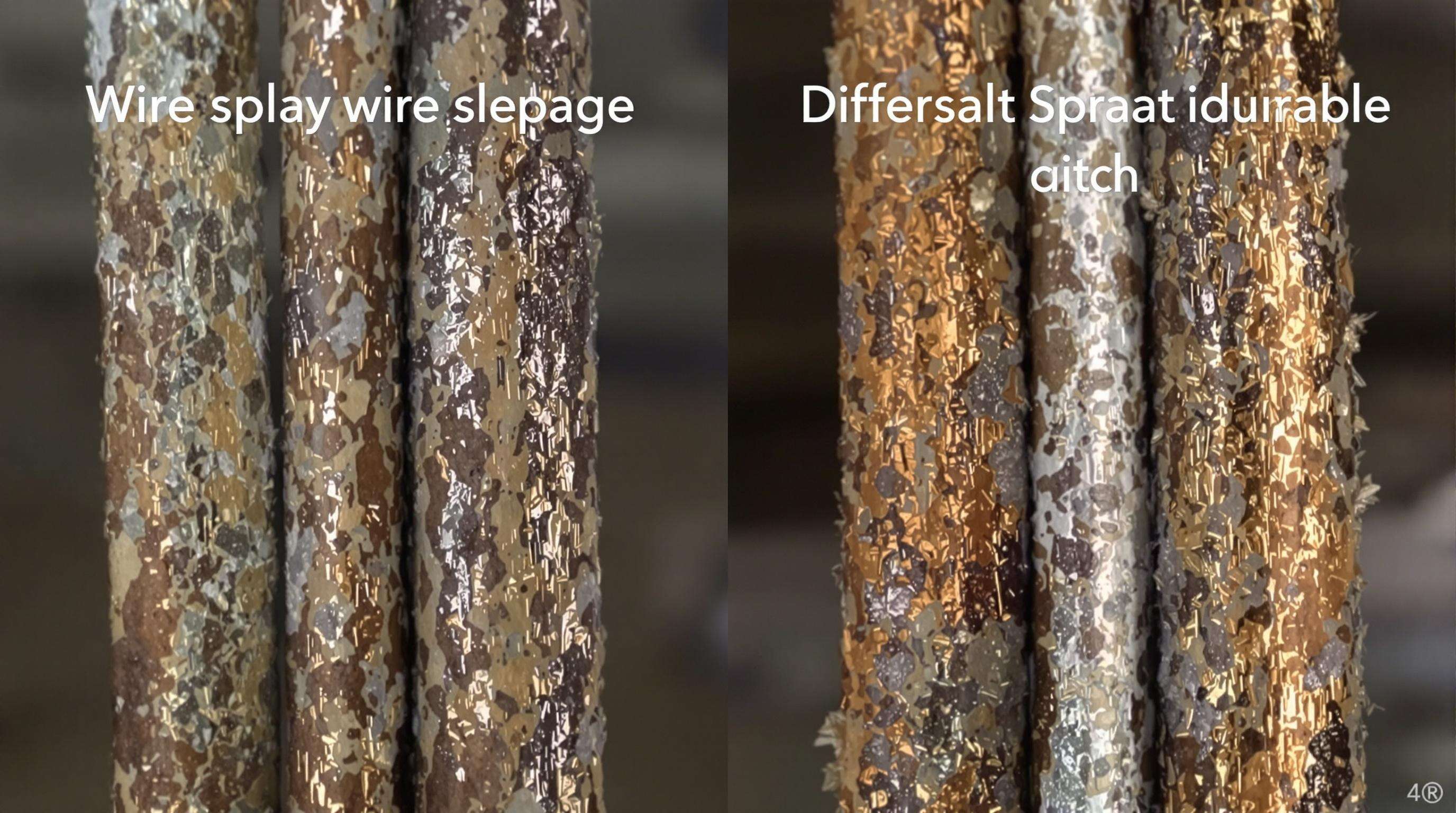
Two wire samples in a lab chamber showing differences in corrosion and durability under salt spray conditions

While the copper cladding protects against oxidation in dry conditions, CCAM is less robust under mechanical and environmental stress than pure copper. Independent testing highlights these differences:

Property CCAM Wire Pure Copper
Tensile strength 110–130 MPa 200–250 MPa
Bend cycles before fail 3,500 8,000+
Salt spray corrosion 720 hrs 1,500+ hrs

In coastal environments, CCAM cables often develop patina at connection points within 18–24 months, necessitating 30% more maintenance than copper-based systems.

Evaluating Performance Trade-Offs in High-Frequency and Long-Distance Transmissions

CCAM works great for short range high frequency stuff like those little 5G cells in cities. At 3.5 GHz it only loses about 1.2 dB per 100 meters which fits right into what LTE-A needs. But there's a catch when it comes to Power over Ethernet (PoE++). Because CCAM has roughly 55% more DC resistance than regular copper, it gets tricky for longer runs beyond 300 meters where the voltage just drops too much. Most installers have found that mixing things up helps. They use CCAM for the drop cables going to individual devices but stick with pure copper for the main trunk lines running through buildings. This mixed method cuts down on material costs somewhere around 18 to 22 percent while keeping signal loss under 1.5 dB. It's basically finding that sweet spot between getting good performance without breaking the bank.

Market Trends Driving Adoption of CCAM Wire in Telecommunications

Growing Demand for Cost-Effective Materials in Broadband Infrastructure

Global spending on broadband infrastructure is expected to hit around $740 billion by 2030 according to Ponemon Institute research from last year, and telecom companies are increasingly turning to alternatives like CCAM wire to cut costs. Compared to traditional copper cables, CCAM reduces material expenses by roughly 40 percent while weighing about 45 percent less, which speeds things up when installing new lines in overhead or final stretch connections. What really matters though is that CCAM retains approximately 90% of what copper can do in terms of conducting electricity, making it work well for coaxial systems ready for 5G rollout. This becomes especially valuable in crowded city areas where getting heavy copper cables into tight spaces creates all sorts of headaches for installers who need something that bends easier and handles better during actual field work.

Global Raw Material Scarcity and Sustainability Pressures Accelerating CCA Adoption

The jump in copper prices has been staggering really, going up around 120% since 2020 alone. Because of this many telecom companies have switched to CCAM instead. About two thirds of them actually. Aluminum makes sense here because it's just so much more plentiful than copper. Plus refining aluminum takes way less energy too, roughly 85% less according to industry reports. The carbon footprint difference is huge when we look at actual numbers. For CCAM products, it's about 2.2 kilograms of CO2 per kilogram produced compared to nearly 8.5 kg for regular copper cables. Another big plus point for CCAM is that almost all of it can be recycled again later on. And unlike copper which fluctuates wildly in price year after year, CCAM stays pretty stable with only about plus or minus 8% variation annually. This stability helps companies meet their green targets while keeping costs predictable. Many European countries are already pushing for greener networks through policies aligned with the Paris Agreement framework. As a result, over ninety percent of telecom operators across the EU now require low carbon materials for any new infrastructure projects they undertake these days.

Real-World Applications of CCAM Wire in Modern Network Infrastructure

Use Cases in Urban Broadband Expansion and Last-Mile Connectivity

CCAM wire has become a go-to solution for citywide broadband projects thanks to its impressive 40 percent lighter weight compared to traditional options. This makes it much easier and safer to install overhead in crowded urban environments. The lightweight nature works wonders in apartment complexes with multiple floors and old neighborhoods where the existing infrastructure simply can't handle the bulk of standard copper cables. Installers report that working with CCAM cuts down their job time somewhere between 15 and 20 percent, which means service providers can bridge those stubborn last-mile connections without breaking a sweat or causing unnecessary disruption to communities.

Case Study: Successful Deployment of CCAM Cables in Large-Scale Telecom Projects

One big telecom company in Europe saved around €2.1 million each year after swapping out old copper distribution cables for CCAM versions in 12 different city areas as part of their national FTTH expansion. After installation, tests showed that signal loss stayed under 0.18 dB per meter at 1 GHz frequencies, which is actually comparable to what they used to get from copper. Plus, because these new cables are lighter, crews could install them 28% quicker when running them along power lines. What started as just one project has now turned into something other companies look at when planning their own upgrades. The results show that CCAM materials really work well against tough performance requirements and still manage to cut costs and simplify logistics at the same time.

FAQ Section

What is CCAM wire?

CCAM wire is a type of coaxial cable that features a copper cladding over an aluminum core, which reduces copper consumption while maintaining good conductivity and performance.

How does CCAM wire compare to pure copper cables?

CCAM wire provides similar electrical performance to pure copper cables for certain applications, especially at frequencies below 1.5 GHz, while offering cost advantages and reduced weight.

Can CCAM cables be used for high-frequency applications?

CCAM cables perform well for high-frequency applications up to 3.5 GHz but may not be suitable for long-distance transmissions due to increased signal attenuation compared to pure copper.

Are CCAM wires durable?

While CCAM wires offer corrosion resistance, they are less durable than pure copper cables under mechanical stress and require more maintenance in coastal environments.

Why are telecom companies adopting CCAM wire?

Telecom companies are adopting CCAM wire due to its cost-effectiveness, reduced weight, and sustainability benefits, helping them meet green targets and manage project budgets effectively.

View More

Client Testimonials on Standard Copper Clad Aluminum

John Smith
Exceptional Performance in Telecommunications

Switching to Litong Cable's CCAL has transformed our network infrastructure. The reduction in weight and enhanced conductivity has significantly improved our operations. Highly recommend!

Sarah Lee
Game Changer for Renewable Energy Projects

The CCAL cables provided by Litong Cable have been a game changer for our solar installations. We are now able to reach more challenging locations with ease. Excellent product!

Get a Free Quote

Our representative will contact you soon.
Email
Name
Company Name
Message
0/1000
Lightweight and Durable Solution

Lightweight and Durable Solution

The lightweight nature of Standard Copper Clad Aluminum allows for easier handling and installation, making it a preferred choice in industries where weight is a critical factor. This advantage reduces the overall load on structures and enhances the efficiency of installations, particularly in telecommunications and renewable energy sectors. Our CCAL products are designed to withstand harsh environmental conditions, ensuring long-lasting performance and reliability.
Superior Electrical Conductivity

Superior Electrical Conductivity

Standard Copper Clad Aluminum offers exceptional electrical conductivity, rivaling that of pure copper while maintaining the weight advantages of aluminum. This unique property ensures minimal energy loss during transmission, making it an ideal solution for power distribution and telecommunications. Clients benefit from improved energy efficiency and reduced operational costs, reinforcing the value of investing in our CCAL products.
  • Product Consultation & Selection

    Product Consultation & Selection

    Tailored advice, perfect fit solutions.

  • Production & Supply Chain

    Production & Supply Chain

    Efficient manufacturing, seamless supply.

  • Quality Assurance & Certification

    Quality Assurance & Certification

    Rigorous testing, global certifications.

  • Post-Sales Support & Tech Help

    Post-Sales Support & Tech Help

    Prompt assistance, ongoing support.

Get a Free Quote

Our representative will contact you soon.
Name
Email
Mobile
Country/Region
Title
Message
0/1000