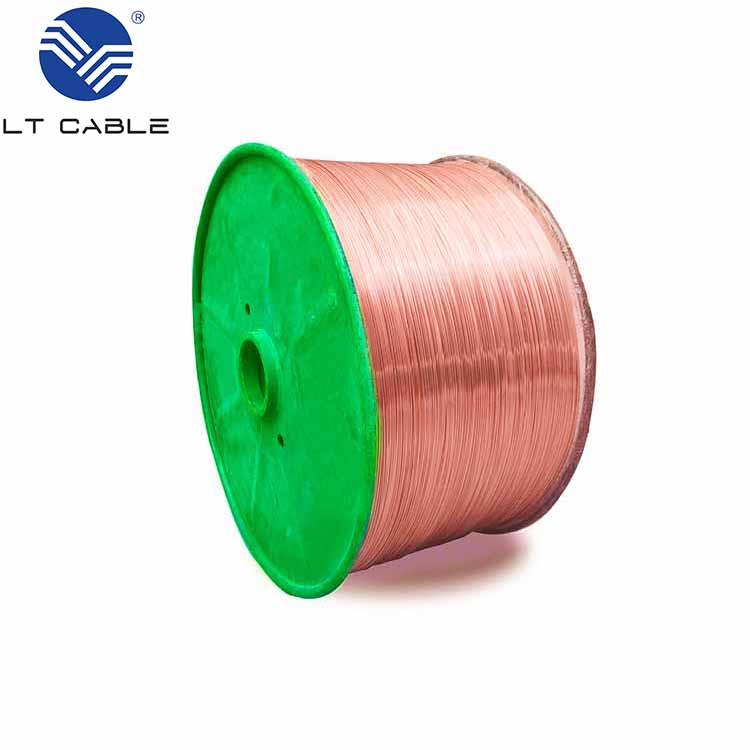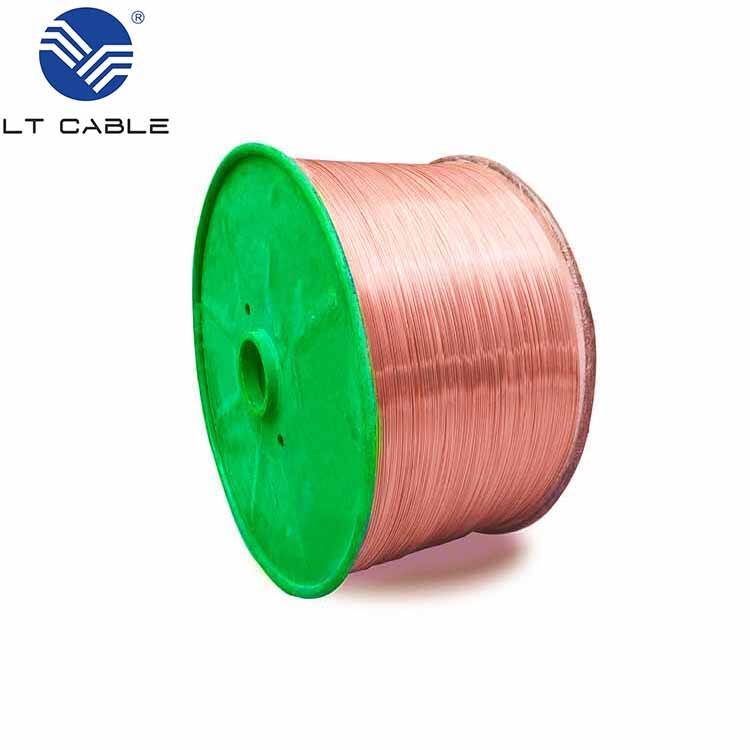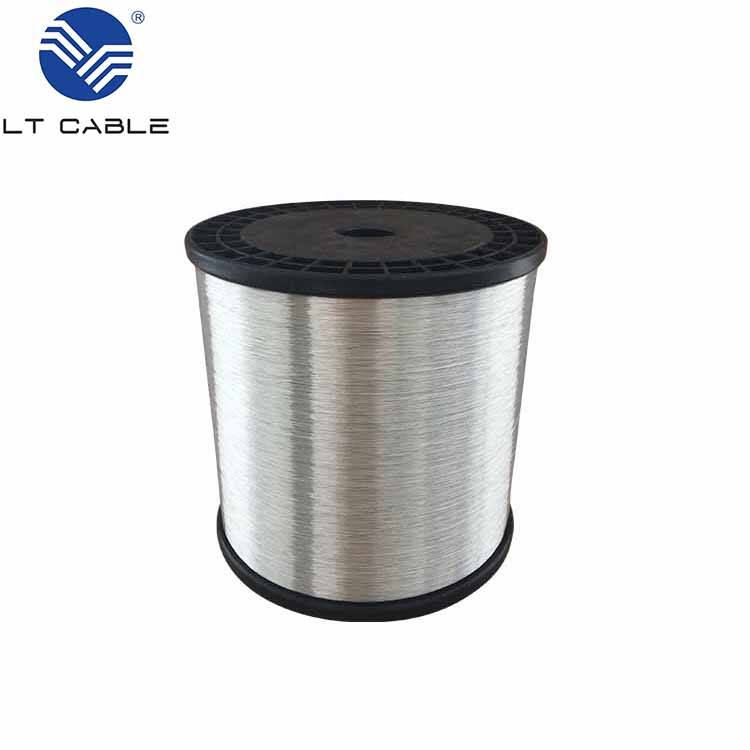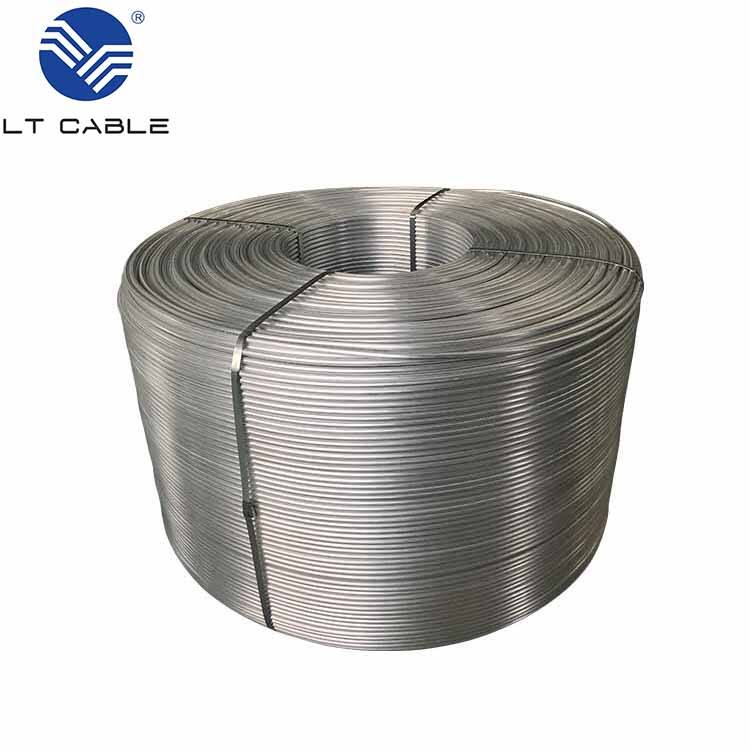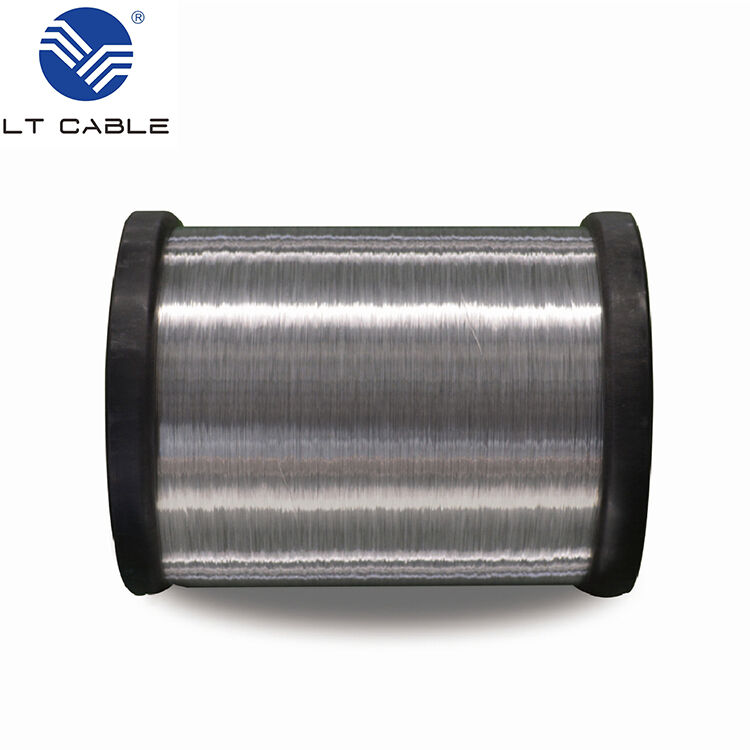
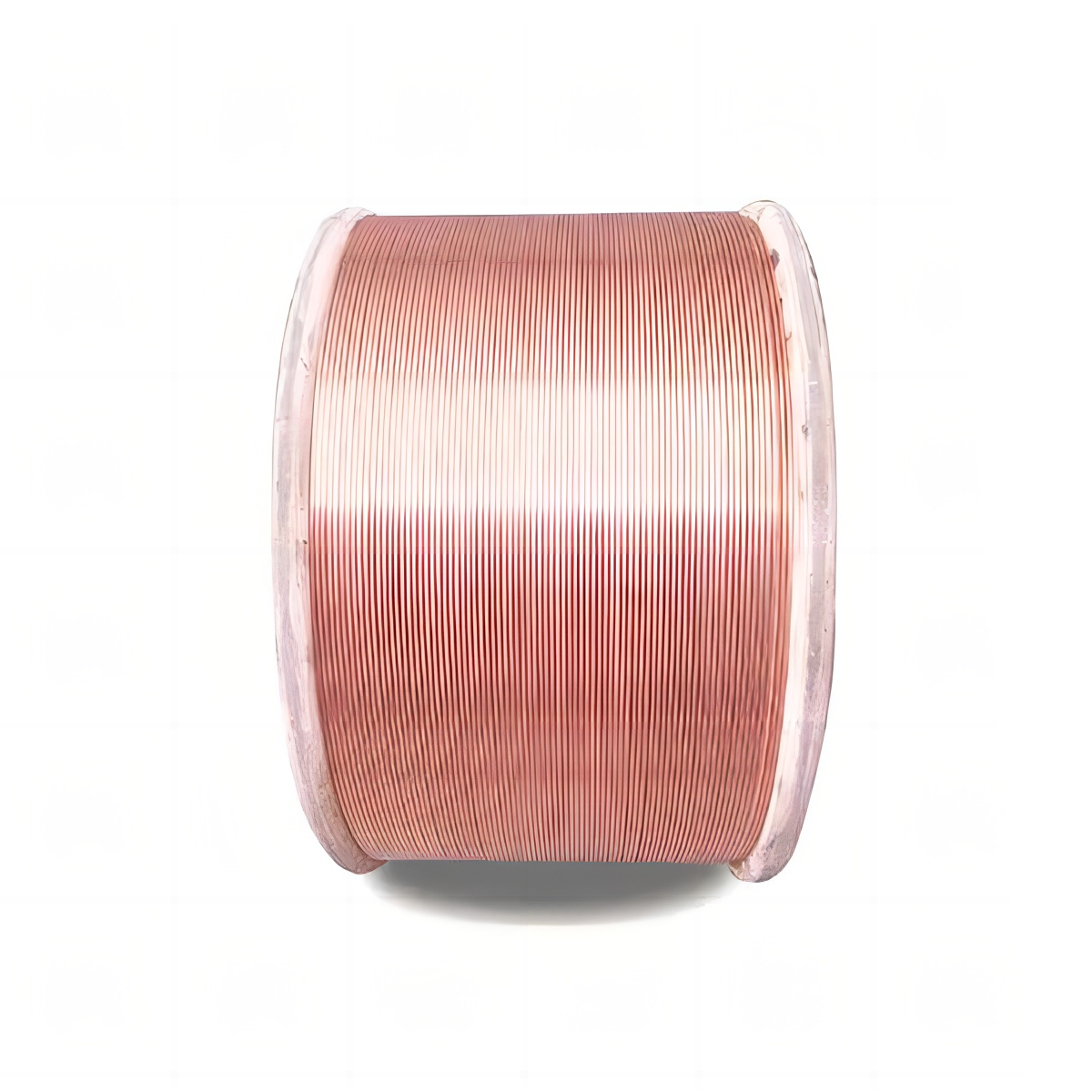
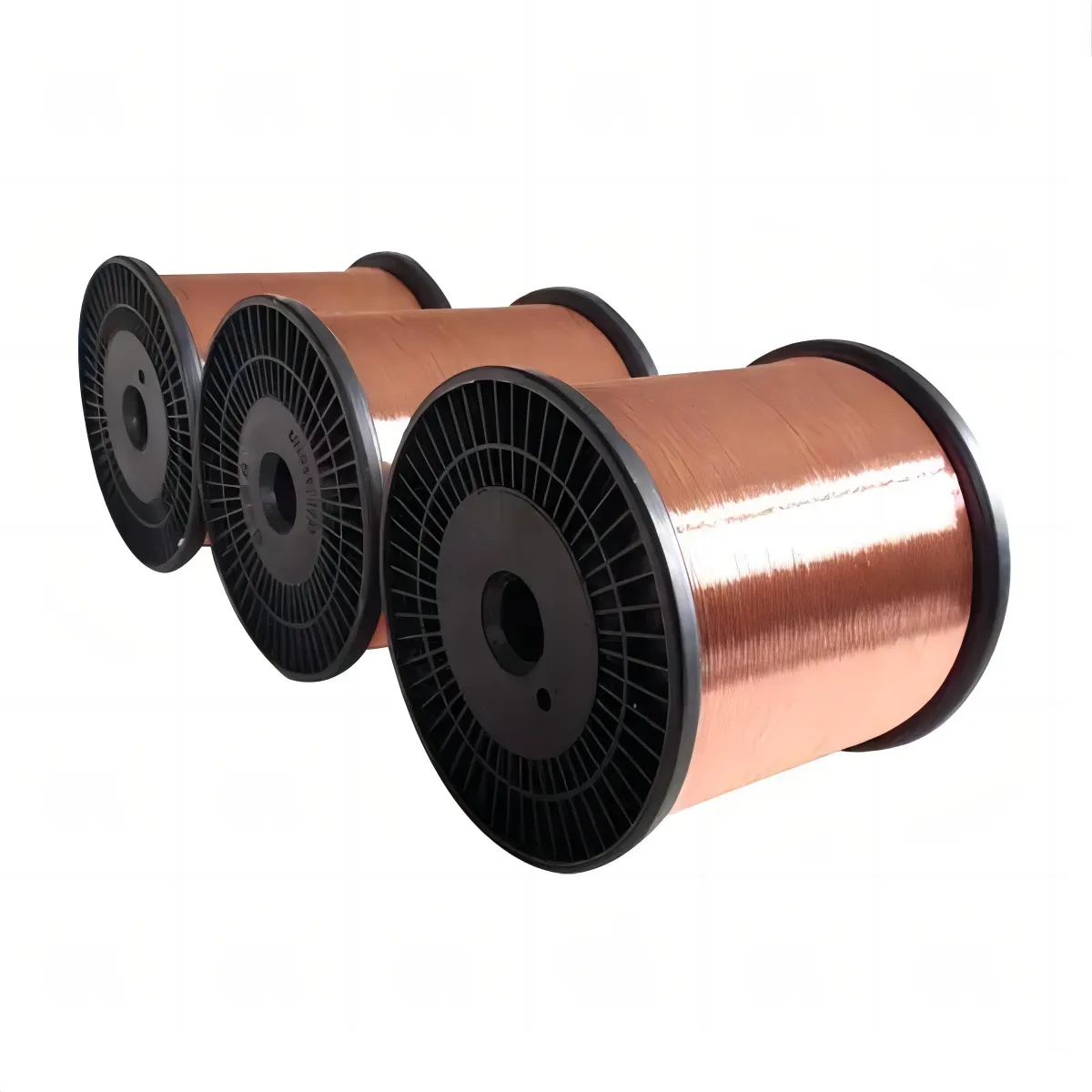
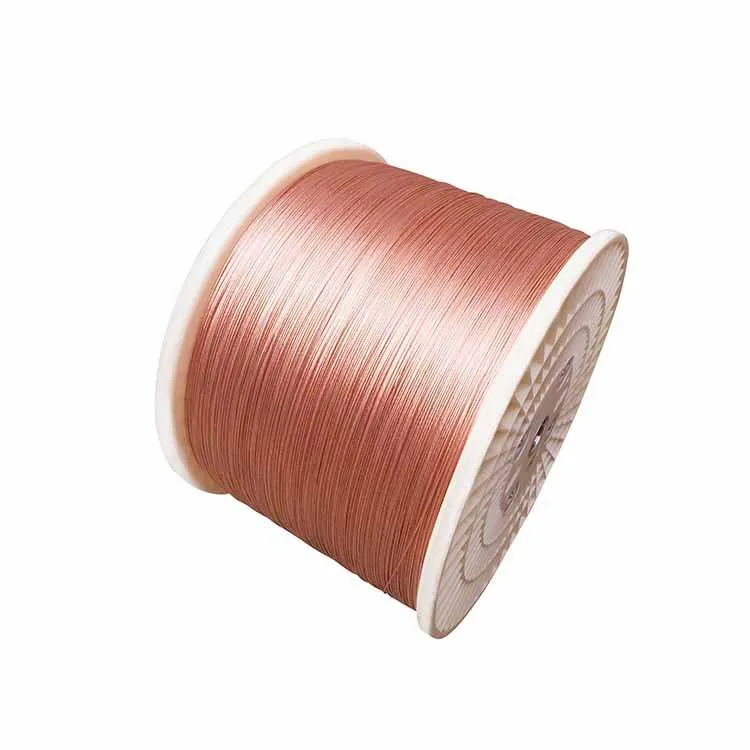
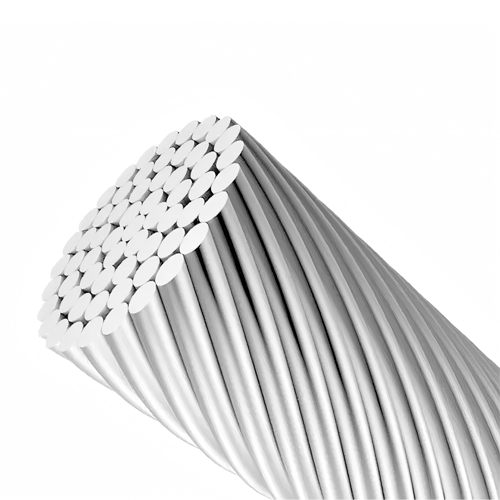
Al-Mg Wire for Cable: Lightweight, High-Conductivity Solution

Get a Free Quote

Our representative will contact you soon.
Name
Email
Mobile
Country/Region
Choose the product you want
Message
0/1000
Unmatched Quality and Performance of Al-Mg Wire for Cable

Unmatched Quality and Performance of Al-Mg Wire for Cable

Our Al-Mg wire for cable offers exceptional strength, lightweight properties, and excellent conductivity, making it ideal for various applications in the electrical and telecommunications industries. With our fully automated production lines, we ensure that every stage of the manufacturing process—from raw material selection to wire drawing and annealing—is meticulously controlled. This results in a product that not only meets but exceeds international quality standards. Our commitment to customer value creation means that we provide customized solutions tailored to your specific needs, ensuring that our Al-Mg wire for cable enhances your project’s efficiency and reliability.
Get A Quote

Case Studies

Enhancing Telecommunications Infrastructure with Al-Mg Wire

A leading telecommunications provider faced challenges with signal strength and durability in their network infrastructure. By integrating our Al-Mg wire for cable, they experienced a remarkable improvement in signal transmission and reduced maintenance costs. The lightweight nature of the wire allowed for easier installation, while its corrosion resistance ensured longevity in various environmental conditions. This case demonstrates how our product can significantly enhance telecommunications networks, providing a reliable solution that meets the demands of modern connectivity.

Powering Renewable Energy Solutions with Al-Mg Wire

An innovative solar energy company sought to optimize their energy transmission systems. They turned to our Al-Mg wire for cable to enhance the efficiency of their solar panel connections. The wire’s lightweight design and high conductivity resulted in reduced energy loss during transmission, leading to improved overall system performance. This collaboration not only boosted the company's energy output but also highlighted the versatility of our Al-Mg wire in renewable energy applications.

Revolutionizing Electrical Wiring in Smart Homes

A smart home technology firm needed reliable wiring solutions for their advanced home automation systems. By utilizing our Al-Mg wire for cable, they ensured that their products operated seamlessly, providing homeowners with efficient and secure connectivity. The wire’s superior conductivity and heat-resistance properties allowed for safe and reliable operation of high-tech devices. This case illustrates how our Al-Mg wire is pivotal in supporting the growth of smart home technologies, ensuring that they meet consumer demands for safety and efficiency.

Related products

The Al-Mg wire we provide for cable applications is made to work great in power, telecom, and renewables. Starting with premium raw materials, we wire draw and anneal to make a wire which is lightweight, has good tensile strength, and great conductivity. We manage every step of production to ensure quality and consistency. As a result, we provide a wire which works in a variety of applications. We understand the importance of client satisfaction and constantly work to improve our offerings to meet the diverse requirements of our global clientele. We also understand the importance of prompt, reliable, and efficient service and we strive to meet those service needs with our Al-Mg wire for cables.

Frequently Asked Questions About Al-Mg Wire for Cable

What are the main benefits of using Al-Mg wire for cable?

Al-Mg wire offers a combination of lightweight properties, high strength, and excellent conductivity, making it ideal for various applications in electrical and telecommunications sectors. Its corrosion resistance also ensures durability in harsh environments.
Our fully automated production lines ensure that every step, from raw material selection to annealing, is meticulously controlled. This precision leads to consistent quality and performance, meeting international standards.

Related article

Al-Mg Alloy Wire Conductivity Calculation: A Practical Example

15

Jan

Al-Mg Alloy Wire Conductivity Calculation: A Practical Example

Al-Mg Alloy Wire Composition and Its Direct Impact on Electrical Conductivity

The electrical conductivity of aluminum-magnesium alloy wire really hinges on how much magnesium is present. As magnesium content ranges between 0.5 to 5 weight percent, it gets incorporated into the aluminum's crystal structure, which messes with the way electrons move through the material. This happens because the magnesium creates tiny distortions at the atomic level that act as obstacles for electron flow. For every additional 1% magnesium added, we generally see around a 3 to 4% drop in conductivity according to the International Annealed Copper Standard benchmark. Some sources claim a 10% reduction, but that number tends to exaggerate what actually occurs in standard commercial products. It also mixes up normal alloy behavior with situations involving very high levels of impurities. The main reason behind this conductivity loss? More magnesium means more scattering events for electrons encountering those dissolved atoms, and naturally leads to higher resistance as magnesium concentration increases.

How magnesium content (0.5–5 wt%) governs electron scattering in aluminum magnesium alloy wire

Magnesium atoms substitute for aluminum in the lattice, distorting local symmetry and impeding electron motion. The magnitude of scattering intensifies nonlinearly above ~2 wt% Mg, where solubility limits are approached. Key experimentally observed impacts include:

  • At 1 wt% Mg: resistivity rises ∼3 nΩ·m versus pure aluminum (ρ = 26.5 nΩ·m)
  • Above 3 wt% Mg: electron mean free path shortens by ~40%, accelerating resistivity growth
    Staying within the equilibrium solid solubility limit (~1.9 wt% Mg at room temperature) is essential—excess Mg promotes β-phase (Al₃Mg₂) precipitation, which introduces larger, less frequent scattering sites but degrades long-term stability and corrosion resistance.

Solid solution hardening vs. precipitate formation: Microstructural drivers of conductivity loss in cold-drawn aluminum magnesium alloy wire

Cold drawing enhances strength but also amplifies microstructural influences on conductivity. Two interrelated mechanisms dominate:

  1. Solid solution hardening: Dissolved Mg atoms elastically strain the Al lattice, acting as distributed scattering centers. This mechanism dominates in low-Mg alloys (<2 wt%) and during cold working below ~150°C, where diffusion is suppressed and precipitates remain absent. It delivers high strength gains with relatively modest conductivity penalties.

  2. Precipitate formation: Above ~3 wt% Mg—and especially after thermal aging—β-phase (Al₃Mg) particles nucleate. While these larger obstacles scatter electrons less efficiently per atom than dissolved Mg, their presence signals supersaturation and instability. Precipitates reduce lattice strain but introduce interfacial scattering and accelerate localized corrosion.

Mechanism Conductivity Impact Dominant When Practical Implication
Solid solution High resistivity Low Mg (<2 wt%), cold-worked Best for applications prioritizing stable, predictable conductivity
Precipitates Moderate resistivity High Mg (>3 wt%), thermally aged Acceptable only with strict process control and corrosion mitigation

Optimal processing balances these effects: controlled aging minimizes coarse precipitate formation while leveraging fine, coherent clusters to enhance strength without disproportionate conductivity loss.

Standardized Conductivity Measurement and Calculation for Aluminum Magnesium Alloy Wire

From Resistivity to %IACS: ASTM E1004-Compliant Four-Point Probe Calculation Workflow

Getting accurate conductivity readings for aluminum-magnesium alloy wires means following the ASTM E1004 guidelines pretty closely. The standard calls for using a four-point probe on wire segments that have been straightened out and stripped of any oxides. Why? Because this approach actually gets rid of those pesky contact resistance issues that plague regular two-point measurements. Labs need to keep things really tight when taking these readings - temperatures should stay within 20 degrees Celsius plus or minus just 0.1 degree. And of course, everyone needs to be working with properly calibrated equipment and standards that can trace back to NIST. To figure out the International Annealing Copper Standard percentage, we take the bulk resistivity value (measured in nanoohm meters) and plug it into this formula: %IACS equals 17.241 divided by resistivity multiplied by 100. That number, 17.241, represents what standard annealed copper looks like at room temperature. Most certified labs can get within about 0.8% accuracy if everything goes right. But there's another trick too: the distance between the probes has to be at least three times the actual wire diameter. This helps create an even electric field across the sample and prevents those annoying edge effect problems that throw off results.

Measurement Factor Four-Point Probe Requirement Impact on %IACS Accuracy
Temperature stability ±0.1°C controlled bath ±0.15% error per 1°C deviation
Probe alignment Parallel electrodes ±0.01mm Up to 1.2% variance if misaligned
Current density ∼100 A/cm² Prevents Joule heating artifacts

Eddy Current vs. DC Four-Wire Measurement: Accuracy Trade-offs for Sub-2 mm Aluminum Magnesium Alloy Wire

For thin aluminum–magnesium alloy wire (<2 mm diameter), method selection hinges on accuracy requirements and production context:

  • Eddy current testing
    Offers non-contact, high-speed scanning ideal for inline quality sorting. However, its sensitivity to surface condition, near-surface segregation, and phase distribution limits reliability when Mg exceeds ~3 wt% or microstructure is inhomogeneous. Typical accuracy is ±2% IACS for 1 mm wire—sufficient for pass/fail screening but inadequate for certification.

  • The DC four wire Kelvin measurement technique can achieve around plus or minus 0.5 percent IACS accuracy even when dealing with thin wires as small as 0.5 mm that contain higher magnesium levels. Before getting accurate readings though, there are several preparation steps needed. First, specimens need to be properly straightened out. Then comes the tricky part - removing surface oxides through methods like gentle abrasion or chemical etching. Thermal stability during testing is also crucial. Despite needing all this prep work and taking about five times longer than other methods, many still rely on it because it's currently the only approach recognized by ASTM E1004 standards for official reports. For applications where electrical conductivity directly affects how well a system performs or meets regulatory requirements, this extra time investment often makes sense despite the slower process.

Step-by-Step Conductivity Calculation: A Real-World Example for 3.5 wt% Aluminum Magnesium Alloy Wire

Input validation: Resistivity measurement, 20°C temperature correction, and Mg solubility assumptions

Getting accurate conductivity calculations starts with making sure all input data is properly validated first. When measuring resistivity, it's essential to use ASTM E1004 compliant four point probes on wires that have been straightened out and thoroughly cleaned. The readings then need adjustment to account for temperature differences from the standard 20 degree Celsius reference point. This correction follows the formula rho_20 equals rho_measured multiplied by [1 plus 0.00403 times (temperature minus 20)]. The value 0.00403 per degree Celsius represents how much resistivity changes with temperature for aluminum magnesium alloys around room temperatures. Something worth noting about these measurements: when working with a 3.5 weight percent magnesium alloy, we're actually looking at something beyond what's normally possible since the equilibrium solubility limit sits around just 1.9 weight percent at 20 degrees Celsius. What this means in practice is that the resistivity numbers obtained don't only reflect solid solution effects but probably include some contribution from either metastable or stable beta phase precipitates forming within the material. To really understand what's going on here, microstructural analysis through methods like scanning electron microscopy combined with energy dispersive spectroscopy becomes absolutely necessary for meaningful interpretation of test results.

Numerical walkthrough: Converting 29.5 nΩ·m to %IACS with ±0.8% uncertainty

Consider a measured resistivity of 29.5 nΩ·m at 25°C:

  1. Temperature-correct to 20°C:
    ρ_20 = 29.5 × [1 + 0.00403 × (25 − 20)] = 30.1 nΩ·m
  2. Apply %IACS formula:
    %IACS = (17.241 / 30.1) × 100 = 57.3%

The plus or minus 0.8% uncertainty comes from putting together all those calibration errors, temperature effects, and alignment issues we always have to deal with during testing. It doesn't actually reflect any natural variation in the materials themselves. Looking at real world measurements for cold drawn wire that's been aged a bit, around 3.5 weight percent magnesium content usually shows conductivities between about 56 and 59 percent IACS. Something worth remembering though is that this rule of thumb about losing 3% conductivity for every additional weight percent magnesium works best when magnesium levels stay under 2%. Once we go past that threshold, things start breaking down faster because of these little precipitates forming and the whole microstructure getting more complicated as well.

Practical Implications for Engineers Selecting Aluminum Magnesium Alloy Wire

When specifying aluminum–magnesium alloy wire for electrical applications, engineers must balance three interdependent parameters: conductivity, mechanical strength, and environmental durability. Magnesium content (0.5–5 wt%) sits at the center of this trade-off:

  • Conductivity: Every 1 wt% Mg reduces conductivity by ~3% IACS below 2 wt%, rising to ~4–5% IACS loss near 3.5 wt% due to scattering from early-stage precipitates.
  • Strength: Yield strength increases ~12–15% per 1 wt% Mg—primarily via solid solution hardening below 2 wt%, then increasingly via precipitation hardening above 3 wt%.
  • Corrosion resistance: Mg improves atmospheric corrosion resistance up to ~3 wt%, but excess Mg promotes grain boundary β-phase formation, accelerating intergranular corrosion—especially under cyclic thermal or mechanical stress.

When dealing with important stuff like overhead transmission lines or busbars, it's better to go with ASTM E1004 compliant DC four wire resistivity measurements instead of relying on eddy current methods for those tiny sub 2 mm wires. Temperature matters too folks! Make sure there are mandatory baseline corrections at 20 degrees Celsius because even a 5 degree swing can throw off readings by about 1.2% IACS, which messes up meeting specs. For checking how materials hold up over time, run those accelerated aging tests using standards like ISO 11844 with salt spray and thermal cycling. Research indicates that if materials aren't properly stabilized, corrosion along grain boundaries jumps up around three times after just 10,000 load cycles. And don't forget to double check what suppliers claim about their products. Look at actual composition reports from reliable sources, especially when it comes to iron and silicon content that should stay below 0.1% total. These impurities really hurt fatigue resistance and can lead to dangerous brittle fractures down the road.
View More
Custom Solutions with Ccs Wire for Industrial and Electrical Companies

26

Jan

Custom Solutions with Ccs Wire for Industrial and Electrical Companies

Understanding Custom Solutions in Electrical Performance

Custom solutions in the context of electrical performance refer to tailored designs and implementations that address specific application requirements. Unlike off-the-shelf products which are designed to meet general needs, custom solutions are crafted to integrate seamlessly with unique operational environments, ensuring compatibility and optimal performance. Such solutions are particularly beneficial when standard products fall short in meeting an application's precise demands. Custom solutions significantly enhance the efficiency and reliability of electrical systems across various industries. For instance, in aerospace, bespoke solutions can accommodate the critical safety and precision requirements. In the automotive industry, these solutions enable integration with advanced technological frameworks for vehicle electrification. Similarly, within consumer electronics, custom-built electrical components ensure devices operate effectively under diverse consumer demands—not only boosting performance but also extending the lifespan and dependability of the systems involved. This adaptability makes custom solutions indispensable for industries that require high precision and flexibility in their operations.

Benefits of Custom CCS Wire Solutions

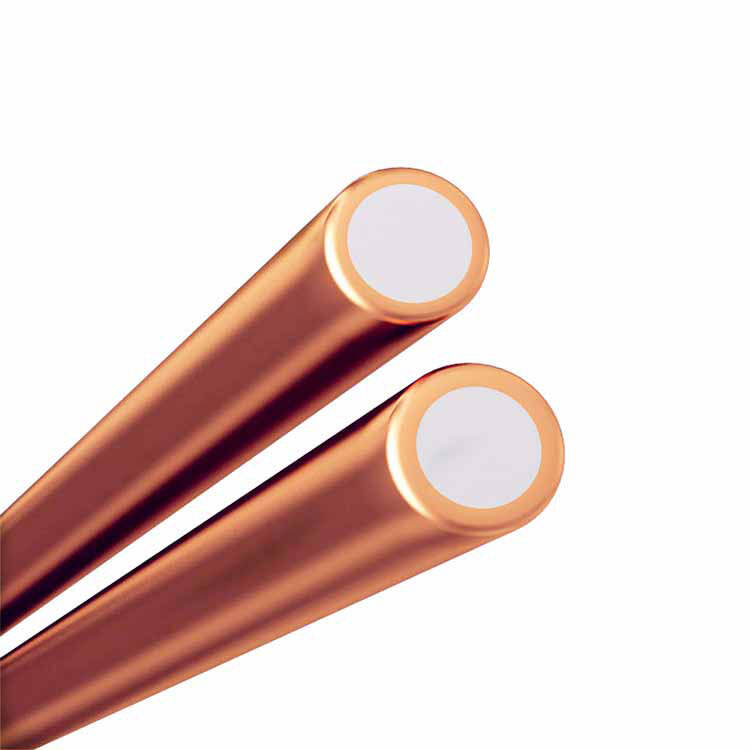
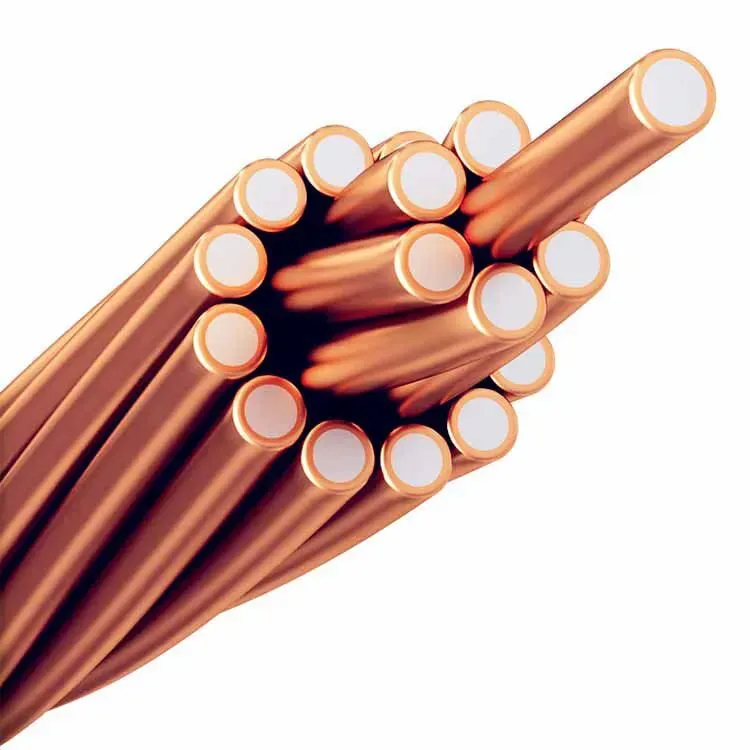
Custom CCS (Copper-Clad Steel) wire solutions offer tailored designs that specifically address unique electrical needs, ensuring optimal performance. These solutions are crafted to meet desired specifications, such as specific conductivity levels and flexibility, which are often required in intricate electrical setups. By customizing CCS wires, businesses can achieve electrical configurations that maximize efficiency and minimize energy loss, resulting in cost savings and consistent performance across various applications. One of the most notable advantages of custom CCS wire solutions is their enhanced electrical performance. These wires are designed to reduce resistance, thereby improving the current flow and minimizing power loss. Additionally, the inherent durability of CCS wires ensures a longer lifespan, making them a reliable choice for demanding environments. Whether for aerospace systems or automotive wiring, custom CCS solutions offer the resilience to withstand varying degrees of stress and thermal challenges. Furthermore, the flexibility and adaptability of custom solutions support innovation in electrical engineering. As technology evolves, so do the requirements for electrical components. Custom CCS wire solutions can be modified to meet new application needs, allowing businesses to stay at the forefront of technological advancements. This adaptability ensures that as industries progress, the wiring solutions can be adjusted accordingly, promoting continuous improvement and fostering innovation.

Custom Solutions: Solid Wire vs Stranded Wire

When considering custom wire solutions, it's essential to understand the characteristics of solid wire. Solid wire is known for its excellent conductance due to its single, continuous strand, which facilitates efficient electrical flow. Additionally, its inherent mechanical strength makes it suitable for static applications where the wire will not be frequently moved or bent. This makes solid wire ideal for use in fixed installations such as building wiring and electrical panels. On the other hand, stranded wire offers distinct advantages, particularly in terms of flexibility. Comprising multiple small strands twisted together, stranded wire is more resistant to fatigue from bending and vibration. This characteristic makes it particularly well-suited for dynamic applications where the wire needs to be frequently flexed or moved, such as in robotics or automotive wiring harnesses. Its flexibility also contributes to easier installation in tight or complex spaces. Choosing between solid and stranded wire for custom solutions depends on several factors. Consider the installation environment: solid wire is more effective in stable, static environments, whereas stranded wire excels in dynamic settings. Evaluate the need for flexibility—if regular movement or vibration is expected, stranded wire is preferable. Lastly, assess the required electrical performance; solid wire may be more efficient for higher conductance needs. By understanding these factors, you can tailor the choice of wire to the application’s specific demands.

Exploring Enameled Wire for Enhanced Performance

Enameled wire is a specialized type of wire known for its excellent insulation and electrical properties, making it a critical component in many electrical applications. The wire is coated with a thin layer of enamel, which serves as insulation against electrical shorts. This insulation helps the wire withstand high temperatures, often up to 200°C, making it suitable for a wide range of operating conditions. Additionally, enameled wire exhibits excellent dielectric properties, reducing energy loss and enhancing electrical efficiency. Enameled wire is commonly utilized in various electrical projects, particularly those involving magnets. For instance, it is frequently used in the windings of electric motors, transformers, and inductors. These components benefit from the precise and compact winding capabilities of enameled wire, which optimizes the performance of the magnetic fields they generate. This makes it a preferred choice in industries ranging from automotive to consumer electronics and industrial machinery. The benefits of enameled wire over other wire types are numerous. Due to its ability to resist heat, it offers improved durability and longevity, particularly in applications subjected to high temperatures. Its compact dielectric coating also reduces space requirements, allowing for more compact designs without compromising performance. Additionally, enameled wire's durability ensures it can withstand harsh environments, contributing to its reliability in demanding applications. These advantages make enameled wire a superior choice for enhancing performance in electrical engineering projects.

The Role of CCA Wire in Custom Electrical Solutions

Copper Clad Aluminum (CCA) wire is a specialized type of electrical conductor that effectively combines the benefits of both aluminum and copper. By coating an aluminum core with a thin layer of copper, CCA wire offers several distinct advantages. It maintains much of the conductivity of copper wire while significantly reducing weight and cost. This unique combination makes CCA wire a popular choice for various custom solutions where weight, cost, and conductivity are crucial factors. One of the main benefits of CCA wire is its cost-effectiveness. Although it is not as conductive as pure copper wire, it is considerably lighter, which makes it easier to handle and install, and costs less due to the lower amount of copper used. This makes CCA wire an attractive option for budget-conscious projects without sacrificing essential performance. Additionally, its physical properties contribute to its versatility in various applications. CCA wire is particularly valuable in industries such as telecommunications, automotive, and HVAC systems. In telecommunications, its lightweight nature helps reduce the weight of cabling over long distances, thus making installation easier and cheaper. In automotive applications, CCA wire can be used in circuits where high current carrying capacity isn't crucial but cost and weight are significant considerations. For HVAC systems, the improved flexibility and reduced weight of CCA wires assist in simpler installations while maintaining satisfactory performance levels. These diverse applications demonstrate the flexibility of CCA wire in meeting custom electrical solution requirements.

Choosing the Right Custom Wire for Your Needs

Selecting the right custom wire begins with assessing your specific electrical requirements. It's essential to consider factors such as voltage, current, and the environment where the wire will be used. For instance, high-voltage applications demand wires with specific insulation properties, while environments exposed to moisture or extreme temperatures may require special protective coatings. By understanding these needs, you can ensure the wire selected will perform safely and efficiently. Budget considerations also play a crucial role in choosing custom wire solutions. While it might be tempting to opt for cheaper options, investing in quality wires can lead to considerable long-term savings. High-quality materials and designs not only enhance performance but also reduce the frequency of replacements and repairs, ultimately lowering overall costs. Finally, do not underestimate the value of expert advice. Collaborating with suppliers and engineers can provide unique insights into the optimal wire options for your specific application. Their expertise ensures that the wire chosen will not only meet your needs but also comply with industry standards and regulations. This collaboration is key to achieving the best balance between functionality, durability, and cost-effectiveness.

Conclusion: The Future of Custom Solutions in Electrical Performance

In an era where efficiency and reliability are paramount, tailored solutions in electrical systems play an essential role in performance optimization. Leveraging custom wire solutions and technologies allows businesses to fine-tune their electrical journeys, ensuring systems not only meet their current requirements but are also adaptable for future needs. Such customization results in unparalleled efficiency improvements and system reliability. Looking ahead, technological advancements are set to further revolutionize custom solutions. Innovations in materials and design practices offer exciting possibilities for future applications. Enhanced conductive materials and eco-friendly options promise to improve performance while reducing environmental impact. As these advancements continue to unfold, the landscape of custom electrical solutions will expand, offering even greater possibilities for those ready to harness tailor-made technological opportunities.
View More
Why Twisted Wire is the Key to Stable Car Electrical Connections

22

Mar

Why Twisted Wire is the Key to Stable Car Electrical Connections

Understanding Twisted Wire Technology in Automotive Systems

Basic Structure: Twisted vs. Solid vs. Stranded Wire

In automotive systems, twisted, solid, and stranded wires all serve different purposes thanks to their unique structures. Take twisted wire for instance it usually has those enameled strands wrapped together. People love this type because it bends easily and cuts down on that annoying electromagnetic interference we all know as EMI. The way these strands twist around each other actually helps the wire handle bumps and shakes better while still working properly. Stranded wire works similarly but just has more individual strands bundled together, which makes it super flexible for getting into tight spots where space matters most. Solid wire takes a completely different approach with one big solid core inside. This gives it great conductivity and lasting power, so it's typically used in places where the wire won't be moved much after installation.

Twisted wire has one big plus point when it comes to fighting off electromagnetic interference. The way these wires are constructed actually cuts down on EMI pretty well, something that matters a lot in cars where there's plenty of high frequency noise floating around. Take enameled wire for instance. When manufacturers twist this type together, they get that protective enamel coating working overtime to prevent shorts. This kind of setup shows up all over the place in motor windings and other critical components inside electric motors. With modern vehicles relying so heavily on clean signal paths, knowing what separates twisted from straight wiring makes all the difference. Engineers spend hours debating which wire type works best for different parts of the vehicle because getting this right can mean smoother operation and fewer headaches down the road.

How Twisting Affects Electrical Signal Integrity

When wires are twisted together, it actually helps maintain better electrical signals, which matters a lot in car electronics where signal loss can be problematic. The main benefit comes from how this twisting works against electromagnetic interference. Basically, when current flows through parallel wires, they create magnetic fields that interfere with each other. But twist those wires just right and those fields start cancelling each other out instead. Research into cable design shows that increasing the number of twists along a given length makes this cancellation even more effective. Most automotive engineers will tell you that properly twisted cables can bring down EMI to almost nothing across their entire run, keeping data transmission clean and reliable throughout the vehicle's wiring system.

Twisting wires works mainly because it cancels out magnetic fields. Current running through these twisted pairs creates opposing magnetic fields in each half of the twist. The result? Much less interference from unwanted voltages and outside noise sources. Tests back this up consistently. Car manufacturers rely heavily on this technique since their vehicles operate in all sorts of electromagnetic environments. From engine compartments to passenger cabins, there's always background electrical noise competing with important signals. That's why properly twisted wiring remains so critical throughout modern cars' increasingly complicated electrical systems.

Key Benefits of Twisted Wire for Car Electrical Connections

EMI Reduction Through Magnetic Field Cancellation

Twisting wires remains a popular approach for cutting down on electromagnetic interference (EMI) problems inside cars and trucks. When wires get twisted together, they create opposing magnetic fields that basically cancel each other out. The result? Less unwanted electrical noise messing with sensitive equipment. Research indicates these twisted arrangements knock EMI levels way down compared to regular straight wires running parallel. Some tests even found reductions exceeding 70% in certain situations. Makes sense why automotive engineers love this trick so much. In modern vehicles packed full of electronic components, keeping those signals clean matters a lot. Safety systems need reliable connections after all, and twisted wiring helps ensure communication stays intact between different parts of the vehicle's complex network.

Enhanced Durability in High-Vibration Environments

Twisted wires tend to hold up really well over time, especially when used in cars that constantly vibrate and move around. What makes them special is how they're built - the twisting lets them bend without breaking as easily as regular solid or stranded wires would under the same rough treatment. Car makers have noticed this firsthand too. Some big names in the industry report their twisted wire connections stay intact much longer when subjected to those relentless vibrations we see in vehicles day after day. Stranded wires just don't cut it in these situations since they wear down faster, and solid ones? Well, they often just snap right off completely. For anyone looking at long term reliability in automotive wiring systems where shaking and rattling is basically part of the job description, twisted wires simply offer advantages that other types just cant match up to.

Improved Flexibility for Complex Routing

Twisted wire designs offer real advantages when it comes to routing through the cramped spaces inside modern vehicles. Solid wires and those made from copper clad aluminum just don't bend well enough for all those tight corners and awkward angles that come standard in today's car interiors. The twist gives these wires the flexibility needed to snake through engine compartments and dashboards where straight runs simply won't work. For mechanics and installers, this means fewer headaches during assembly and better integration with other components. Automotive engineers appreciate this too since they can create more advanced electrical layouts without constantly fighting against the limitations of traditional wiring options. Better installation times translate into cost savings on production lines, while also helping maintain the reliability and performance standards expected from modern vehicle electrical systems.

Twisted Wire vs. Solid and Stranded Conductors

Current Capacity Comparison: Twisted vs. Solid Wire

When it comes to cars, how much electricity twisted wire can carry makes all the difference compared to regular solid wire. The twisty design actually works better for moving current because of the way the strands are woven together, creating more surface area that helps get rid of heat faster. This matters a lot in car electrical systems where keeping things running smoothly without overheating is critical. Some research published in an engineering journal found that twisted wires handle about 15 percent more current than their solid counterparts. Most car makers follow guidelines from groups like the IEC when picking out wiring materials. These rules help them choose wires that won't overheat or fail under normal driving conditions, which keeps everyone safer on the road.

Flexibility Advantage Over Copper Clad Aluminum (CCA) Wire

When it comes to flexibility, twisted wire definitely outperforms copper clad aluminum (CCA) wire, particularly in those complicated vehicle layouts we see these days. Twisted wire just bends and twists right through all those tight spots in cars without snapping, while CCA might be lighter but tends to break down when things get really complicated. Take modern car designs where wires need to snake through engine compartments and under dashboards. Mechanics actually report faster installations with twisted wires since they don't kink up so easily. Most major car manufacturers now specify twisted wire for their production lines simply because these wires hold up better during assembly and after years of vibration from everyday driving conditions something every mechanic knows matters a lot in keeping vehicles running smoothly.

Why Stranded Wire Complements Twisted Pair Designs

In automotive wiring applications, stranded wire works alongside twisted wire designs to boost performance across different vehicle systems. When combined properly, these wires maintain good connections even when subjected to vibrations and temperature changes common in cars. We see this happening in critical areas like engine management controls where reliable signal transmission matters most. The automotive industry has noticed this trend too many manufacturers now prefer using mixed wiring approaches because they get better results from combining flexible stranded conductors with the structural benefits of twisted pairs. This practice helps meet strict performance requirements while keeping electrical systems running smoothly for longer periods without failures.

Practical Applications in Modern Vehicle Systems

Stable Sensor Data Transmission for ADAS

Twisted wire is really important for keeping data transmission stable in those Advanced Driver-Assistance Systems (ADAS) found in today's cars. When manufacturers twist the wires together, it cuts down on electromagnetic interference problems. This matters a lot now that cars have so many different electronic systems packed into them. Industry numbers show that when using twisted wiring instead of other approaches, data errors drop quite a bit, making these driver assistance features both safer and more dependable over time. Take Tesla for instance they actually implemented twisted pair wiring throughout their vehicle line-up. Their engineers noticed much better sensor communication between components, especially under real world driving conditions where all sorts of electrical signals are bouncing around inside the car.

Noise-Free Audio in Infotainment Systems

Twisted wire tech plays a big role in getting clean audio from car infotainment systems. These wires work really well against electromagnetic interference, something that causes those annoying noises drivers hear while on the road. Car audio specialists will tell anyone serious about sound quality that good wiring matters a lot, especially when we're talking about twisted pairs. Take the BMW 7 Series as an example. They actually use these special wires in their audio setup so people can enjoy music without all that background static messing things up during their drive. Most car owners probably don't think about this stuff, but it makes a real difference in how satisfying the whole listening experience feels inside the vehicle cabin.

Reliable Ignition and ECU Communication

Good wiring is absolutely necessary for proper functioning of ignition systems and those important computer parts called ECUs. We've seen plenty of cars on the road with bad wiring that just plain breaks down. Take some models from a few years back where people had all sorts of trouble starting their vehicles because the wires couldn't handle the job. Twisted wire stands out because it conducts electricity better and holds up longer under stress, which keeps those vital signals moving between parts without interruption. When manufacturers invest in quality wiring solutions, they're not just preventing breakdowns but actually making cars run smoother and last longer overall. The difference might seem small at first glance, but over time it adds up to fewer repairs and happier customers.

View More
What Is CCA Wire? Composition, Benefits, and Common Uses

25

Dec

What Is CCA Wire? Composition, Benefits, and Common Uses

CCA Wire Composition: Aluminum Core with Copper Cladding

example

Copper-Clad Aluminum Structure and the 10% Copper Volume Ratio

CCA wire has an aluminum core wrapped in a continuous copper coating, and copper makes up around 10% of the whole thing. The way these materials work together gives us something special. Aluminum is much lighter than copper, so CCA wires can be about 40% lighter than regular copper ones. At the same time, we get all the good stuff from copper too. Copper has great surface conductivity at 100% IACS which helps signals travel efficiently through the wire. Now here's where it gets interesting. While aluminum itself isn't as conductive as copper (only about 61% IACS), the copper layer is really thin, usually between 0.1 and 0.3 mm thick. This thin copper covering creates a path with very little resistance exactly where the high frequency currents need it most because of what's called the skin effect.

Electroplating vs. Rolling Bonding: Manufacturing Methods Compared

CCA wire is produced primarily through two metallurgical processes:

  • Electroplating, which deposits copper onto aluminum via electric current in a copper-ion bath, yields uniform cladding ideal for complex or fine-gauge geometries;
  • Rolling bonding, which applies high pressure and heat to fuse copper foil to aluminum cores, produces stronger, more durable interfacial bonds—up to 20% higher bond strength than electroplated variants, according to peer-reviewed metallurgical studies.

Rolling-bonded CCA is preferred for demanding applications like automotive harnesses and aerospace wiring, where mechanical integrity under vibration or thermal cycling is critical.

Skin Effect Physics: Why CCA Performs Well in High-Frequency Applications

The skin effect basically describes how AC currents tend to bunch up near the surface of conductors, which is why CCA performs so well in RF and broadband applications. When we look at signals above 50 kHz, most of the actual current (over 85%) stays within just 0.2 mm from the outside of the wire. Since this outer layer is made of pure copper, CCA wires can deliver electrical characteristics almost exactly like regular solid copper cables used in coaxial systems, CATV installations, and short distance data transmission lines. But here's where it gets interesting for manufacturers: these cables still offer around 40% savings on materials costs compared to traditional copper solutions, plus they're much lighter too. That makes them particularly attractive for applications where weight matters but performance cannot be compromised.

Why Choose CCA Wire? Cost, Weight, and Performance Advantages

CCA wire delivers a strategic balance of economic and functional benefits across three critical dimensions:

  • Cost Efficiency: By substituting 90% aluminum for copper, CCA reduces raw material costs by roughly 40% versus solid copper equivalents—making it especially valuable for large-scale infrastructure projects like telecommunications backbone cabling and residential low-voltage deployments.
  • Weight Reduction: With aluminum’s density just 30% that of copper, CCA wire weighs up to 40% less. This simplifies handling, lowers shipping and installation labor costs, and meets stringent mass requirements in automotive, aerospace, and portable electronics applications.
  • Optimized Performance: Thanks to the skin effect, the copper cladding carries virtually all high-frequency current in RF and broadband applications. As a result, CCA matches solid copper’s signal integrity in coaxial and short-run Ethernet systems—without sacrificing the cost and weight advantages of aluminum.

Top Industry Applications of CCA Wire

Telecommunications & CATV: Dominant Use in Coaxial and Drop Cables

CCA wire has become pretty much standard stuff for coaxial cables and drop lines across today's CATV systems, broadband networks, and even 5G infrastructure setups. The main reason? Those aluminum cores inside cut down on overall cable weight somewhere around 40% which makes installing them overhead much easier and takes pressure off utility poles. Copper cladding does something pretty cool too - it helps maintain good high frequency transmission because of how signals tend to stick to the outer layers (that's called the skin effect if we get technical). Plus, these cables work great with all the old F-connectors and amplifier gear already out there. Most residential drop cables running from street poles to houses use CCA wiring nowadays since it offers decent value for money while still holding up over time and delivering clear signals. Just need to make sure folks follow those industry guidelines about signal loss limits when putting them in place though.

Residential and Low-Voltage Systems: Speaker, Alarm, and Short-Run Ethernet Wiring

CCA works well in homes and other low voltage situations where circuits don't need maximum power. Most people see it in speaker wires since they don't require great conductivity, plus security systems that run on minimal electricity. When running Ethernet cables shorter than 50 meters, CCA can handle regular internet speeds found in Cat5e or Cat6 cables throughout most households and small offices. But watch out for Power over Ethernet setups because CCA just doesn't cut it there. The increased resistance causes bigger voltage drops and overheating problems. Another plus point? The outer layer resists corrosion better than pure copper, so these cables last longer in damp areas such as basements or underfloor spaces. Electricians should know that according to NEC regulations, CCA isn't allowed for main electrical wiring. They need to stick with proper materials for standard 120/240 volt circuits since aluminum expands differently when heated, which creates issues with connections over time.

Critical Limitations and Safety Considerations for CCA Wire

NEC Restrictions and Fire Safety Risks in Branch-Circuit Installations

According to the National Electrical Code (NEC), CCA wire is not allowed for branch circuit wiring which includes things like residential outlets, lighting systems, and appliance circuits because there are documented fire hazards associated with it. The problem comes down to aluminum having much higher electrical resistance compared to copper about 55 to 60 percent more actually. This causes significant heat buildup when electricity flows through especially at connection points. When we look at aluminum's properties, it melts at a lower temperature than copper and expands differently too. These characteristics lead to problems like loose connections over time, sparking, and damaged insulation. Because of all these issues, CCA wires fail to meet the UL/TIA fire safety requirements needed for wiring inside walls. Things get even worse in Power over Ethernet setups where continuous current flow adds extra strain on the system. Before anyone goes ahead with CCA installation, they should double check what their local building codes say and specifically review NEC Article 310.10(H) regarding conductor materials.

FAQ: CCA Wire

What is CCA wire?

CCA wire is a type of electrical wire featuring an aluminum core coated with a copper layer, combining benefits such as lighter weight and cost efficiency.

Why is CCA wire not used in branch-circuit installations?

The National Electrical Code restricts CCA wire for branch-circuit installations due to safety risks like fire hazards and loose connections associated with its higher electrical resistance.

Can CCA wire be used in high-frequency applications?

Yes, due to the skin effect, CCA wire efficiently handles high-frequency currents, making it suitable for RF and broadband applications.

What are the main applications of CCA wire?

CCA wire is mainly used in telecommunications, CATV systems, residential speaker and alarm wiring, and short-run Ethernet applications.

View More

Client Testimonials on Al-Mg Wire for Cable

John Smith
Exceptional Performance and Reliability

We switched to Litong Cable's Al-Mg wire for our telecommunications projects, and the results have been outstanding. The wire's lightweight design made installation a breeze, and we've seen a noticeable improvement in signal strength. Highly recommend!

Sarah Lee
Perfect Solution for Renewable Energy

Using Litong Cable's Al-Mg wire has transformed our solar energy installations. The reduced energy loss during transmission has significantly boosted our efficiency. Their customer service and customization options are top-notch!

Get a Free Quote

Our representative will contact you soon.
Email
Name
Company Name
Message
0/1000
Lightweight and Durable Design

Lightweight and Durable Design

Our Al-Mg wire for cable is engineered to be exceptionally lightweight, which simplifies installation and reduces structural load. This feature is particularly advantageous in applications where weight constraints are critical, such as in telecommunications towers and renewable energy systems. The durability of our wire ensures it can withstand harsh environmental conditions, making it a reliable choice for long-term projects. The combination of these characteristics allows our clients to achieve greater efficiency and cost savings in their operations.
Superior Conductivity for Enhanced Performance

Superior Conductivity for Enhanced Performance

One of the standout features of our Al-Mg wire for cable is its superior conductivity, which is essential for minimizing energy loss in electrical applications. This high level of conductivity ensures that power transmission is efficient, reducing operational costs and enhancing overall system performance. Our clients have reported significant improvements in their electrical systems after switching to our Al-Mg wire, highlighting its effectiveness in various applications, including smart homes and industrial settings.
  • Product Consultation & Selection

    Product Consultation & Selection

    Tailored advice, perfect fit solutions.

  • Production & Supply Chain

    Production & Supply Chain

    Efficient manufacturing, seamless supply.

  • Quality Assurance & Certification

    Quality Assurance & Certification

    Rigorous testing, global certifications.

  • Post-Sales Support & Tech Help

    Post-Sales Support & Tech Help

    Prompt assistance, ongoing support.

Get a Free Quote

Our representative will contact you soon.
Name
Email
Mobile
Country/Region
Title
Message
0/1000